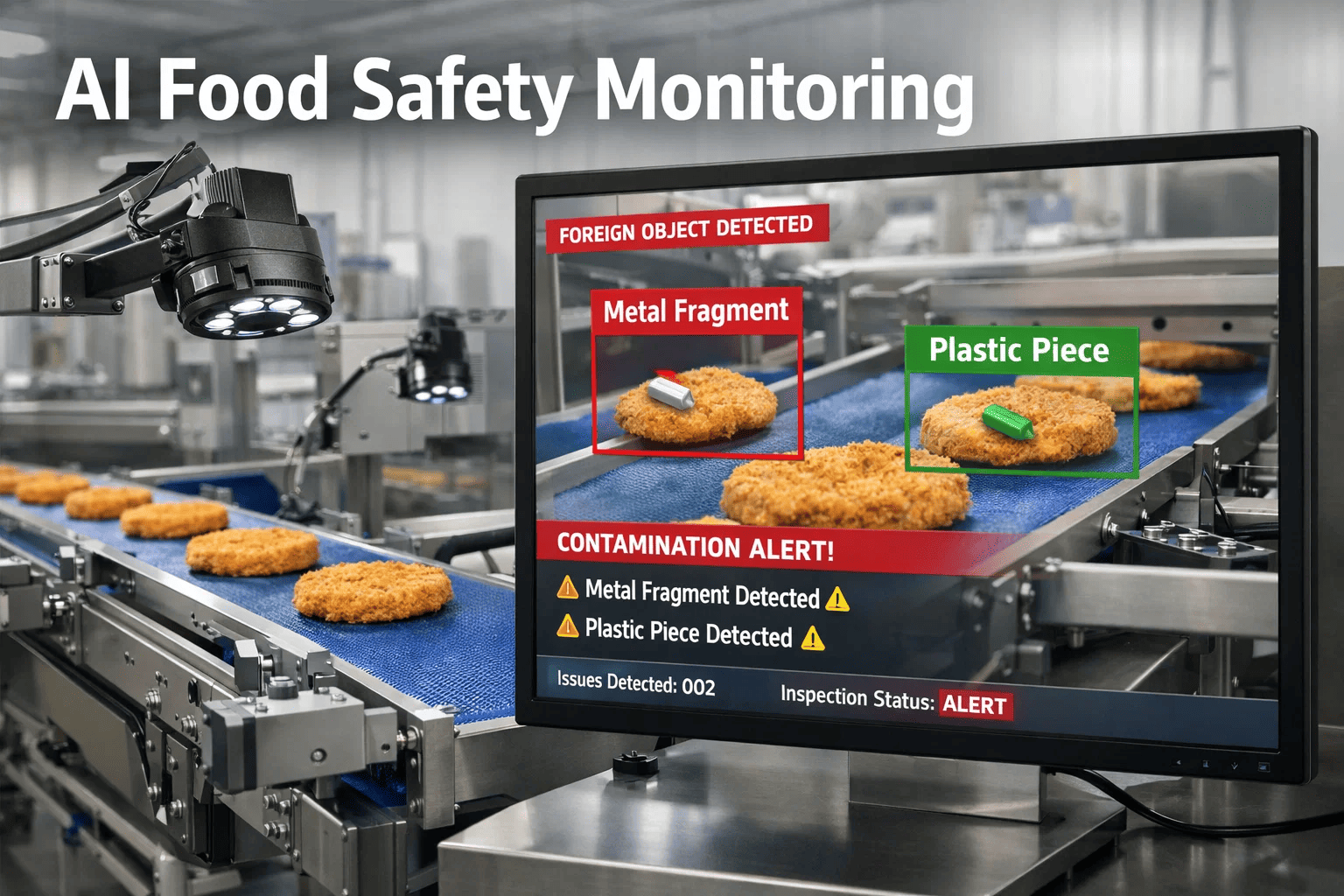
The food industry loses $55 billion annually to contamination events, product recalls, and foodborne illness outbreaks — yet 60% of food manufacturers still rely on manual visual inspection and periodic batch testing as their primary safety controls. These methods catch contamination after it has already entered the product stream, not before. AI-powered food safety monitoring fundamentally changes this equation by deploying computer vision systems that inspect every single item at production speed (up to 1,200 units per minute), IoT sensors that monitor environmental conditions continuously across every production zone, and predictive analytics that identify contamination risk patterns 2–4 weeks before they manifest as positive test results. The global AI in food safety market reached $7.2 billion in 2024 and is projected to exceed $53 billion by 2034 — reflecting a 25% CAGR driven by tightening FSMA regulations, rising recall costs ($10M+ average per event), and the proven ability of AI systems to reduce contamination incidents by up to 40%. Nearly 60% of U.S. food and beverage manufacturers have already integrated IoT sensors for real-time monitoring. Start a free trial to integrate AI-driven monitoring into your maintenance and food safety workflows, or book a demo to see Oxmaint's contamination prevention capabilities in action.
Detect Contamination Before It Reaches Your Product — Not After
Oxmaint integrates sensor data, equipment health monitoring, and AI-driven anomaly detection to identify contamination risks at the equipment and environmental level — triggering maintenance actions that prevent food safety incidents before they happen.
How AI Transforms Food Safety: The Four Technology Layers
AI food safety is not a single technology — it is a layered system where computer vision, IoT sensors, predictive analytics, and digital traceability work together to create a continuous, automated safety net that manual processes cannot match. Each layer addresses a specific failure mode in traditional food safety programs, and together they shift food safety from periodic testing (reactive) to continuous prevention (proactive). Start a free trial to explore AI-integrated food safety monitoring in Oxmaint.
Where Equipment Maintenance Meets Food Safety AI
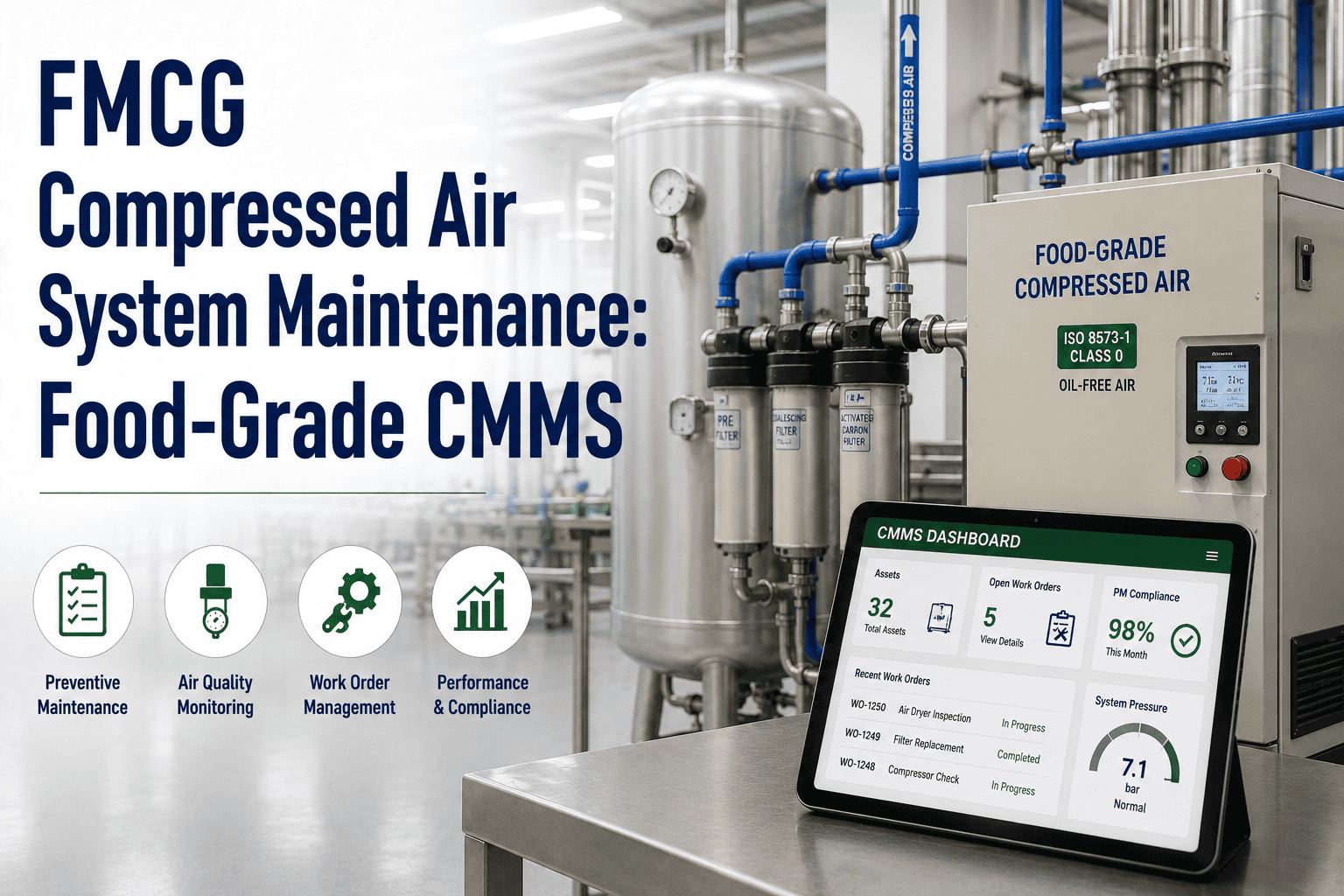
41% of food recalls are linked to equipment failures that could have been prevented through proactive maintenance. The connection between maintenance and food safety is direct: a worn pump seal introduces metal fragments, a degraded gasket harbors Listeria, a failing heat exchanger does not reach pasteurization temperature, a corroded conveyor sheds particles into open product. AI monitoring detects these equipment-driven contamination risks by correlating equipment health data with food safety outcomes — identifying the maintenance failures that create contamination before the contamination occurs. Book a demo to see how Oxmaint connects equipment health to food safety risk scoring.
AI Food Safety Monitoring ROI
Frequently Asked Questions
How does AI food safety monitoring integrate with existing HACCP programs?
AI monitoring enhances HACCP — it does not replace it. HACCP defines your critical control points (CCPs) and critical limits. AI provides continuous, automated monitoring of those CCPs with real-time data instead of periodic manual checks. For example, a CCP for pasteurization temperature currently relies on operator checks every 30 minutes. AI-connected temperature sensors monitor continuously, verify every 60 seconds, and auto-document compliance. When a deviation occurs, Oxmaint auto-generates a corrective action work order with the deviation data, affected product batch, and recommended response — creating the HACCP documentation that auditors require. Start a free trial to see HACCP-integrated monitoring.
What types of contaminants can AI computer vision detect?
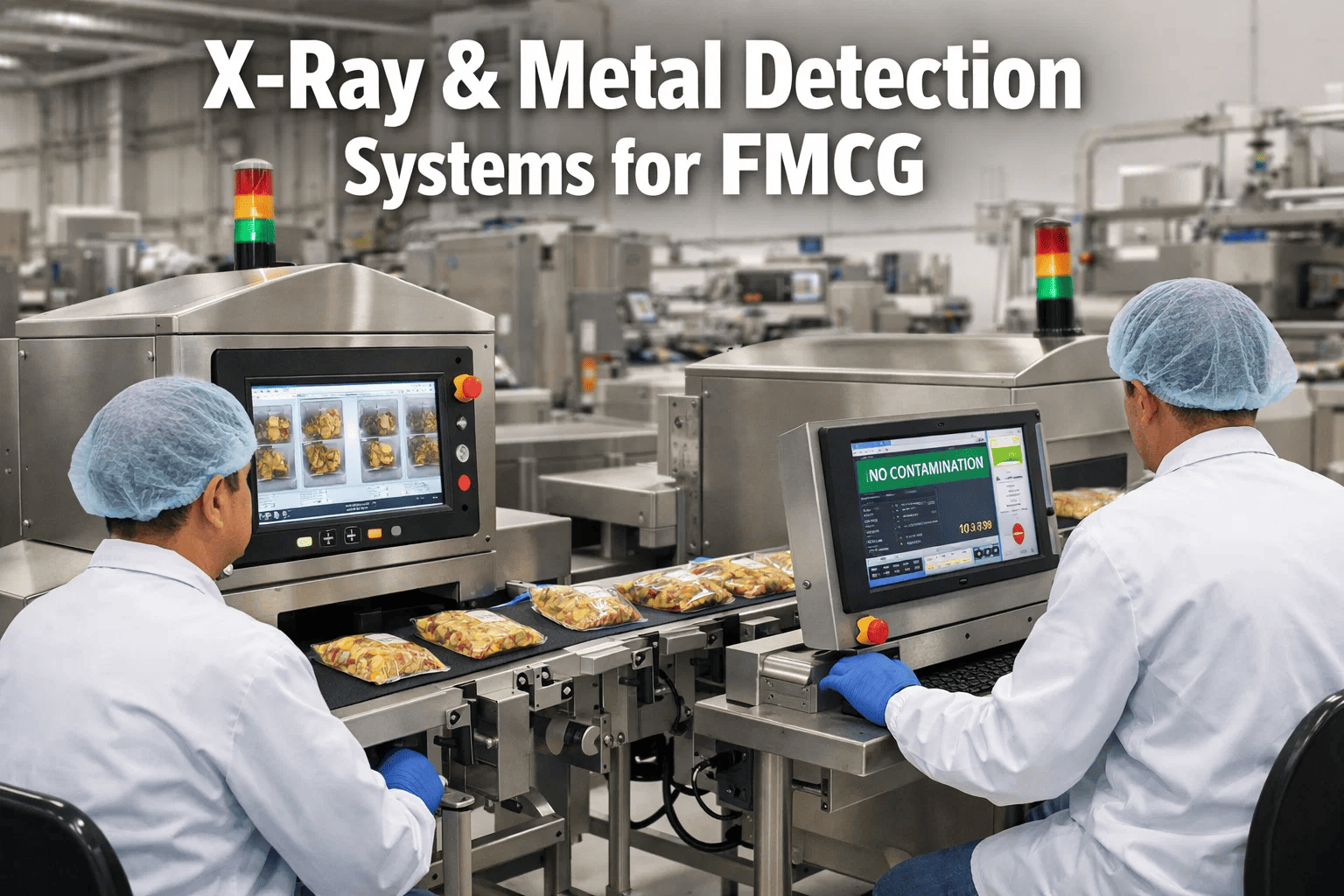
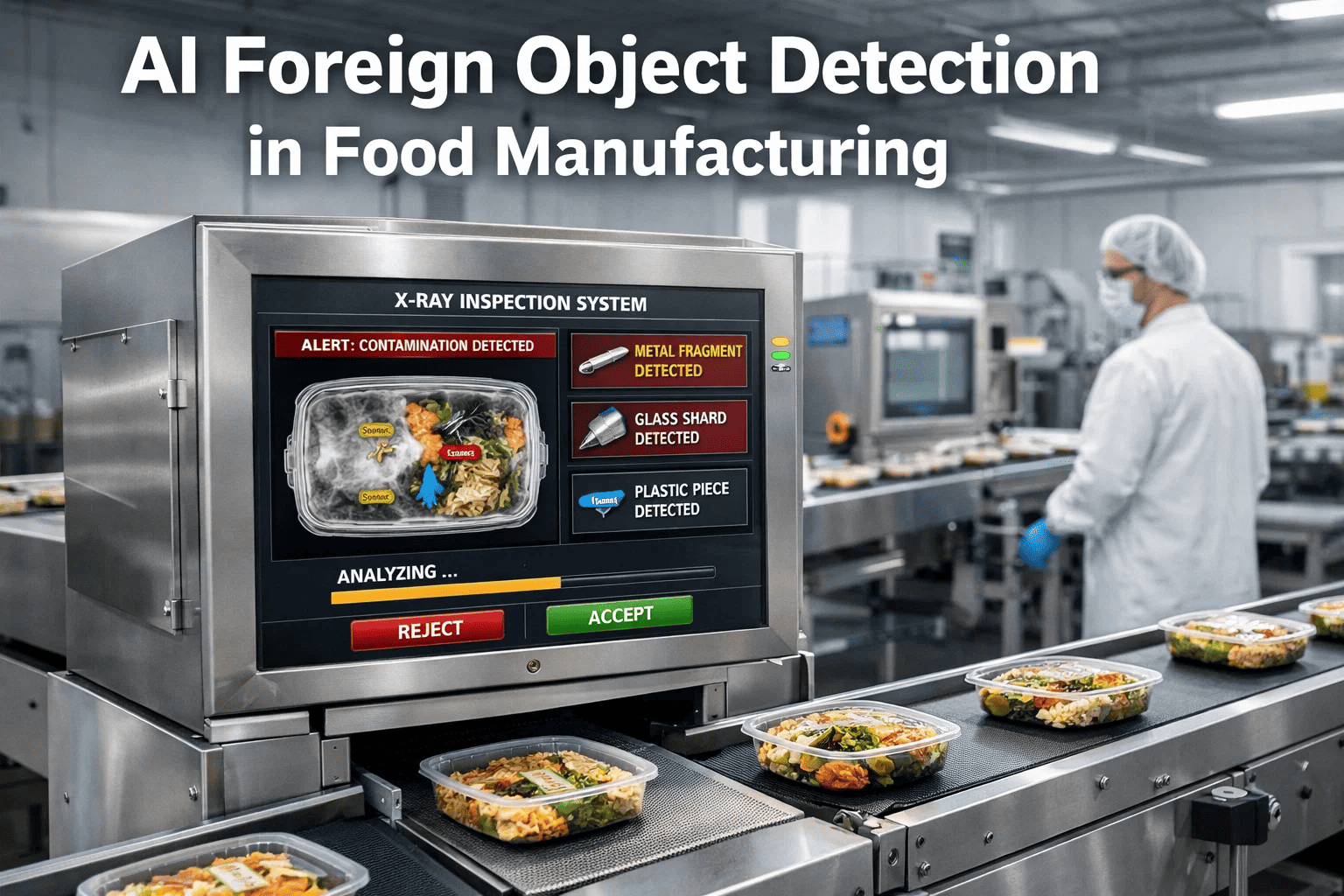
Modern AI vision systems detect physical contaminants (metal, glass, plastic, bone, stone, wood, insects), biological indicators (mold, discoloration, surface defects), and packaging integrity issues (seal failures, label errors, fill level variations). Detection accuracy exceeds 99% for physical contaminants at production speeds up to 1,200 units per minute. The key advantage over traditional metal detection and X-ray systems is that AI vision learns from historical data — it improves detection rates over time as it processes more images and encounters more contaminant types specific to your product and production environment.
Can AI predict contamination events before they happen?
Yes — predictive contamination analytics is the most transformative AI capability in food safety. AI models analyze patterns across environmental monitoring data (temperature, humidity, air quality), equipment health indicators (vibration, seal condition, CIP effectiveness), sanitation verification results, and seasonal/production cycle trends to identify conditions that historically preceded contamination events. These models can flag elevated risk 2–4 weeks before a positive test result would be detected through traditional sampling. Book a demo to see predictive risk scoring in Oxmaint.
What is the ROI timeline for AI food safety monitoring?
Most facilities see positive ROI within 6–12 months, driven primarily by avoided recall costs, reduced product waste from false-positive rejections, and labor savings from automated inspection. A single prevented recall ($10M+ average direct cost) pays for multiple years of AI monitoring investment. Additional value comes from reduced insurance premiums (15–25% reduction for facilities with documented AI monitoring), improved audit outcomes, and the competitive advantage of demonstrating advanced food safety capabilities to retail customers and regulatory bodies.
From Reactive Testing to Predictive Prevention — AI Food Safety With Oxmaint
Food manufacturers across the USA, UK, Germany, Australia, and UAE use Oxmaint to connect equipment health monitoring, environmental sensors, and AI analytics into a unified food safety intelligence platform that prevents contamination instead of detecting it after the fact.

.png)

