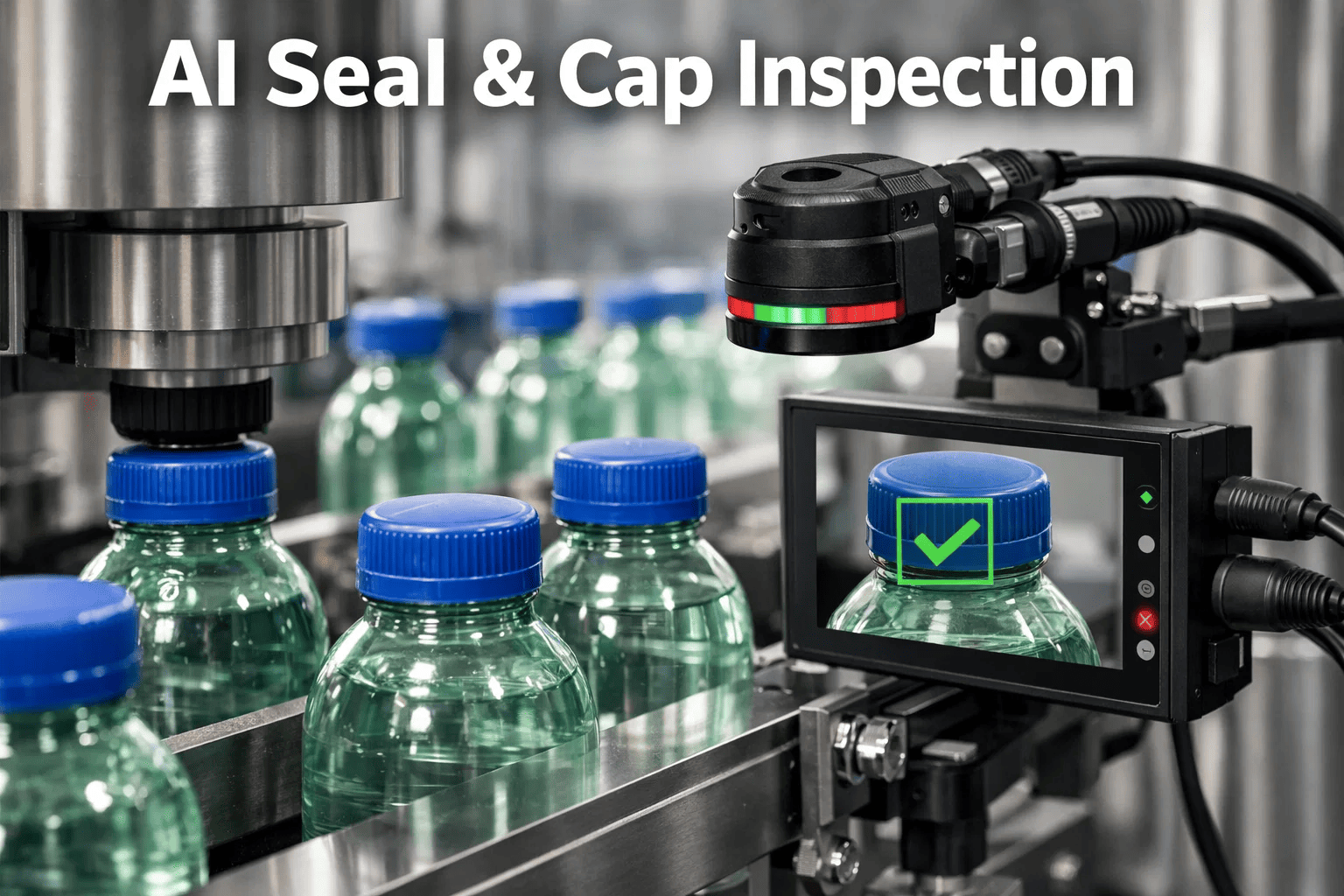
A beverage manufacturer in Ohio was running 1.8 million bottles per week through two filling lines with manual cap inspection — operators stationed after the capper watching closures pass under angled lighting, pulling suspect bottles when they spotted something off. After a retailer returned a pallet with 14 leaking bottles traced to incomplete cap threading, the quality team conducted a covert audit.
They planted 200 known-defective closures across four shifts. Operators caught 112. The remaining 88 — cross-threaded caps, missing tamper bands, and incomplete seals — passed through undetected, a 44% miss rate on defects that were already identified and planted intentionally.
At production speed, that miss rate meant roughly 4,700 compromised packages reaching distribution every week. Each one was a potential spoilage event, consumer complaint, or recall trigger. After deploying AI vision inspection on both lines, detection accuracy reached 99.97% and the miss rate dropped to less than 1 in 12,000 units. Schedule a consultation to see how Oxmaint integrates AI seal and cap inspection with maintenance-driven corrective actions.
AI Vision Inspection
AI-Powered Seal and Cap Inspection for FMCG Packaging Lines
Detect cap threading failures, seal defects, and tamper band anomalies at full line speed — every unit, every time.
Detection Accuracy on Seal and Cap Defects
Reduction in Packaging Defect Escapes
Fewer Consumer Complaints from Seal Failures
1,200+
units/min
Inspection Speed with Zero Line Slowdown
Why Seal and Cap Integrity Is the Highest-Risk Packaging Checkpoint
Every container leaving your facility depends on its closure for product safety, shelf life, and consumer trust. A cap that looks seated but lacks proper torque will leak in transit. A heat seal with micro-channels invisible to the human eye will allow oxygen ingress that degrades product weeks before expiration. A tamper band that tears incorrectly signals potential contamination to consumers even when the product is safe.
67%
of packaging-related consumer complaints trace to seal or cap failures — not label errors, not dents, not print defects. Closure integrity is the single largest source of packaging quality escapes in FMCG operations, yet it remains the checkpoint most dependent on human visual inspection at production speed.
Manual inspection at 400–1,200 units per minute forces operators into a detection task that human vision cannot sustain. Fatigue sets in within 20–30 minutes of continuous visual monitoring. Subtle defects like partial thread engagement or micro-seal gaps fall below human perceptual thresholds at line speed. AI vision systems eliminate these constraints by inspecting every unit with consistent accuracy regardless of speed, shift duration, or defect subtlety.
Sign up for Oxmaint to connect AI vision inspection data with maintenance workflows that fix equipment root causes — not just reject symptoms.
Core Defect Types Detected by AI Seal and Cap Inspection
AI vision systems classify seal and cap defects into distinct categories, each requiring different detection algorithms and triggering specific corrective actions. Understanding these categories is essential for configuring inspection systems and interpreting their output.
Defect Types
Cross-threading, under-torqued caps, over-torqued caps causing deformation, tilted caps, caps seated but not engaged with threads, and stripped thread engagement.
Detection Method
Multi-angle cameras measure cap height, tilt angle, and thread engagement depth. AI models compare against trained profiles for each cap-bottle combination to detect deviations below 0.3mm.
Equipment Root Cause
Capping head wear, chuck misalignment, torque spindle calibration drift, or bottle handling instability during capping. CMMS-connected alerts route to maintenance when defect patterns indicate equipment degradation.
Defect Types
Incomplete seals, seal wrinkles, contamination in seal area (product splash), micro-channels, uneven seal width, delamination, and burn-through from excessive temperature.
Detection Method
Infrared and visible-light cameras inspect seal zone uniformity. AI algorithms detect seal width variation, contamination particles, and thermal signature anomalies invisible to human inspectors.
Equipment Root Cause
Sealing jaw wear or misalignment, temperature controller drift, dwell time inconsistency, or product splash from overfilling. Pattern analysis identifies whether defects correlate with specific sealing stations.
Defect Types
Missing tamper bands, partially applied bands, incorrect perforation position, band not seated below retaining ring, torn bands, and shrink bands with uneven contraction.
Detection Method
360-degree camera arrays capture tamper band position and completeness from multiple angles. AI verifies band presence, seating depth, perforation alignment, and shrink uniformity against product-specific templates.
Equipment Root Cause
Band applicator timing, heat tunnel temperature distribution, conveyor speed synchronization, or band stock dimension variation. Trend data identifies whether failures cluster by station or time period.
Defect Types
Missing foil seal, partially bonded seal, off-center seal, wrinkled foil, insufficient bond strength, and foil puncture from cap liner interaction.
Detection Method
Electromagnetic sensors verify foil presence through the cap. Thermal imaging detects bond quality and uniformity after induction sealing. AI correlates multiple sensor inputs for comprehensive seal assessment.
Equipment Root Cause
Induction coil power variation, conveyor speed affecting dwell time under coil, cap liner material inconsistency, or sealing head height drift. CMMS work orders trigger when seal quality trends indicate equipment attention needed.
Defect Types
Under-torque allowing leakage, over-torque causing cap deformation or difficulty opening, torque variation exceeding specification range, and application torque versus removal torque inconsistency.
Detection Method
Inline torque monitoring sensors capture application torque on every unit. AI models detect torque drift patterns, station-to-station variation, and correlation with cap or bottle lot changes.
Equipment Root Cause
Magnetic clutch wear, torque spindle bearing degradation, pneumatic pressure variation, or capping head chuck wear. Predictive maintenance scheduling based on torque trend deterioration prevents failures.
Defect Types
Chipped bottle finish, out-of-round container mouths, thread damage from handling, foreign material on sealing surface, and neck ring defects affecting cap engagement.
Detection Method
Pre-capping vision inspection of container finish using high-resolution cameras. AI identifies chips, cracks, and dimensional deviations that would prevent proper seal formation before capping occurs.
Equipment Root Cause
Upstream handling damage from star wheels, guide rails, or transfer mechanisms. Container supplier quality issues. Pre-capping rejection prevents wasted caps and identifies handling equipment needing adjustment.
Stop Inspecting Symptoms — Start Fixing Equipment Root Causes
Oxmaint connects AI vision defect data to maintenance workflows. When cap threading defects spike on Station 3, a work order generates automatically — with trend data, defect images, and suspected root cause attached.
AI Inspection by Container and Closure Type
Different container formats present distinct inspection challenges. AI vision systems require format-specific training, camera configurations, and detection parameters to achieve reliable accuracy across the packaging mix found in FMCG facilities. Book a demo to discuss which container formats in your facility would benefit most from AI vision inspection integration with Oxmaint.
Primary Defects
Cross-threading, tilted caps, missing tamper bands, insufficient torque, cap color mismatch (wrong SKU cap), and stripped threads from over-torquing.
Camera Configuration
Top-down camera for cap presence and color. Side cameras at 0°, 120°, 240° for thread engagement, tilt, and tamper band. Backlit silhouette for cap height measurement.
Line Speed Range
200–1,200 bottles per minute depending on container size. Multi-camera triggering synchronized to encoder for consistent image capture at variable speeds.
Primary Defects
Incomplete seal around perimeter, product contamination in seal zone, seal wrinkles creating micro-channels, lid misregistration, and delamination from temperature inconsistency.
Camera Configuration
Top-down high-resolution camera for full seal perimeter inspection. Infrared camera for thermal bond quality assessment. Angled lighting to highlight wrinkles and contamination.
Line Speed Range
60–400 units per minute. Tray indexing systems allow longer exposure times for higher resolution seal zone imaging compared to continuous-motion bottle lines.
Primary Defects
Double seam width and thickness variation, seam wrinkles, cut-over, droop, false seam, and deadhead. Critical for hermetic seal integrity in retorted and carbonated products.
Camera Configuration
Specialized seam profiling cameras capturing cross-sectional measurements. Laser profilometry for seam geometry. X-ray systems for internal seam structure on destructive-test-free basis.
Line Speed Range
600–2,000 cans per minute on high-speed beverage lines. Vision systems must trigger and capture within milliseconds at these speeds.
Primary Defects
Seal contamination from product in seal area, insufficient seal width, channel leaks, wrinkled seals, zipper misalignment on resealable pouches, and spout weld defects.
Camera Configuration
Transmitted light inspection for seal integrity (backlit to reveal contamination and channels). Top-down camera for seal width and position. Pressure decay testing integrated with vision for leak correlation.
Line Speed Range
80–600 pouches per minute. Flexible packaging movement requires stabilization systems or high-speed triggering to capture consistent images of non-rigid containers.
Manual vs. AI Seal and Cap Inspection: Comparative Analysis
The gap between human and AI inspection capability widens as line speed increases. Understanding the comparative performance helps quantify the business case for AI vision deployment.
Detection Accuracy
55–80% depending on defect type, line speed, and operator fatigue. Degrades significantly after 20–30 minutes of continuous monitoring.
Inspection Coverage
Statistical sampling at best. Typically 1 in 50–200 units examined closely. Vast majority pass uninspected at production speed.
Defect Data Capture
Subjective notes, no images, no measurements. Defect classification inconsistent between operators and shifts.
Root Cause Correlation
Impossible to link defect patterns to equipment stations or process conditions without structured data collection.
Initial Investment
Low equipment cost. Ongoing labor cost of 2–4 operators per line across all shifts adds up significantly.
Detection Accuracy
99.5–99.97% consistently across all shifts, speeds, and conditions. No fatigue degradation over continuous operation.
Inspection Coverage
100% of units inspected at full line speed. Every container evaluated against the same criteria with the same consistency.
Defect Data Capture
Images, measurements, and classifications for every defect. Timestamped records linked to production data for traceability.
Root Cause Correlation
AI pattern analysis links defect clusters to specific capping heads, sealing stations, or process parameter shifts — generating CMMS work orders automatically.
Initial Investment
Camera and software investment. ROI typically achieved within 8–14 months through labor reallocation and defect escape reduction.
Sign up for Oxmaint to connect AI vision defect data with maintenance workflows that resolve equipment root causes automatically.
Every Defect Image Becomes a Maintenance Data Point
Oxmaint transforms AI vision reject data into equipment intelligence. When seal defects cluster on Station 4 every Tuesday after weekend changeovers, the system identifies the pattern and generates a preventive work order — before complaints arrive.
Key Performance Metrics for AI Seal and Cap Inspection
Tracking the right metrics ensures your AI vision system delivers sustained value and provides objective evidence of packaging quality performance for both operational and regulatory purposes. Schedule a consultation to discuss which KPIs matter most for your packaging lines and how Oxmaint tracks them automatically.
Defect Escape Rate
Undetected Defects / Total Defects x 100
Target: Below 0.03%
The ultimate measure of inspection effectiveness. Track through downstream audits and customer complaint correlation.
False Reject Rate
Good Product Rejected / Total Rejects x 100
Target: Below 0.5%
Excessive false rejects waste product and erode operator trust in the system. Monitor to optimize detection thresholds.
Reject Rate by Station
Rejects per Station / Total Production x 100
Target: Uniform across stations
Station-level variation reveals equipment problems. A capping head producing 3x the rejects of others needs maintenance attention.
Mean Time Between Defect Events
Operating Hours / Number of Defect Clusters
Target: Increasing trend
Measures equipment reliability improvement. Rising MTBDE confirms maintenance actions are resolving root causes.
Vision System Uptime
Inspection Active Time / Line Run Time x 100
Target: 99.5% minimum
Any gap in inspection coverage means uninspected product. Track camera, lighting, and software availability separately.
Corrective Action Response Time
Time from Defect Alert to Equipment Adjustment
Target: Under 15 minutes
Measures how quickly defect data translates into maintenance action. CMMS integration with auto-generated work orders drives this down.
Frequently Asked Questions: AI Seal and Cap Inspection
How does AI vision handle different cap colors, sizes, and materials on the same line?
AI models are trained on product-specific profiles — each cap-bottle combination has its own reference template with defined tolerances. During changeovers, the system loads the correct profile automatically based on production schedule or operator selection. Modern systems maintain libraries of hundreds of product profiles and switch between them in under two seconds.
What happens when the vision system detects a sudden spike in defects?
The system triggers a cascade of responses based on severity thresholds. A minor uptick generates an operator alert. A sustained spike above the configured threshold triggers an automatic work order in the CMMS with defect images, station identification, and trend data attached. Critical threshold breaches can trigger automatic line stops to prevent mass defect production.
Can AI vision systems detect defects that torque testing misses?
Yes. Torque testing only measures rotational resistance — it cannot detect visual defects like tilted caps, missing tamper bands, cap color mismatches, or cosmetic damage that affect consumer perception and safety. AI vision and torque monitoring are complementary systems that together provide comprehensive closure quality verification.
What is the typical ROI timeline for AI seal and cap inspection?
Most FMCG facilities achieve ROI within 8–14 months. The calculation includes labor reallocation from manual inspection (typically 2–4 FTEs per line), reduced customer complaints and returns, avoided recall costs, and lower product waste from false rejects. Facilities with existing quality escape problems often see faster payback as the immediate defect reduction generates measurable savings.
How does the CMMS connection improve outcomes beyond simple reject-and-eject?
Without CMMS integration, vision systems catch defects but never fix the source. With Oxmaint, defect pattern analysis automatically generates maintenance work orders targeting the specific equipment causing failures. The result: defect rates decline over time because equipment root causes are systematically resolved, not just filtered at the inspection point.
Every Rejected Unit Should Generate a Maintenance Insight
Oxmaint connects AI vision inspection data to the maintenance actions that eliminate defect root causes. Stop treating seal and cap failures as a quality problem — start treating them as an equipment problem with a maintenance solution.