It's 4:47 AM on a Thursday. A 53-foot trailer backs into dock door 7 at a regional FMCG distribution center. The pick team loaded 26 pallets overnight—mixed SKUs of cereal, snack bars, and beverages bound for 14 retail stores across two states. The driver signs the bill of lading and pulls out at 5:12 AM. By 9:30 AM, the first call comes in: Store #2847 received six pallets of granola bars instead of the three pallets of cereal and three pallets of juice on the order. Two more stores call by noon with similar complaints. The investigation reveals that pallet labels were correct but physical contents didn't match—a picker pulled visually similar cases from adjacent slots in the dark warehouse. The mispick affected $47,000 in product, generated $8,200 in emergency re-delivery costs, triggered two retailer chargebacks totaling $12,400, and cost the distributor a compliance score downgrade that will increase deduction rates for the next six months. One camera mounted at the dock door, reading pallet contents against the bill of lading in real time, would have stopped that trailer before it left. Schedule a demo to see how AI vision warehouse verification works.
This guide examines how AI-powered vision systems transform FMCG warehouse operations—from receiving inspection and inventory tracking through pick verification and load optimization—eliminating the manual errors that cost the industry billions annually while creating the digital documentation trail that modern retail partners demand. Sign up free to start integrating warehouse equipment maintenance with AI operations.
Every mispick, every mislabeled pallet, every wrong load costs $500–$15,000 in chargebacks, re-deliveries, and retailer penalties. AI vision catches errors before they leave the dock.
Why FMCG Warehouses Lose Millions to Manual Errors
FMCG distribution centers handle thousands of SKUs that look nearly identical—same-brand cases in similar packaging that differ only by flavor, size, or formula. Human pickers working under time pressure in dimly lit aisles make visual identification errors that compound through the supply chain. A single wrong case on a pallet becomes a wrong pallet on a truck becomes a retailer chargeback that costs ten times the product value.
| Without AI Vision | With AI Vision System |
|---|---|
| Pickers identify SKUs by reading small case labels in dim aisles | Cameras verify every case and pallet against pick list in real time |
| Mispicks discovered when retailers unload—hours or days later | Wrong product flagged before pallet leaves the pick zone |
| Load verification relies on driver counting pallets at the dock door | AI confirms pallet count, sequence, and SKU match at dock in seconds |
| Damaged pallets and wrap failures found at delivery | Structural and wrap integrity scanned before loading |
| Inventory counts require warehouse shutdown and manual scanning | Continuous visual inventory tracking updates counts passively |
The Anatomy of a Warehouse Shipping Error
Understanding why shipping errors happen—not just that they happen—transforms warehouse quality from reactive damage control into systematic prevention. The 5 Whys technique reveals the true root causes that barcode scanning and manual checks consistently miss.
Example: Mixed-SKU Mispick Causes $67,000 in Chargebacks and Penalties
AI Vision Applications Across the FMCG Warehouse
AI vision systems address errors at every stage of warehouse operations—from the moment product arrives at the receiving dock through final load-out. Each application targets a specific failure mode that manual processes cannot reliably prevent. Sign up free to start tracking warehouse equipment alongside AI vision operations.
| Warehouse Zone | AI Vision Application | Error Type Prevented | Impact Level |
|---|---|---|---|
| Receiving Dock | Inbound pallet verification: count, SKU, damage, label accuracy vs. ASN | Receiving wrong product, accepting damaged goods, count discrepancies | Critical — Inventory accuracy at source |
| Putaway Zone | Slot verification: confirm correct product placed in correct storage location | Putaway errors that seed future mispicks across multiple orders | Critical — Prevents cascading errors |
| Pick Face | Case-level pick verification: confirm each case matches the pick list SKU | Wrong SKU selection from visually similar adjacent products | High — Order accuracy |
| Pallet Build | Pallet composition scan: verify all cases on pallet match the pallet label | Mixed pallets with wrong products, incorrect layer configurations | High — Pallet integrity |
| Staging Area | Pallet-to-order matching: confirm staged pallets match outbound order | Pallets assigned to wrong orders during staging congestion | High — Order completeness |
| Dock Door | Load verification: scan all pallets entering trailer against bill of lading | Wrong pallets loaded, missing pallets, sequence errors for multi-stop loads | Critical — Last line of defense |
| Storage Aisles | Continuous inventory monitoring: cameras on forklifts or fixed positions track slot occupancy | Inventory phantom counts, misplaced product, unauthorized movement | Medium — Inventory accuracy |
Error Source Categories in FMCG Warehouses
Warehouse shipping errors cluster into predictable categories. Understanding these patterns allows operations directors to deploy AI vision where it eliminates the most costly failures rather than blanketing the entire facility.
Human Factors
- Visual similarity between SKUs (same brand, different flavor)
- Fatigue during overnight and early morning shifts
- Time pressure from throughput targets overriding accuracy
- Language barriers misreading pick lists or labels
- Temporary labor unfamiliar with product layout
- Complacency from repetitive picking tasks
Process Gaps
- Barcode scanning verifies slot labels, not actual case contents
- Dock verification limited to pallet count, not SKU identity
- No automated cross-check between physical load and BOL
- Putaway errors not detected until downstream mispick
- Cycle count frequency insufficient for high-velocity SKUs
- Returns and damaged product re-entering active inventory
Infrastructure Issues
- Inadequate lighting in pick aisles for label reading
- Slot labels faded, damaged, or misaligned after slot changes
- Racking configuration placing similar SKUs in adjacent slots
- Forklift traffic damaging labels and pallet wrapping
- Temperature zones creating condensation on labels
- Aging WMS with limited real-time validation capability
Product & Packaging
- Brand families with near-identical case artwork
- Small or low-contrast SKU identifiers on cases
- Promotional packaging creating temporary SKU confusion
- Multi-pack vs. single configurations in same packaging
- Seasonal variants stored alongside core SKUs
- Private label products with minimal visual differentiation
Technology Limitations
- Handheld scanners read one barcode at a time—too slow for pallet-level verification
- RFID adoption limited by tag cost for low-margin FMCG products
- WMS confirms digital record, not physical reality
- No image record of what was actually loaded on trailer
- Conveyor sortation only works for case-level, not pallet-level
- Legacy systems cannot integrate real-time vision data
External Pressures
- Retailer delivery windows creating loading urgency
- Promotional surges overwhelming normal pick capacity
- Labor shortages forcing overtime and inexperienced workers
- Seasonal volume spikes exceeding facility design capacity
- Multi-stop loads requiring precise pallet sequencing
- Retailer compliance programs with escalating penalty structures
Every error that leaves the dock costs 10–50x more to correct than catching it at the point of origin. AI vision is the last line of defense before product becomes a chargeback.
AI Vision Technology Stack for FMCG Warehouses
Effective warehouse AI vision combines multiple technologies into an integrated verification pipeline. Understanding each component's role helps operations teams specify the right system for their facility. Book a demo to see how equipment maintenance supports vision system uptime.
| Technology Component | Function | FMCG Application | Accuracy Contribution |
|---|---|---|---|
| OCR (Optical Character Recognition) | Reads printed text on cases, labels, and pallets | SKU numbers, lot codes, expiry dates, shipping labels, production codes | Critical — Primary SKU identification |
| Barcode / QR Decoding | Reads 1D/2D barcodes at high speed from multiple angles simultaneously | UPC, GS1-128, SSCC labels, pallet license plates, case serial numbers | Critical — Machine-readable verification |
| Object Detection (Deep Learning) | Identifies product type by visual appearance independent of labels | Distinguishing visually similar SKUs, detecting wrong product by package shape/color | High — Label-independent backup |
| 3D Volumetric Scanning | Measures pallet dimensions, layer count, and structural integrity | Pallet height verification, case count estimation, wrap coverage assessment | High — Physical integrity check |
| Damage Detection (CNN) | Identifies crushed cases, torn wrap, leaning pallets, wet spots | Rejecting damaged pallets before loading, documenting condition at receiving | Medium — Quality assurance |
Pallet Verification: The Highest-Stakes Application
Pallet-level verification at the dock door is the single highest-ROI AI vision application in FMCG warehouses. It is the last checkpoint before product enters the supply chain—and the last opportunity to prevent errors from reaching retailers.
| Verification Check | What AI Inspects | Failure Mode Prevented |
|---|---|---|
| SKU Match | Reads case labels/barcodes on all visible faces against BOL line item | Wrong product loaded on trailer |
| Quantity Validation | Counts visible cases and layers, estimates total against expected count | Short shipments and over-shipments |
| Pallet Sequence | Confirms pallet load position matches multi-stop delivery sequence | Pallets loaded out of delivery order for multi-stop routes |
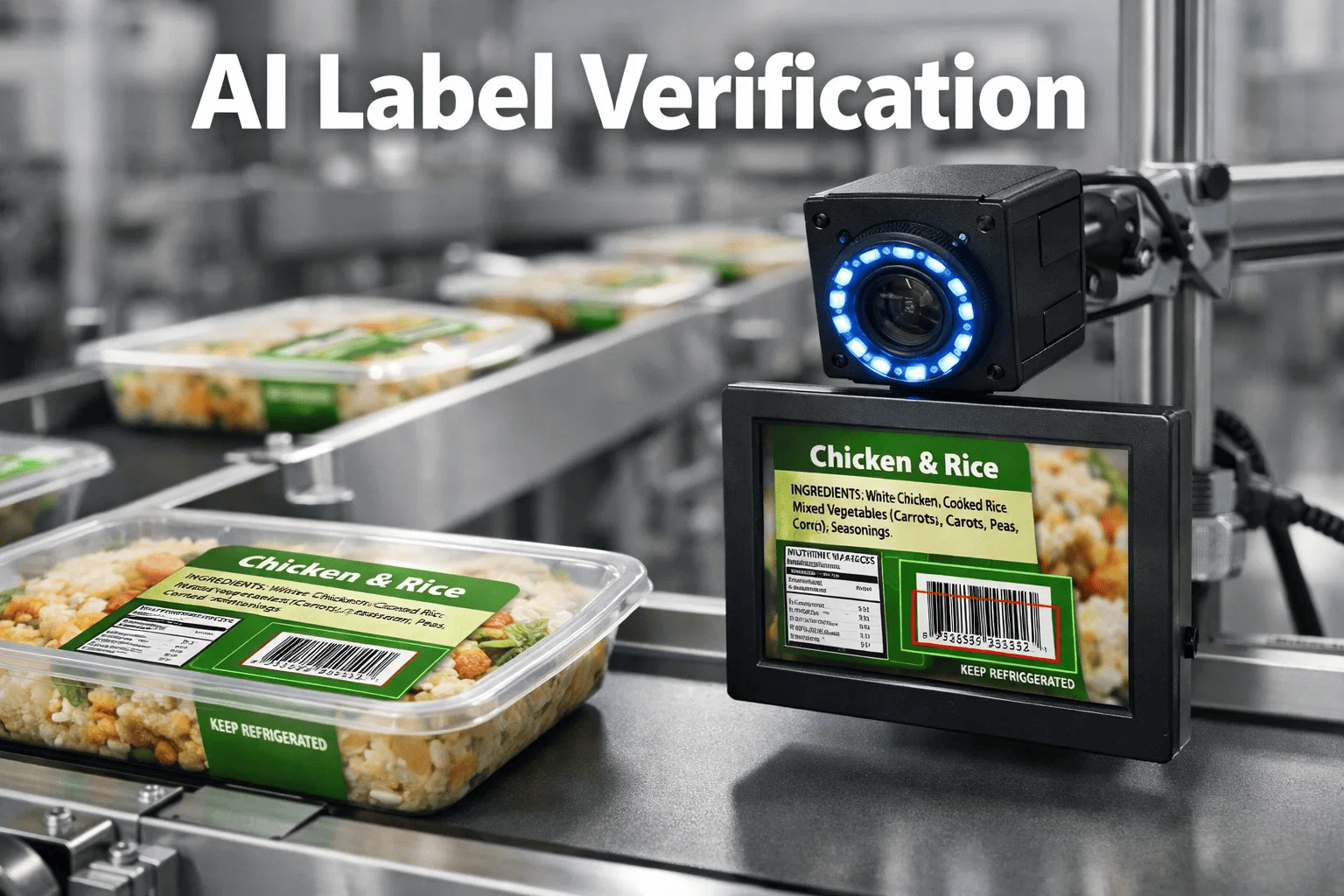
| Label Integrity | Verifies SSCC label present, readable, and matches pallet contents | Missing or mismatched pallet license plates |
| Structural Assessment | Measures lean angle, wrap coverage, corner damage, case crush | Pallet collapse in transit, damaged product at delivery |
| Date Code Verification | Reads production dates and expiry dates on visible cases | Shipping short-dated or expired product to retailers |
Implementation Roadmap: Deploying AI Vision in FMCG Warehouses
Follow this systematic approach to deploy AI vision across your warehouse operations—starting with the highest-ROI application and expanding as the system proves value and your team builds operational confidence.
Audit Current Error Rates and Costs
Quantify your baseline: mispick rate by zone, chargeback costs by retailer, claims frequency, re-delivery expenses, and labor hours spent on error investigation. This data determines where AI vision delivers the fastest payback and builds the business case for investment.
Deploy Dock Door Verification First
Install cameras at outbound dock doors to verify pallet identity and count against the bill of lading during loading. This is the single highest-ROI deployment point—it catches all upstream errors at the last checkpoint and generates immediate chargeback reduction.
Expand to Receiving Inspection
Add inbound verification at receiving docks: confirm supplier shipments match the ASN (Advanced Shipping Notice) for SKU, quantity, and condition. Receiving errors seed inventory inaccuracy that causes downstream mispicks for weeks or months.
Add Pick Zone and Pallet Build Verification
Mount cameras at pallet build stations or on pick carts to verify each case as it is placed. This catches errors at the point of origin rather than the dock—reducing rework by preventing wrong pallets from ever being built.
Integrate with WMS and Maintenance Systems
Connect AI vision data to your WMS for automatic order confirmation and to OXmaint CMMS for vision equipment maintenance scheduling. Camera calibration, lens cleaning, lighting replacement, and network connectivity all require preventive maintenance to sustain accuracy.
Enable Continuous Inventory Monitoring
Deploy forklift-mounted or fixed-position cameras for passive inventory tracking. As forklifts move through aisles, cameras read slot labels and case faces to maintain a continuous inventory picture without dedicated count labor or warehouse shutdown.
Response Priority Hierarchy for Vision System Alerts
When AI vision flags issues during warehouse operations, response priority must reflect the cost and downstream impact of each error type. Use this hierarchy to guide operator response protocols.
Wrong SKU on Outbound Pallet
AI detects product on the pallet that does not match the bill of lading. Loading must stop immediately. Wrong product reaching a retailer triggers chargebacks of $500–$15,000 per incident plus compliance score damage. Pull the pallet, verify, and reload.
Pallet Count or Sequence Mismatch
Pallet count on trailer doesn't match BOL, or multi-stop pallets are loaded out of delivery sequence. Correct before trailer departure—short shipments and mis-sequenced loads both generate retailer penalties and costly re-delivery runs.
Pallet Structural or Wrap Issue
AI detects excessive lean, inadequate wrap coverage, crushed cases, or wet spots. Assess damage level—re-wrap if minor, repalletize if structural. Product arriving damaged generates claims and erodes retailer confidence.
Date Code or Label Anomaly
Expiry dates approaching threshold, production codes from unexpected runs, or label readability issues. Verify product freshness compliance with retailer requirements. Short-dated product shipped knowingly triggers punitive chargebacks.
Vision System Confidence Alerts
AI confidence score below threshold but no definitive error detected. Log for trend analysis—recurring low-confidence reads on specific SKUs may indicate labeling issues, lighting problems, or camera maintenance needs that OXmaint can schedule proactively.
A wrong pallet caught at the dock costs 5 minutes to fix. The same pallet caught at the retailer costs $5,000–$15,000 in chargebacks, re-delivery, and compliance penalties. AI vision makes the dock door a hard stop.
Maintaining AI Vision Equipment for Sustained Accuracy
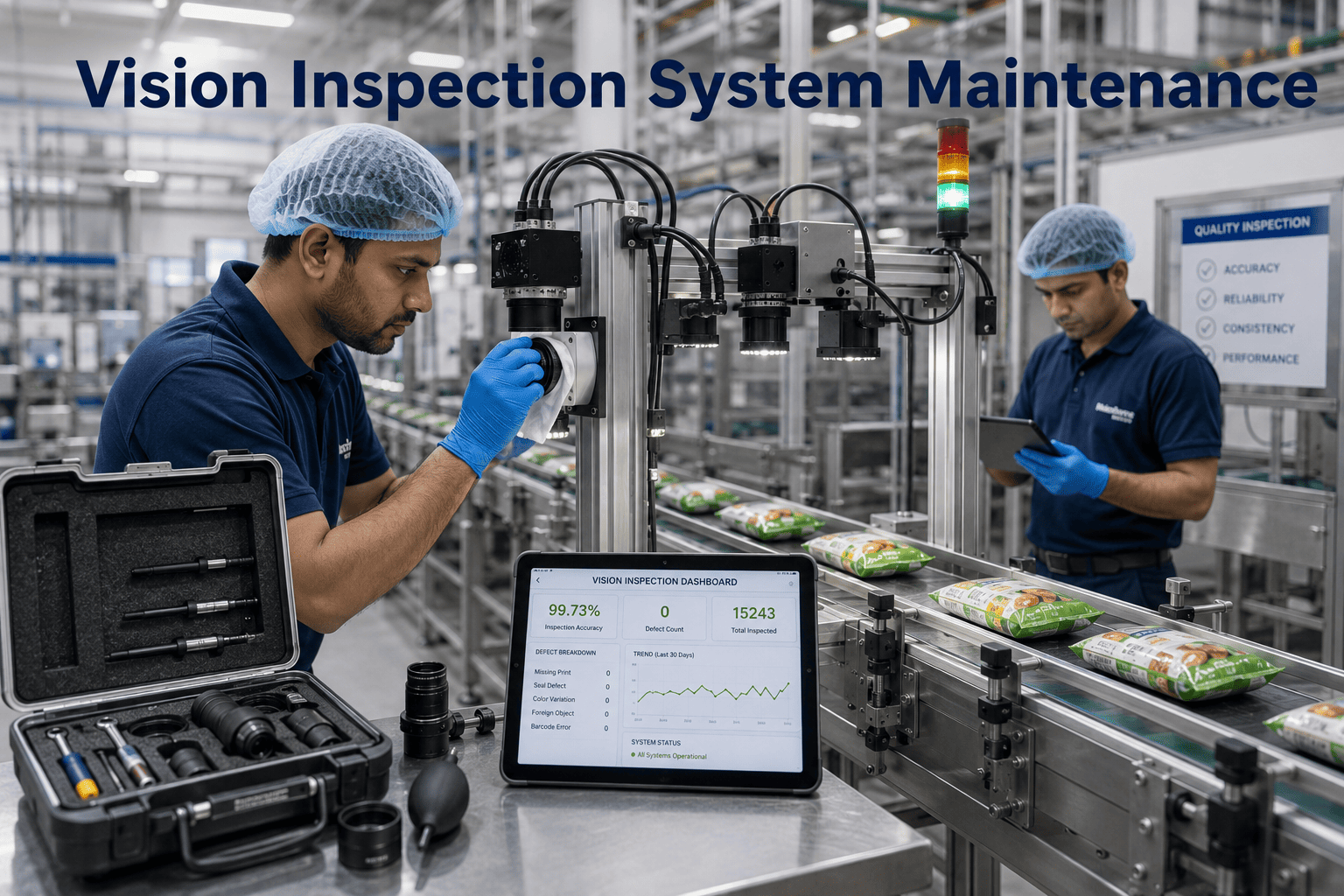
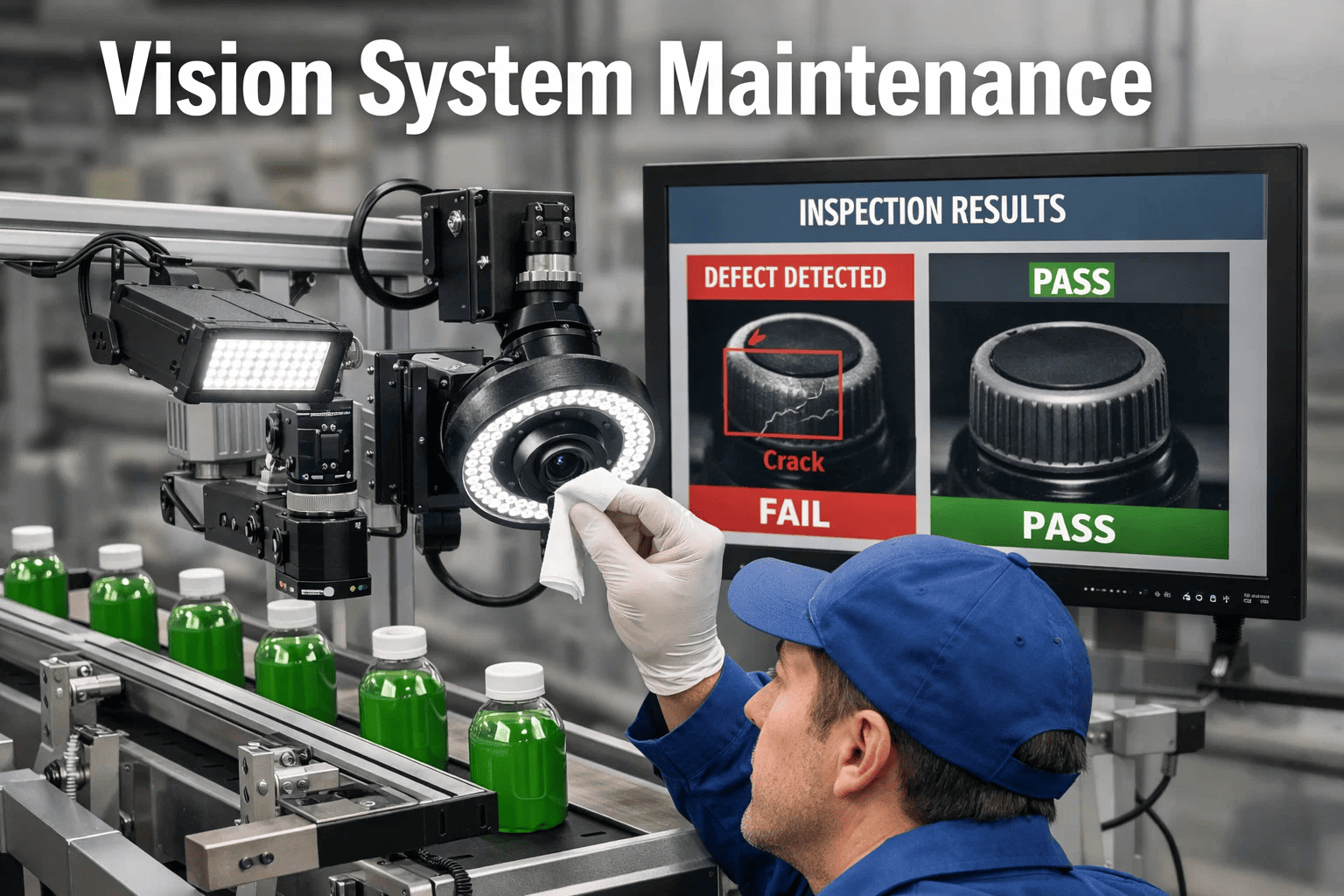
AI vision systems are precision instruments operating in harsh warehouse environments—dust, temperature swings, forklift vibration, and humidity all degrade performance over time. Systematic maintenance is essential to sustain the accuracy that justifies the investment.
Warehouse dust, forklift exhaust, and moisture film accumulate on lenses and degrade image quality. Schedule weekly lens cleaning in OXmaint with photo verification of before/after clarity. Dirty lenses are the #1 cause of accuracy degradation.
LED illumination systems dim over time and shift color temperature—both affect OCR and barcode read rates. Monthly lux-level measurement at each camera station ensures consistent illumination. Replace LED arrays proactively before failure.
Forklift vibration, thermal expansion, and accidental contact shift camera alignment over time. Quarterly calibration using reference targets verifies field of view, focus accuracy, and dimensional measurement precision.
Vision systems depend on network connectivity for real-time WMS integration. Packet loss, latency spikes, or switch failures can create verification blind spots. Monitor uplink status and configure fail-safe protocols that halt loading if vision goes offline.
New product launches, packaging redesigns, and promotional packaging require AI model updates. Build a change management process: when marketing introduces new packaging, feed sample images to the vision system before product reaches the warehouse.
A vision system that rejects too many good pallets disrupts throughput and erodes operator trust. Track false reject rate weekly—above 0.5% indicates model drift, lighting issues, or calibration problems. Use this data to trigger maintenance before accuracy collapses.
ROI Framework: Quantifying AI Vision Returns
AI vision ROI in FMCG warehouses comes from multiple sources. Use this framework to build a business case specific to your operation. Book a demo to calculate your facility's specific savings potential.
| ROI Category | Typical Annual Savings | How It's Calculated |
|---|---|---|
| Chargeback Reduction | $200K–$2M+ | Mispick rate reduction from 1–3% to <0.1% × average chargeback per incident |
| Re-Delivery Elimination | $80K–$400K | Emergency re-delivery runs eliminated × $300–$800 per re-delivery |
| Labor Efficiency | $100K–$500K | Reduced manual QC headcount, faster dock verification, less error investigation |
| Inventory Accuracy | $50K–$300K | Fewer cycle counts, reduced phantom inventory, less write-off from misplaced product |
| Retailer Compliance | $100K–$1M+ | Avoided compliance score downgrades that increase deduction rates across all shipments |
| Damage Prevention | $30K–$150K | Damaged pallets caught before loading, reducing transit damage claims |
Frequently Asked Questions
How fast can AI vision verify a pallet at the dock door?
Modern AI vision systems verify a full pallet in 2–5 seconds—reading all visible case labels, barcodes, and structural condition in a single pass as the forklift moves the pallet onto the trailer. For a typical 26-pallet load, this adds approximately 60–90 seconds to total loading time versus the 45–60 minutes required for manual case-by-case verification. The speed-to-accuracy tradeoff is overwhelmingly positive: you gain 99.9%+ verification accuracy with negligible throughput impact. Book a demo to see dock verification in action.
What happens when AI vision detects a mismatch during loading?
The system immediately signals the forklift operator (audio alarm, visual indicator on dock light stack, and alert on operator's handheld device) and notifies the dock supervisor. Loading halts until the discrepancy is resolved—either confirming the pallet is correct (false positive) or pulling the wrong pallet for correction. Every event is logged with timestamp, images, and resolution for audit trail and root cause analysis.
Can AI vision work in cold storage and freezer environments?
Yes, but cold and frozen environments require specialized hardware: heated camera enclosures to prevent condensation, IR-supplemented lighting for frost-covered labels, and ruggedized cabling rated for −20°F or below. Label readability decreases with frost accumulation—AI models trained on frost-covered packaging handle this, but camera enclosure heating and defrost cycles must be included in the maintenance program. OXmaint automates cold-environment camera maintenance schedules.
How does AI vision handle mixed-SKU pallets with partial label visibility?
AI combines multiple verification methods: OCR on visible case labels, barcode reads from accessible angles, object detection comparing case artwork to trained models, and 3D volumetric analysis confirming expected pallet configuration. Even when only 60–70% of cases are directly visible, the system cross-references visible identifications against the pick list to confirm the entire pallet. Confidence scoring flags pallets where verification certainty falls below threshold for manual spot-check.
What maintenance do AI vision cameras require in a warehouse environment?
Weekly lens cleaning (the single most important task), monthly lighting verification, quarterly camera calibration, and continuous network health monitoring. Warehouses generate significant airborne dust and forklift exhaust that coat lenses progressively. A camera with a dirty lens can drop from 99.9% to 95% accuracy in just 2–3 weeks—enough to miss critical mispicks. Schedule all vision system maintenance in your CMMS alongside other warehouse equipment to ensure nothing falls through the cracks.
Stop Shipping Errors Before They Ship
Every mispick that leaves your dock door costs 10–50x more to fix than catching it before the trailer departs. AI vision systems verify every pallet, every load, every time—with the speed and accuracy that manual inspection cannot match and the documentation trail that retailers demand.