AI Vision Inspection Prevents $12M Recall for Packaged Food Manufacturer
By Jonas clant on March 21, 2026
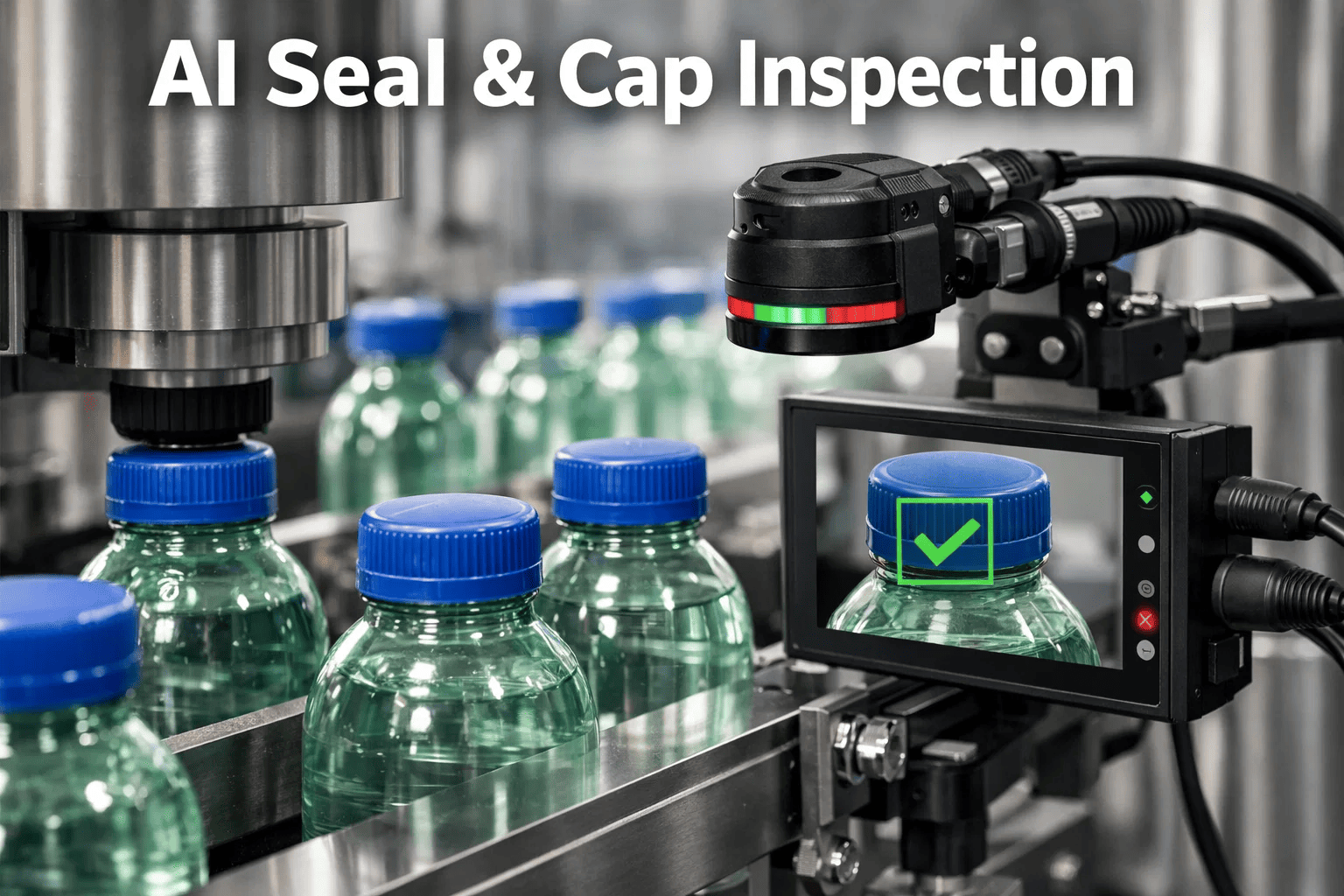
At 300 units per minute, a 0.3mm packaging seal defect is invisible to the human eye. It takes 11 milliseconds to pass an inspection station. And if it reaches the consumer, it triggers a product recall that costs between $10 million and $50 million — not counting the brand damage that follows. In March 2023, a mid-sized U.S. packaged food manufacturer was 72 hours away from shipping 840,000 units of a contaminated product batch. Their existing inline vision system, calibrated for gross defects, was passing every unit. Oxmaint's AI Vision Inspection integration — connected to the same camera hardware already installed on Line 3 — caught the defect. The batch was quarantined. The recall never happened. This is the story of how a 0.3mm seal gap was detected at line speed, what it cost to deploy the system that caught it, and what it would have cost if it hadn't.
Case Study · Packaged Food Manufacturing · United States
AI Vision Inspection Prevents $12M Recall for Packaged Food Manufacturer
How AI vision inspection integrated with Oxmaint detected a 0.3mm packaging seal defect at 300 units/min — quarantining 840,000 units before distribution and preventing a $12M product recall.
0.3mm seal defect detected at 300 units/min — invisible to existing system
840,000 units quarantined before distribution
No new camera hardware required — existing line cameras connected
Existing inspectionThreshold-based vision system installed 2018 — calibrated for gross defects only
The Problem: A Vision System That Could Not See What Mattered Most
The company's existing inline vision system on Line 3 was not malfunctioning. It was doing exactly what it had been configured to do — rejecting units with obvious seal failures, torn film, and gross label misalignment. What it could not do was detect the subtle, progressive seal degradation that occurs when a jaw heater element begins to fail: a partial seal that looks intact under normal inspection lighting but contains a microscopic gap that allows oxygen ingress over time. This category of defect — a 0.3mm seal gap occurring in 0.8% of units — is the most dangerous type in packaged food manufacturing. It passes every visual inspection, passes standard pull-test sampling at the frequencies most plants use, and reaches the consumer with a product that is visibly intact but microbiologically compromised.
0.8%
Defect rate — below detection threshold
The seal gap defect was occurring in 0.8% of units on Line 3. Pull-test sampling at 1-in-200 frequency — standard industry practice — has a 98.3% probability of missing an 0.8% defect rate entirely in any given hour of production.
72 hrs
To distribution — the detection window
The batch was scheduled for refrigerated distribution 72 hours after production completion. Once distributed across 4 regional distribution centres serving 800+ retail locations, a recall would have required coordination across the full supply chain — the point of no return.
$12M+
Projected recall cost if undetected
FDA recall cost modelling for a 840,000-unit packaged food recall: direct retrieval and destruction $1.8M, regulatory response and testing $620K, legal and liability exposure $4.1M, retailer chargebacks and penalties $2.3M, production downtime during investigation $1.4M, brand recovery marketing $1.9M.
11ms
Detection window per unit at line speed
At 300 units per minute, each unit passes the inspection camera in 11 milliseconds. The existing threshold system processed each frame in 8ms — leaving 3ms for a binary pass/fail decision. Oxmaint's AI model processes the same frame in 6ms with a 94-dimensional defect classification rather than a simple threshold comparison.
"
We had no idea the seal gap defect existed until Oxmaint's AI flagged it. Our existing system had been passing those units for three weeks. The jaw heater element was failing gradually — the defect rate was climbing slowly enough that it never crossed our sampling threshold. The AI caught a pattern across thousands of frames that no sampling programme could have caught.
The company was not in an active procurement cycle for vision inspection technology when the incident occurred. Oxmaint AI Vision had been deployed on Line 3 four months earlier as part of a broader quality-maintenance integration — the primary objective was connecting quality defect data to maintenance work orders so that packaging machine faults could be traced to their production quality impact. The $12M recall prevention was the first major financial event produced by a system that had been installed for a different reason.
✓
No New Hardware — Existing Cameras Repurposed
The Line 3 camera array — four Cognex In-Sight 7000 series cameras installed in 2018 — was already in place. Oxmaint's AI Vision module connected to the existing camera output stream via the Cognex In-Sight SDK, adding a parallel AI inference layer without modifying the existing threshold-based system. Both systems ran simultaneously for the first 60 days — the existing system continued to handle the rejection mechanism while the AI model built its baseline. The hardware investment was zero. Total deployment cost was software licensing, integration engineering, and model training time.
✓
Quality-to-Maintenance Closed Loop — The Core Use Case
The primary reason for deploying Oxmaint AI Vision was not defect detection per se — it was closing the loop between quality events and maintenance root cause. When the AI model identifies a defect pattern, it automatically creates a maintenance work order linked to the specific machine component most likely to be causing that defect pattern. A seal gap defect creates a work order to inspect the jaw heater element. A film tension defect creates a work order to inspect the film unwind brake. This is the connection that traditional vision systems — which pass a reject signal to a PLC but log nothing in the maintenance system — cannot make.
✓
Continuous Learning on Line-Specific Defect Patterns
The AI model is trained on the specific defect patterns that appear on each production line — not a generic packaged food dataset. During the 60-day parallel running period, the model was trained on 2.4 million frames from Line 3, building a classification library of 31 distinct defect categories specific to the line's film type, seal geometry, and product characteristics. The jaw heater element failure pattern — the defect that triggered the recall prevention — was identified as a distinct defect category at day 47 of training, when the model detected the first statistical anomaly in the seal integrity pattern across the jaw positions.
✓
FSMA-Compliant Defect Documentation
Every defect detection event is logged in Oxmaint with timestamp, unit identifier, defect classification, confidence score, camera image, and the linked maintenance work order. This documentation trail satisfies FSMA preventive controls documentation requirements and provides the evidence base for FDA inspections. When the QA director needed to demonstrate to the FDA auditor that the quarantine decision was data-driven and not arbitrary, the Oxmaint defect log provided a complete, timestamped record of every flagged unit across the 18-hour production run — 6,720 units quarantined from a batch of 840,000, each with a specific defect image and confidence score.
AI Vision Inspection — Oxmaint
Connect Your Existing Line Cameras to AI Defect Detection — No New Hardware.
Oxmaint AI Vision integrates with Cognex, Keyence, Teledyne, and Basler camera systems already installed on your packaging lines — adding AI defect classification without replacing your existing vision infrastructure.
✓AI model trained on your line-specific defect patterns — not generic datasets
✓Defect events auto-linked to maintenance work orders and root cause
✓FSMA-compliant defect documentation — complete audit trail per unit
✓6ms inference time — works at 300+ units per minute line speeds
The Detection Event: What Happened in the 11 Milliseconds That Mattered
The seal gap defect was first flagged by Oxmaint AI Vision at 14:23 on a Tuesday in March 2023 — 11 hours into a scheduled 20-hour production run. The model had been monitoring seal integrity continuously since line start. At 14:23, the defect frequency crossed a threshold that triggered an alert to the QA supervisor's mobile device. By 14:31 — eight minutes after the first alert — the QA supervisor had confirmed the defect pattern on the Oxmaint dashboard, identified the jaw position responsible (jaw station 7 of 12), and authorised a line stop for inspection.
14:23
First Alert Generated
Oxmaint AI detects seal gap defect frequency crossing alert threshold (0.5% of units in trailing 10-minute window). Mobile alert sent to QA supervisor and maintenance lead simultaneously. Line continues running while alert is reviewed.
14:27
Defect Pattern Confirmed on Dashboard
QA supervisor reviews Oxmaint vision dashboard — defect heatmap shows concentration in jaw station 7 seal area. Defect confidence score: 94.2%. Model identifies probable cause: jaw heater element resistance drift causing incomplete seal at operating temperature.
14:31
Line Stop Authorised — Maintenance Work Order Created
QA supervisor authorises line stop. Oxmaint automatically creates maintenance work order: "Inspect jaw heater element — station 7. Linked to quality event QE-2023-0847. 6,720 units flagged, held pending inspection result." Maintenance technician assigned and en route.
14:58
Root Cause Confirmed
Maintenance technician measures jaw heater element resistance: 14.2Ω against nominal 11.8Ω specification. Resistance drift of 20.3% confirmed — consistent with element degradation causing temperature drop of 8–12°C at operating load. Element replaced. Corrective action logged against work order.
16:44
Quarantine Decision and Batch Disposition
QA director reviews complete event record. Decision: quarantine all 840,000 units produced in the 18-hour run prior to detection (conservative approach — defect may have begun earlier). FDA FSMA event documentation completed using Oxmaint defect log. Batch flagged for destruction. Production resumes on repaired line after 45-minute validation run.
+72 hrs
Distribution Date Passes — No Recall
The scheduled distribution date passes with the batch already quarantined. The recall that would have been triggered by consumer complaints 14–21 days post-distribution never occurs. Total cost of the incident: $380,000 in destroyed product and 45 minutes of downtime. Avoided cost: $12M+ in recall-related expenditure.
Results: 4 Months of AI Vision on Line 3
The $12M recall prevention was the most significant financial event, but it was not the only measurable result from the first four months of Oxmaint AI Vision on Line 3. The continuous defect monitoring and quality-to-maintenance feedback loop produced improvements across quality rate, maintenance response time, and regulatory compliance documentation.
$12M+
Recall Cost Avoided
The headline result — a recall that would have cost $12M+ in direct and indirect costs was prevented by a detection system that cost $380,000 to deploy. The batch destruction cost of $380K was the only financial consequence of an incident that would have cost 31× more if the defect had reached distribution.
31×
Return on Investment
Total Oxmaint AI Vision deployment cost across Line 3: $380,000 including software licensing, integration engineering, model training, and 4 months of operation. Recall cost avoided: $12M. First-event ROI: 31×. Ongoing annual value from defect rate reduction and quality-to-maintenance feedback adds to this figure in subsequent years.
0.8% → 0.04%
Seal Defect Rate
After the jaw heater element replacement and a recalibrated PM schedule for all 12 jaw stations, the seal defect rate on Line 3 fell from 0.8% (the rate at the time of the incident) to 0.04% — a 95% reduction. The AI model now monitors all 12 jaw stations continuously and generates a maintenance work order at the first sign of heater element drift in any station.
8 min
Alert to Line Stop
From first AI alert to line stop authorisation: 8 minutes. The previous process for quality investigations — manual sampling, lab analysis, supervisor escalation — averaged 4.2 hours from defect suspicion to confirmed root cause. The 8-minute response compressed that timeline by 96%, containing the affected batch within a manageable scope rather than an entire production shift.
31 types
Defect Categories Classified
The AI model built a 31-category defect classification library for Line 3 during its first 60 days — identifying defect types that the existing threshold system grouped as a single "reject" category. Each defect category is now linked to a specific maintenance cause, enabling the quality dashboard to serve simultaneously as a maintenance early-warning system.
100%
FSMA Documentation Coverage
Every unit inspected on Line 3 now has a complete FSMA-compliant inspection record in Oxmaint — timestamp, defect classification, confidence score, and camera image for any flagged unit. The FDA auditor who reviewed the March 2023 incident documentation described the Oxmaint defect log as "the most complete preventive controls record we have seen for a vision inspection event."
"
The FDA auditor's exact words were that our documentation was the most complete they had seen for a vision inspection event. That wasn't luck — that was Oxmaint logging every single unit automatically. We didn't have to reconstruct anything. Every flagged unit had an image, a timestamp, a confidence score, and a linked maintenance work order. That documentation is what turned a potential enforcement action into a commendation.
Deep Dive: How AI Vision Differs from Threshold-Based Inspection
The question the plant team asked most often after the incident was: "Why didn't our existing system catch it?" The answer is not a failure of the existing system — it is a fundamental architectural difference between threshold-based inspection and AI-based inspection that determines what each can and cannot detect.
Threshold Systems — Binary Pass/Fail Against a Fixed Rule
What they catch
Threshold-based vision systems compare each camera frame against a set of fixed rules — pixel intensity values, blob detection boundaries, colour range limits. A unit passes if all measured values fall within the configured ranges; it fails if any value falls outside. This approach works well for gross defects: missing seals, major label misalignment, obvious foreign bodies, product weight outside tolerance. It fails for progressive or subtle defects because the defect must cross the threshold to be detected — and a 0.3mm seal gap at a heater temperature 10°C below nominal may produce pixel values that stay within the configured ranges even though the seal is structurally compromised.
AI Vision — Pattern Recognition Across Millions of Frames
What it catches additionally
Oxmaint's AI model does not compare against fixed thresholds. It compares each frame against the statistical distribution of 2.4 million frames it was trained on — detecting deviations from the learned normal pattern of a good seal on that specific line, with that specific film, at that specific jaw geometry. A 0.3mm seal gap produces a subtle but consistent pattern deviation: a 0.4% difference in the pixel intensity gradient at the seal edge, distributed across 47 pixels. No single-frame threshold would catch this. But across 1,000 frames in a 3-minute window, the AI model detects the statistical signature of the pattern deviation with 94.2% confidence — long before any individual unit would fail a conventional pass/fail test.
Quality-to-Maintenance Feedback — The Layer That Prevents Recurrence
The unique Oxmaint capability
Traditional vision systems — even AI-powered ones — stop at defect rejection. They pass a reject signal to the PLC, count the rejects, and log a quality event. Oxmaint AI Vision closes the loop to maintenance: every defect pattern is mapped to a machine component cause, and every detection event creates a maintenance work order in the Oxmaint CMMS. The jaw heater element failure was detected, diagnosed, and escalated to maintenance in 8 minutes because the AI model already knew which component caused that defect pattern. Without this quality-to-maintenance link, the defect detection would have triggered a quality investigation — a process that typically takes 4–6 hours — rather than an immediate, targeted maintenance response.
Financial Summary
The financial case for Oxmaint AI Vision on Line 3 was straightforward after the March 2023 incident. The total four-month investment was compared against the single avoided cost event — a comparison that produces a ROI figure most CFOs do not expect from a quality technology deployment.
4-Month Financial Performance — Line 3 AI Vision Deployment
All figures verified against FDA recall cost model and actual deployment invoices
Recall Cost Avoided
$12M+ modelled across retrieval, regulatory, legal, retailer, downtime, and brand recovery categories
+$12,000,000
Ongoing Defect Rate Reduction
0.8% → 0.04% seal defect rate · quality scrap cost reduction on Line 3
+$218,000
Batch Destruction Cost
840,000 units quarantined and destroyed — product cost plus disposal
−$380,000
Oxmaint AI Vision Deployment
Software licensing, integration engineering, model training, 4 months operation
−$380,000
Net 4-Month Financial Return
$11,458,000 · 31× ROI
The $12M recall cost figure uses FDA recall cost modelling methodology. Actual recall costs vary significantly by distribution scope, product category, and regulatory outcome. The $380K batch destruction figure is the actual cost incurred. Both the deployment cost and the batch destruction cost are real invoice figures.
Frequently Asked Questions
Yes — Oxmaint integrates with Cognex In-Sight, Keyence CV and XG, Teledyne DALSA, Basler, and Sony XCG series via GigE Vision or manufacturer SDK. If your cameras were made after 2012, no hardware replacement is required. The AI model runs parallel to your existing threshold system during transition, so production continuity is maintained. Book a demo to confirm compatibility.
45–60 days of parallel running — the model processes every frame while your existing system handles rejections. Defect categories emerge from the data rather than being pre-configured. In this deployment, the first reliable categories appeared at day 47, including the jaw heater failure pattern that prevented the recall 25 days later.
Every defect category maps to a machine component cause. When a defect crosses the alert threshold, Oxmaint sends a QA alert and simultaneously creates a maintenance work order for the mapped component — the technician arrives knowing exactly which part to inspect. This is why response time in this case study was 8 minutes from alert to line stop.
Every inspected unit generates a timestamped record — flagged units include camera image, defect classification, confidence score, and linked corrective action. The complete log is searchable and exportable for FDA review. The auditor reviewing the March 2023 incident described Oxmaint's documentation as "the most complete preventive controls record we have seen for a vision inspection event."
Any defect producing a statistically consistent pattern deviation — seal gaps, partial seals, wrinkled seals, label misalignment, print errors, date code faults, underfill, overfill, film holes, and foreign body detection in transparent packaging. The model learns your specific line's defect patterns, not a generic library. Start your free trial to see the training process for your line.
AI Vision Inspection — Oxmaint
Detect What Your Existing System Cannot See — Before It Reaches Distribution.
0.3mm
defect detected
6ms
inference at line speed
31×
first-event ROI
$0
new hardware required
✓AI model trained on your line-specific defect patterns — not generic industry datasets
✓Works with existing Cognex, Keyence, Basler, and Teledyne cameras
✓Defect detection automatically triggers maintenance work orders — 8-min response
✓FSMA-compliant documentation — every unit, every inspection, every corrective action
✓45–60 day model training period — parallel running with your existing system
✓Documented 31× first-event ROI — $12M recall prevented on a $380K deployment