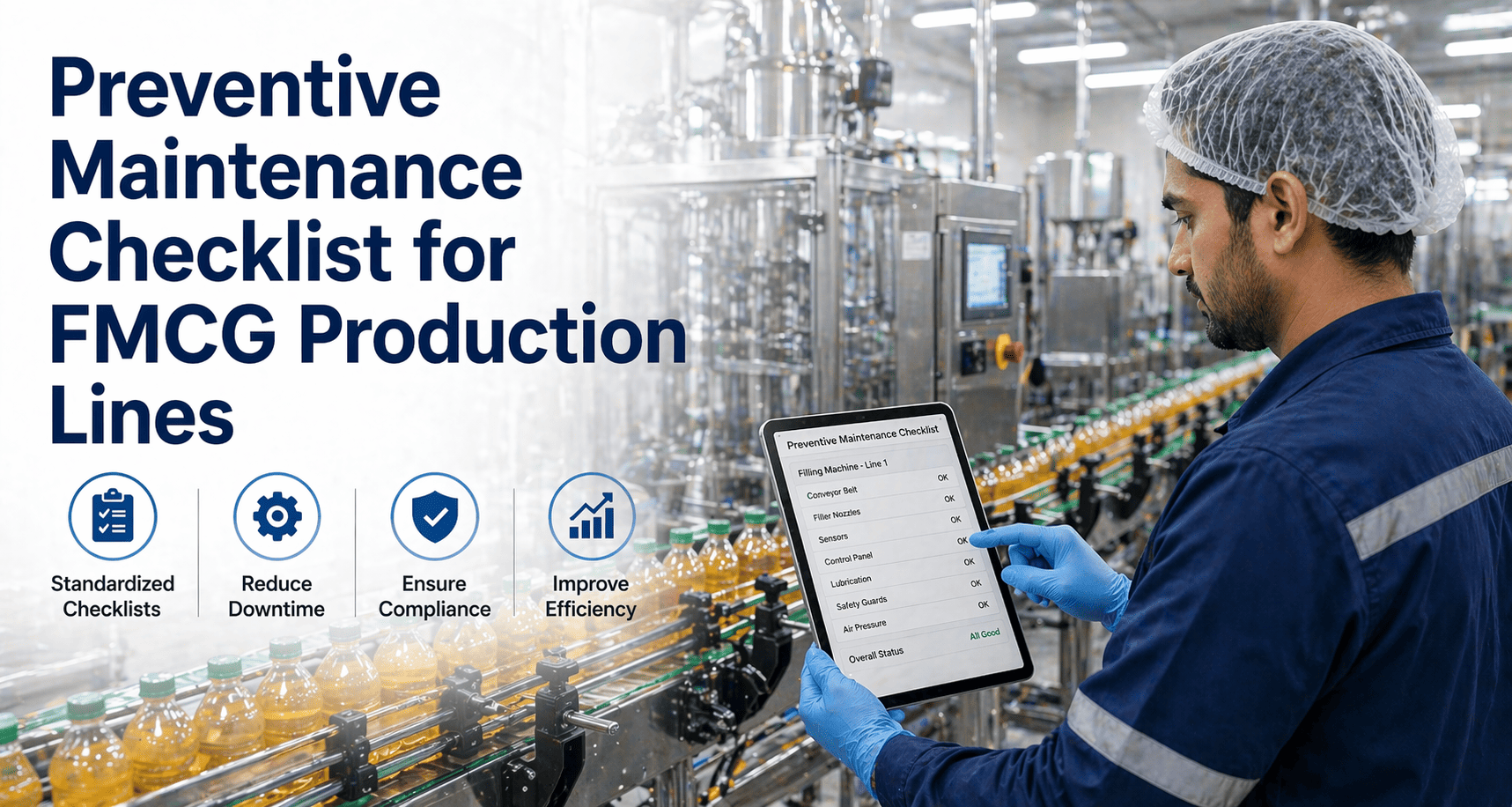
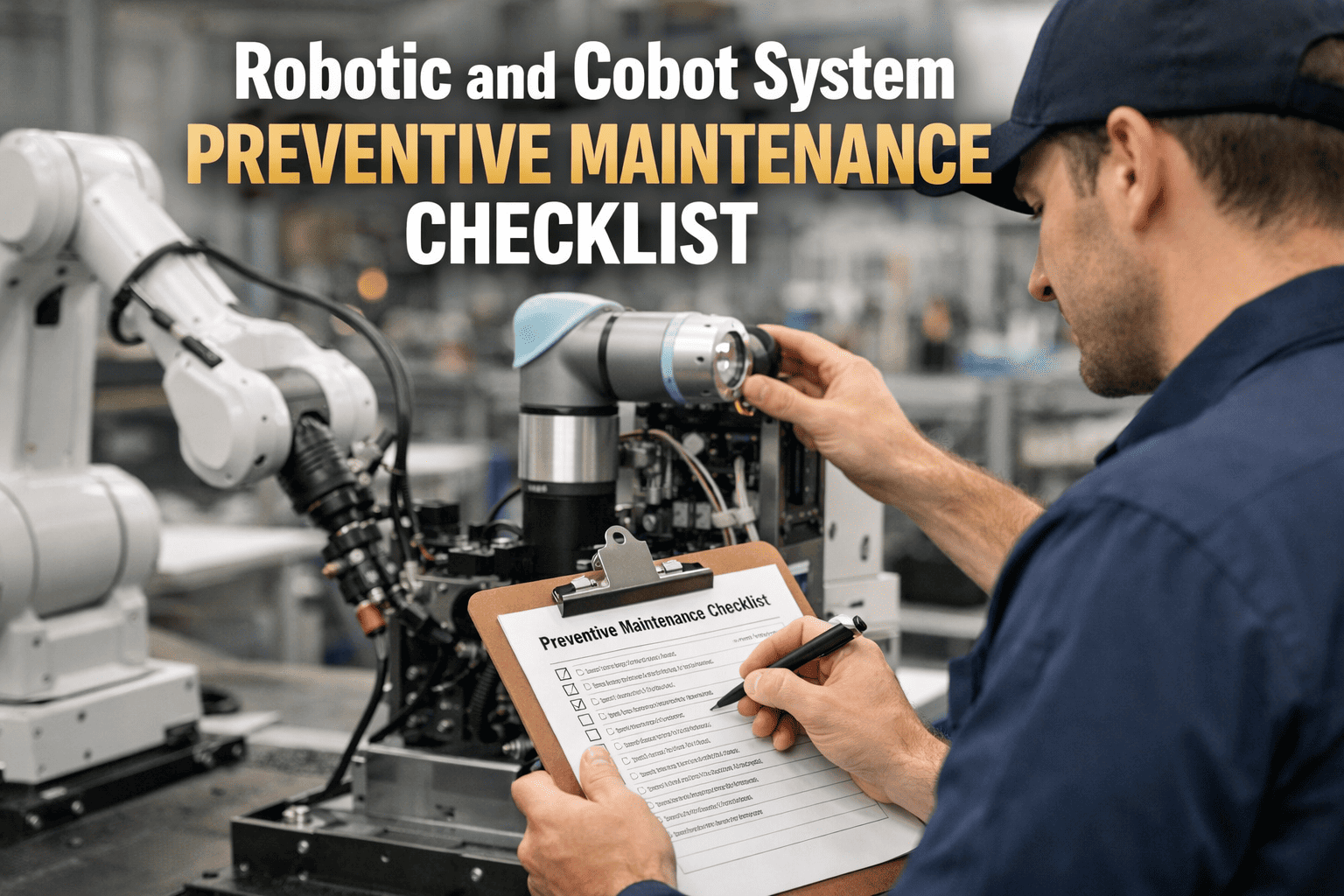
A packaged foods plant lost three full production shifts when a 60-metre main conveyor belt seized mid-run — the drive roller bearing had been deteriorating for weeks, but nobody noticed until the belt stopped moving. The same week, their robotic palletizer dropped two loaded pallets after a worn vacuum cup on the end-effector lost grip pressure. Combined losses: $46,000 in damaged product, missed shipments, and emergency repairs. Both failures were entirely preventable with basic scheduled maintenance. Conveyors and robotic palletizers are the two highest-throughput, most-abused asset categories in any FMCG plant — and the two most frequently neglected in preventive maintenance programmes. Oxmaint automates PM scheduling, inspection checklists, and predictive alerts for both asset types. Schedule a demo to see how it works for your plant.
Neglected / Reactive Maintenance
Conveyor MTBF
280–450 Hours
Palletizer Unplanned Stops
8–14 Events per Month
Belt Replacement Frequency
Every 6–10 Months
End-of-Line Availability
72–81% OEE
Structured PM Programme
Conveyor MTBF
1,800–3,200 Hours
Palletizer Unplanned Stops
1–3 Events per Month
Belt Replacement Frequency
Every 24–36 Months
End-of-Line Availability
92–97% OEE
Structured PM Extends Asset Life by: 3–4x on Conveyors, 2–3x on Palletizer Components
Why Conveyors and Palletizers Deserve Their Own Maintenance Programme
Conveyors and robotic palletizers are the connective tissue of every FMCG production line. When a filling machine stops, that line stops. But when a conveyor fails, every line feeding into it stops — and when a palletizer goes down, finished product backs up across the entire plant floor. These assets handle more cumulative operating hours, more physical load, and more product contact than any other equipment category in a typical FMCG facility. Yet maintenance teams routinely deprioritise them because they seem mechanically simple. A conveyor is "just a belt on rollers" until the belt tracks off-centre, shreds product, and jams the line for four hours. A palletizer is "just a robot arm" until a miscalibrated servo drops a 1,200 kg pallet. Both asset types demand structured, frequency-based PM programmes with clear inspection checklists, calibration schedules, and predictive monitoring. Plants using Oxmaint build these programmes in days, not months — with auto-generated checklists, mobile inspection tools, and real-time alerts when any asset drifts outside its maintenance window.
Conveyor Belt Maintenance: The Complete PM Checklist
Conveyor maintenance in FMCG environments covers five critical areas: belt tracking and tension, roller and bearing health, drive system condition, cleaning and sanitation, and structural integrity. Each area has its own inspection frequency and failure signature. Missing any single area accelerates degradation across the entire system — a misaligned belt wears rollers, worn rollers increase drive load, and increased drive load burns out motors. The checklist below covers all five areas with recommended frequencies for food-grade FMCG conveyors.
Belt Tracking & Alignment Check
Daily (Visual)
Weekly (Measured)
Belt Tension Adjustment
Weekly
Monthly (Tension Gauge)
Roller & Bearing Inspection
Weekly (Listen/Touch)
Monthly (Vibration Sensor)
Drive Motor Current Draw
Monthly
Continuous (IoT Sensor)
Belt Surface & Edge Wear
Weekly (Visual)
Monthly (Thickness Gauge)
Sanitation & CIP Compliance
Every Shift
Post-Changeover Verified
Frame & Support Structure
Monthly
Quarterly (Full Audit)
Food-grade conveyors in wet FMCG environments (dairy, beverage, sauces) require FDA/EHEDG-compliant belt materials and open-frame designs for full washdown access. Enclosed-frame conveyors in these environments trap moisture and organic residue, creating both sanitation and corrosion risks.
Five Root Causes of Conveyor Failures in FMCG
Most conveyor failures in FMCG plants trace back to the same five root causes. Understanding them helps maintenance teams focus inspection effort where it delivers the highest return — and prevents the cascading damage chains where one neglected issue destroys multiple components.
Belt Mistracking
31%
Belt drifts to one side due to uneven loading, worn rollers, or misaligned frame — causes edge fraying, product spillage, and eventual belt failure
Bearing Seizure
24%
Roller bearings fail from contamination ingress during washdown, inadequate lubrication, or overloading — often catastrophic with no gradual warning without vibration monitoring
Belt Tension Loss
19%
Belt stretches over time, reducing grip on drive roller — causes slipping, product accumulation, and inconsistent line speed that throws off upstream timing
Drive Chain/Sprocket Wear
15%
Chains elongate and sprockets wear unevenly — introduces jerky motion, increased noise, and eventual chain skip or break during peak load conditions
Corrosion & Sanitation Damage
11%
Chemical cleaners, acidic products, and standing water attack belt materials, fasteners, and frame welds — accelerated by skipping post-wash drying procedures
Belt Tracking and Tension: The Two Most Critical Conveyor Adjustments
Belt tracking and tension are the two adjustments that prevent the majority of conveyor failures. A properly tracked, correctly tensioned belt distributes load evenly, maintains consistent speed, minimises edge wear, and reduces drive motor energy consumption by 8–15%. Yet these two adjustments are the most commonly skipped in FMCG plants because they require the line to be stopped — and production pressure always wins unless maintenance has a scheduled window.
Robotic Palletizer Maintenance: The Complete PM Framework
Robotic palletizers are precision machines operating in a brute-force environment — lifting 15–50 kg loads hundreds of times per hour, every hour, every shift. Their maintenance demands are fundamentally different from conveyors: palletizers require calibration, not just inspection. A conveyor either runs or it doesn't. A palletizer can run while being out of calibration — placing loads 5mm off-centre, applying 10% less vacuum, or overshooting pick positions — causing pallet instability, product damage, and dropped loads without triggering a hard stop. Structured PM for palletizers centres on four areas: robot arm calibration, end-effector care, servo and drive system health, and safety system verification.
01
Robot Arm Calibration
TCP (Tool Centre Point) calibration — monthly
Joint encoder zero-point verification — quarterly
Repeatability test: ±0.5mm tolerance — monthly
Frequency: Monthly + Quarterly
02
End-Effector Care
Vacuum cup inspection and replacement — weekly
Gripper jaw alignment and wear check — weekly
Vacuum/pressure leak test on full circuit — monthly
Frequency: Weekly + Monthly
03
Servo & Drive Health
Servo motor current draw trending — continuous
Gearbox oil analysis and level check — quarterly
Cable and harness flex-point inspection — monthly
Frequency: Continuous + Quarterly
04
Safety System Verification
Light curtain and area scanner function test — weekly
E-stop circuit full loop test — monthly
Safety PLC diagnostics and firmware check — quarterly
Frequency: Weekly + Quarterly
End-Effector Maintenance: The #1 Palletizer Failure Point
End-effectors — vacuum grippers, mechanical clamps, and fork-style handlers — are the most frequently failing component on robotic palletizers. They make direct contact with product, endure constant impact loading, and wear significantly faster than any other palletizer component. A worn vacuum cup that loses 15% of its suction force will not trigger an alarm but will drop loads intermittently — the most dangerous failure mode because it is unpredictable and damages product.
Vacuum Cups (Silicone/NBR)
4–8 Weeks
15% Suction Loss
Gripper Jaw Pads (Polyurethane)
8–14 Weeks
2mm Wear Depth
Vacuum Generator (Venturi/Pump)
12–18 Months
20% Flow Decline
Pneumatic Cylinders
18–30 Months
Seal Leak Detection
Proximity & Photoelectric Sensors
24–36 Months
False Trigger Events
Always stock vacuum cups and gripper pads as consumable spares — not as capital parts. Running out of vacuum cups on a Saturday night shift is the #1 cause of palletizer-related production loss in FMCG plants. Keep a minimum 4-week buffer stock on-site at all times.
Cleaning & Sanitation Schedules for Food-Grade Conveyors
In FMCG food and beverage manufacturing, conveyor cleaning is not just maintenance — it is regulatory compliance. Inadequate cleaning causes biofilm formation, allergen cross-contamination, and audit failures that can shut down a production line faster than any mechanical breakdown. The cleaning schedule must account for product type, belt material, environment (wet vs. dry), and regulatory requirements (FSSC 22000, HACCP, BRC).
Tier 1: Operational
Every Shift / Every Changeover
Dry wipe-down of belt surface, removal of visible product debris, and inspection of belt edges for material buildup. Takes 10–15 minutes per conveyor. Performed by line operators as part of autonomous maintenance. Critical for preventing allergen cross-contact between product changeovers.
Tier 2: Deep Clean
Daily / End of Production
Full belt wash with approved food-safe detergent, underside cleaning, roller and frame wash, sanitiser application, and rinse. Takes 30–45 minutes. Includes running belt through wash station at slow speed to clean full loop. ATP swab verification on three points per conveyor.
Tier 3: Strip Clean
Weekly / Monthly
Belt removed for manual inspection and deep cleaning. Frame interior, dead zones, and return path cleaned. Bearings inspected for moisture ingress post-wash. Belt re-tensioned and re-tracked after reinstallation. Documented with photos for audit trail. Required by most food safety certifications.
Predictive Monitoring: What to Sensor on Conveyors and Palletizers
Adding IoT sensors to conveyors and palletizers transforms maintenance from scheduled guesswork to condition-based precision. The right sensors detect developing faults weeks before they cause stops — but only if you instrument the right points. This table maps the highest-value sensor placements for both asset types, showing what each sensor detects and how far in advance it provides warning.
Conveyor Drive Motor — Vibration
Bearing Degradation
4–10 Weeks
Conveyor Drive Motor — Current
Belt Tension / Load Shift
2–6 Weeks
Palletizer Servo Motors — Current
Gearbox Wear / Overload
3–8 Weeks
Palletizer Vacuum System — Pressure
Cup Wear / Leak Detection
1–3 Weeks
Conveyor Gearbox — Temperature
Oil Degradation / Overheating
2–6 Weeks
Palletizer Base — Vibration
Foundation Looseness / Bolt Fatigue
4–12 Weeks
Sensor investment per conveyor + palletizer pair averages $700–$1,800 depending on sensor quality and wireless protocol. A single avoided catastrophic bearing or gearbox failure typically costs $5,000–$14,000 in emergency repair and lost production — paying for the entire sensor deployment in one event.
Cost of Neglect: What Poor Conveyor & Palletizer Maintenance Costs FMCG Plants
The financial impact of neglecting conveyor and palletizer maintenance compounds quickly. Each unplanned stop disrupts not just the affected line but upstream and downstream equipment, warehousing schedules, and delivery commitments. This breakdown shows the true annual cost of reactive maintenance on these two asset categories for a typical mid-size FMCG plant.
Unplanned Conveyor Downtime
220 hrs lost production × $1,680 avg output value/hr across lines
$370,000
Palletizer Emergency Repairs
6 servo/gearbox failures × $7,000 avg emergency cost per event
$42,000
Premature Belt Replacements
4 early belt changes × $3,900 per belt vs. planned replacement cycle
$16,000
Dropped Load Product Damage
82 dropped pallet events/yr × $1,700 avg product damage per event
$51,000
Excess Energy & Spare Parts
Worn conveyors draw 15–25% excess power; emergency parts cost 2–4x planned
$29,000
Total Annual Cost of Reactive Maintenance
$508,000
A structured PM programme covering all conveyors and palletizers costs $22,000–$36,000/yr including CMMS platform, sensor monitoring, consumable spares, and technician time. That is 4–7% of the reactive cost — a 14–23x return on the PM investment.
90-Day Implementation: Building Your Conveyor & Palletizer PM Programme
You do not need a year-long initiative to get structured maintenance running on your conveyors and palletizers. A focused 90-day programme covers asset auditing, PM schedule creation, checklist deployment, sensor installation, and team training. Plants following this roadmap through Oxmaint have their full PM programme running within the first quarter — with mobile checklists, auto-scheduled work orders, and predictive alerts active on every critical conveyor and palletizer.
01
Days 1–15: Audit
Inventory all conveyors and palletizers by type and criticality
Document current belt condition, alignment, and wear state
Record palletizer calibration status and end-effector condition
Output: Asset Baseline Report
02
Days 16–40: Build
Create PM schedules for each asset (daily/weekly/monthly/quarterly)
Deploy mobile inspection checklists with photo capture
Install vibration and current sensors on worst-performing assets
Output: Live PM Programme
03
Days 41–70: Train
Operator autonomous maintenance training (belt checks, cleaning)
Technician training on palletizer calibration procedures
First predictive catches from sensor alerts
Output: Skilled Team + First Wins
04
Days 71–90: Optimise
Review PM compliance rates and adjust frequencies
Document avoided failures and cost savings
Present ROI to plant leadership for programme expansion
Output: Proven Results + Scale Plan
Common Mistakes That Kill Conveyor & Palletizer Reliability
Even plants with PM programmes make mistakes that undermine equipment reliability. These six errors are the most frequent — and the most damaging — across FMCG conveyor and palletizer maintenance. Recognising them early saves months of frustration and tens of thousands in avoidable repairs.
Over-Tensioning Belts
Avoid
Technicians tighten belts "a bit extra for safety" — this overloads bearings, stretches belts permanently, and increases motor current draw by 15–25%
Skipping Palletizer Calibration
Avoid
Robot "seems to work fine" so calibration is deferred — meanwhile pick accuracy drifts 2–5mm, causing intermittent dropped loads and pallet instability
Wrong Washdown Pressure
Avoid
High-pressure washdown at >40 bar forces water past bearing seals and into electrical connectors — clean belts but destroy bearings and sensors within weeks
No Vacuum Cup Buffer Stock
Avoid
Vacuum cups are consumables — treating them as capital spares means weekend shifts run with worn cups that drop product until Monday's procurement cycle
Ignoring Return-Side Belt
Avoid
Operators clean the carry side but ignore the return path — product residue and moisture on the return side cause premature belt delamination and mould growth
Generic PM for All Conveyors
Avoid
A wet-area modular belt conveyor and a dry-area flat belt conveyor have completely different maintenance needs — one-size-fits-all PM checklists miss critical zone-specific tasks
Frequently Asked Questions
How often should conveyor belts be replaced in FMCG food manufacturing?
With a structured PM programme, food-grade modular belts last 24–36 months and flat PU belts 18–28 months. Without PM, those numbers drop to 6–12 months. Replace based on condition — not calendar: belt thickness below 70% of nominal, edge fraying over 5mm, or tracking that can't be corrected with standard adjustment. Drive motor current trending can predict belt degradation 4–8 weeks before it reaches replacement threshold.
What is the correct calibration frequency for robotic palletizers?
TCP calibration monthly and after any end-effector replacement or collision event. Joint encoder zero-point verification quarterly. Full kinematic calibration annually or when repeatability exceeds ±1mm. A 3mm positional drift on a vacuum gripper at 12 cycles per minute causes intermittent grip failures that are nearly impossible to diagnose without calibration data.
Oxmaint schedules calibration tasks automatically and logs results for trend analysis.
Can we use the same cleaning chemicals on conveyors and palletizer end-effectors?
Generally no. Conveyor belts require food-grade alkaline or enzymatic detergents approved for the belt material. Silicone vacuum cups are sensitive to chlorine-based sanitisers, which cause accelerated hardening and cracking. Always check chemical compatibility with both the belt manufacturer and end-effector supplier, and maintain separate cleaning procedures and chemical stocks for each asset type.
How many spare vacuum cups and gripper pads should we keep on-site?
Keep a minimum 4-week consumption buffer of vacuum cups and a 6-week buffer of gripper pads. Calculate from your replacement frequency: 24 cups on a palletizer replacing 6/week = 24 cups minimum buffer. Treat these as consumable inventory with automatic reorder points in your CMMS — running out of vacuum cups is the number one cause of avoidable palletizer downtime in FMCG plants.
What is the ROI of adding vibration sensors to conveyor drive motors?
A single wireless vibration sensor costs $95–$240 installed. A single drive bearing failure costs $3,600–$9,600 in emergency repair plus 4–12 hours of lost production worth $7,200–$21,600. One avoided failure pays for 15–50 sensors. Across 6–10 conveyors, vibration monitoring prevents 2–4 catastrophic bearing failures per year — delivering $21,000–$60,000 in annual savings against a $1,200–$2,400 sensor investment, with payback typically on the first avoided failure.
How does Oxmaint help manage conveyor and palletizer PM schedules?
Oxmaint auto-generates PM schedules based on asset type and criticality, delivers mobile checklists to technicians' phones at the right time, captures photo evidence and inspection results, and alerts supervisors when tasks are overdue or when sensor readings drift outside normal range. All data feeds into a live compliance dashboard — so you always know exactly which conveyor or palletizer is due for inspection and which has a developing issue before it becomes a breakdown.
Start your free trial to see it in action.
Your Conveyors and Palletizers Run Your Plant. Maintain Them Like It.
Oxmaint automates PM scheduling, mobile inspection checklists, and predictive sensor alerts for every conveyor and robotic palletizer on your floor — giving your team the tools to prevent failures before they stop production.