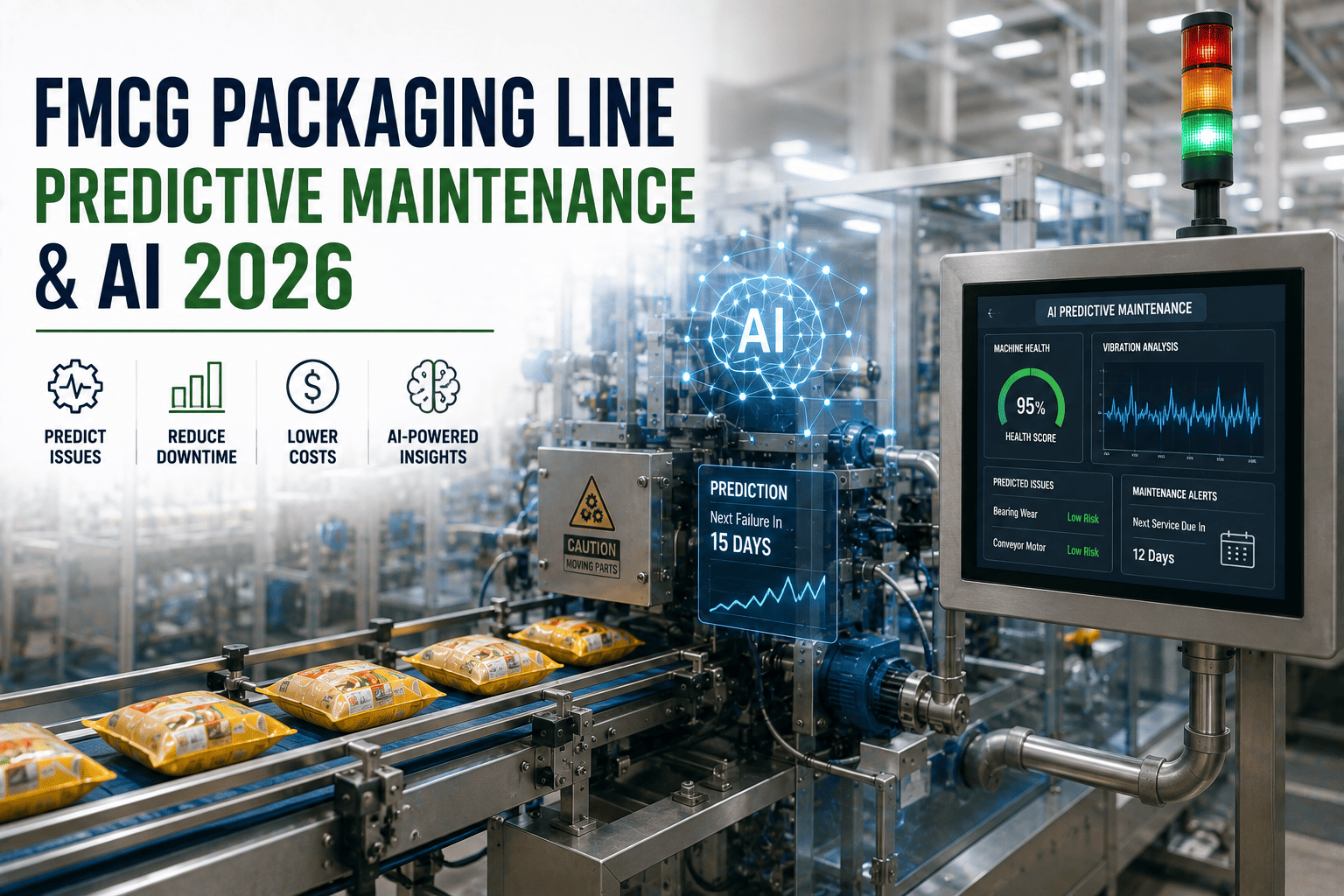
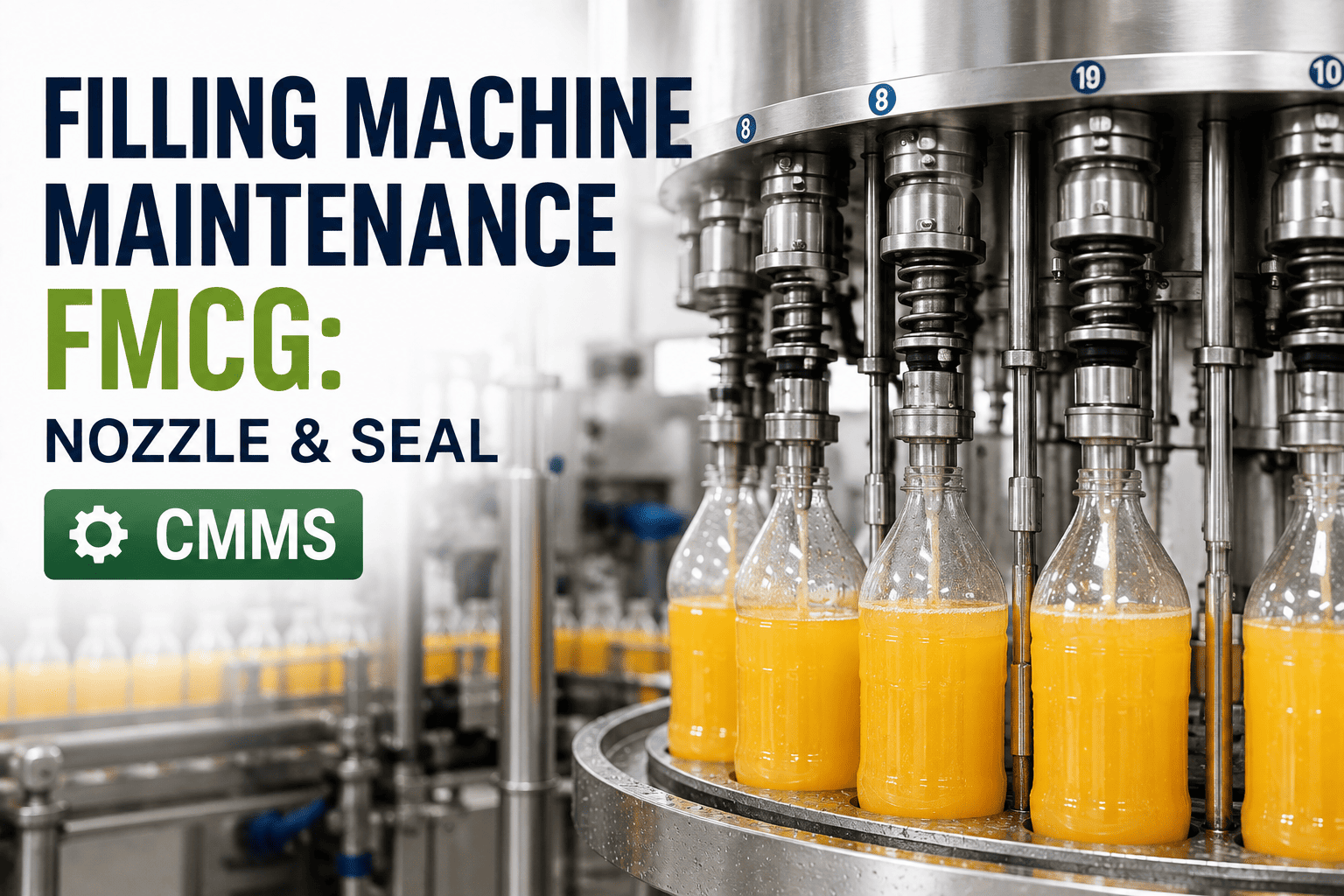
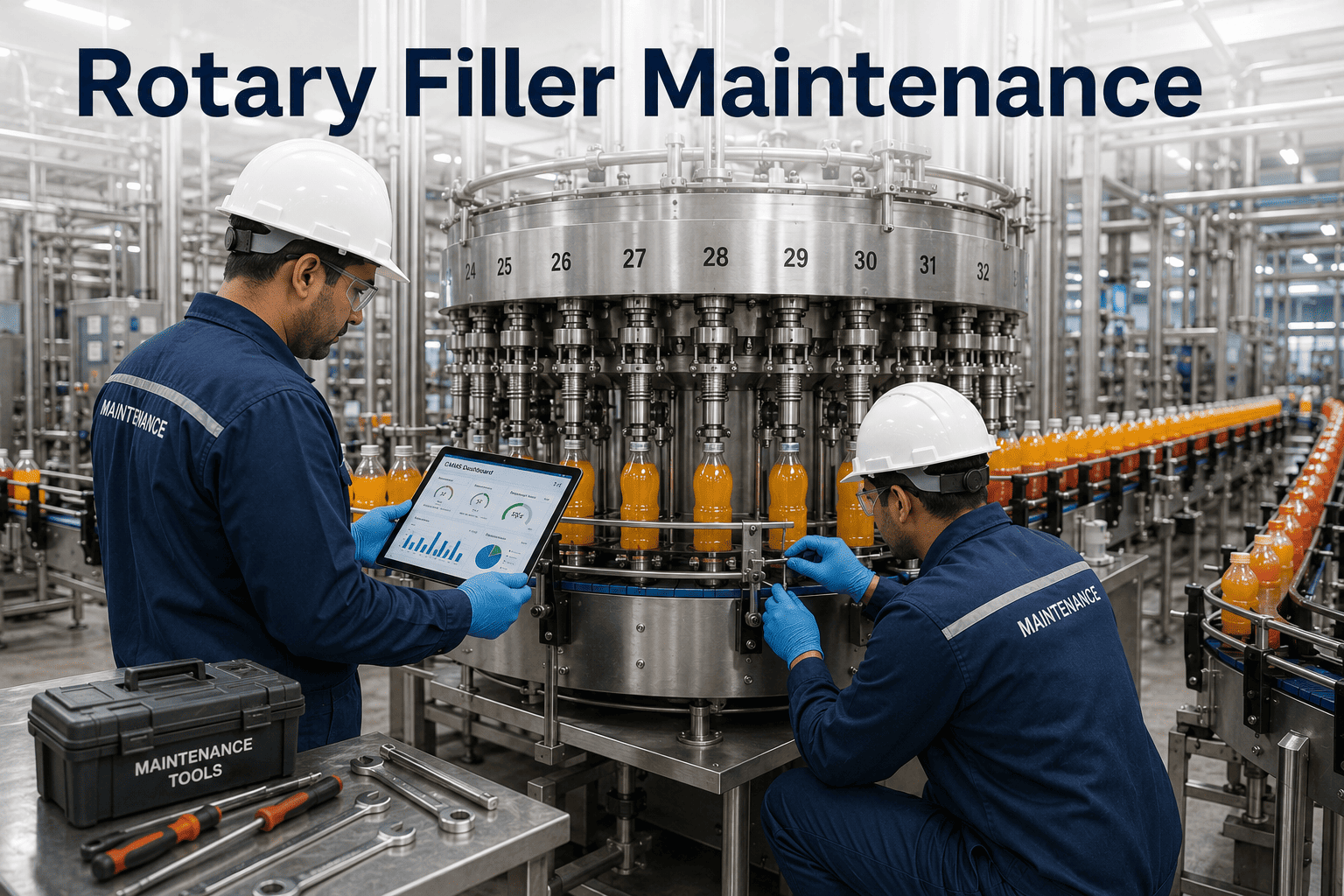
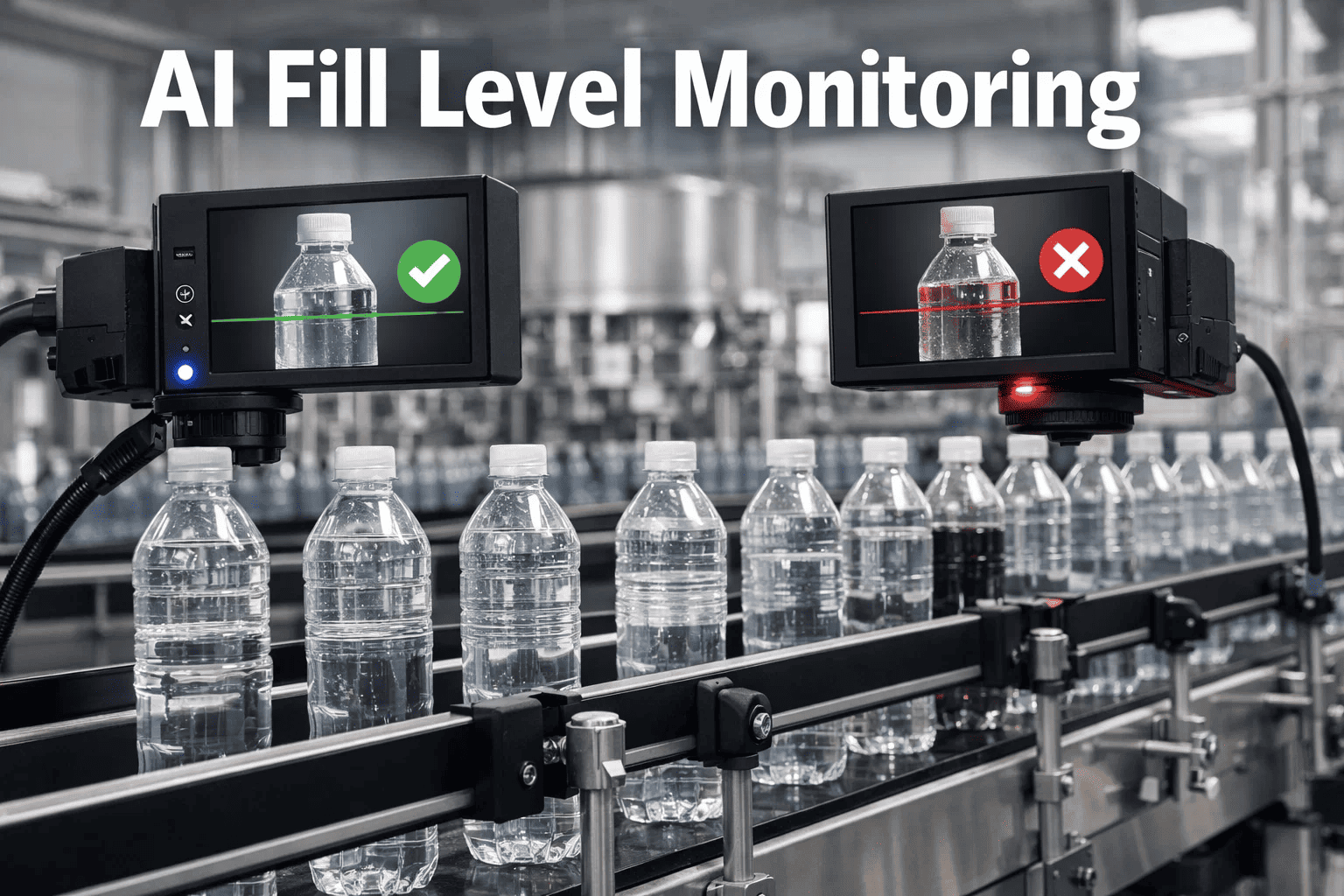
A rotary filler bearing failed at 2 AM on a Saturday. By Monday morning, the plant had lost $340,000 — 38 hours of halted production, 14,000 contaminated bottles, and emergency freight for a replacement part. The bearing had been degrading for 11 days. Nobody knew. The vibration signature was there. The data existed. There was just no system listening to it. That gap — between data that exists and decisions that get made — is exactly what AI-powered predictive maintenance closes. Want to stop losing production to failures you could see coming? start a free trial for 30 days or book a demo to see how Oxmaint monitors your filling lines in real time.
PdM for FMCG / Bottling & Packaging Lines
Filling Machine Predictive Maintenance with AI
Real-time sensor monitoring, machine learning anomaly detection, and automated work orders — purpose-built for high-speed filling, bottling, and packaging operations.
$39K
per hour
Average unplanned downtime cost for FMCG filling lines — every minute of stoppage compounds across the whole line
50%
less downtime
Reduction in unplanned stoppages achieved by facilities running AI-based predictive maintenance programs
14 days
avg. lead time
Typical warning window AI sensors provide before a filler bearing failure — enough to plan, order, and schedule
40%
lower maint. costs
Maintenance cost reduction vs. reactive programs — McKinsey research across industrial manufacturing operations
Your filling line is talking. Is anyone listening?
Oxmaint connects IoT sensors on your fillers, valves, and conveyors to an AI engine that flags degradation days before breakdown — then auto-generates the work order, assigns the tech, and checks parts stock. All before the line stops.
The Problem
Why Filling Lines Break Without Warning
Filling machines cycle hundreds of units per minute. Rotary fillers, piston fillers, nozzle assemblies, capping heads, sealing stations — all running at relentless speeds with fine mechanical tolerances. A bearing degrading over 11 days looks identical to a healthy bearing on a maintenance checklist. Calendar-based PM replaces parts on schedule, not on condition. Reactive programs wait for the bang. Neither is good enough when a single stoppage cascades across your entire line within 15 minutes.
No visibility into valve wear
Filler valves drift before they fail — fill volumes shift by 0.5–2% before a technician notices. By then, product loss and rework costs are already stacking up.
Calendar PM misses actual wear state
An 18-month bearing replacement schedule misses a bearing that fails at 14 months — or replaces one at 18 months that had 6 good months left. Both extremes cost money.
Cascade shutdowns from a single point
When the filler stops, the upstream mixer has nowhere to go, the downstream case packer starves, and within 15 minutes your entire line is idle — all from one failed component.
Emergency repairs cost 4.8x planned work
Emergency freight, overtime labour, spoiled product, and contaminated batches turn an $85 bearing failure into a $340,000 weekend. Planned maintenance removes every cost multiplier.
Nozzle and seal wear invisible to teams
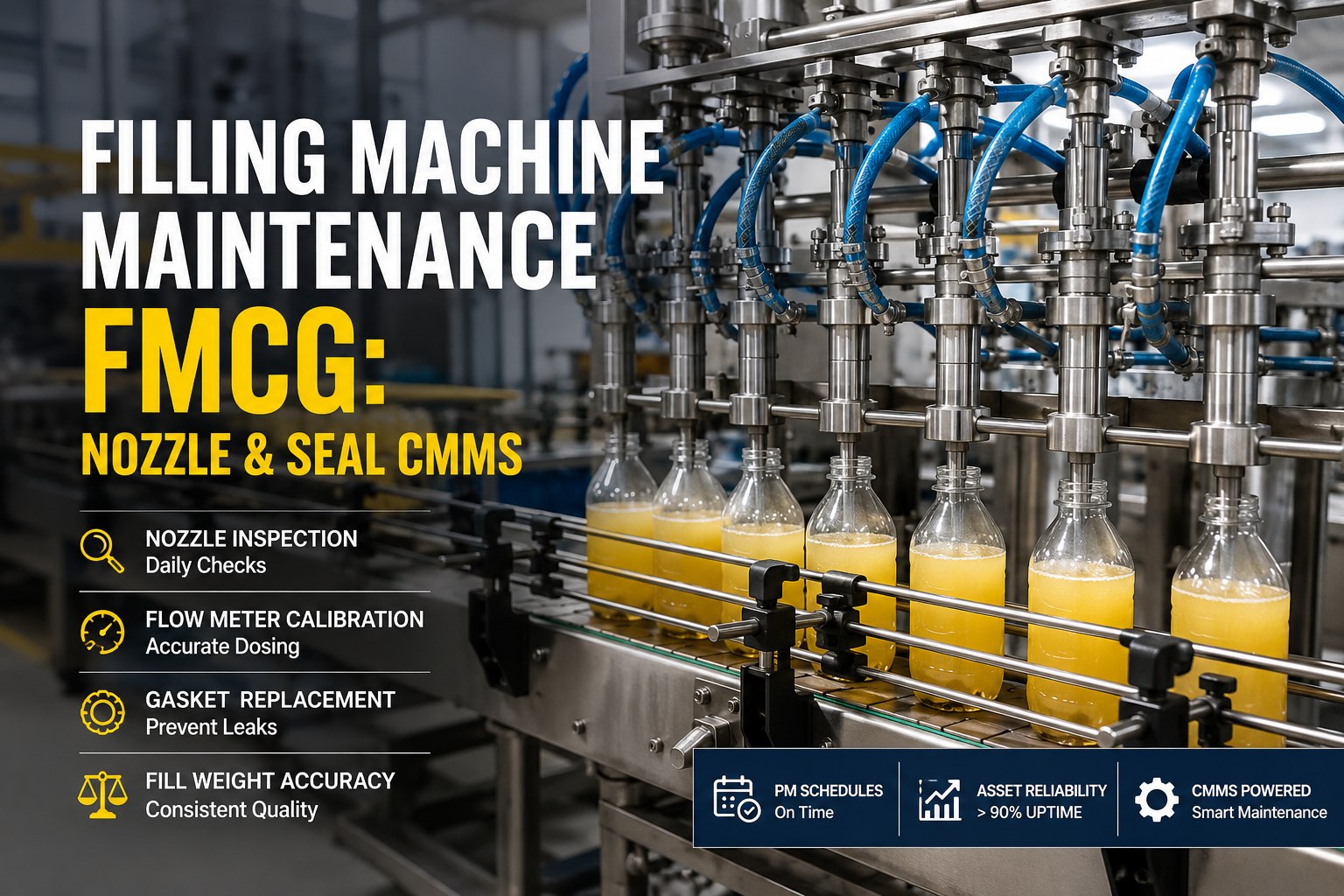
Nozzle wear causes fill inaccuracy, drips, and foaming. Seal deterioration creates contamination risk and regulatory exposure. Both are detectable by sensors weeks before failure.
No data trail for root cause analysis
Without continuous sensor logs, post-failure investigations are guesswork. Teams repeat the same failures quarterly because they cannot trace when degradation actually started.
How It Works
The AI Monitoring Architecture for Filling Lines
Predictive maintenance on filling equipment works through a four-layer system — sensors on critical components, edge processing for real-time analysis, machine learning models that learn each machine's normal baseline, and a CMMS that converts predictions into action. The data exists on your line already. AI makes it useful. Start a free trial and connect your first filling line within days, or book a demo to see the monitoring flow live.
01
Sensor Installation on Critical Points
Wireless vibration sensors, temperature probes, current transformers, and acoustic emission monitors mount on bearings, motors, valves, and sealing heads. Sampling at 10–50 kHz captures fault signatures invisible to human senses or routine inspections.
02
Edge Processing and Signal Analysis
Industrial edge gateways run Fast Fourier Transforms and envelope analysis locally — converting raw vibration waveforms into health indicators in milliseconds. Critical alerts trigger even during network outages. No cloud dependency for urgent signals.
03
ML Baseline Learning and Anomaly Detection
Models train on each asset's unique vibration spectrum, thermal profile, and current draw pattern during healthy operation. As failure history accumulates, supervised models learn specific degradation signatures for bearing wear, seal deterioration, and gearbox damage.
04
Alert to Work Order to Repair
When a degradation signature crosses the alert threshold, Oxmaint auto-generates a prioritised work order — parts list, technician assigned, repair scheduled for the next planned changeover. No manual interpretation. No alert fatigue. Just action.
Failure Mode Detection
What AI Monitors on Your Filling Line
Each filling machine failure mode produces a unique sensor signature. The table below maps primary failure modes, the sensor signals that expose them, and the typical warning window AI detection provides — time that transforms emergency scrambles into planned interventions.
| Component |
Failure Mode |
Sensor Signal |
AI Lead Time |
Cost if Missed |
| Rotary bearing |
Spalling, fatigue cracking |
High-frequency vibration spike at bearing defect frequency |
7–14 days |
Line stoppage, spindle damage, contaminated batch |
| Filler valve |
Seal wear, valve drift |
Fill weight variance >0.5%, pressure oscillation |
5–10 days |
Product give-away, rework, regulatory non-compliance |
| Drive motor |
Winding degradation, overheating |
Current draw anomaly, thermal rise pattern |
10–21 days |
Full line shutdown, emergency motor sourcing |
| Sealing head |
Seaming roll wear, misalignment |
High-frequency vibration at seam frequency, micro-leak rate rise |
3–7 days |
Product recalls, microbiological risk, batch waste |
| Conveyor belt |
Belt misalignment, bearing failure |
Acoustic emission pattern, temperature on drive bearing |
14–21 days |
Pile-up, glass breakage, safety incident |
| Gearbox |
Tooth damage, lubricant breakdown |
Vibration at gear mesh frequency, oil temperature rise |
7–14 days |
Catastrophic mechanical failure, multi-day repair |
| Capping torque |
Chuck wear, torque drift |
Torque sensor variance >2%, off-spec rate rise |
4–8 days |
Under/over-torqued caps, quality holds, complaints |
| Pump and seal |
Seal deterioration, cavitation |
Pressure oscillation, acoustic cavitation signature |
5–12 days |
Product contamination, hygiene failure, allergen risk |
Reactive vs. Predictive
Before and After: What Changes on Your Line
Bearing replaced every 18 months regardless of condition — fails at month 14 or runs perfectly past month 24
Technicians respond to breakdowns, spending 60%+ of their time firefighting emergency repairs
Emergency freight, overtime, and spoiled product inflate every repair cost by 4.8x planned rate
Root cause analysis is guesswork — no sensor log, no data trail, the same failure repeats next quarter
Cascade shutdowns take the full line down within 15 minutes of the first component failure
CapEx decisions for equipment replacement made on anecdote and age, not condition data
Bearing replaced when vibration signature shows degradation — right-timed, not calendar-forced, every time
Technicians work from a prioritised queue of predicted failures — planned, scheduled, and efficient
Standard freight, regular labour rates, no spoiled product — 40% lower maintenance costs overall
Every anomaly logged with timestamp, sensor readings, and corrective action — root cause is traceable
7–21 day warning windows allow repairs during planned changeovers — cascade shutdowns eliminated
Asset health scoring and remaining useful life data drive evidence-based CapEx planning decisions
Oxmaint Solution
How Oxmaint Manages Your Filling Line PdM
Oxmaint connects sensor data, asset records, work order management, and CapEx forecasting into one platform — so predictive intelligence automatically becomes maintenance action. No manual interpretation. No disconnected alerts. Just your filling lines running longer. Start a free trial to connect your first filling line within days, or book a demo and we will walk through your specific configuration.
IoT and SCADA
Real-Time Sensor Integration
Connects to vibration, temperature, pressure, and current sensors across your filling line. SCADA and PLC integration pulls production data alongside maintenance signals — asset health in context of what the line is actually producing.
AI Engine
Anomaly Detection and Failure Prediction
Pre-trained models for FMCG equipment types learn each machine's baseline and detect degradation signatures — bearing defect frequencies, thermal anomalies, current draw shifts — weeks before functional failure occurs.
Work Orders
Automated Maintenance Dispatch
When an anomaly crosses the alert threshold, Oxmaint auto-generates a prioritised work order — technician assigned, parts checked against inventory, repair scheduled for the next planned changeover. Zero manual interpretation required.
Asset Registry
Full Component-Level Asset Hierarchy
Every filler, valve, bearing, motor, and seal lives in a structured asset registry — Portfolio to Plant to Line to Machine to Component. Sensor data, work history, and condition scores attach to the component, not a location code.
OEE
Production-Linked Maintenance Triggers
Maintenance tasks trigger on production units, cycles, or hours — not just calendar intervals. A valve PM triggered at 500,000 cycles fires exactly when condition warrants it. OEE dashboards track availability, performance, and quality at line level.
CapEx
Condition-Based CapEx Forecasting
Asset condition scores and degradation trends feed into rolling 5–10 year CapEx models. Replace decisions based on actual remaining useful life — not guesswork or age. Investor-grade reports generated automatically for ownership groups.
Inspections
Digital Equipment Inspections
Mobile inspection forms for fill weight checks, valve condition, torque verification, and CIP compliance — with digital signatures and GMP-ready audit trails. Inspection results feed back into asset health scoring automatically.
Spare Parts
MRO Inventory Integration
When a predictive alert fires, Oxmaint checks spare parts stock automatically. If the required bearing or seal is not in inventory, the system flags procurement before the repair date — eliminating emergency sourcing at premium prices.
Results from AI-Driven Filling Line Maintenance
30%
Maintenance cost reduction
Achieved by a mid-sized manufacturer within 6 months of deploying smart sensor monitoring on critical lines — removing emergency repair costs from the budget
95%
PdM adopters report positive ROI
27% achieve full cost recovery within year one — Oxmaint accelerates this by eliminating the integration complexity that slows other implementations
40%
Longer equipment lifespan
Right-timed maintenance — replacing components at actual wear-out rather than calendar date — extends the usable life of every major filling machine component
38 hrs
vs. 30 min repair time
The same bearing swap takes 30 minutes as a planned repair during changeover — versus 38 hours of emergency downtime when it seizes without warning at 2 AM Saturday
Frequently Asked Questions
Filling Machine PdM: Common Questions
What sensors work best on high-speed rotary filling machines?
Wireless vibration sensors are the primary tool — sampling at 10–50 kHz to capture bearing defect frequencies, gear mesh anomalies, and imbalance signatures invisible to human senses. Temperature probes on motors and bearings catch thermal rise patterns 10–21 days before failure. Current transformers on drive motors detect winding degradation and load anomalies. For liquid filling specifically, pressure sensors on fill circuits detect valve drift and seal deterioration through flow pressure oscillations. In washdown environments, sensors must be IP65 or IP69K rated.
Start a free trial and our onboarding team will recommend the right sensor configuration for your specific filler model.
How long does it take for AI models to learn my filling machine's normal behaviour?
Most ML models require 4–8 weeks of clean operational data to establish a reliable baseline for a filling line. During this period the system collects vibration spectra, thermal profiles, and current draw patterns across the full range of products and speeds the machine runs. Oxmaint uses pre-trained models for common FMCG equipment categories — rotary fillers, piston fillers, conveyor systems — which reduces the baseline period by starting from known failure signatures for your equipment type. The first meaningful anomaly detections typically appear within 6–8 weeks of go-live.
Book a demo to see how the learning timeline applies to your specific equipment types.
Can Oxmaint integrate with our existing SCADA and PLC systems?
Yes. Oxmaint integrates with SCADA and PLC systems via standard industrial protocols — OPC-UA, Modbus, and MQTT — pulling production data, machine states, and existing sensor outputs directly into the platform. If your filling line already has sensors feeding a SCADA display, Oxmaint can consume that data stream and add the AI analytics layer on top. For lines without existing connectivity, Oxmaint supports retrofit IoT sensor installation. Integration timelines range from days for SCADA-connected lines to 2–3 weeks for full retrofit sensor installation.
Start a free trial to begin the integration assessment for your facility.
What is the ROI timeline for predictive maintenance on a filling line?
Most facilities see the first prevented failure within 6–12 weeks of deployment — and that single event typically covers several months of platform cost. The formal ROI calculation compares current unplanned downtime costs ($39,000/hour average for FMCG lines), emergency repair premiums (4.8x planned repair cost), and spoiled product losses against the annual programme cost. Industry data shows 95% of PdM adopters report positive ROI, with 27% achieving full cost recovery within year one. McKinsey research confirms 10–40% overall maintenance cost reductions and up to 50% downtime reduction for facilities running AI-based programmes. Starting with 5–10 highest-criticality assets — typically the rotary filler, primary conveyor, and capping station — maximises early ROI and builds organisational confidence.
Book a demo and we will model the ROI case for your specific line configuration.
Stop Running Blind on Your Filling Line
Oxmaint connects IoT sensors on your fillers, valves, bearings, and conveyors to an AI engine that predicts failures 7–21 days out — then automatically converts those predictions into planned work orders, parts checks, and technician assignments. No integration headache. No heavy implementation fees. Your first line live in days.