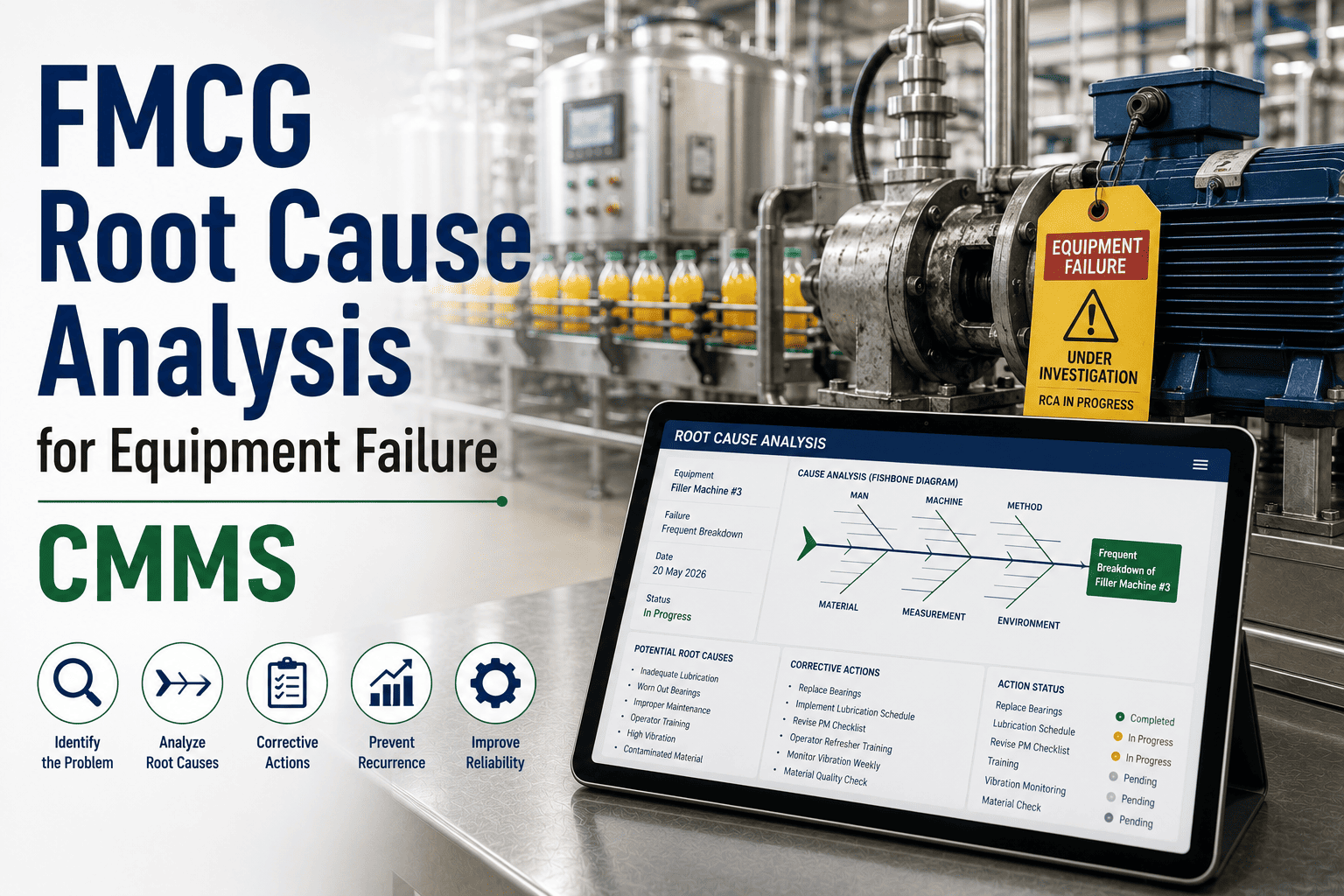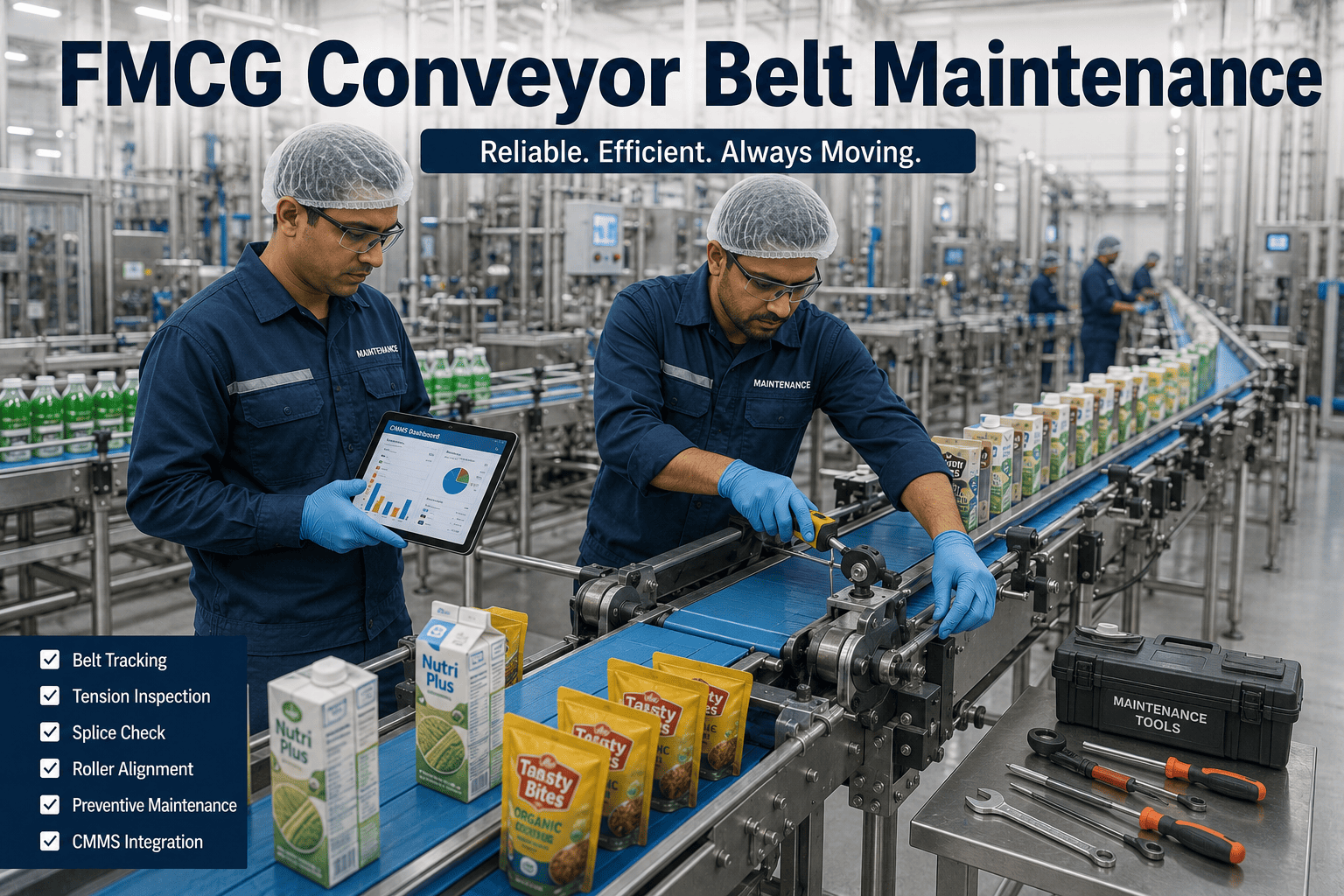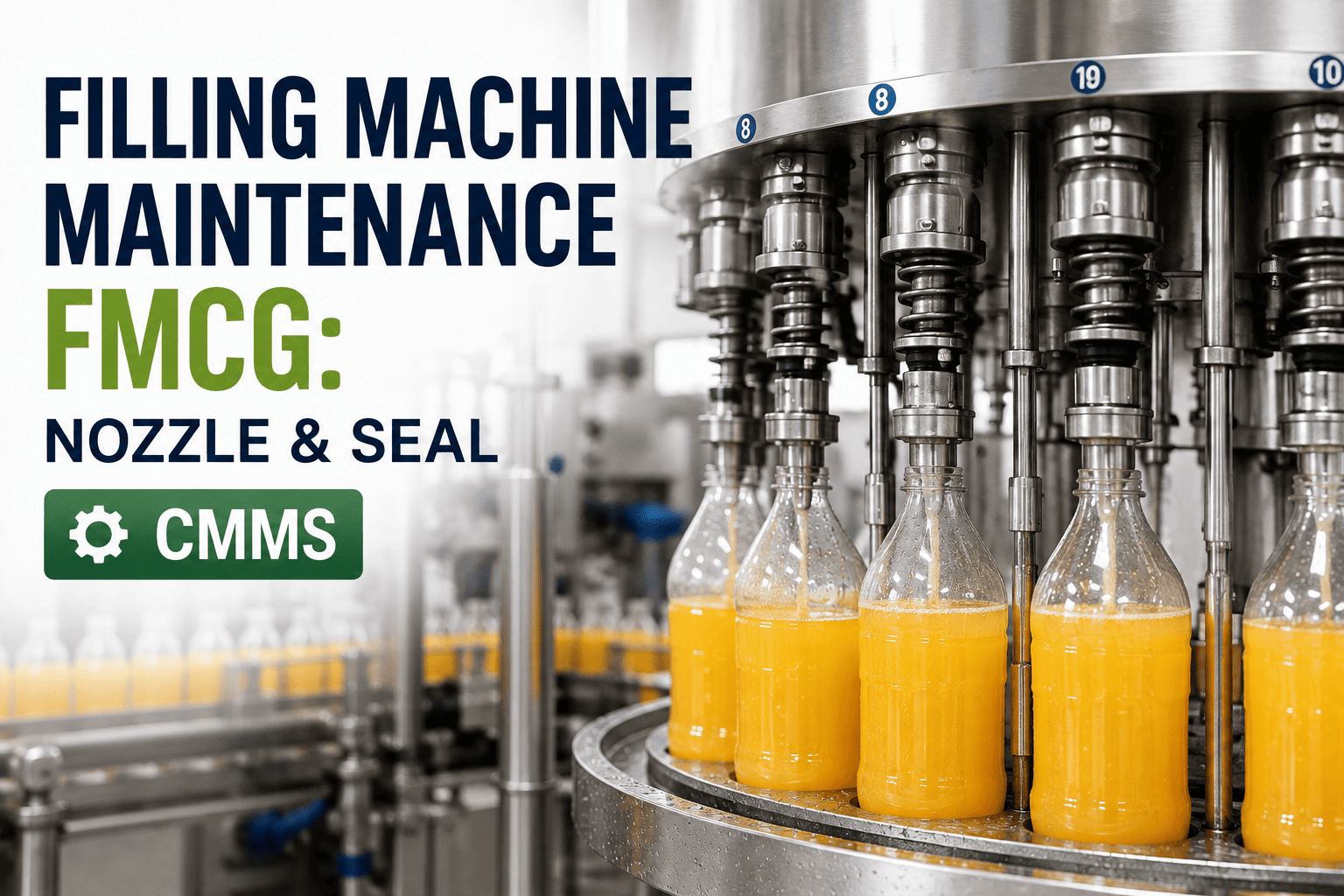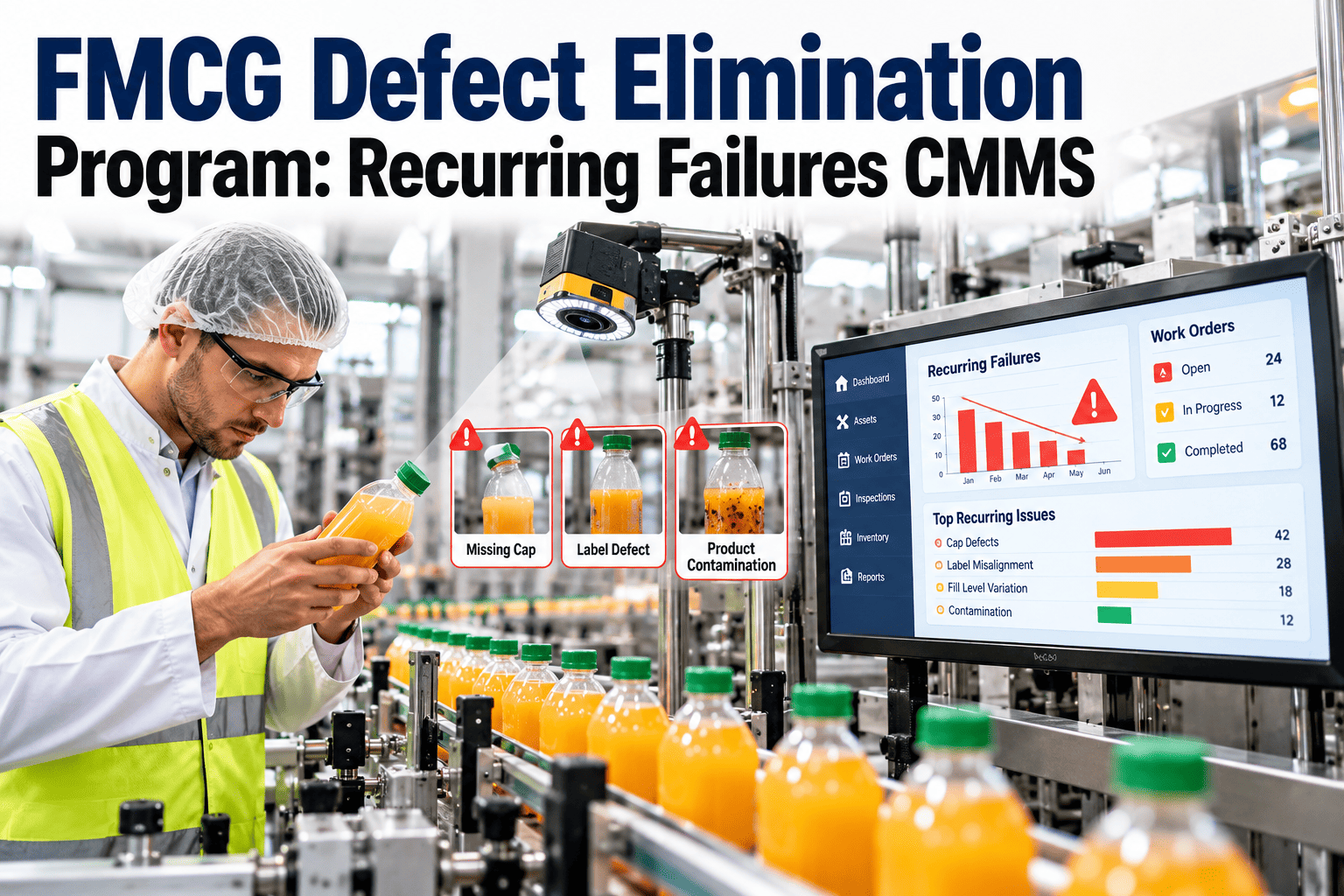
Every plant has a few problems that keep coming back: the same nozzle that drips after changeover, the conveyor transfer that jams every shift, the sealing station that gives inconsistent results on Mondays. Each repair works for a while, so the problem never gets serious enough to be studied. A defect elimination program changes that by treating repeat failures as targets to remove, not chores to repeat. This guide shows how FMCG maintenance teams can find, rank and permanently fix recurring failures, and how Oxmaint work order and failure tracking can keep the program organized.
Defect Elimination Program for FMCG Plants: Ending Recurring Failures
Turn repeat filler, conveyor and sealing problems into tracked defects with owners, root causes and verified fixes, instead of repairs that return next week.
- 1Detect
- 2Log
- 3Rank
- 4Investigate
- 5Fix
- 6Verify
Repair Culture Versus Elimination Culture
The difference is not effort. It is what happens after the machine restarts.
Repair Culture
- Success means the line is running again
- Causes are guessed from memory
- Repeat jobs are accepted as normal
- Knowledge lives with individual technicians
- Reports count breakdowns, not repeats
Elimination Culture
- Success means the failure does not return
- Causes are tested against evidence
- Repeat jobs trigger investigation
- Findings are recorded against the asset
- Reports track repeats and closed defects
Three Chronic Problems on FMCG Lines
These examples show how a quick fix can hide a deeper cause. Your own list will differ, so use failure history to find it.
Filler Nozzle Drips
Usual quick fixReplace the seal or wipe the nozzle.
Causes to investigateResidue build-up, cleaning gaps, seal material compatibility, assembly torque, valve timing.
Persistent Conveyor Jams
Usual quick fixClear the jam and restart.
Causes to investigateGuide settings, transfer gaps, chain wear, container variation, speed synchronization.
Sealing Inconsistency
Usual quick fixRaise the temperature or adjust pressure.
Causes to investigateHeater or sensor degradation, tape wear, jaw alignment, product in the seal area, material variation.
Spotting a Recurring Failure
A defect is easier to fight once the data shows it is repeating. Agree on simple triggers that fit your plant.
| Trigger | What it looks like | Where to find it |
|---|---|---|
| Same failure code, same asset | Repeat repairs within a set period | Work order history |
| Same symptom, different words | Different descriptions of one problem | Technician and operator review |
| Repeat after a recent repair | Fix did not last | Closed work orders on the asset |
| Frequent short stops | Minor stoppages on one machine | Line downtime logs |
| Quality drift tied to a station | Rejects or rework from one machine | Quality records and checkweigher data |
Set the repeat threshold with your team. Too strict and everything qualifies; too loose and chronic problems never appear.
The Defect Register: What to Record
One record per defect keeps investigation and follow-up in the same place.
- Asset and location. Machine, assembly and component where the defect appears.
- Description and failure code. The symptom in plain terms, using standard codes.
- Linked work orders. Every repair that relates to the defect.
- Impact. Downtime, rejects, safety or quality consequence.
- Owner and due date. A named person accountable for progress.
- Root cause and action. What was found and what will change.
- Verification result. Evidence that the defect has stopped returning.
Ranking Defects and Matching the Effort
Not every repeat problem needs a formal investigation. Match the depth to the cost and risk.
- Level 1
Standard Work Fix
Low impact. Operator or technician corrects a missing step, such as a cleaning or setting check.
- Level 2
Focused Investigation
Moderate impact. Small team applies 5 Whys or a fishbone review and agrees corrective action.
- Level 3
Cross-Functional RCA
High impact or safety and quality risk. Maintenance, production, quality and engineering investigate together.
Find the Failures You Keep Paying For
Track repeat repairs by asset and failure code, then assign investigations and follow them to closure.
Choosing a Root Cause Method
| Method | Best for | Strength | Watch out for |
|---|---|---|---|
| 5 Whys | Simple, single-path problems | Fast and easy to teach | Can stop at an opinion without evidence |
| Fishbone diagram | Problems with many possible causes | Organizes team brainstorming | Lists causes without proving them |
| Fault tree analysis | Serious or complex failures | Maps combined causes logically | Takes more time and skill |
| Failure data review | Spotting patterns across assets | Uses real history | Needs consistent failure coding |
Illustrative 5 Whys: Conveyor Transfer Jams
This hypothetical example shows how asking why moves past the symptom. Verify every answer with observation or measurement.
- Why 1Containers jam at the transfer point because some tip as they cross the plate.
- Why 2The gap between conveyors varies from shift to shift.
- Why 3The guide rails are set by feel after each changeover.
- Why 4There are no reference marks and the fasteners loosen with vibration.
- RootThe changeover procedure has no defined setting or verification step.
Permanent actions might include reference scales, locking hardware and a changeover checklist step, followed by a monitored trial period.
Strong Fixes Versus Weak Fixes
Corrective actions differ in how reliably they prevent a return. Aim for the top of this list when practical.
- Eliminate the cause. Redesign a part, change a material or remove the condition.
- Prevent by design. Add guides, reference marks or mistake-proofing.
- Detect early. Add inspection or monitoring that catches the defect before it stops the line.
- Standardize the work. Update procedures, training and checklists.
- Remind people. Signs and warnings help least and fade over time.
Verification: Proving the Defect Is Gone
A closed action is not the same as a solved problem. Confirm results using the same measures that exposed the defect.
Before the Fix
- Repeat work orders on the same code
- Downtime and rejects measured
- Cause assumed
After the Fix
- Same measures tracked for an agreed period
- Repeats compared with the baseline
- Defect closed only when evidence supports it
How a CMMS Supports Defect Elimination
Failure Codes on Work Orders
Capture problem, cause and remedy consistently so repeats can be counted.
Asset History
View every repair on a filler, sealer or conveyor in one place.
Linked Actions
Create follow-up work orders, PM changes and inspections from findings.
Mobile Capture
Let technicians add notes and photos while the evidence is fresh.
Dashboards
Track repeat failures, downtime by cause and open defect actions.
Teams can book a demo to see repeat-failure tracking in a maintenance workflow before changing their own process.
Running the Weekly Defect Review
- 1Review new repeats. Add recurring failures to the register.
- 2Assign levels and owners. Match effort to impact.
- 3Check open actions. Remove blockers on overdue items.
- 4Verify completed fixes. Close only with evidence.
- 5Share lessons. Apply fixes to similar machines and lines.
KPIs for a Defect Elimination Program
| KPI | What it shows |
|---|---|
| Repeat failures by asset | Whether chronic problems are shrinking |
| Defects opened and closed | Program activity and throughput |
| Downtime from top defects | Value of the problems being tackled |
| Action completion rate | Follow-through on corrective actions |
| Recurrence after closure | Quality of root cause work |
Preserving Evidence at the Moment of Failure
Root causes are often lost because the failed part is thrown away or the scene is cleaned before anyone looks. Build simple habits into every repair.
- 1Photograph before touching. Capture the condition, settings and surroundings.
- 2Keep the failed part. Tag it with asset, date and work order number.
- 3Record readings. Note temperatures, pressures, speeds and alarm history.
- 4Ask the operator. Note what was different before the failure.
- 5Code the failure. Use the standard code for problem, cause and remedy.
Illustrative 5 Whys: Inconsistent Seals
A second hypothetical example shows how the questioning differs when the symptom is a quality drift rather than a stoppage.
- Why 1Some packs fail the seal strength check, mainly early in the shift.
- Why 2Jaw temperature is below the setpoint for the first period after start-up.
- Why 3The heater takes longer to stabilize than the start-up routine allows.
- Why 4A degraded heater cartridge and loose sensor contact slow the response.
- RootNo measurement of actual jaw temperature is part of the PM or the start-up check.
Actions might include measured temperature checks, a stabilization hold before running, and planned replacement of heaters showing slow response.
Typical Root Cause Categories on Packaging Lines
Grouping causes helps teams look beyond the part that broke and ask what allowed it to fail.
| Category | Examples | Typical permanent fix |
|---|---|---|
| Design or specification | Seal material unsuited to the product, weak guide design | Modify design or specify a suitable part |
| Installation or setup | Misalignment, wrong torque, missing reference marks | Setup standards and verification checks |
| Operation | Wrong settings, skipped cleaning step | Training, standard work and clear limits |
| Maintenance | Wrong interval, missed lubrication, poor repair method | Revise PM and repair procedures |
| Materials and supply | Variable containers, film or label stock | Supplier specification and incoming checks |
| Environment | Heat, moisture, vibration, product residue | Protection, cleaning method or relocation |
Estimating the Cost of a Chronic Defect
A defect that costs a little every day is easy to ignore. Add the pieces together to understand its true size.
- Lost production time. Minutes stopped multiplied by line output value or contribution margin.
- Rejects and rework. Product, packaging and labor lost to the defect.
- Maintenance labor and parts. Hours and materials used in each repeat repair.
- Overtime and delays. Extra shifts or late deliveries caused by lost output.
- Risk costs. Complaint, audit or safety exposure where relevant.
A No-Blame Culture for Failure Reporting
Defects are found fastest by the people closest to the machine. They report more when reporting is safe and leads to action.
What Discourages Reporting
- Questions that assign fault to individuals
- Reports that disappear without feedback
- Extra paperwork for every small issue
What Encourages It
- Focus on the process and conditions
- Quick feedback on what was done
- Simple mobile requests with photos
Feeding Defect Findings Back Into PM and Procedures
A solved defect should change something lasting. Use the findings to update the documents technicians and operators rely on.
- 1PM tasks. Add a measurement or inspection aimed at the root cause.
- 2Repair procedures. Correct steps that allowed the defect to return.
- 3Changeover checklists. Add setting and verification steps.
- 4Spare parts. Adjust critical stock if a different part or kit is now required.
- 5Training. Brief operators and technicians on what changed and why.
Common Defect Program Pitfalls
- Too many open defects. A long list with no priority leads to stalled work. Limit active investigations.
- Stopping at the first answer. The first plausible cause is not always the real one. Test it.
- Actions without owners. Every action needs a named person and a date.
- Closing without verification. A fix is proven by results, not by completion of a task.
- Ignoring similar machines. A fix on one filler may apply to the others.
Choosing the First Defects to Attack
A new program needs early, visible wins. Pick targets that are frequent, measurable and within the team's control.
| Selection question | Good sign | Warning sign |
|---|---|---|
| Is it measurable? | Coded work orders and downtime logs exist | No consistent record of events |
| Is the cost meaningful? | Lost time or rejects are clearly visible | Impact is unclear or very small |
| Can the team act on it? | Causes are within plant control | Depends on a long supplier redesign |
| Is it repeatable? | Occurs often enough to verify a fix | Rare, so results will take too long to show |
Start with one defect on the bottleneck line. A single proven result makes it easier to gain support for the next one.
Roles in a Defect Elimination Program
- Program sponsor. Removes obstacles, approves resources and reviews results with plant leadership.
- Defect owner. Leads the investigation for one defect and reports progress at the weekly review.
- Technicians and operators. Provide evidence, test theories and help implement changes.
- Quality and engineering. Support causes linked to product, materials, design or modification.
- Planner. Schedules corrective work, parts and downtime for permanent fixes.
Plants that want to see how a defect register and linked actions look in practice can start with Oxmaint and test the workflow on one line.
Quick Reference: Questions to Ask After Every Repeat Failure
- Has this happened before? Check asset history for the same failure code or symptom.
- What changed recently? Consider formats, materials, settings, shifts, cleaning chemicals and recent repairs.
- What does the evidence show? Examine the failed part, readings and photographs before deciding on a cause.
- Could it happen on other machines? Look across similar fillers, sealers and conveyors.
- How will we know it is fixed? Choose the measure and review period before the action is closed.
Defect Elimination FAQs
What is a recurring failure?
A failure of the same type on the same asset that returns after repair.
Does every repeat need an RCA?
No. Match investigation depth to downtime, quality and safety impact.
How do failure codes help?
They let reports group similar events. Oxmaint supports failure codes on work orders.
How long should we monitor a fix?
Long enough to cover several normal failure cycles for that problem.
Where do we start?
Pick the top repeat on your bottleneck line. Talk to Oxmaint about setting it up.
Stop Fixing the Same Failure Twice
Give your team a structured way to log defects, find causes, assign actions and prove that recurring problems are gone for good.