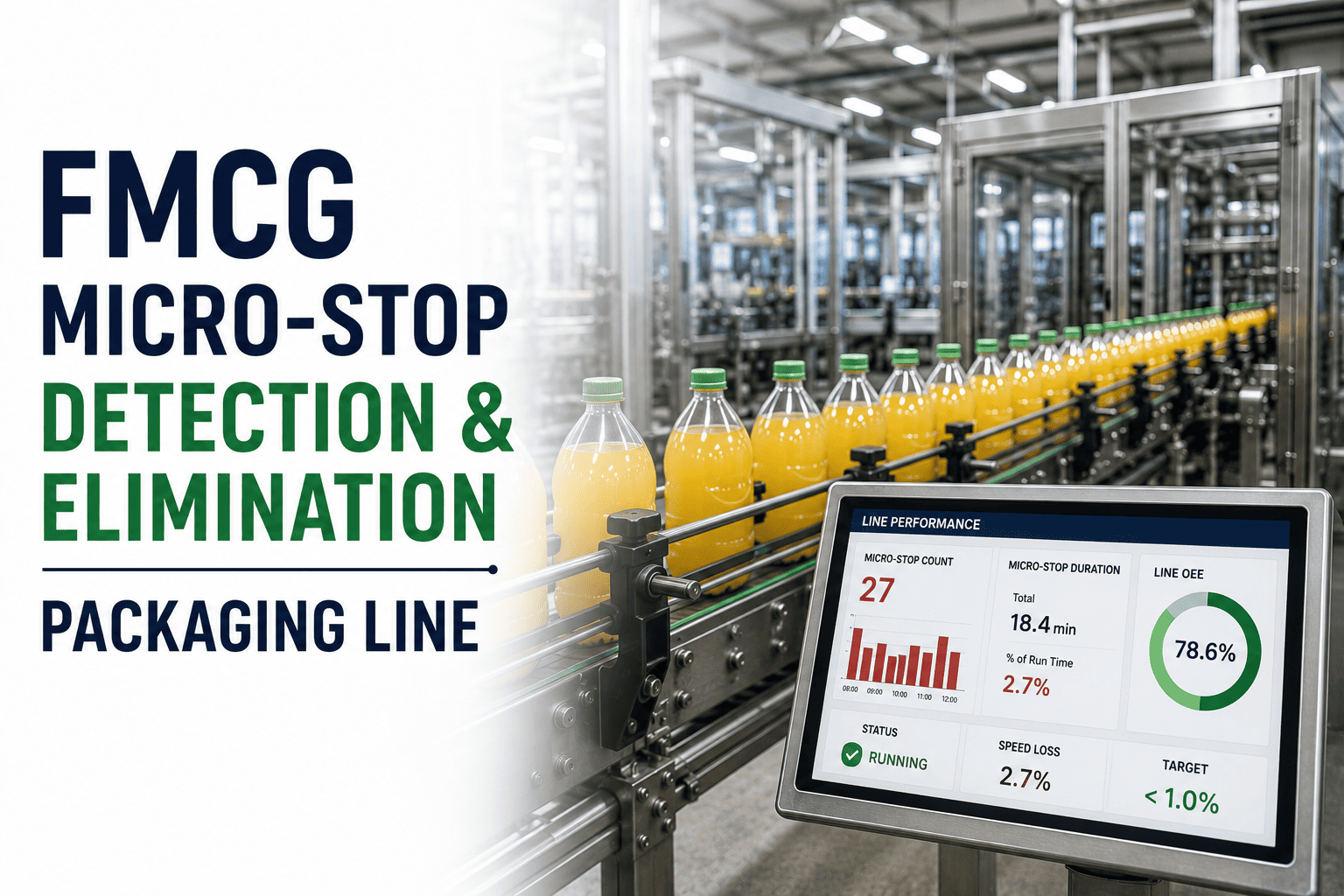
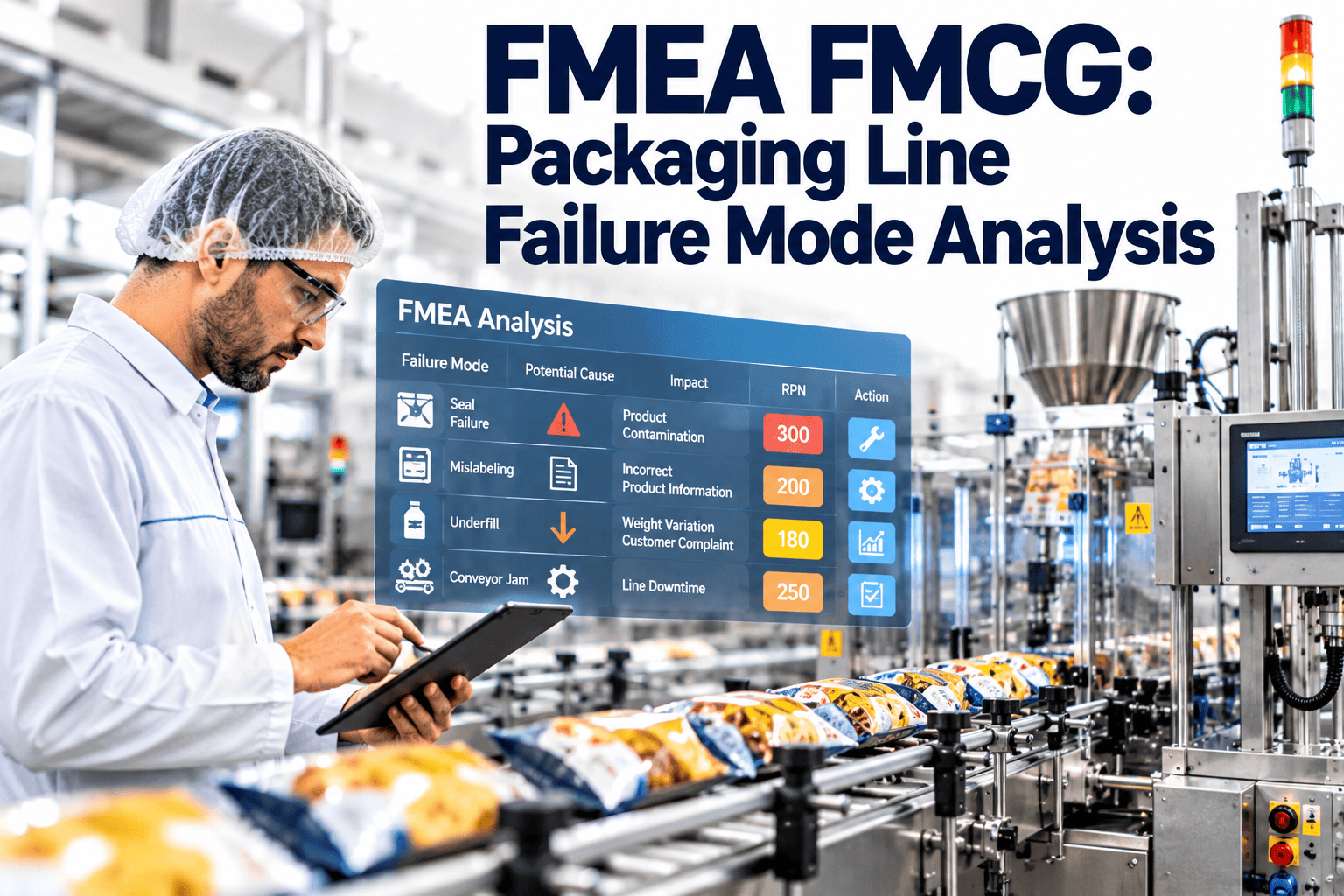
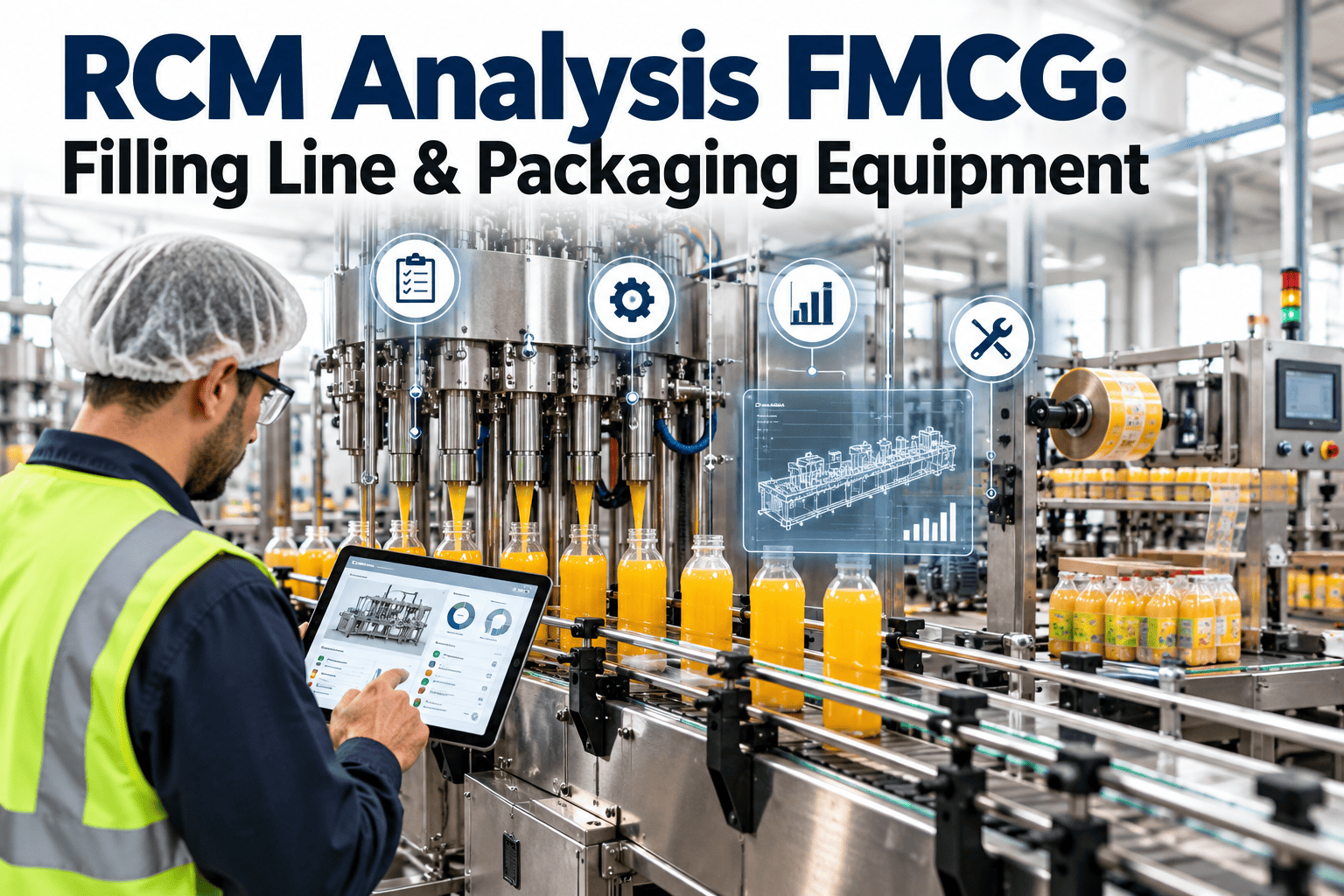
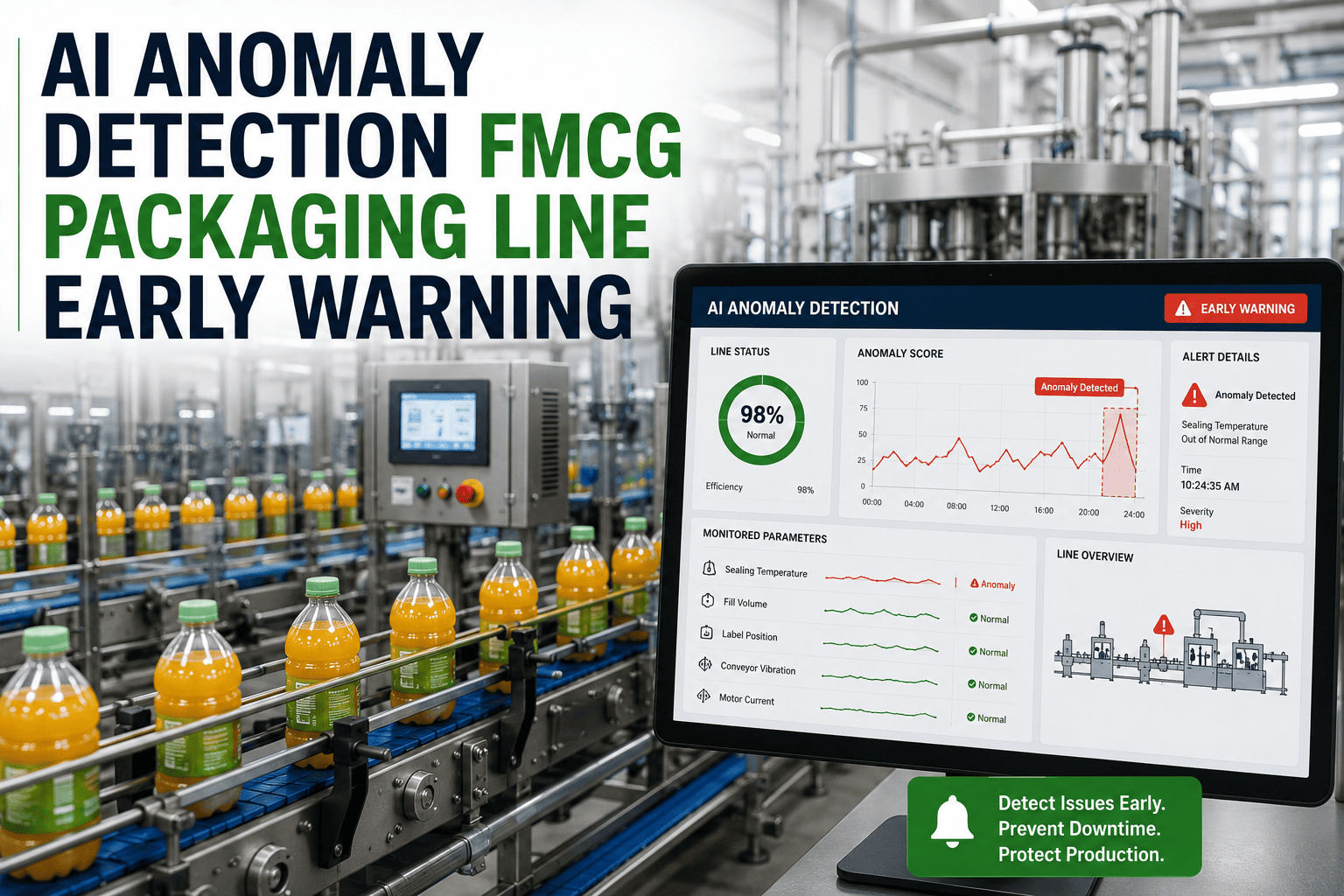
A line can stop for forty seconds, restart, and nobody writes it down. Multiply that by sixty times a shift and you have hours of lost availability that never shows up on any downtime report. Micro-stops are the loss FMCG packaging lines underestimate the most, simply because they're too short to notice and too frequent to log by hand. Sign up to start capturing every micro-stop automatically.
What Actually Counts As A Micro-Stop
A micro-stop is any stoppage short enough that an operator can clear it and restart without formally logging downtime, typically under a minute or two. Individually they look trivial. Across a shift on a high-speed packaging line, they're often the single largest source of availability loss, larger than the two or three breakdowns everyone remembers.
The Logged Number vs. The Real Number
| Data Source |
What It Typically Shows |
| Manual shift log |
A handful of stoppages, mostly the ones over five minutes that felt worth writing down |
| PLC or sensor log |
Dozens to hundreds of sub-minute stops per shift, most under thirty seconds each |
| The gap between them |
The exact availability loss that never enters any OEE calculation until it's automated |
The Four Repeat Offenders On Packaging Lines
Film Misfeeds
Wrapping and flow-wrap film catching, tearing, or feeding out of alignment is one of the most repetitive stoppages on any wrapping station
Label Jams
Applicator heads misaligning or labels folding on the web are quick fixes individually, but they recur constantly on fast-moving labelers
Sensor Faults
Dirty or misaligned photo-eyes triggering false stops are one of the sneakiest causes, since the product itself was never actually the problem
Product Jams At Transfer Points
Cartons or bottles backing up at infeed and outfeed transitions are usually a symptom of upstream speed mismatch, not a random fault
Stop Losing Track Of The Stops You Don't See
OxMaint captures every sub-minute stoppage automatically and groups it by root cause, so film misfeeds and label jams stop hiding inside a vague "minor stops" bucket. Sign up for a free trial to start capturing your real stoppage count, or book a demo to see micro-stop categorization on your own line data.
From Detection To Elimination
1
Capture Every Stop, Not Just The Long Ones
Pull stoppage events directly from PLC or sensor signals so sub-minute stops are timestamped automatically instead of relying on operator memory
2
Categorize By Root Cause, Not Just Duration
Group stops into causes like film misfeed, label jam, or sensor fault so the pattern behind the frequency becomes visible, not just the total time lost
3
Rank The Repeat Offenders
A small number of recurring causes usually drives most of the micro-stop time, so fix the top two or three before chasing rare, one-off events
4
Close The Loop With A Work Order
Route the top recurring cause into a scheduled adjustment or maintenance task, then track whether that specific stoppage type actually drops afterward
Why This Needs A CMMS, Not A Spreadsheet
Micro-stops happen too often and too fast for manual entry to keep pace with. A CMMS that pulls stoppage signals directly from the line, timestamps them, and links each event to a work order is what turns hundreds of small interruptions into a ranked, actionable list instead of an invisible drain on the shift.
Frequently Asked Questions
Q
Why don't operators log micro-stops themselves?
Because clearing a jam and restarting the line takes priority over pausing to write it down, especially when it happens dozens of times a shift. That's not a discipline problem, it's a design problem that automated capture solves.
Q
How much OEE is typically hiding in micro-stops?
It varies by line, but on high-speed packaging equipment it's common for micro-stops to account for more total lost time than every logged breakdown in a shift combined.
Q
Do all micro-stops need to be eliminated?
No. The goal is to eliminate the recurring, root-cause-identifiable ones. A handful of genuinely random, one-off stops will always exist, and chasing those has diminishing returns.
See The Stops Your Shift Log Is Missing
OxMaint captures, categorizes, and ranks every micro-stop automatically so the biggest hidden loss on your packaging line finally becomes visible. Sign up for a free trial to start capturing your real stoppage data, or book a demo to see root-cause categorization on your own line.