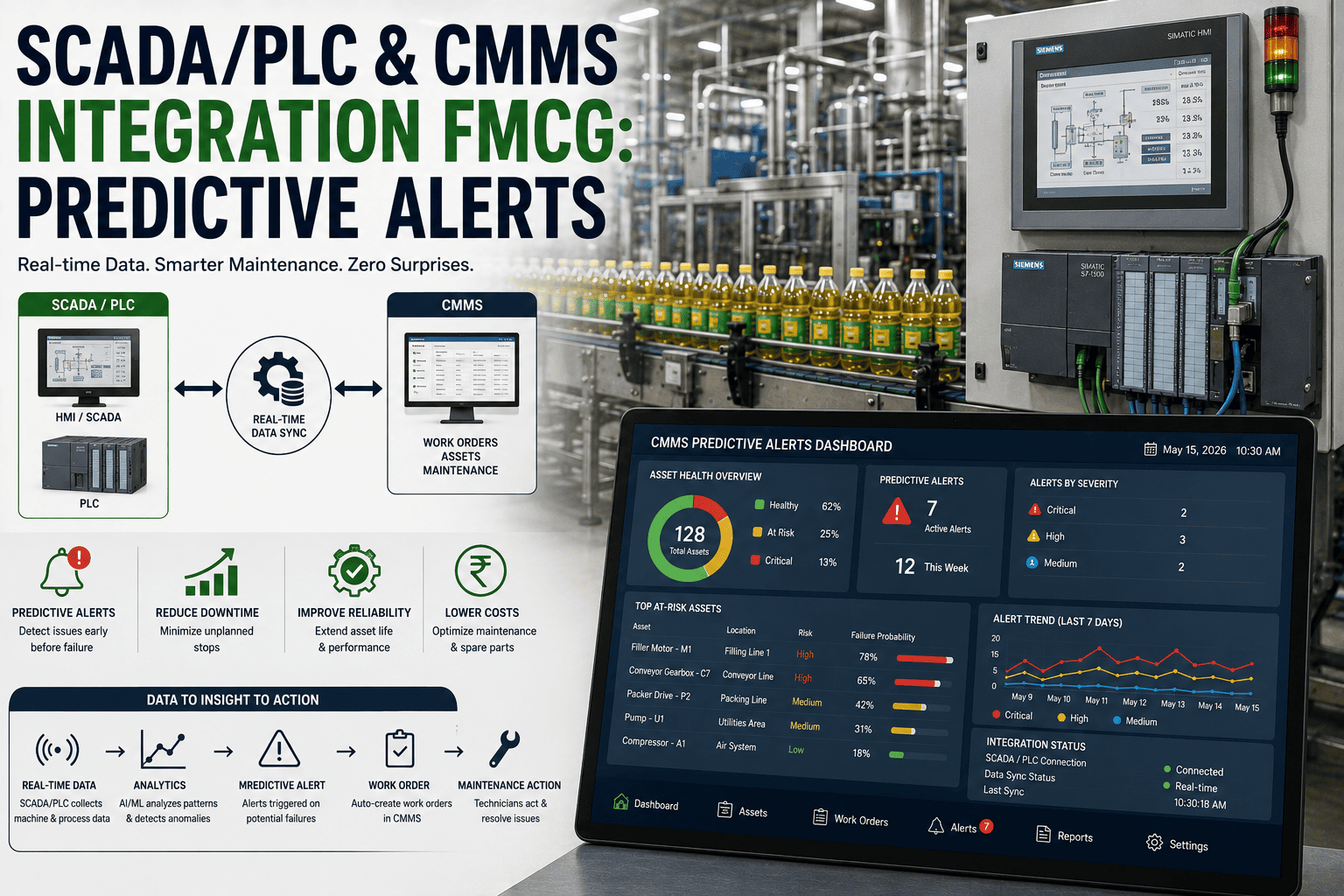
Most FMCG plants can point to a breakdown that cost them a shift. Fewer can point to the twenty small ones predictive maintenance would have caught first. The ROI case for predictive maintenance isn't a guess, it's a documented pattern across packaging lines, refrigeration, and rotating equipment once the right assets are actually monitored. Sign up to build a predictive program on the assets that actually move your downtime and OEE numbers, backed by a real ROI case.
What This Guide Covers
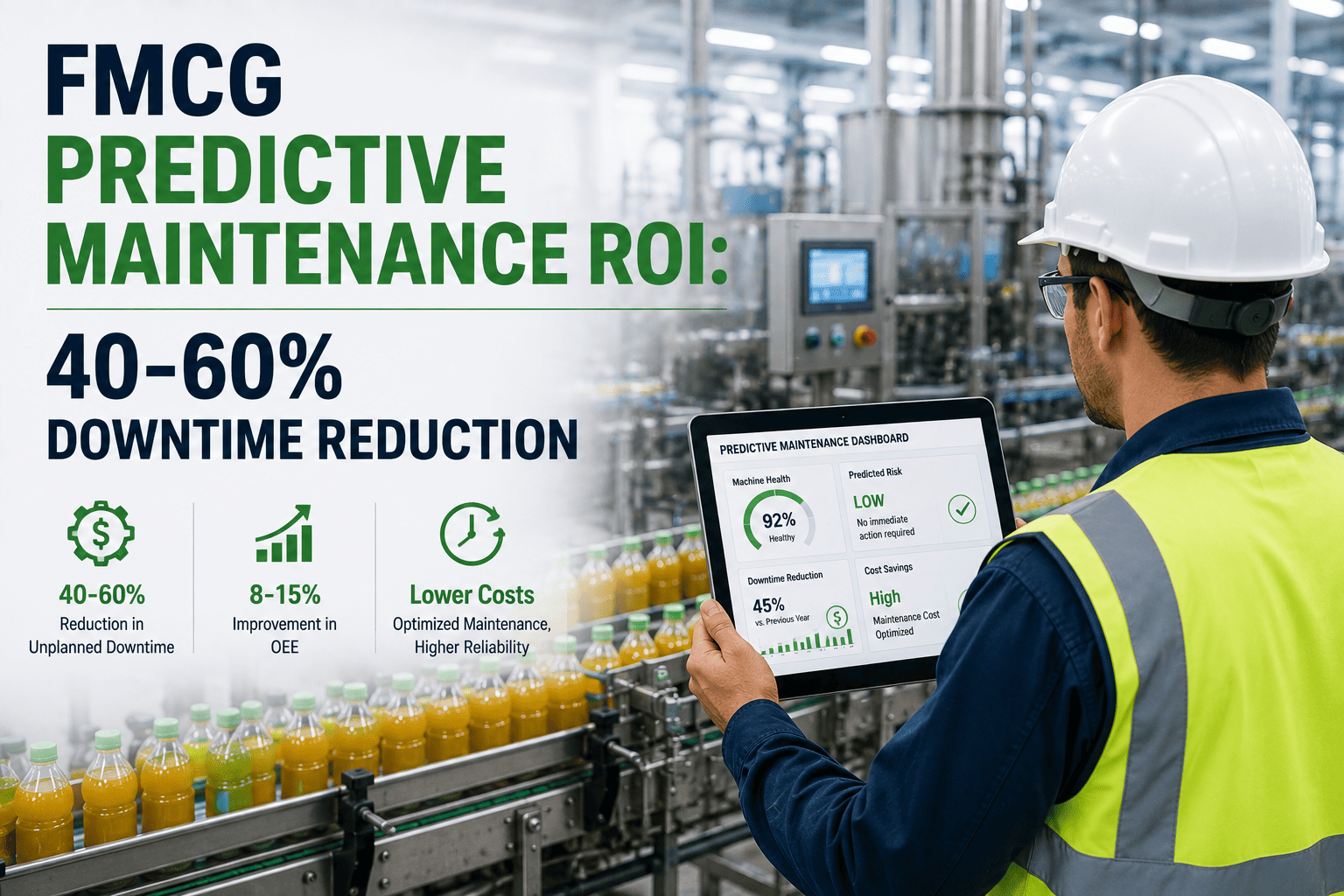
FMCG predictive maintenance consistently shows 40 to 60 percent unplanned downtime reduction on assets that are properly selected and monitored. This guide covers the FMCG predictive maintenance ROI case in a CMMS: the ROI framework, asset selection criteria, cost-benefit modeling, and the deployment approach that consistently generates the documented returns FMCG plants actually see.
40-60%
Typical unplanned downtime reduction on monitored assets
8-15pp
Typical OEE gain once predictive coverage is in place
6-12mo
Typical payback window on prioritized assets
The ROI Framework, Four Steps
1
Asset Selection And Prioritization
Ranking assets by downtime cost and failure frequency points the first monitoring dollars at the equipment that actually moves the ROI needle
2
Cost-Benefit Modeling
Modeling avoided downtime hours against sensor and analytics cost turns the business case into a number leadership can approve
3
Phased Deployment
Starting on the highest-priority line and expanding once savings are proven keeps the program funded on its own results
4
Continuous ROI Tracking
Tracking avoided downtime and OEE gain against the original model keeps the ROI case current instead of a one-time pitch
Which Assets Deliver The Fastest ROI
| Asset Category |
Why It Delivers ROI Fast |
| High-value rotating equipment |
Bearings, motors, and gearboxes give clear vibration and temperature signals well before failure, making early prediction reliable |
| Packaging lines |
Short cycle times mean a single stoppage cascades fast, so avoided downtime here converts to savings almost immediately |
| Refrigeration and utilities |
A failure here risks product loss on top of downtime, which raises the avoided-cost number well beyond lost production time alone |
| Changeover-heavy lines |
Frequent changeovers stress the same components repeatedly, so predictive coverage catches wear that a fixed PM schedule would miss |
Turn Predictive Signals Into A Documented ROI Case
OxMaint ties asset prioritization, cost-benefit modeling, and downtime tracking to one running ROI dashboard your leadership can trust. Sign up for a free trial to start building your predictive ROI case, or book a demo to see how it maps to your lines.
What A CMMS Adds To The ROI Case
Downtime Cause Tracking
Every stoppage logged by cause and asset builds the baseline that proves how much predictive coverage actually avoided
OEE Trend Reporting
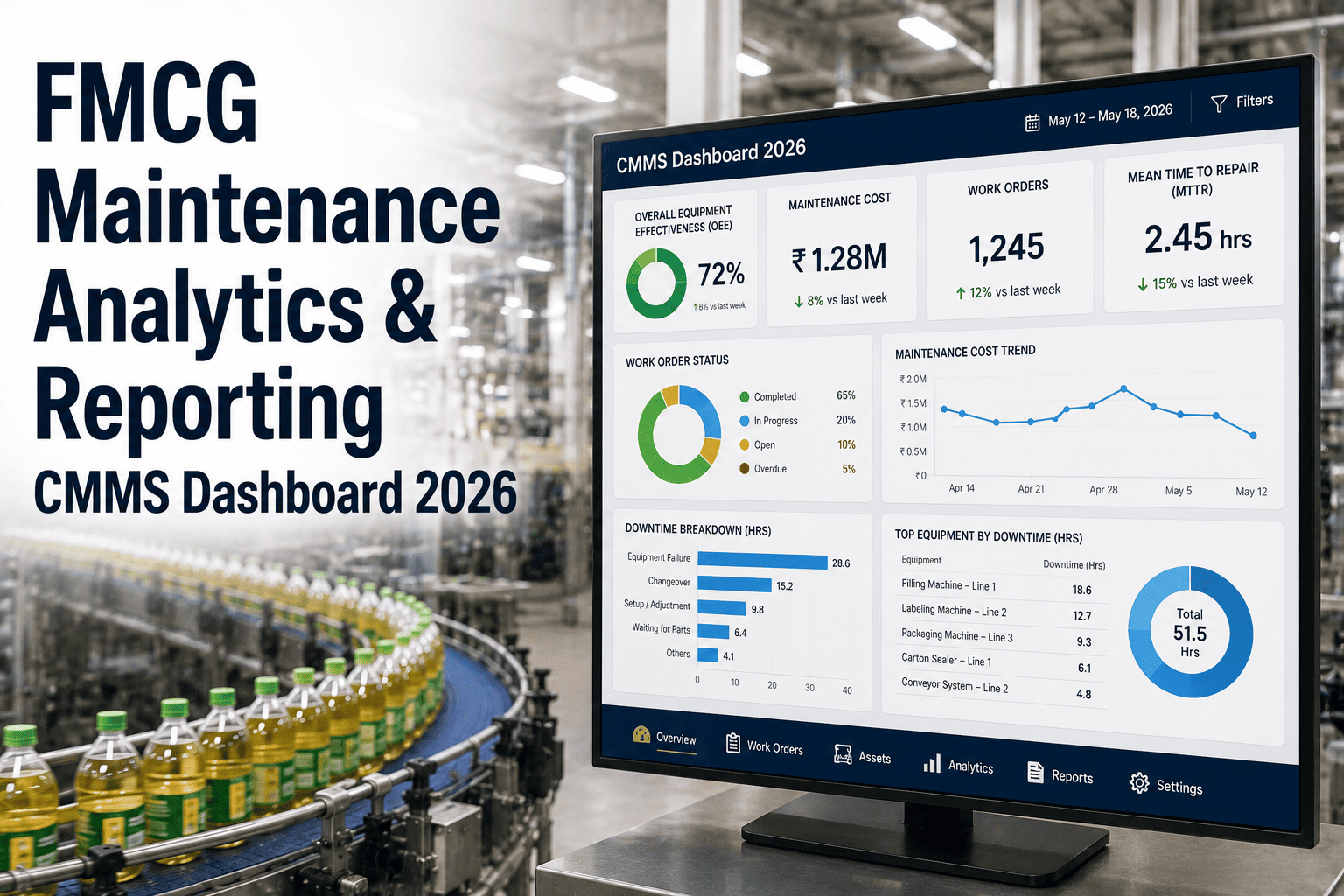
Availability, performance, and quality trends stay tied to each line, showing the OEE gain as it actually happens
Cost Avoidance Log
Every predictive catch gets tied to an estimated downtime hour saved, adding up to a running savings total
Payback Dashboard
Actual savings tracked against the original cost-benefit model shows leadership exactly where payback stands
The ROI Case Only Holds If It's Tracked
A predictive pilot that isn't measured against a baseline is just a pitch deck. The plants that actually secure budget for phase two are the ones tracking avoided downtime and OEE gain against the original model from day one, not the ones hoping the savings speak for themselves at review time.
Frequently Asked Questions
Q
Where does the 40 to 60 percent downtime reduction figure actually come from?
That range reflects assets that were properly selected, sensored, and analyzed against a clear baseline, so it represents outcomes on prioritized equipment rather than a plant-wide average across every asset regardless of monitoring coverage.
Q
Which assets should an FMCG plant start with for the fastest ROI?
Starting with high-value rotating equipment and the packaging lines with the shortest cycle times usually delivers the fastest measurable ROI, since failures there cascade quickly and the avoided-cost case is easy to demonstrate.
Q
How long does it typically take to see payback on a predictive maintenance investment?
Plants that prioritize the right assets and track results against a cost-benefit model commonly see payback within six to twelve months, though the exact window depends on asset criticality and how quickly monitoring is deployed.
Build A Predictive Maintenance Case Leadership Will Approve
OxMaint turns asset prioritization, cost-benefit modeling, and downtime tracking into one documented ROI story. Sign up for a free trial to start building your predictive ROI case, or book a demo to see it built around your lines.