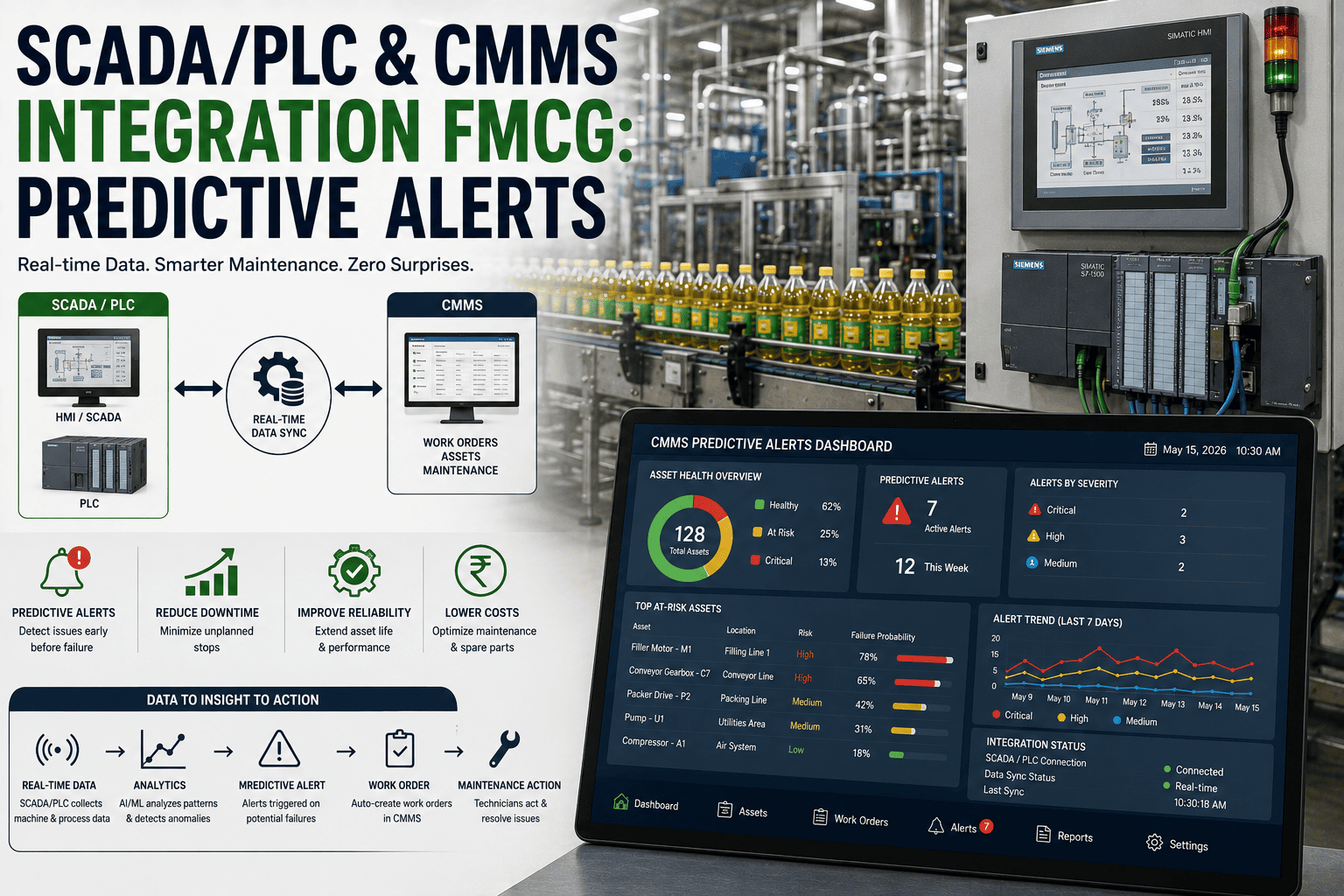
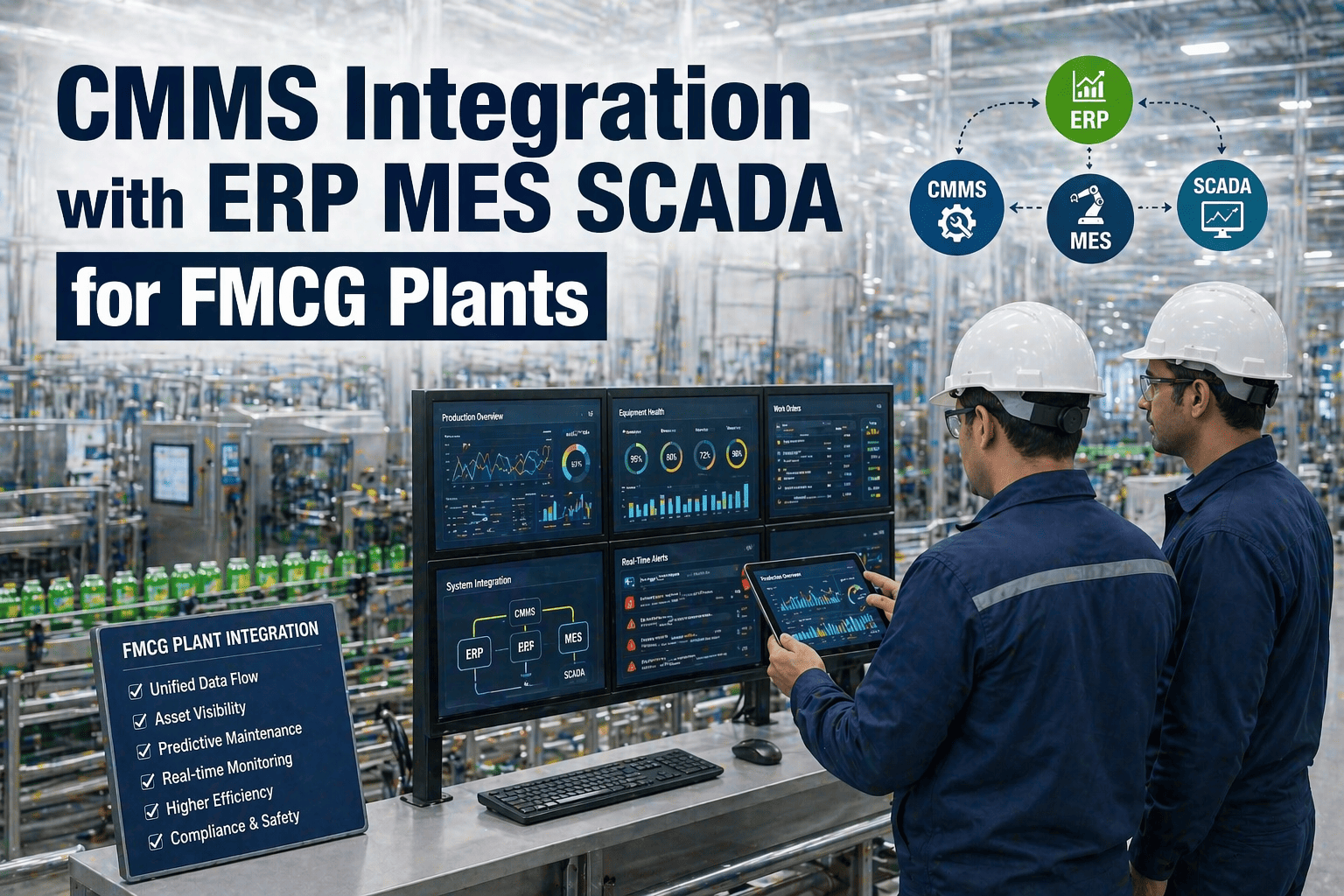
A PLC alarm firing on a filler doesn't automatically become a work order. Historian data showing a bearing trend creeping upward doesn't reach maintenance until someone happens to look. Process alarms and maintenance action live in two separate systems, and the gap between them is where predictive maintenance quietly turns into reactive maintenance. Sign up to close that gap and turn plant-floor data into work orders the moment it matters.
What This Guide Covers
SCADA/PLC-CMMS integration is where FMCG predictive maintenance either becomes real-time or stays batch-and-late. This guide covers integration architecture, alarm-to-work-order automation, tag mapping, and historian data leverage, and the CMMS setup that turns plant-floor data into real-time maintenance action.
Where The Data-To-Action Gap Actually Sits
| Layer |
Where It Breaks Down Without Integration |
| PLC alarms |
Alarms sit in the control system log, seen only if an operator happens to check, not routed to whoever should act |
| SCADA tags |
Thousands of tags exist without a mapping to specific assets, so a trend can't be tied to a maintenance decision |
| Historian data |
Years of process history sit unused for maintenance because nothing pulls it into a work order trigger |
| Work order creation |
Manual entry between systems means the delay between an alarm and a work order is often measured in shifts, not minutes |
Four Steps To Real-Time Predictive Alerts
1
Map SCADA And PLC Tags To CMMS Assets
Tying each critical tag to a specific asset record is the foundation everything else in the integration depends on
2
Automate Alarm-To-Work-Order Routing
Defined alarm thresholds that generate a work order automatically remove the manual handoff where delay creeps in
3
Leverage Historian Trends For Early Warning
Pulling historian data into asset trend views catches slow degradation an instantaneous alarm would miss entirely
4
Validate Alarm Thresholds Against Nuisance Rate
Tuning thresholds after go-live keeps the system generating real work orders instead of alert fatigue that gets ignored
Turn Plant-Floor Alarms Into Tracked Work Orders
OxMaint connects to SCADA and PLC systems like Siemens, Rockwell, and Schneider, mapping tags to assets and routing alarms straight into work orders. Sign up for a free trial to start closing the data-to-action gap, or book a demo to see how it maps to your architecture.
What A CMMS Adds To SCADA/PLC Integration
Tag-To-Asset Mapping
Every mapped tag ties process data directly to the correct asset record, no manual cross-referencing needed
Automated Alarm Routing
Threshold breaches generate a work order and route it to the right team without waiting on a manual review
Historian Trend Views
Asset records show historian trend history alongside work order history, connecting cause and maintenance action
Nuisance Alert Tracking
Logging which alerts led to real findings versus false positives makes threshold tuning a data-driven process
Integration Rarely Fails Loudly
A plant without SCADA-CMMS integration doesn't look broken — alarms still fire, historians still log, work still gets done eventually. The plants that actually run predictive maintenance are the ones that closed the gap between alarm and work order, not the ones treating the two systems as separate tools that happen to sit on the same network.
Frequently Asked Questions
Q
Which SCADA and PLC platforms typically need to be supported?
Most FMCG plants run a mix of Siemens, Rockwell, and Schneider systems across different lines and vintages, so integration architecture needs to handle multiple protocols rather than assuming a single vendor standard.
Q
Why do alarm-to-work-order rules need tuning after go-live?
Initial thresholds are often set conservatively and generate too many low-value alerts, so tracking which alerts led to real findings lets the team tighten thresholds and keep the system trusted rather than ignored.
Q
Is historian data alone enough for predictive alerts without CMMS integration?
Historian data can show a trend, but without a connection to a work order system someone still has to notice the trend and manually act on it, which reintroduces the same delay integration is meant to remove.
Close The Gap Between Alarm And Action
OxMaint connects SCADA and PLC data straight into work orders, so plant-floor alerts become tracked maintenance action instead of unread logs. Sign up for a free trial to get your integration running, or book a demo to see it built around your systems.