FMCG CMMS-ERP Integration: SAP, Maximo & Predictive Guide

By Mark strong on August 26, 2026

fmcg-cmms-erp-sap-maximo-integration-predictive

A predictive alert is only half useful if it stops at the CMMS. In most FMCG plants, the part still needs a purchase order, the spend still needs to hit the right cost center, and finance still needs the number to reconcile — none of which happens unless the CMMS actually talks to SAP, Maximo, or whatever ERP runs the plant. Sign up to connect predictive maintenance directly into your ERP's work order and purchasing flow.

What This Guide Covers

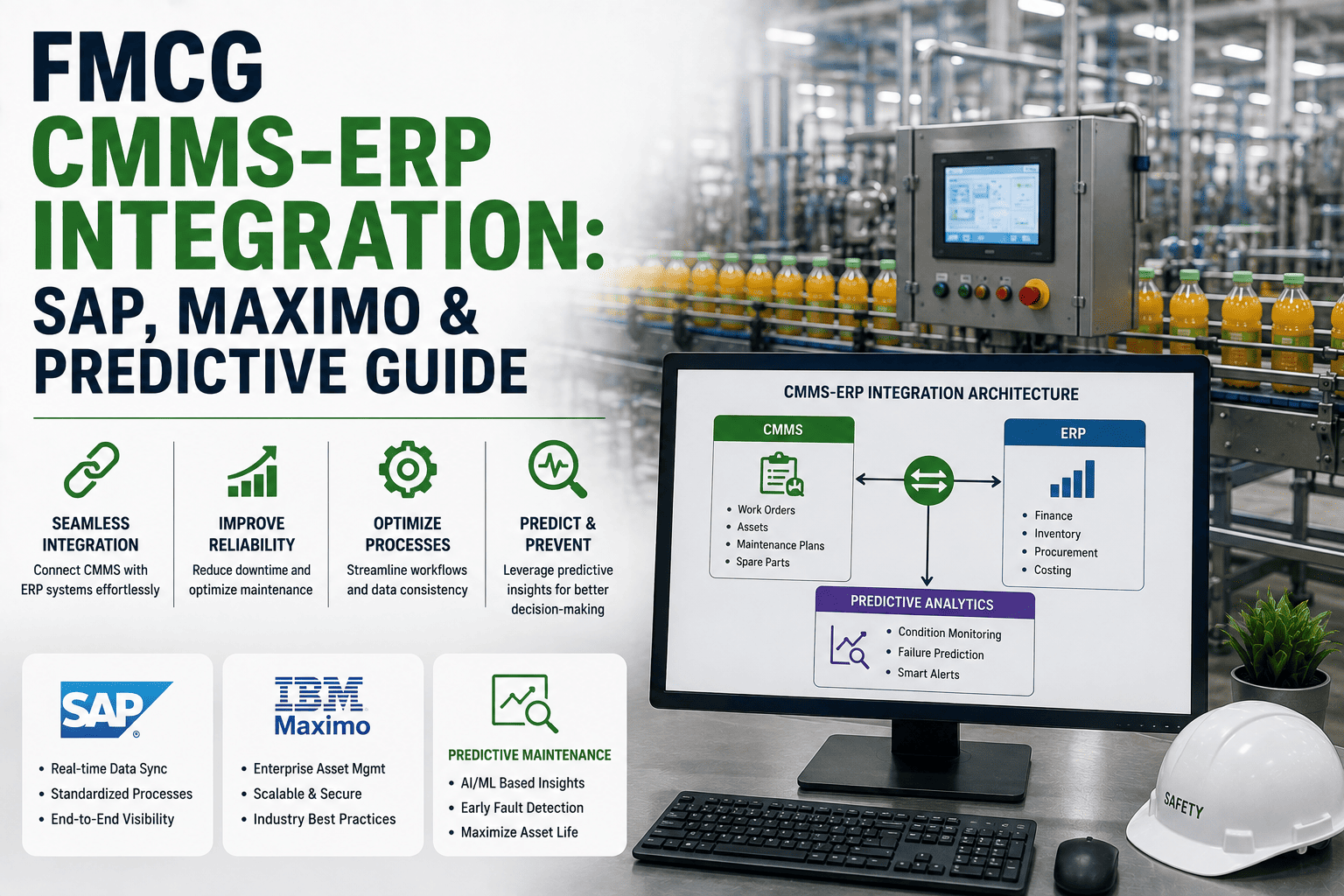
This guide covers FMCG CMMS-ERP integration for SAP, Maximo, Infor EAM, and Oracle: why maintenance and financial systems need to connect, the integration architecture that carries a predictive alert through to a purchase order, how SAP PM, Maximo, and Infor EAM each approach connectivity, and the integration design that keeps cost data reconciled across systems.

Why A Disconnected CMMS Costs FMCG Plants Real Money

When the CMMS and ERP don't talk, someone on the floor has to manually retype a work order into SAP or Maximo to get a part ordered, and someone in finance has to manually match maintenance spend back to the right cost center at month end. Every manual step is a delay, and in FMCG plants running tight production schedules, that delay is often the difference between a predictive catch and a reactive breakdown.

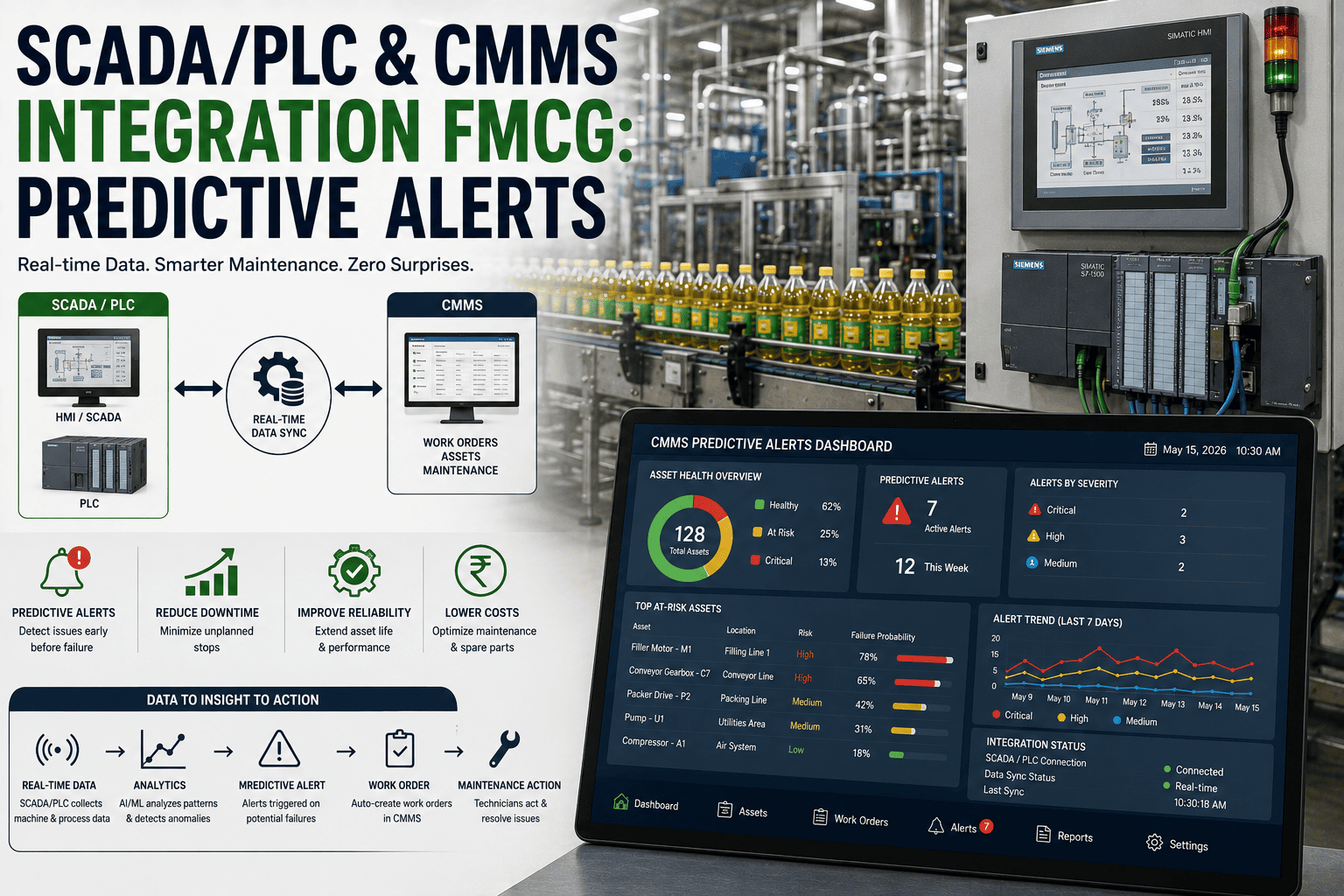
How A Predictive Alert Flows Into The ERP

01
Predictive Alert Fires
An anomaly on a monitored asset triggers a maintenance alert inside the CMMS in real time
02
Work Order Auto-Generated
A work order is created automatically and assigned to a technician, no manual entry required
03
ERP Purchase Order Sync
If a part is needed, the API pushes a purchase requisition straight into SAP, Maximo, or Infor EAM
04
Cost Data Reconciled
Labor and parts cost sync back to the right cost center automatically, ready for finance close

How SAP, Maximo, And Infor EAM Compare On Integration

System Integration Approach
SAP PM Connects through SAP's standard APIs for work orders, notifications, and purchasing modules
IBM Maximo Uses REST APIs to sync work orders, assets, and inventory between the CMMS and Maximo's asset registry
Infor EAM Integrates through Infor's ION middleware, keeping asset and purchasing data aligned across systems
Connect Predictive Maintenance To Your ERP

OxMaint syncs work orders, purchase requisitions, and cost data directly with SAP, Maximo, and Infor EAM, so a predictive alert turns into a purchase order without anyone retyping it. Sign up for a free trial to start mapping your integration, or book a demo to see it connect to your ERP.

What Real Integration Solves For FMCG Plants

Automated Purchase Orders
A flagged part triggers a purchase requisition in the ERP automatically, cutting the wait between alert and part in hand
Live Inventory Sync
Spare parts stock levels stay accurate across the CMMS and ERP instead of drifting apart in two separate systems
Cost Reconciliation
Labor and parts cost land in the correct cost center automatically, removing the manual month-end matching
One Source Of Truth
Maintenance history, asset data, and financials stay aligned, so no two teams are working off different numbers
Integration Is An Architecture Decision, Not A One-Time Project

Bolting on a one-off data export between CMMS and ERP breaks the first time either system updates. The FMCG plants that keep predictive workflows and financial data in sync long-term are the ones that treat the connection as an ongoing API integration, not a spreadsheet passed between two teams.

Frequently Asked Questions

Q Does CMMS-ERP integration require custom development?
Not usually. Most SAP, Maximo, and Infor EAM connections use standard REST APIs or middleware the ERP already supports, so integration is configuration work more than custom coding.
Q What data actually needs to sync between systems?
Work orders, asset records, spare parts inventory, and cost data are the four that matter most, since those are what connect a maintenance event to a financial one.
Q Can predictive maintenance still work without ERP integration?
Yes, but the alerts stay isolated to maintenance. Without integration, someone still has to manually push every part request and cost entry into the ERP by hand.

Turn Predictive Alerts Into Purchase Orders, Automatically

OxMaint connects maintenance, purchasing, and cost data directly with SAP, Maximo, and Infor EAM so nothing gets retyped between systems. Sign up for a free trial to start mapping your CMMS-ERP integration, or book a demo to see it fit your ERP stack.
Share This Story, Choose Your Platform!