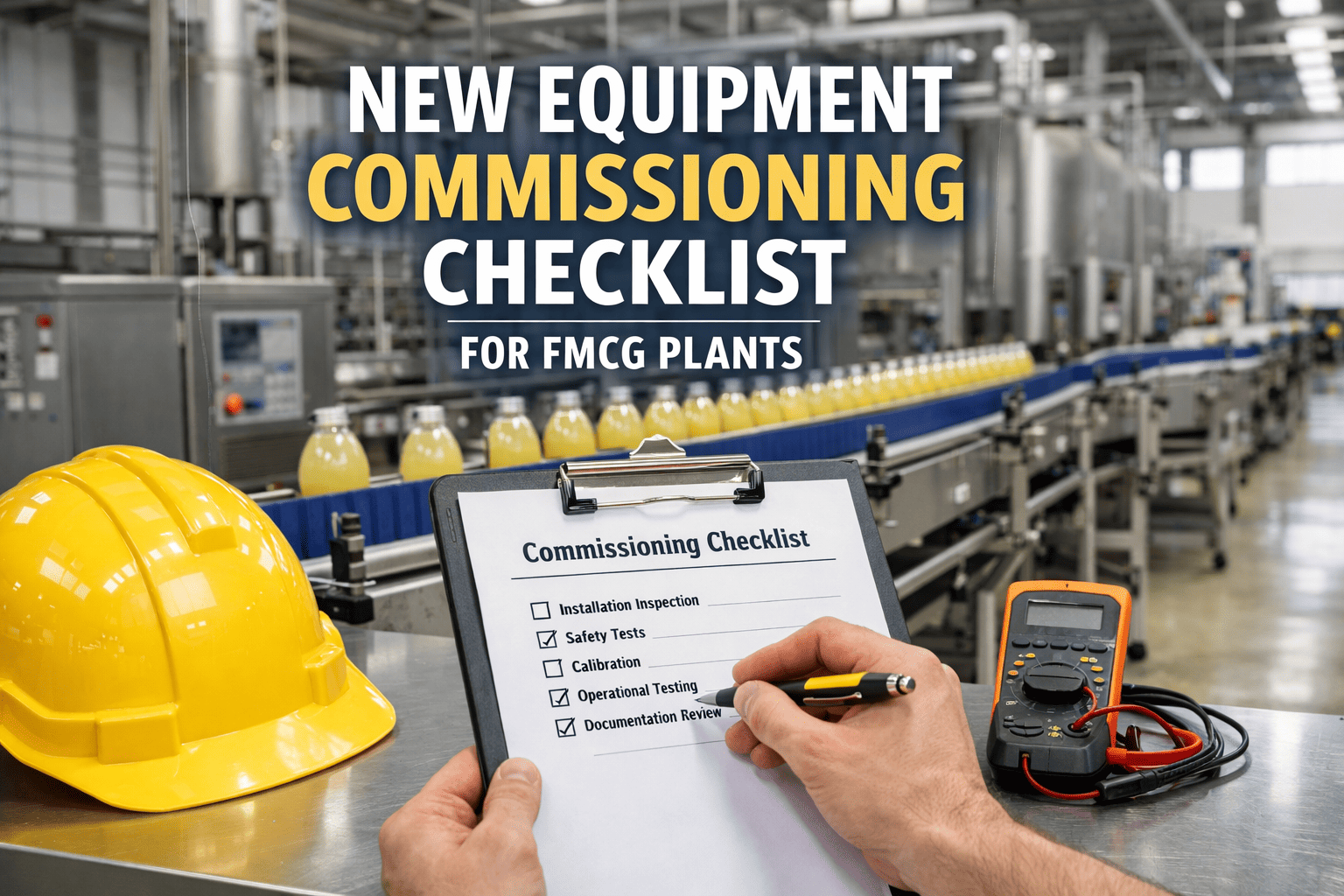
New equipment commissioning is the single moment in an asset's lifecycle where every decision about its long-term reliability is made. Miss the baseline vibration reading and you have nothing to compare against when the bearing starts to deteriorate. Skip the utility verification and you find out the compressed air supply is undersized when the machine runs its first production cycle. Forget to create the PM schedule in the CMMS and the first maintenance event happens reactively — six months later, at 2am. This checklist covers every step from pre-installation verification through to live PM scheduling in Oxmaint — structured so that by the time a piece of equipment enters production, its maintenance programme is already running.
Phase 1: Pre-Installation Verification
Pre-installation verification prevents the most expensive commissioning failures — discovering on installation day that the floor loading is insufficient, the door opening is too narrow, or the electrical supply doesn't match the equipment specification. Every item in this phase should be completed and signed off before the equipment leaves the supplier's facility.
Phase 2: Installation Verification
Installation verification confirms that the physical installation meets specification before any utilities are connected or power is applied. An equipment frame that is not level will cause premature bearing wear, belt misalignment, and vibration-induced fastener loosening throughout its operating life — problems that are difficult to trace back to the original installation error.
Phase 3: Utilities and Services Verification
Utility verification is the phase where the most surprises occur — compressed air supply pressure that drops 2 bar when the machine runs at full load, electrical supply that was wired for the wrong voltage, or drainage that is too small for the machine's peak discharge rate. Every utility connection must be tested under load conditions, not just verified at the connection point.
Phase 4: Functional Testing
Functional testing is the commissioning phase where the equipment proves it does what it was purchased to do — under the operating conditions of your facility, not the supplier's test environment. This phase should be witnessed and signed off by both the commissioning engineer and the plant engineering manager before production use begins.
Phase 5: Baseline Recording
The baseline recording phase is the most undervalued step in equipment commissioning — and the one most commonly skipped under schedule pressure. A baseline reading taken at commissioning is the only objective reference for determining whether a machine is running normally or deteriorating. Without it, maintenance decisions are based on feel rather than data.
Phase 6: Handover and PM Schedule Setup
The handover phase closes the loop between commissioning and the start of the asset's operating life. Every task in this phase either transfers knowledge from the commissioning team to the plant team, or creates the maintenance infrastructure that will support the equipment for the next 10–20 years. Skipping any item here creates a gap that will cost more to fill later than it would have cost to complete at commissioning.


.png)

