Robotic Palletizing & Depalletizing Solutions for FMCG Packaging Lines
By Oxmaint on February 17, 2026
A mid-size FMCG bottling operation in Georgia was running three manual palletizing stations at end-of-line, each staffed by two operators per shift. Throughput capped at 14 cases per minute per station. Repetitive strain injuries averaged 6.2 incidents per year — the single largest category in the plant's OSHA 300 log. After deploying two robotic palletizing cells with integrated conveyor feeds and connecting them to a CMMS for cycle-count-based preventive maintenance, the line pushed 28 cases per minute per cell with zero ergonomic injuries in the first 12 months. But the number that changed the CFO's outlook was unplanned downtime: 1.8% versus the industry average of 7–12% for robotic palletizers — because every gripper, servo, vacuum generator, and conveyor belt was tracked against actual operating data, not calendar dates. Schedule a demo to see how Oxmaint manages palletizer maintenance and conveyor integration.
2×
throughput per cell vs. manual palletizing — with fewer operators and zero ergonomic injuries
Composite data from FMCG palletizer deployments 2024–2026
85%reduction in end-of-line ergonomic injury incidents
72%less labor cost per pallet at full utilization
1.8%unplanned downtime with CMMS-integrated preventive maintenance
14–18 motypical ROI payback period for FMCG robotic palletizer cells
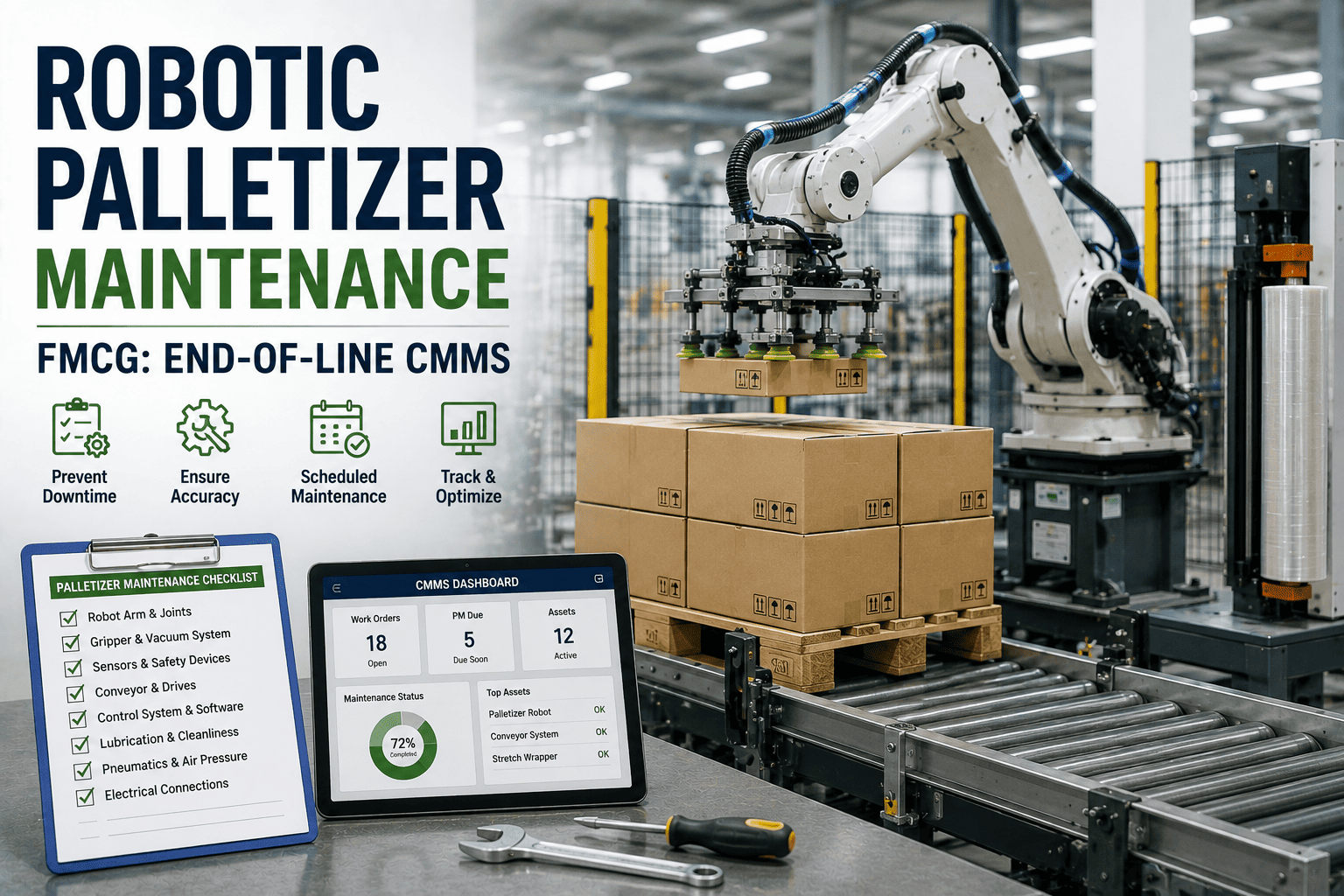
Your palletizer is only as reliable as its maintenance program. Oxmaint tracks every gripper cycle, servo hour, and conveyor belt meter — auto-generating work orders before component wear becomes production downtime.
Why Manual End-of-Line Palletizing Is Ending in FMCG
Manual palletizing persists in FMCG plants not because it works well, but because alternatives historically required capital investment mid-size operations could not justify. That calculus has shifted. Robot cell costs have dropped 40% since 2020, mixed-case pattern software has matured, and the labor market for physical warehouse roles has tightened to the point where overtime premiums and injury costs now exceed the annualized cost of automation. The plants still running manual end-of-line are paying more per pallet — they just cannot see it because the costs are buried across payroll, workers' comp, quality defects, and throughput constraints.
Palletizer Technology for FMCG Lines
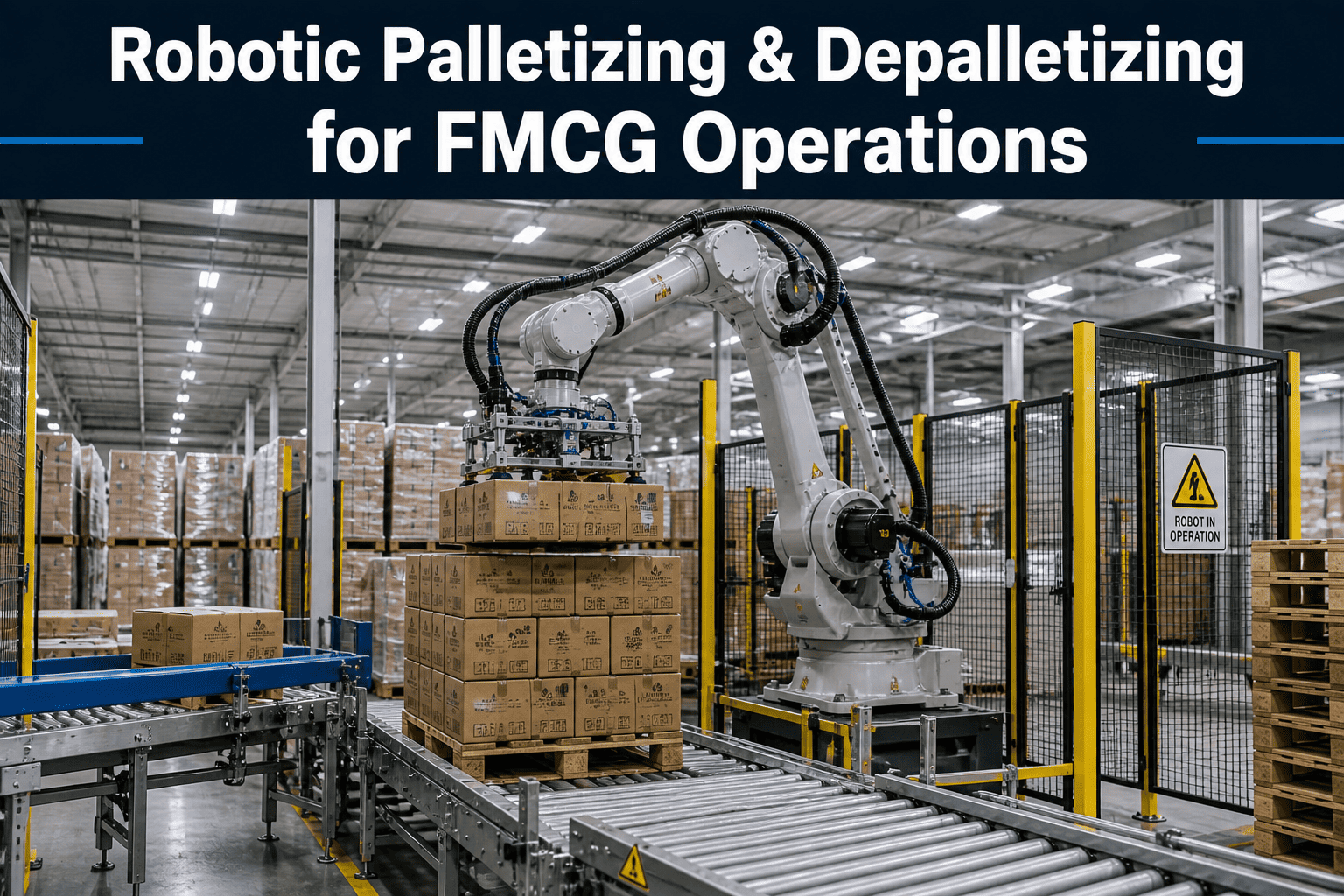
FMCG packaging demands palletizers that handle high-speed changeovers between SKUs, mixed-case pattern building, and continuous multi-shift operation. Each technology serves a different profile — and each creates distinct maintenance requirements that CMMS tracking must address.
Palletizer Types & FMCG Applications
Articulated Arm
6-Axis Robot Palletizers
Mixed-case pattern flexibility20–30 cases/min per cellMulti-line servicingCompact footprint
High-SKU
Gantry / Cartesian
Layer-Building Palletizers
Full-layer placement per cycle40–120 cases/min throughputSingle-SKU high-speed runsLower per-case energy cost
High-Volume
Collaborative
Cobot Palletizer Cells
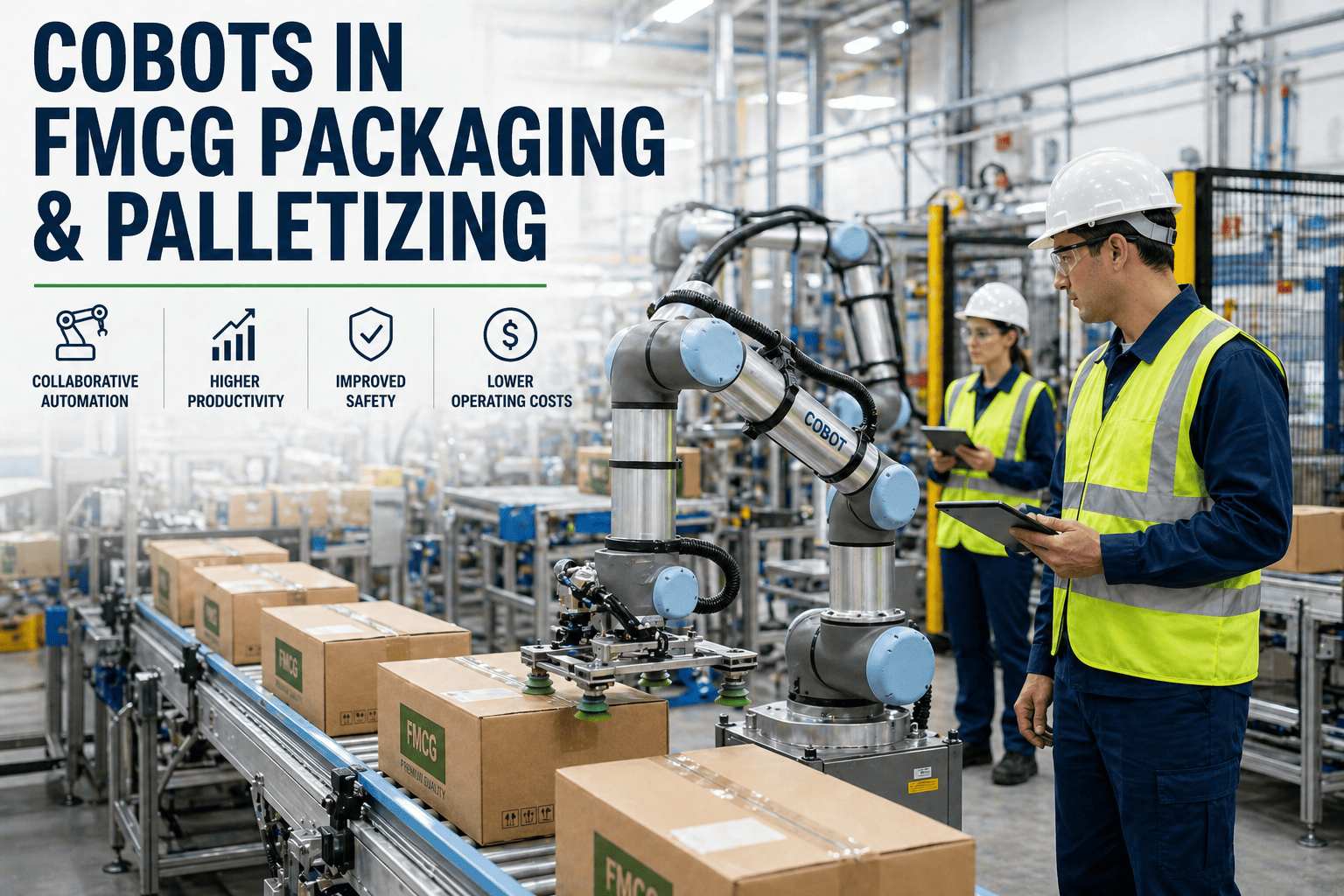
No safety fencing required8–14 cases/min per unitDeploy in days, not weeksLowest capital entry
Low-Med Vol
Depalletizing
Inbound Layer & Case Removal
Vision-guided layer pickingMixed-SKU inbound handlingDamaged-case detectionConveyor-fed to production
Receiving
Critical Subsystems and Maintenance Priorities
Robotic palletizers run 16–24 hours per day in FMCG plants, accumulating cycle counts that accelerate wear far faster than calendar-based PM schedules anticipate. The plants holding 98%+ uptime track these components against actual operating data. Start tracking your palletizer fleet — sign up free.
Palletizer Subsystem Maintenance Map
Subsystem
Degradation Signals
Service Interval
Failure Cost
Gripper / End-of-Arm Tool
Grip force decline, vacuum leak rate, suction cup wear
2,000–5,000 hrs or 500K cycles
$3K–$12K
Servo Drives & Motors
Current draw increase, positioning error, thermal anomaly
8,000–12,000 operating hours
$5K–$25K
Conveyor Belts & Rollers
Belt tracking drift, roller bearing noise, splice degradation
4,000–8,000 hrs or belt meters
$2K–$8K
Vacuum Generators
Flow rate decline, response time increase, line cracking
Camera calibration drift, pattern errors, false rejects
Monthly calibration check
$3K–$15K
Plants achieving sub-2% unplanned downtime track all six subsystems against cycle counts in their CMMS — not calendar dates alone.
How CMMS Integrates with Palletizers and Conveyors
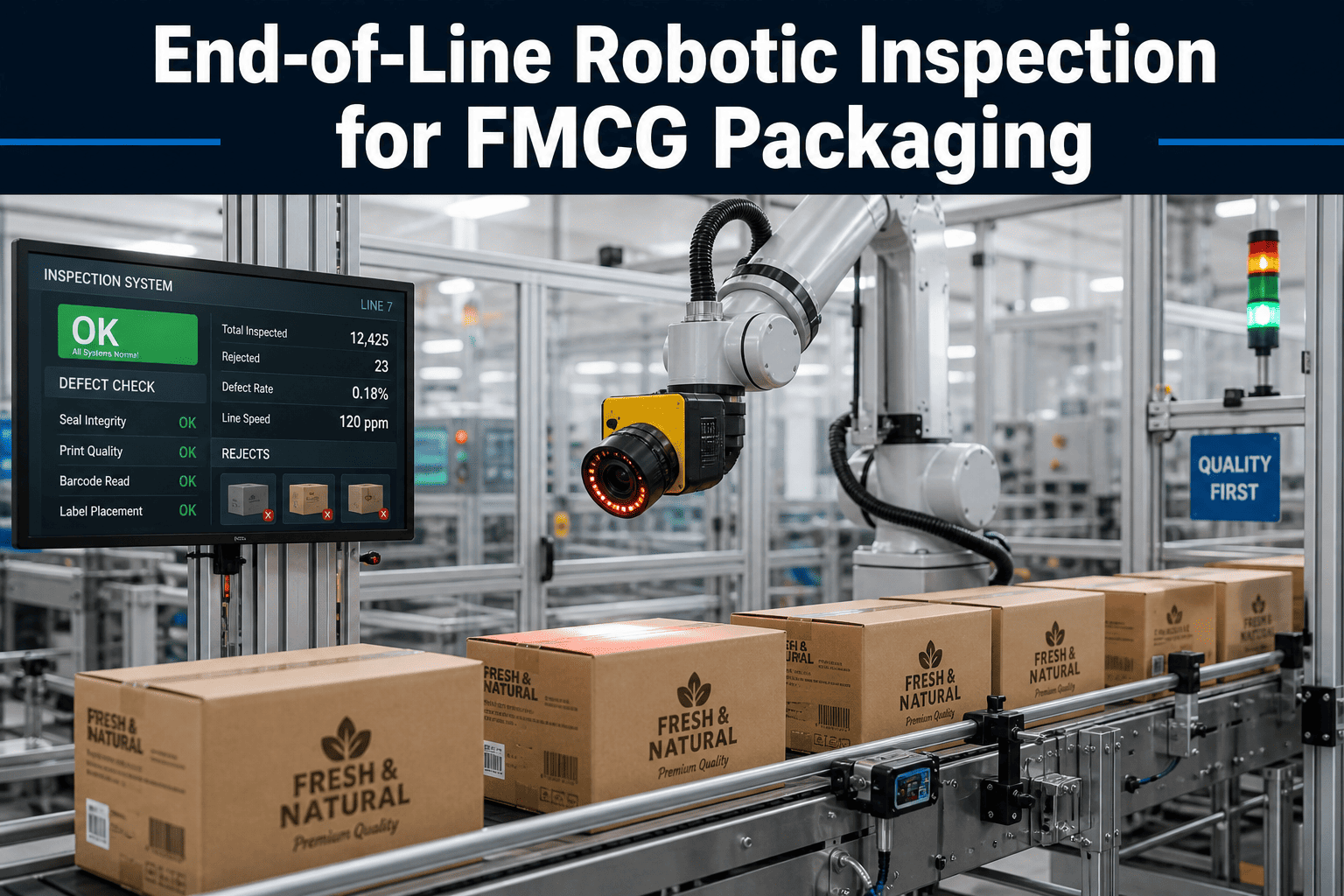
The palletizer does not operate in isolation — it is the terminus of a conveyor network that includes infeed lanes, accumulation tables, case turners, label stations, and stretch wrappers. A single conveyor fault upstream can starve the palletizer; a palletizer fault backs up the entire packaging line. CMMS integration treats the complete end-of-line as one connected asset chain.
Oxmaint Palletizer & Conveyor Integration
Cycle-Count-Based Work Orders
PMs trigger by actual gripper cycles, conveyor belt meters, and servo hours — not calendar intervals. Every component gets serviced at the right time based on real wear.
End-of-Line Asset Chain Mapping
Palletizer, conveyors, stretch wrapper, and label verifier linked as one asset chain. A fault on any component shows upstream/downstream impact in the work order.
Spare Parts Auto-Reorder
Suction cups, belts, gripper pads, and servo components tracked with min/max stock levels. Predicted consumption triggers POs before stockouts halt production.
OEE-Linked Maintenance Analytics
Correlate palletizer OEE with maintenance events to see which PM actions improve availability, performance, and quality — and which need interval adjustment.
Keep Your Palletizers Running at Line Speed
Oxmaint gives packaging operations a single platform to manage every palletizer, conveyor, and end-of-line asset — with cycle-based PMs, spare parts tracking, and OEE analytics that connect maintenance actions directly to throughput.
The decision to automate palletizing is not just about speed — it is about total cost of operation, injury exposure, quality consistency, and flexibility between SKUs without retraining a crew.
End-of-Line Operations Comparison
Manual Palletizing
Robotic + CMMS
10–14 cases/min with fatigue decline across shift
20–30 cases/min sustained 24/7, no performance fade
Zero ergonomic injuries; operators redeploy to value-added roles
SKU changeovers require crew retraining and pattern instruction
Pattern change via software in minutes — no physical reconfiguration
Pallet quality varies by operator skill and fatigue level
Consistent stack height, edge alignment, and wrap stability every pallet
Staffing shortages and overtime premiums erode margin
72% lower labor cost per pallet at full utilization
7–12%typical unplanned downtime (industry avg)
1.8%unplanned downtime with CMMS maintenance
Impact: What Robotic Palletizing + CMMS Delivers
85%
Fewer ergonomic injuries
Eliminating manual case lifting removes the #1 injury category from OSHA logs at FMCG plants
72%
Lower labor cost per pallet
Eliminates 4–6 manual positions per shift while increasing throughput 2× per cell
98%+
Uptime with CMMS integration
Cycle-count-based PMs keep unplanned downtime below 2% vs. 7–12% industry average
14-18
Month payback period
Labor elimination, injury reduction, throughput gain, and pallet quality improvement combined
Implementation Roadmap
Most FMCG plants achieve full production integration within 12–16 weeks when maintenance infrastructure is built in parallel with cell deployment. Schedule a demo to plan your rollout.
Palletizer Deployment & CMMS Integration
1
Weeks 1-3
Line Assessment & Cell Selection
Audit throughput, SKU mix, case dimensions, and conveyor layout. Select palletizer type and end-of-arm tooling matched to product profiles and changeover frequency.
2
Weeks 4-8
Cell Install & Conveyor Integration
Install palletizer cell, integrate infeed conveyors, case turners, and stretch wrapper. Commission safety systems — light curtains, E-stops, and interlocks.
3
Weeks 6-10
CMMS Setup & PM Activation
Register every subsystem in Oxmaint. Configure cycle-count PMs, spare parts catalog, and safety inspection schedules. Build end-of-line asset chain.
4
Weeks 10-16
Production Ramp & Optimization
Run parallel production to validate throughput targets. Calibrate PM intervals against actual wear data. Train technicians on mobile work order execution.
Never miss a gripper replacement or safety certification again. Oxmaint auto-schedules every PM by cycle count and sends escalation alerts before overdue inspections become production losses.
Can a single palletizer handle mixed-case patterns for multiple SKUs?
Yes — 6-axis articulated arm palletizers are designed for FMCG mixed-case requirements. Pattern changes execute via software in under two minutes with no physical tooling swap. Modern pattern-building software handles hundreds of SKU configurations and optimizes stack stability for each combination. Mixed-case operations stress the gripper/EOAT more than single-SKU runs, requiring tighter cycle-count-based service intervals tracked in your CMMS.
What is the typical ROI payback period?
Most FMCG operations see payback in 14–18 months based on labor elimination, injury reduction, throughput increase, and pallet quality improvement. Multi-shift plants see faster payback because the robot operates continuously without overtime premiums. Plants without CMMS-integrated maintenance see payback stretch to 20–24 months due to reliability issues. Schedule a demo for a customized ROI projection.
How does Oxmaint differ from the robot OEM dashboard?
OEM dashboards show robot status and utilization. Oxmaint treats the palletizer as part of a connected end-of-line asset chain — tracking grippers, conveyors, wrappers, and safety systems together. Work orders auto-generate with parts lists and scheduling. Spare parts inventory, cost-per-pallet metrics, and OEE correlation are built in. Sign up free to start building your program.
What safety compliance requirements apply?
Robotic palletizers must comply with OSHA 1910.212 (machine guarding), ANSI/RIA R15.06 (industrial robot safety), and NFPA 79 (electrical standard). Safety system validation — light curtains, E-stops, interlocks — requires documented quarterly checks and annual certification. Oxmaint auto-generates these compliance work orders with photo-verified completion and audit-ready documentation.
Your Palletizer Runs 24/7. Your Maintenance System Should Too.
Oxmaint manages every gripper cycle, conveyor belt meter, and safety inspection across your entire end-of-line — with cycle-count work orders, spare parts automation, and OEE analytics that connect maintenance discipline directly to packaging throughput. Request an end-of-line assessment and we will map your maintenance gaps and the throughput you are leaving on the table.