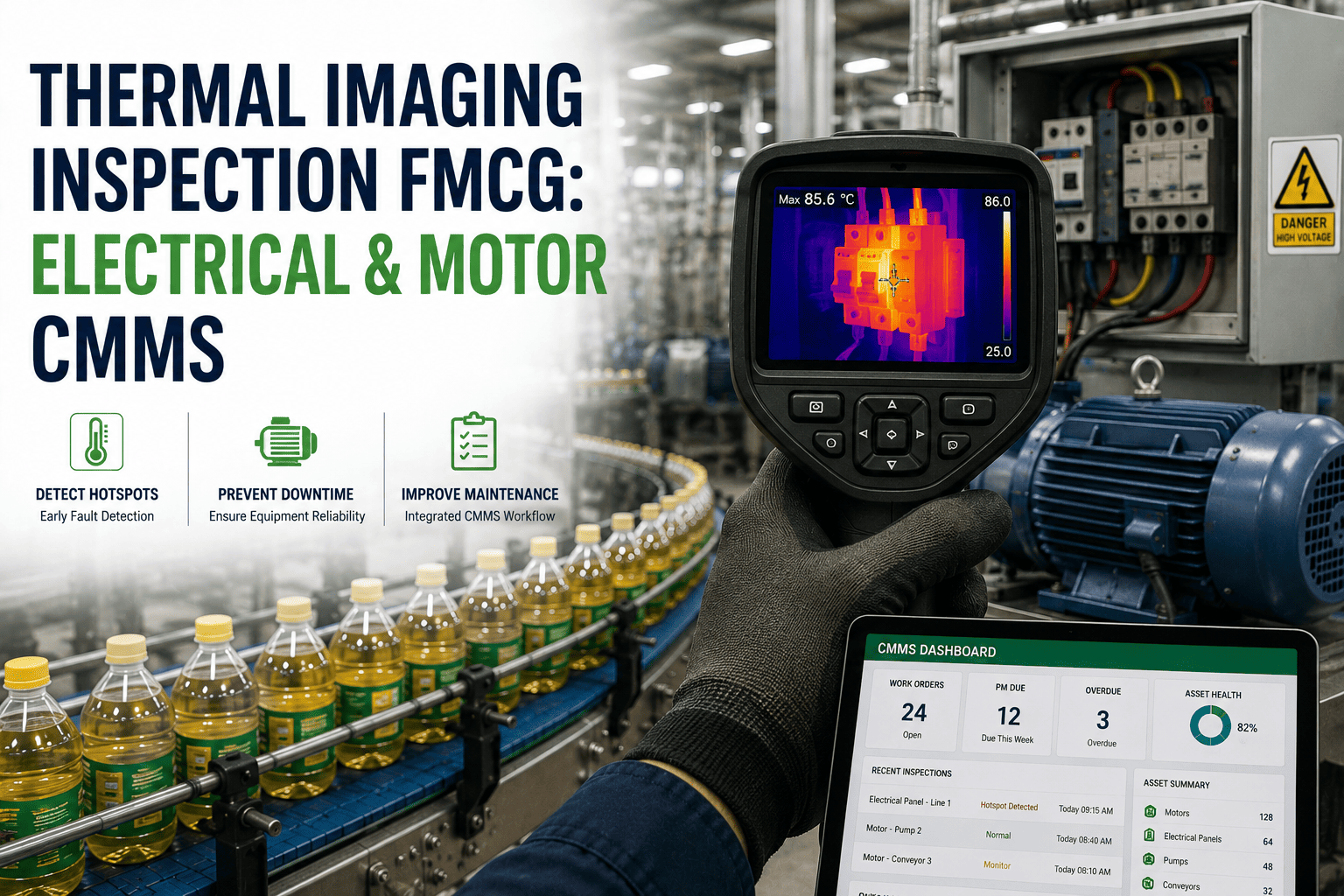
An electrician points a thermal camera at a panel during a routine scan and finds one connection glowing thirty degrees hotter than its neighbors. Nothing tripped, nothing alarmed, nothing looked wrong to the naked eye — but that hotspot was weeks away from an arc flash. Sign up to turn thermal scans into a documented, scheduled reliability program instead of a one-off check.
What This Guide Covers
This guide covers thermal imaging inspection for FMCG electrical and motor equipment: scan cadence, panel inspection, motor terminal inspection, hotspot classification, bearing thermal trending, and the CMMS documentation that turns thermography into a scheduled reliability program.
What A Thermal Scan Actually Reveals
Panel
A single connection reading hotter than identical connections nearby usually means a loose lug or corroding contact
Motor
Uneven heat across the terminal box points to an unbalanced load or a connection starting to resist current flow
Bearing
A housing temperature climbing steadily above its own history, not just an absolute number, is the earliest warning sign
Where Thermography Programs Break Down
| Stage |
How It Costs Reliability |
| Scan cadence |
Irregular or skipped scan cycles let a slow-building hotspot go unnoticed between the rare visits it does get |
| Classification |
Treating every warm reading the same way either buries technicians in false urgency or lets a real risk slide by |
| Documentation |
Images and readings saved separately from the asset record make it impossible to compare this scan with the last one |
| Follow-up |
A flagged hotspot with no linked work order relies on someone remembering to act on a report weeks later |
Four Pillars Of A Thermal Imaging Program
1
A Fixed Scan Cadence For Every Circuit
Panels and motors scanned on a set schedule under load, so no critical circuit goes unchecked for months at a time
2
A Clear Hotspot Severity Classification
Temperature rise measured against a comparable reference point, not a raw number, decides how urgent the finding is
3
Image And Reading History Tied To Each Asset
Every scan filed against the same panel or motor so trends across months are visible instead of scattered in folders
4
CMMS-Linked Follow-Up Work Orders
A flagged hotspot generates a work order directly from the scan, so the finding turns into scheduled action
Turn Every Scan Into A Documented Reliability Record
OxMaint files every thermal image and reading against the exact panel or motor scanned, flags severity automatically, and opens the follow-up work order on the spot. Sign up for a free trial to start your thermography program, or book a demo to see it mapped to your electrical rooms.
What A CMMS Adds To Thermal Imaging Inspection
Scan Records Attached To Each Asset
Every image and temperature reading lives against the specific panel or motor, not a loose folder of files
Automatic Severity Flagging
A reading crossing its severity band gets flagged automatically instead of relying on someone reviewing a PDF report
Direct Work Order Creation
A flagged hotspot opens a work order straight from the finding, closing the gap between scan and repair
Scan Cadence Tracked Plant-Wide
A single view shows which panels and motors are overdue for their next scheduled thermal scan
The Real Value Is In The Comparison
A single thermal image tells you the temperature right now. It's the comparison against last month's scan of the same connection that tells you whether it's degrading, stable, or something to act on today.
Frequently Asked Questions
Q
How often should electrical panels be scanned with a thermal camera?
Most critical distribution panels are scanned annually at minimum, with higher-risk or older panels checked more frequently and always under normal operating load.
Q
Why does a hotspot need a reference comparison instead of a fixed temperature limit?
Ambient conditions and normal operating temperatures vary by circuit, so comparing a connection against an identical nearby one shows real deviation rather than a false alarm from a generic limit.
Q
Can thermal imaging catch bearing problems, or is it only useful for electrical faults?
Bearing housings running hotter than their own history are a valid thermal signal too, making thermography a useful complement to vibration analysis rather than an electrical-only tool.
Build A Thermography Program That Actually Gets Followed Up On
OxMaint connects scan cadence, hotspot classification, and asset-linked history into one CMMS workflow that turns every thermal finding into scheduled work. Sign up for a free trial to get started, or book a demo to see it built around your panels and motors.