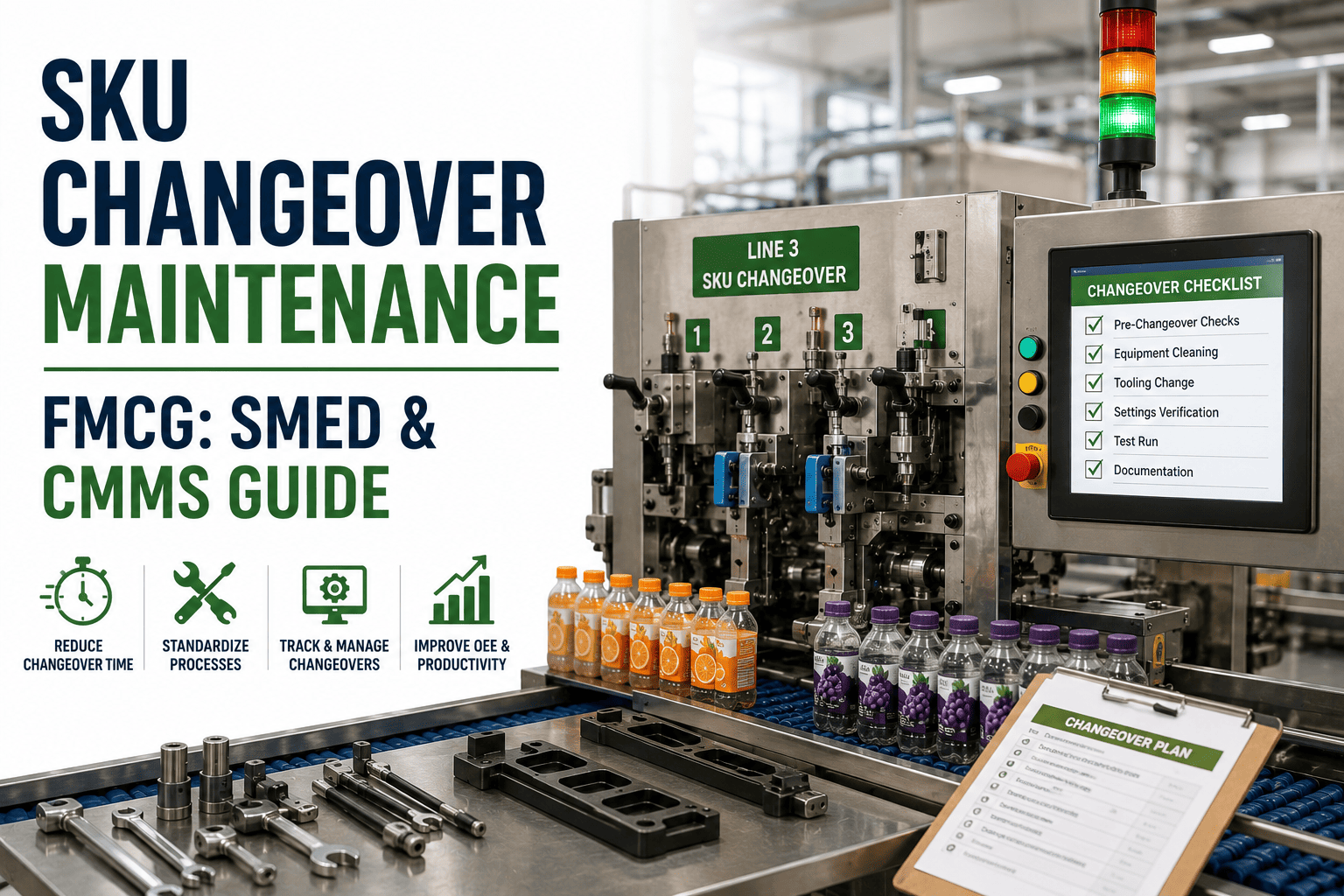
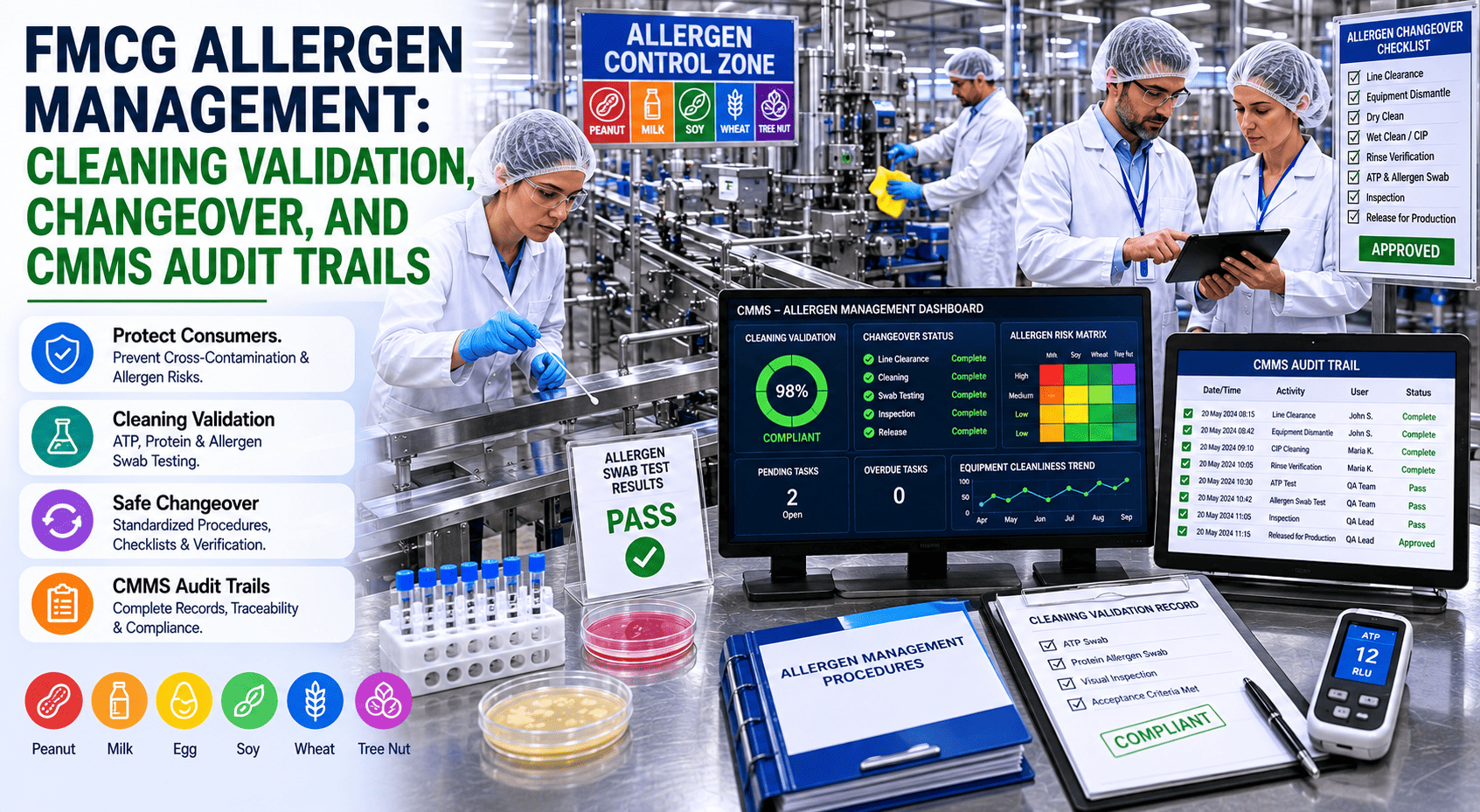
On a high-mix FMCG line, the machine spends less time making product than most people assume. Every SKU switch means stopping, swapping format parts, resetting, validating, and starting again — and none of that counts toward output. Changeover time isn't a side detail on these lines. It's usually the single biggest lever on OEE.
Every Minute Of Changeover Is A Minute Not Producing
Changeover doesn't show up as a breakdown, so it rarely gets tracked with the same discipline as unplanned downtime — even though it can consume more line hours over a month. Treating changeover as a managed process, not a variable one, is often the fastest OEE win available on a high-mix line.
What Actually Shortens A Changeover
Lines that hold consistent changeover times tend to run the same three practices.
SMED Analysis
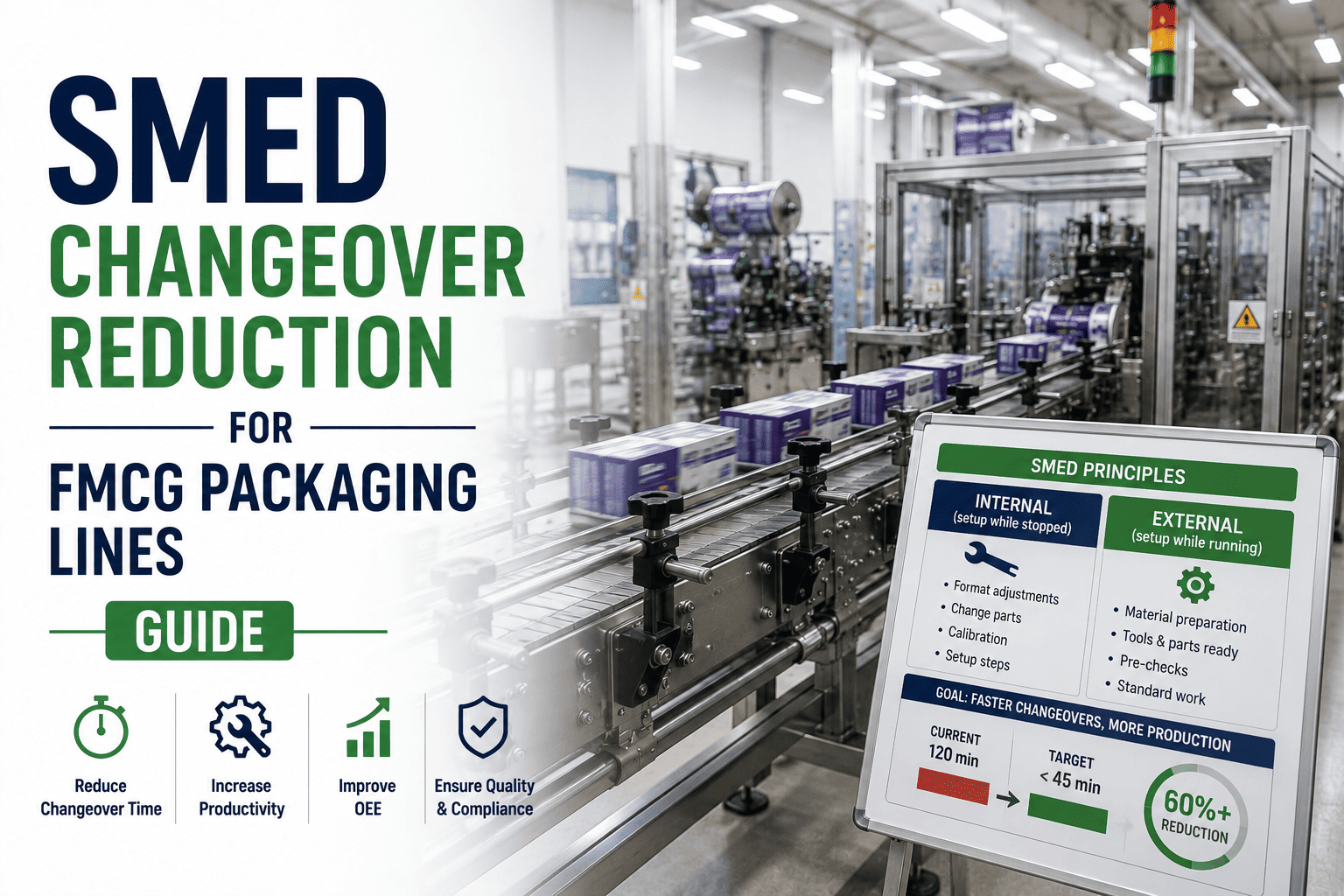
Splitting internal steps that must happen offline from external ones that can happen while the line still runs.
Format Part Kitting
Format parts staged and verified before the line stops, so the changeover isn't spent hunting for the right part.
Standard Work Orders
A defined sequence per changeover type, so the outcome depends on the process instead of who's on shift.
Changeover Step, Common Delay, Fix
| Changeover Step |
Common Delay |
Fix |
| Format part swap |
Searching for or cleaning the wrong part |
Pre-kitted, labeled part sets by SKU |
| Sanitation validation |
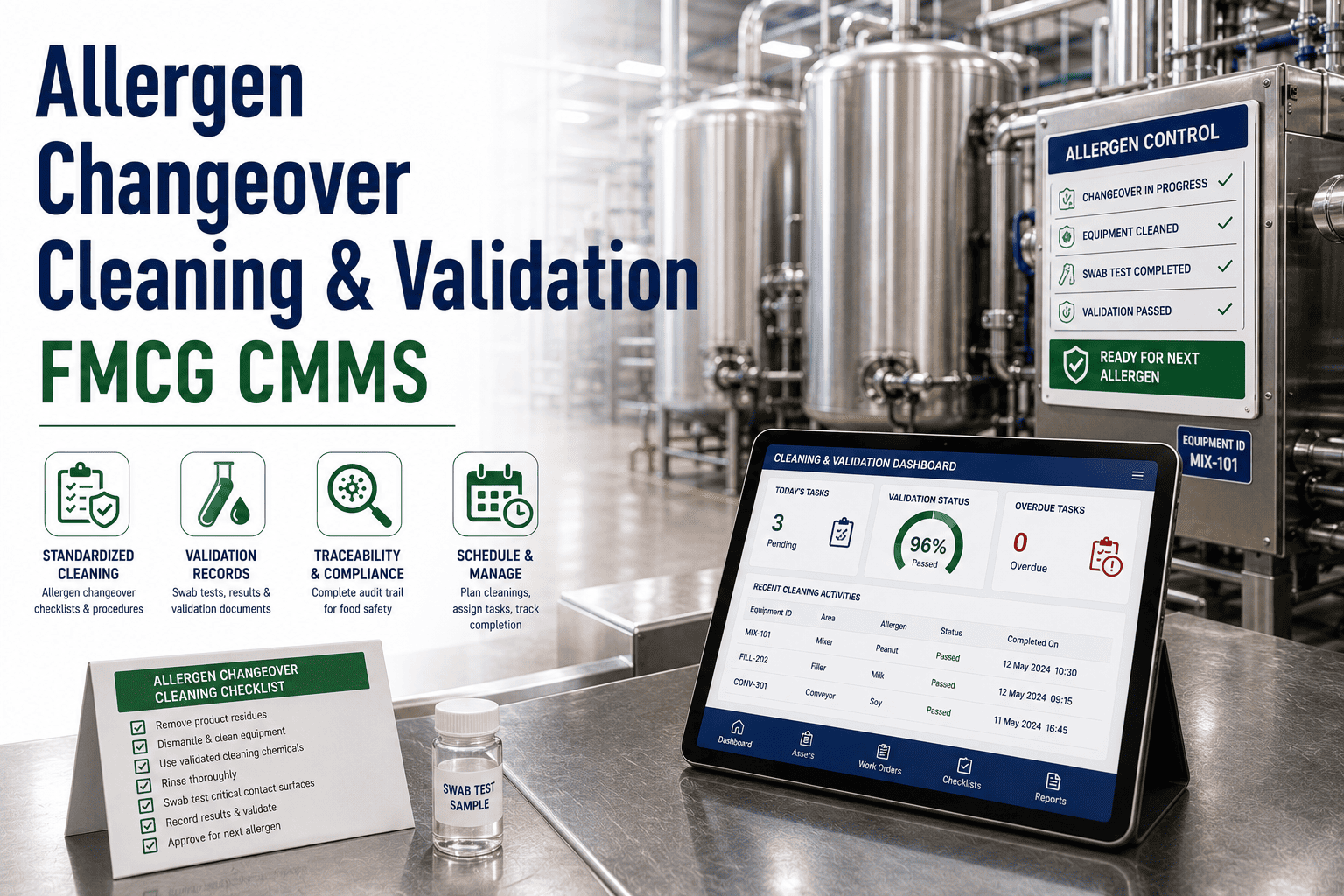
Waiting on swab results before restart |
Parallel validation scheduled during setup |
| Line restart |
Manual re-verification of every setting |
Standard work order with built-in checkpoints |
Turning Changeover Into A Managed Process
Changeover Work Order Structure
Each changeover type mapped to its own work order template, so nothing is left to memory or improvisation.
Parallel-Track Orchestration
Sanitation, kitting, and mechanical steps sequenced to overlap wherever the process allows.
Changeover Time Tracking
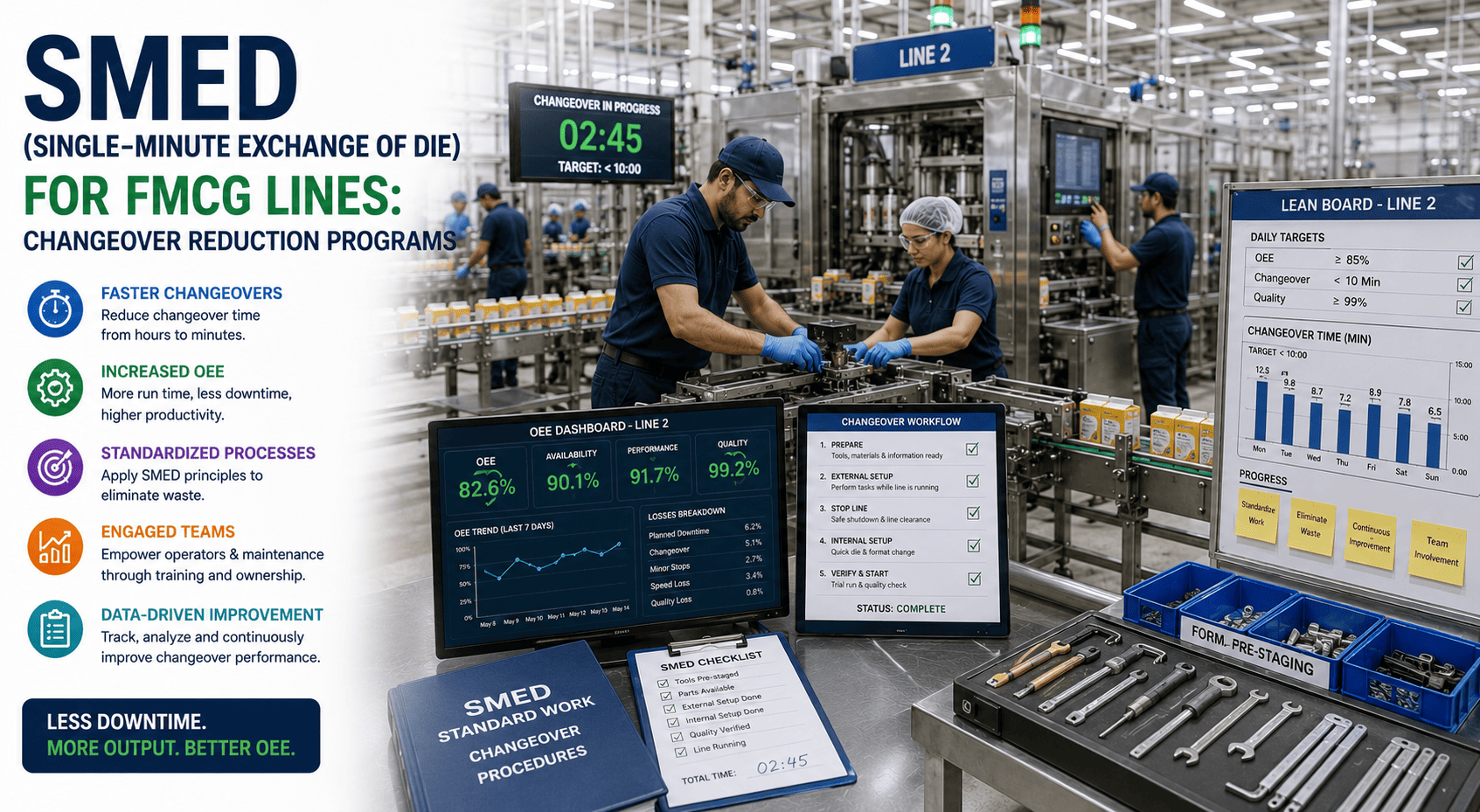
Actual duration logged against target for every changeover, turning drift into a visible, correctable trend.
A changeover program only shortens changeover time when every work order, kit, and validation step is logged and sequenced the same way, every time. Teams that sign up for Oxmaint track changeover work orders, kitting status, and time-versus-target against every line automatically, or book a demo to see a SMED-driven changeover program running live.
Q
Why does changeover time affect OEE more than breakdowns on some lines?
On high-mix lines, frequent SKU switches can add up to more total downtime than unplanned failures, but because each changeover is planned, it often escapes the same scrutiny breakdowns get — even though the cumulative time lost is larger.
Q
What's the difference between internal and external changeover steps in SMED?
Internal steps can only happen while the line is stopped, while external steps — like staging parts or prepping documentation — can be done while the line is still running, so shifting work from internal to external is the core of shortening a changeover.
Q
How does parallel-track orchestration reduce changeover time?
Instead of running sanitation, kitting, and mechanical setup one after another, sequencing them to overlap wherever they don't conflict cuts total elapsed time even though the amount of work stays the same.
Turn Changeover From A Variable Into A Managed Process
Track changeover work orders, format part kitting, and time-versus-target against every SKU switch on every line. Sign up for a free trial to set up your first SMED-driven changeover program, or book a demo to see it running live.