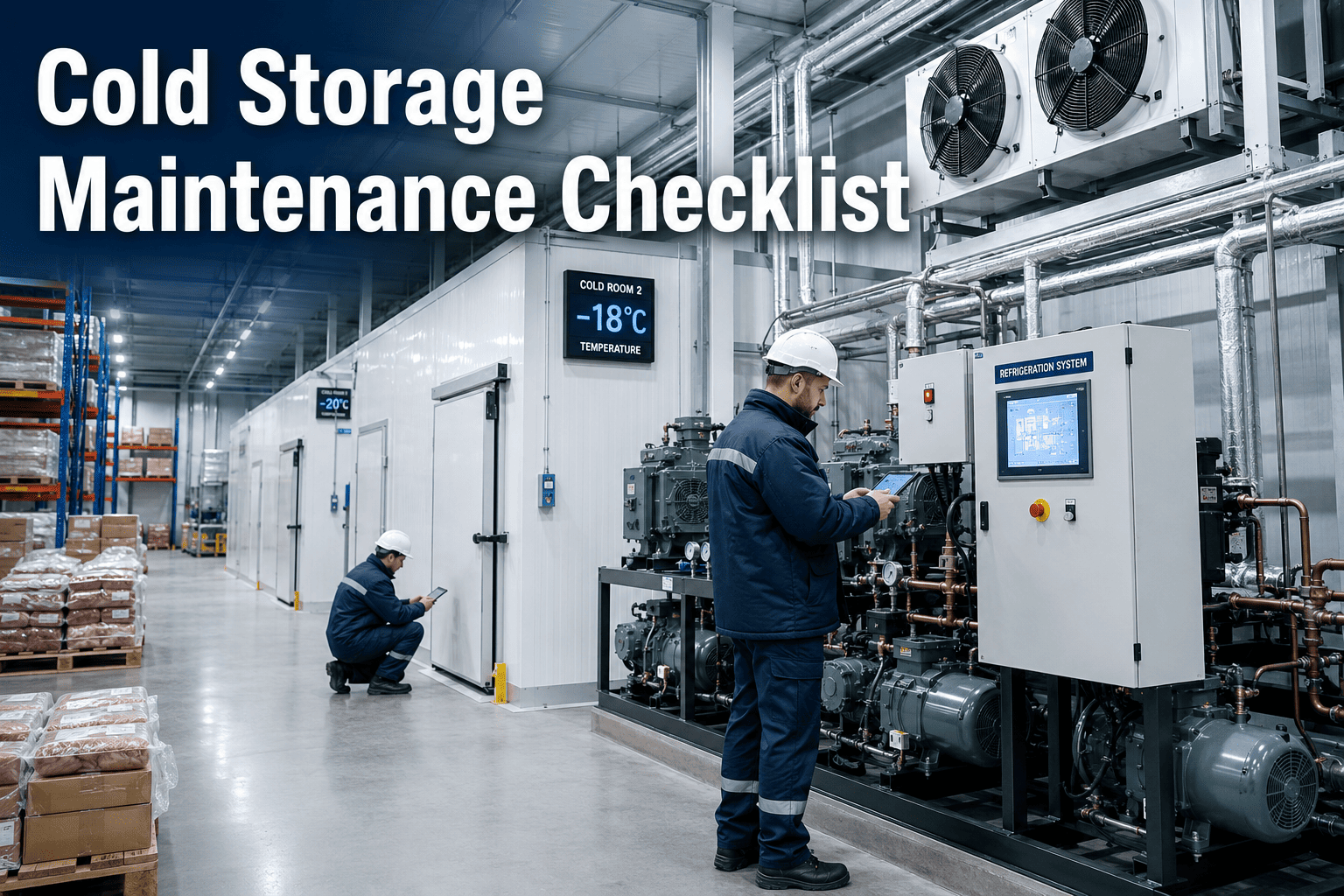
A walk-in cooler compressor failed at 2:14 AM on a Friday in a 40,000 sq ft food distribution center. Nobody noticed until the morning shift arrived at 6:00 AM — by then, the internal temperature had climbed from 2 degrees Celsius to 11 degrees. Three pallets of fresh dairy, two pallets of pre-cut produce, and an entire staging area of seafood crossed the FDA danger zone threshold. Total loss: $34,000 in spoiled product, $8,500 in emergency repair costs, 18 hours of operational disruption, and an FDA auditor visit the following week that flagged incomplete temperature documentation. The root cause was not a sudden catastrophic failure. It was dirty condenser coils that had been restricting airflow for six weeks, quietly forcing the compressor to overwork until it gave out. A single weekly coil inspection — scheduled, tracked, and documented inside a CMMS — would have caught the rising head pressure trend and triggered a planned service call that costs $400 instead of a crisis that costs $42,500. Cold chain equipment does not fail without warning. It fails without monitoring. Want to protect your cold chain before the next silent failure becomes a spoilage crisis — start a free trial and see how sensor-driven PM scheduling works, or book a demo to get a walkthrough built for your facility.
Your Refrigeration Never Sleeps. Your Maintenance Program Shouldn't Either.
OxMaint connects IoT temperature sensors, automated PM scheduling, and real-time compliance documentation into one platform — so your cold chain stays intact 24/7 without depending on manual walkthroughs to catch failures that are already happening.
What Cold Chain Equipment Maintenance Actually Covers
Cold chain equipment maintenance is the structured discipline of inspecting, servicing, and monitoring every refrigeration asset in your facility — from industrial chillers and compressor racks to walk-in coolers, blast freezers, and transport refrigeration units. It goes far beyond topping off refrigerant. A comprehensive program covers condenser and evaporator cleaning, refrigerant charge verification, defrost system calibration, door gasket integrity, electrical connection tightness, and continuous temperature monitoring across every cold zone. Facilities operating under HACCP, FDA 21 CFR Part 117, or FSMA requirements must document every inspection, every reading, and every corrective action — making manual clipboard-based programs a compliance risk in themselves. A 10% drop in condenser heat transfer efficiency can raise energy costs by 20% or more, while a slow refrigerant leak can degrade cooling capacity for weeks before anyone notices the temperature creeping upward. The scope spans your entire cold chain network — and the documentation burden spans every regulatory audit you will ever face. Explore how CMMS-driven cold chain management works in practice — start a free trial or book a demo to see it configured for your plant.
Walk-In Coolers and Freezers
Door gasket integrity, defrost cycle calibration, evaporator coil cleaning, floor heating verification in freezer rooms, and emergency release mechanism testing
Industrial Chillers
Condenser and evaporator cleaning, refrigerant charge verification, oil analysis, compressor amp draw monitoring, and quarterly performance benchmarking
Blast Freezers and Chillers
Airflow balance checks, high-pressure cutout testing, rapid pulldown cycle verification, and controller calibration — failure during post-cook cooldown is a direct food safety violation
Compressor Racks and Refrigerant Systems
Vibration analysis, amp draw trending, electronic leak detection, EPA Section 608 refrigerant tracking, and suction/discharge pressure monitoring
IoT Temperature Sensors
Calibration verification, sensor drift detection, alert threshold configuration, wireless connectivity checks, and data logger accuracy validation across all cold zones
Transport Refrigeration Units
Pre-trip cooling verification, fuel system inspection, thermostat calibration, door seal integrity, and GPS-linked temperature logging for chain-of-custody documentation
Why Cold Chain Equipment Fails — And Why You Don't See It Coming
Most cold chain failures are not sudden. They build silently over days or weeks — through fouled coils, slow refrigerant leaks, drifting sensors, and worn gaskets that nobody inspects on schedule. By the time a temperature alarm triggers, the damage is already done. These are the six failure patterns that account for the majority of cold chain downtime events in food facilities. Identifying them early is not about better technicians — it is about better systems. See how OxMaint catches these failure patterns before they become spoilage events — start a free trial or book a demo for your facility.
Condenser Coil Fouling
Grease, dust, and protein particles accumulate on condenser coils, reducing heat transfer by 20%+ and forcing compressors to overwork. Energy costs rise 30% before failure.
Slow Refrigerant Leak
Gradual capacity loss manifests as longer pull-down times and uneven temperature distribution — weeks before sudden cooling failure and product loss.
Defrost Cycle Failure
Incomplete defrost cycles add ice layer by layer on evaporator coils. Airflow drops 1-2 degrees per day until the coil becomes a solid block of ice requiring hours of manual defrost.
Door Gasket Degradation
Worn gaskets create constant warm air infiltration, increasing refrigeration load by 15-30% and accelerating compressor wear. Develops over months with zero alarms.
Sensor Drift and Calibration Loss
Temperature sensors drift 0.5-1.5 degrees over 6-12 months. Your monitoring system shows 2 degrees Celsius while actual product temperature is 3.5 degrees — inside the danger zone.
Drain Line Blockage
Blocked condensate drains cause water pooling, ice buildup, mold growth, and odors. In food-contact zones, blockages trigger HACCP corrective action requirements.
How OxMaint Protects Your Cold Chain — From Sensor to Work Order
OxMaint replaces clipboard inspections, spreadsheet tracking, and reactive service calls with an integrated system where IoT sensors feed real-time data into automated PM schedules, every inspection generates a digital record, and every out-of-spec reading creates a corrective work order before the temperature alarm ever triggers. Here is how it works across your entire cold chain operation. Ready to see this workflow running on your equipment — start a free trial or book a demo to see it configured for food plant environments.
IoT Sensor Integration
Continuous temperature, humidity, and compressor performance data from every cold zone flows directly into OxMaint. Sensor readings auto-correlate with asset maintenance history — so when a compressor starts drawing 15% more amps than baseline, the system flags it before the temperature drifts.
Automated PM Scheduling
Pre-built cold chain checklists — condenser cleaning, gasket inspection, refrigerant verification, defrost calibration — deploy on configurable intervals. Tasks auto-assign to qualified technicians with complete procedure documentation and compliance requirements attached.
Real-Time Threshold Alerts
Warning and critical alert levels configured per zone. When a walk-in cooler drifts 1.5 degrees above setpoint, the maintenance team gets an immediate alert — not 4 hours later when the morning shift discovers the problem visually.
Auto-Generated Corrective Work Orders
When a checklist finding exceeds a threshold — elevated head pressure, low refrigerant charge, gasket fail — OxMaint auto-generates a corrective work order with asset ID, reading value, and recommended action. Zero handoff gap between inspection and repair.
Refrigerant Compliance Tracking
EPA Section 608 requires records of every refrigerant addition, recovery, leak inspection, and repair. OxMaint automates all recordkeeping for systems with 50+ lbs of regulated refrigerant — eliminating manual logs and audit preparation time.
Multi-Site Cold Chain Dashboard
Corporate maintenance managers see PM completion rates, temperature excursion trends, and compliance metrics across every facility in one view. Identify the plant with rising condenser fouling rates before it becomes the plant with the spoilage event.
Reactive vs. Preventive Cold Chain Maintenance
The gap between reactive and preventive cold chain maintenance is not incremental — it is the difference between a $400 planned service call and a $42,500 crisis. Here is what the two approaches look like side by side across the metrics that actually matter to food plant operations.
| Metric | Reactive Maintenance | Preventive with OxMaint |
|---|---|---|
| Average Repair Cost | $25,000 - $75,000 per emergency | $300 - $800 per planned service |
| Product Loss Per Event | $15,000 - $200,000+ in spoilage | Zero — issues caught before excursion |
| Failure Detection | After temperature alarm triggers | Weeks before — via sensor trends and PM findings |
| Compliance Documentation | Incomplete, manual, audit-risky | Auto-generated, timestamped, audit-ready |
| Energy Efficiency | 20-30% higher energy costs from dirty coils | 15-25% energy savings from clean equipment |
| Annual Downtime | 48-72 hrs from unplanned failures | Under 4 hrs — all maintenance planned |
The Cold Chain IoT Sensor Architecture That Actually Works
IoT in cold chain maintenance is not about installing sensors everywhere. It is about placing the right sensors on the right assets with the right alert thresholds — and connecting that data to PM workflows so readings translate into action, not just dashboards. Here is the sensor architecture that OxMaint supports across food manufacturing and cold storage facilities. See how sensor data flows into automated work orders in real time — start a free trial or book a demo to see it running.
Temperature and Humidity Monitoring
Compressor and Equipment Health
Access Frequency and Seal Integrity
Measurable Impact: What Structured Cold Chain PM Delivers
Frequently Asked Questions
How often should cold chain equipment be inspected in a food manufacturing facility?
Inspection frequency depends on the asset and the environment. In food plants, condenser coils should be inspected weekly — not monthly as general commercial guidelines suggest — because airborne grease, flour dust, and protein particles foul coils far faster. Walk-in cooler temperatures should be checked at least twice daily, with continuous IoT monitoring between manual checks. Refrigerant systems with 50+ lbs of regulated refrigerant require annual leak inspections under EPA Section 608. OxMaint automates all interval scheduling, sends reminders to qualified technicians, and flags overdue inspections in real time.
What does IoT sensor integration look like in a cold chain CMMS?
IoT sensors in each cold zone continuously transmit temperature, humidity, and compressor performance data to OxMaint. The CMMS correlates sensor trends with asset maintenance history — so a compressor drawing 15% more amps than its learned baseline triggers a work order, not just a dashboard alert. Sensor data supplements manual checklist rounds by providing 24/7 coverage between inspections, and automated alerts flag when sensor drift contradicts manual readings, catching calibration issues early.
Can OxMaint handle cold chain compliance documentation for FDA and HACCP audits?
Yes. Every PM inspection, temperature reading, corrective action, refrigerant transaction, and work order completion generates a timestamped digital record inside OxMaint. When an auditor requests temperature logs for a specific cold zone over the last 90 days, the report generates in seconds — not the hours or days it takes to compile from paper logs and spreadsheets. Refrigerant tracking, sensor calibration records, and technician certification documentation are all maintained within the same system.
What is the typical payback period for implementing a CMMS-based cold chain PM program?
Most food facilities see measurable results within 4-6 weeks of launching a structured program. The first returns typically come from catching a condenser fouling issue or slow refrigerant leak that would have caused an emergency call. Within one quarter, combined savings from prevented product losses, reduced emergency repairs, and lower energy consumption typically exceed $30,000 for a mid-size facility. First-year ROI ranges from 8:1 to 15:1 depending on facility size and baseline maintenance maturity.
Your Cold Chain Is Only as Strong as Your Weakest Maintenance Interval.
OxMaint gives food manufacturers and cold storage operators the IoT integration, automated PM scheduling, and compliance documentation to keep every refrigeration asset running at specification — before the next silent failure becomes a $42,500 spoilage event.