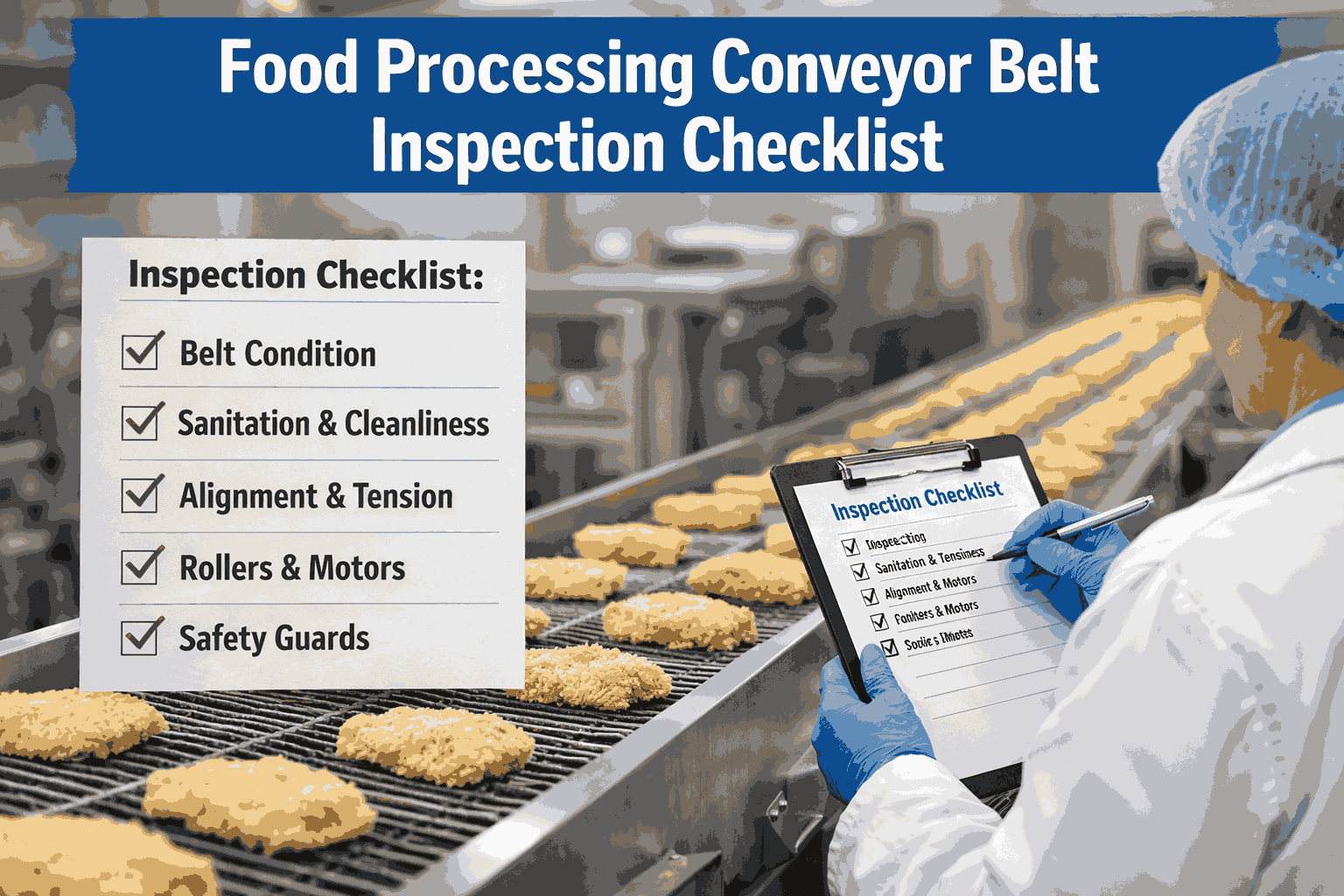
A bakery production line in Pennsylvania lost 14 hours of production when a conveyor belt tracking problem escalated from minor edge wear to complete belt failure during a weekend shift. The belt had been drifting toward one side for three weeks, slowly grinding against the frame until the edge delaminated and wrapped around the tail pulley. Emergency repairs required cutting away damaged belt sections, realigning all idlers, and replacing two damaged bearings—all while 47,000 pounds of dough sat waiting in proofing. The failure was entirely preventable: systematic tracking checks would have identified the drift pattern weeks earlier when a simple idler adjustment would have corrected the problem. Facilities implementing structured conveyor checklist usa protocols catch misalignment in early stages, preventing the catastrophic failures that stop production and destroy expensive belting.
Conveyor belt misalignment rarely happens suddenly. Belts drift gradually due to uneven loading, idler wear, pulley contamination, or frame deflection. Each operating hour with misalignment accelerates belt edge wear, increases drive motor load, and stresses structural components. Without systematic inspection, minor drift becomes major damage before anyone notices the problem.
Sign up for Oxmaint to digitize your conveyor inspection checklists with automated scheduling and trend tracking.
Maintenance Checklist
Conveyor Belt Misalignment Checklist
Systematic inspection procedures to detect belt tracking problems before they cause damage or production loss.
Of Belt Failures Begin with Misalignment
Tracking Issues Correctable with Early Detection
Belt Life Extension with Proper Tracking
10 min
daily
Complete Tracking Inspection Time
Why Belt Alignment Matters in Food Production
In food and beverage manufacturing, conveyor belt misalignment creates problems beyond mechanical damage. Misaligned belts spill product, contaminate adjacent lines, and create food safety hazards when product contacts frame edges or falls into areas that aren't part of the sanitation routine. Belt edge wear generates debris that can contaminate product or jam downstream equipment.
The food industry's stringent sanitation requirements make misalignment particularly costly. When a belt runs off-track, it often contacts surfaces that haven't been included in cleaning protocols, creating potential contamination points. Product that falls off misaligned belts may need to be scrapped even if it appears undamaged, adding waste costs to the mechanical repair expenses.
73%
of conveyor belt failures begin with misalignment issues that progress through predictable stages: initial drift, edge contact, accelerated wear, structural stress, and eventual failure. Systematic inspection catches problems in early stages when correction is simple.
Daily Belt Tracking Checklist
Complete these visual and operational checks at the start of each production shift. Document findings and compare to previous inspections to identify developing trends.
Observe belt position at head pulley
Belt should be centered with equal clearance on both sides. Note any drift direction.
Observe belt position at tail pulley
Check centering and watch for belt oscillation or hunting side to side.
Walk full conveyor length observing tracking
Identify specific locations where belt runs off-center. Mark problem areas.
Check belt edges for wear or damage
Look for fraying, delamination, or gouging that indicates frame contact.
Listen for unusual sounds
Scraping, squealing, or thumping indicates belt contact with structure or component wear.
Check for vibration or belt flutter
Excessive movement indicates tension issues or idler problems affecting tracking.
Observe belt behavior under load
Belt may track differently when loaded. Check with typical product load.
Monitor motor current if accessible
Elevated current suggests increased friction from misalignment or bearing issues.
Check for product buildup on pulleys
Material accumulation on pulleys causes effective diameter changes that pull belt off-center.
Inspect idler rollers for buildup
Uneven buildup creates tracking problems. Clean or schedule cleaning as needed.
Check belt surface for stuck material
Product adhered to belt can affect tracking as it contacts scrapers and idlers.
Digitize Your Conveyor Inspections
Replace paper checklists with mobile forms that track trends, alert supervisors to problems, and build maintenance history.
Weekly Detailed Inspection Checklist
These deeper inspections identify developing problems before they affect daily tracking. Schedule during maintenance windows or shift changes.
Spin each idler roller by hand
Should rotate freely with minimal resistance. Stiff or seized rollers cause tracking drift.
Check idler alignment to frame
Rollers should be perpendicular to belt travel. Misaligned idlers steer belt off-center.
Inspect roller surfaces for wear
Worn crowns, flat spots, or damaged lagging affect belt centering.
Verify self-aligning idlers function
If equipped, confirm pivot action is free and responsive to belt position.
Check head pulley alignment
Pulley axis should be perpendicular to belt centerline. Measure from frame on both sides.
Check tail pulley alignment
Same perpendicularity check. Tail pulley misalignment is common tracking cause.
Inspect pulley lagging condition
Worn, damaged, or missing lagging reduces grip and can cause belt slippage and drift.
Verify crowned pulley profile
If crowned, check that crown is centered and not worn flat.
Check frame for level and straightness
Use level on frame rails. Twisted or bowed frames cause persistent tracking problems.
Inspect mounting and supports
Check for loose bolts, cracked welds, or settling that could affect alignment.
Look for frame damage or dents
Impact damage from forklifts or product can create tracking interference.
Common Misalignment Causes and Solutions
Understanding root causes helps identify permanent solutions rather than repeatedly adjusting tracking.
Product consistently loaded to one side of belt creates asymmetric forces that push belt off-center.
Solutions
Adjust feed chutes to center product load
Install guide rails to center product on belt
Modify upstream equipment for centered discharge
Bearings fail from contamination or lack of lubrication, creating drag that steers belt toward the seized roller.
Solutions
Replace seized idlers immediately
Implement idler lubrication schedule
Consider sealed bearing upgrades
Product or debris accumulating on pulleys creates effective diameter differences that track belt toward larger diameter.
Solutions
Install or improve belt scrapers
Add pulley cleaners or brushes
Increase cleaning frequency
Crooked splices or uneven tension across splice width create tracking disturbance that cycles with belt rotation.
Solutions
Inspect splice alignment and condition
Re-splice belt if alignment is poor
Ensure splice square to belt edges
Conveyor frame not level or straight creates inherent tracking bias that can't be corrected by idler adjustment alone.
Solutions
Perform laser alignment survey
Shim or adjust supports to level frame
Repair structural damage causing deflection
Low belt tension reduces tracking stability and allows belt to wander in response to minor disturbances.
Solutions
Adjust take-up to increase tension
Check take-up mechanism for proper function
Verify tension against manufacturer specification
Track Alignment Trends Over Time
Oxmaint captures inspection data to identify patterns and predict which conveyors need attention before failures occur.
Belt Tracking Adjustment Procedure
When inspection identifies tracking problems, follow this systematic correction procedure. Always make small adjustments and observe results before making additional changes.
1
Identify Drift Location
Mark the specific location where belt runs off-center. Note whether drift is consistent or varies along conveyor length. Different locations require different corrections.
2
Check for Root Causes
Before adjusting tracking, inspect for and correct obvious causes: seized idlers, pulley buildup, off-center loading. Adjusting tracking without fixing root cause provides only temporary improvement.
3
Start at Tail Pulley
If belt drifts consistently in one direction, adjust tail pulley first. Move the side belt is running toward away from the belt (belt runs toward the side that is closer).
4
Make Small Adjustments
Move take-up or adjustment bolts no more than 1/8" per adjustment. Run belt through several complete revolutions to observe effect before making additional changes.
5
Adjust Idlers for Local Drift
If drift occurs at specific locations, adjust idlers near that point. Angle the idler slightly so the end toward which belt is drifting moves forward in direction of belt travel.
6
Verify Under Load
After adjustments, run conveyor with typical product load. Tracking may differ between empty and loaded conditions. Final adjustment should optimize loaded performance.
Frequently Asked Questions
How often should conveyor belt tracking be checked?
Visual tracking checks should be performed at the start of every production shift, taking approximately 10 minutes per conveyor. More detailed inspection of idlers, pulleys, and frame alignment should be completed weekly. Conveyors with known tracking history or critical applications may warrant more frequent inspection.
What causes a conveyor belt to drift to one side?
Belt drift results from asymmetric forces acting on the belt. Common causes include misaligned pulleys or idlers, off-center product loading, seized or sticky idler rollers, material buildup on pulleys, frame misalignment, belt splice problems, or uneven belt tension. Identifying and correcting the root cause is essential for lasting tracking improvement.
Can we use self-aligning idlers to fix all tracking problems?
Self-aligning idlers help manage minor tracking variations but cannot compensate for significant misalignment or other root causes. They work best when the conveyor is properly aligned and the self-aligners handle normal operating variations.
Sign up for Oxmaint to track which conveyors have recurring issues that may need structural correction.
How much belt edge wear is acceptable?
Any visible edge wear indicates the belt is contacting structure and should be addressed. Edge wear accelerates rapidly once it begins because damaged edges catch on frame components. Belts with fraying or delaminated edges should be repaired or replaced, and the tracking problem causing the wear must be corrected.
What's the relationship between belt tension and tracking?
Proper belt tension is essential for stable tracking. Loose belts wander in response to minor disturbances and are harder to keep centered. However, excessive tension accelerates wear on belts, bearings, and pulleys. Follow manufacturer tension recommendations and verify tension is within specification during weekly inspections.
Prevent Belt Damage with Systematic Tracking Inspection
Oxmaint transforms paper checklists into digital workflows that ensure completion, track trends, and alert you to developing tracking problems before they damage belts or stop production.