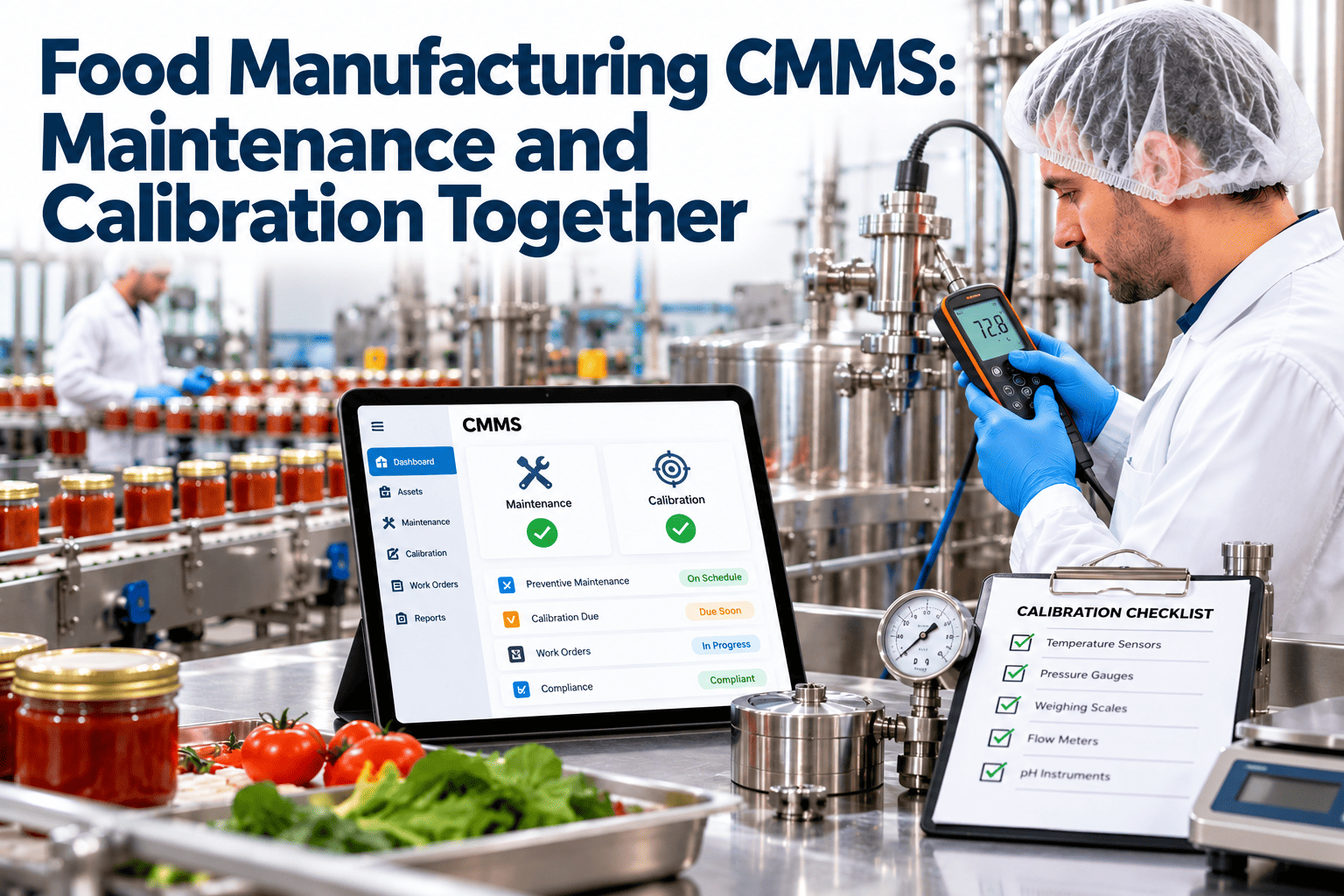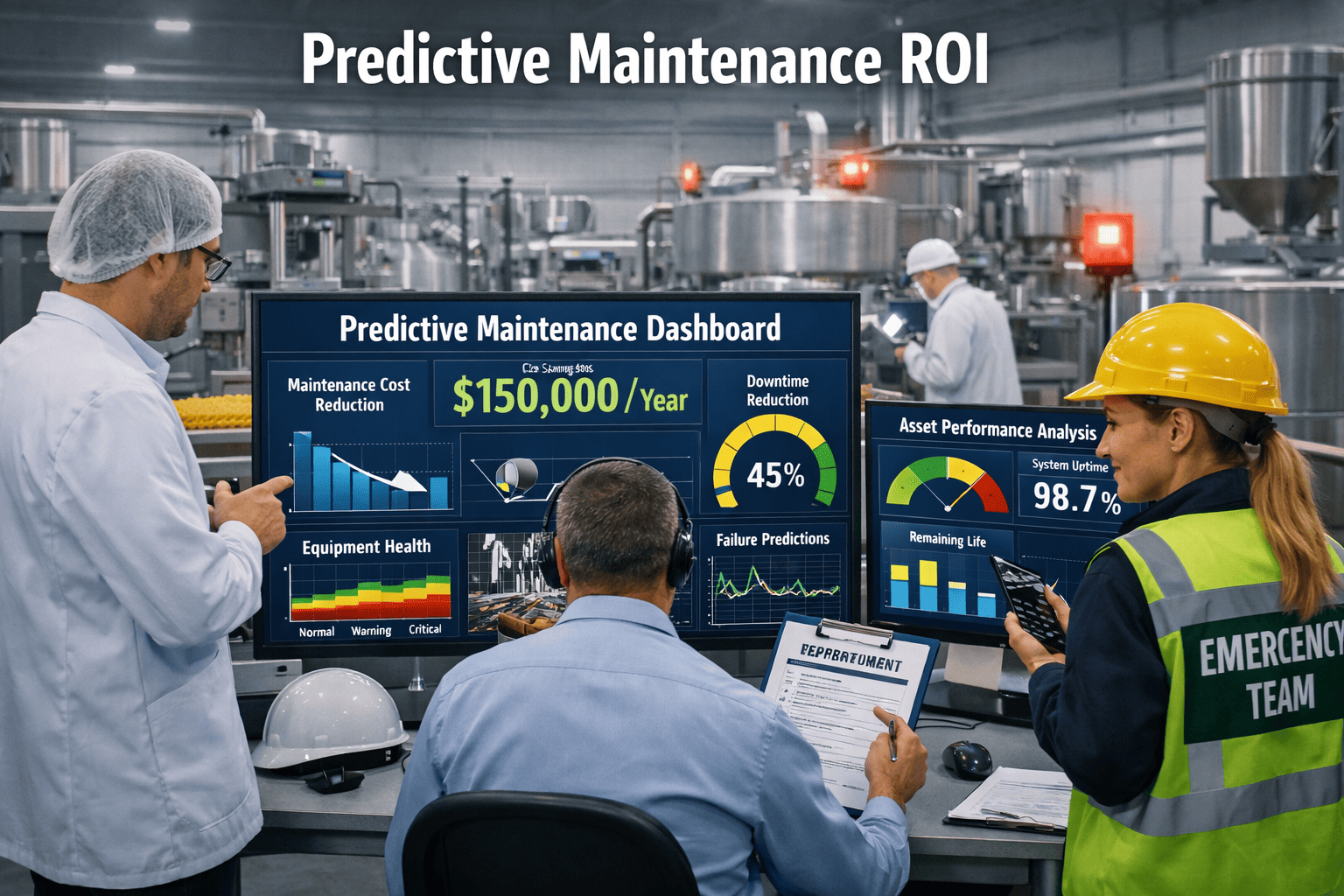
Building a business case for CMMS investment in food manufacturing is less about software features and more about translating downtime, recall risk, and compliance failures into numbers your CFO will approve.
ROI-Focused CMMS for Food Manufacturing
See exactly how much reactive maintenance is costing your facility — and what eliminating it looks like on a P&L.
- AI-powered predictive maintenance with 94% accuracy
- FSMA-ready audit trails generated automatically
- 62% less unplanned downtime across Oxmaint customers
Trusted by 1,000+ teams managing assets in food manufacturing, facilities, and industrial operations · ROI visible within 90 days
What Is a CMMS Business Case — and Why Does It Keep Getting Rejected?
A CMMS business case is a financial and operational justification for replacing your current maintenance approach — paper logs, spreadsheets, or legacy software — with a modern AI-driven platform. In food manufacturing, the case should be easy to make: downtime costs are massive, recalls are catastrophic, and labor is expensive. Yet most proposals get rejected because they focus on features instead of dollars.
Approvers at the VP and CFO level don't care about dashboards. They care about payback period, risk reduction, and operating cost impact. A strong business case quantifies what you're currently losing to reactive maintenance, frames compliance failures as financial liability, and shows a credible path to ROI — ideally within 12 months.
Use the Oxmaint ROI calculator to build the numbers before your next budget meeting, or book a demo and we'll help you build the financial model together.
The 6-Part Framework for a CMMS Investment Business Case
Calculate monthly spend on reactive repairs, emergency parts orders, overtime labor, and production losses from unplanned stops. This is your "do nothing" cost — it must be on slide one.
FDA Warning Letters, FSMA violations, and SQF/BRC audit failures carry direct financial penalties and operational disruption costs. Model the probability and cost of a single compliance event.
Use industry benchmarks — 25–62% downtime reduction is well-documented for AI-driven CMMS — and apply them conservatively to your facility's current unplanned stop frequency and hourly cost.
Quantify time saved per technician on work order creation, parts lookup, and compliance documentation. Even 45 minutes per tech per shift compounds significantly across a 10-person maintenance team.
CMMS-driven auto-reorder prevents both emergency part purchases and overstocking. Model a 15–25% inventory cost reduction as a conservative estimate for your first 12 months.
Total annual savings divided by total implementation cost gives you payback period. A well-configured CMMS in food manufacturing typically pays back in 6–14 months.
The 4 Objections Approvers Raise — and How to Answer Them
Modern AI-native CMMS platforms like Oxmaint deploy in days without IT involvement. QR-based asset setup, cloud hosting, and guided onboarding remove the implementation burden entirely. No servers, no integrations required for day one.
Adoption resistance is a real risk — but it's solvable with a mobile-first, QR-driven design. When the app is faster than paper for the first real work order, resistance drops. Frame adoption risk as a vendor selection criterion, not a reason to delay.
This is the most dangerous objection in food manufacturing. Legacy systems without AI only record failures — they don't predict them. The disruption cost of a single unplanned line stop typically exceeds 12 months of CMMS subscription costs.
Start a free trial and run Oxmaint in parallel for 30 days. By day 30, you'll have real data on PM compliance, reactive work order frequency, and downtime trends — from your own facility, not industry benchmarks.
Every objection above becomes easier to address when you have real numbers from your facility. Start a free trial to build evidence-based answers before your next budget presentation.
How Oxmaint Builds the ROI Case for You
Oxmaint's predictive engine flags failures 2–6 weeks ahead with 94% accuracy. Every prediction includes asset ID, severity, and estimated cost impact — ready-to-use data for your business case and your budget holder.
See predictive maintenanceAudit-ready maintenance records are generated automatically at point of work. Audit prep that currently takes 4–8 hours drops to under 60 seconds. Model this as direct labor savings in your business case.
Inspection managementOxmaint auto-triggers purchase orders when parts reach reorder threshold, eliminating emergency procurement. Average food plant sees 15–25% inventory cost reduction within 6 months of full deployment.
Parts and inventoryReal-time Overall Equipment Effectiveness tracking surfaces which lines, assets, and shifts are underperforming — and why. This becomes the ongoing evidence that the CMMS investment is delivering returns.
OEE analytics dashboardOSHA, FDA, and food safety compliance tracking built into every work order. EHS incidents tied to maintenance failures are quantifiable liability — remove them from your risk register with automated compliance capture.
EHS managementInput your facility's downtime frequency, hourly production value, and team size. The calculator returns a 12-month ROI projection using real Oxmaint customer benchmarks — shareable as a PDF for budget approval.
Use the ROI calculatorCost of Inaction vs. CMMS Investment
A direct comparison of operating costs across the eight categories that drive food plant maintenance spend.
| Cost Category | No CMMS / Status Quo | With Oxmaint CMMS |
|---|---|---|
| Reactive vs planned maintenance ratio | 60–70% reactive | Below 30% reactive |
| Unplanned downtime frequency | Baseline — your current average | 62% reduction — documented |
| Cost per repair event | 3–5x planned maintenance cost | Planned cost plus prevention savings |
| Emergency parts procurement | Regular — expedite fees included | Eliminated via auto-reorder logic |
| Audit preparation time | 4–8 hours manual compilation | Under 60 seconds — auto-generated |
| Compliance violation risk | High — incomplete records | Low — complete audit trail always ready |
| Technician productive time | 30–40% on admin, parts hunt, paperwork | 85%+ wrench time with AI routing |
| Typical payback period | N/A | 6–14 months for food manufacturing |
ROI and Results — What Food Manufacturers Achieve
Build your actual payback numbers before your next budget meeting — use the Oxmaint ROI calculator now, or book a demo and we'll run the model with your facility's data.
Frequently Asked Questions
How do I justify CMMS investment to a CFO in food manufacturing?
What is the typical payback period for CMMS in food manufacturing?
What costs should I include in a CMMS business case for food manufacturing?
How do you calculate CMMS ROI for a food manufacturing facility?
Ready to Win Your CMMS Budget Approval?
Stop Losing the Business Case for CMMS Investment
The numbers are on your side — they just need to be assembled. Oxmaint gives you real-facility ROI data, an AI-driven model that pays for itself, and a deployment timeline measured in days. Go into your next budget meeting with evidence, not estimates.
- ROI calculator built for food manufacturing — payback in under 14 months
- 94% predictive accuracy — failures flagged before they cost you production
- FSMA-ready compliance records — eliminate audit preparation cost entirely
Trusted by 1,000+ maintenance teams in food manufacturing and facilities management · Live in days, no IT project required