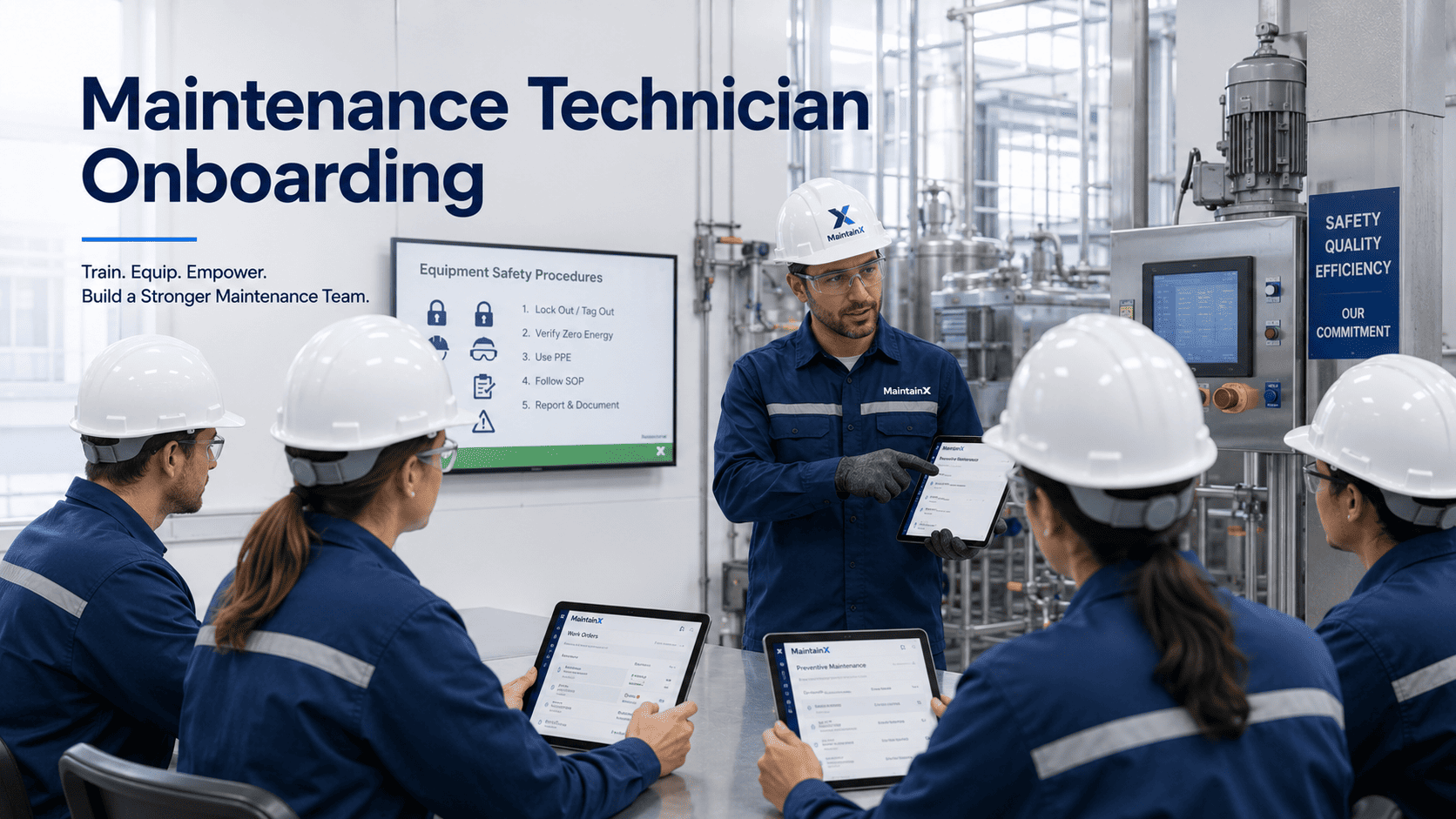
Maintenance technician onboarding in a food plant is not the same as onboarding a technician anywhere else — and treating it like a generic industrial orientation is one of the most expensive mistakes a food manufacturing facility can make. A new hire who understands motors but has never worked in a food-grade environment can trigger a contamination event, fail a BRC audit, or void a HACCP plan on their first unsupervised shift — not from negligence, but from gaps in onboarding that nobody caught. The U.S. food industry experiences 48 million foodborne illness cases annually, and improper maintenance practices — wrong lubricants, missing allergen controls on equipment, seal integrity failures after maintenance — are a recognized contamination pathway under FDA FSMA. Yet the average food plant has no structured maintenance onboarding program beyond "shadow this technician for a week." The result: 39% annual turnover in food processing creates a permanent state of partially trained technicians working on mission-critical equipment with incomplete hygiene and CMMS knowledge. A structured 30–60–90 day onboarding program — covering food safety, GMP compliance, CMMS workflows, and preventive maintenance procedures — can reduce new-hire errors by 50%, cut time-to-full-productivity by 40%, and build the documented training record that auditors demand. Want to see how Oxmaint manages technician training records, inspection workflows, and CMMS onboarding in one platform? Start a free trial or talk to an expert about your food plant training program.
Build a documented maintenance onboarding program that satisfies FSMA, BRC, and SQF auditors — and gets new technicians productive in half the time.
- Digital training records tied to each technician's asset access
- QR-scan CMMS workflows — new hire productive on day one
- Compliance audit trail from the first completed work order
1,000+ maintenance teams across food manufacturing, facilities, and industrial · Live in days
What Makes Food Plant Maintenance Onboarding Different?
In a standard industrial facility, a qualified maintenance technician can be productive within days — they know the equipment types, they understand the safety protocols, and their prior experience translates directly. In a food plant, every assumption that experience carries must be tested against a completely different set of non-negotiables: food-grade lubricant requirements, allergen control procedures during equipment maintenance, GMP dress codes in production zones, HACCP critical control point awareness, and the documentation standards that FSMA, BRC, and SQF auditors will check during an unannounced inspection.
A technician who installs a standard industrial lubricant where a food-grade NSF H1 lubricant is required has just created an undocumented contamination risk that could persist for months before a product recall traces it back to that maintenance event. A technician who does not understand allergen changeover procedures between equipment runs can trigger a cross-contamination incident with regulatory and liability consequences far exceeding the cost of any equipment failure. These risks are unique to food manufacturing — and they are why maintenance onboarding in this environment requires a structured, documented program rather than informal job shadowing. Oxmaint's food manufacturing platform gives teams the compliance documentation layer that turns onboarding from a loose process into an auditable program from day one.
The 8 Pillars of a Structured Food Plant Maintenance Onboarding Program
Food Safety and GMP Orientation
Before a new maintenance technician touches any equipment, they must complete GMP (Good Manufacturing Practice) orientation covering: production zone access rules, personal hygiene requirements (hair nets, beard covers, dedicated footwear), allergen awareness, foreign object contamination prevention (tools in, tools out protocols), and the meaning of HACCP critical control points. This is not optional. FSMA's Preventive Controls rule (21 CFR Part 117) requires documented training for anyone who could affect food safety — and maintenance technicians who work on food-contact equipment qualify directly.
LOTO and Electrical Safety — Food Plant Specifics
Lockout/tagout (LOTO) is standard in any industrial environment, but food plant LOTO has additional complexity: equipment with multiple energy sources on the same line, sanitation systems that operate on different lockout protocols than production systems, and confined spaces common in tanks, silos, and processing vessels. New technicians must demonstrate competency on the specific LOTO procedures for each equipment class they will work on before performing unsupervised maintenance. OSHA CFR 1910.147 requires documented training records per technician per equipment type — Oxmaint's EHS management module stores these against each technician profile automatically.
Food-Grade Lubrication and Chemical Handling
Food-grade lubrication is one of the most common maintenance errors in food manufacturing — and one of the most audit-critical. NSF H1 lubricants are approved for incidental food contact; NSF H2 lubricants are approved for non-food-contact surfaces only. Technicians must be trained on which lubricant grade applies to each equipment type, where to find the lubricant specification on a work order, and what to do when a lubricant record is missing. Chemical handling training must cover cleaning-in-place (CIP) chemical concentrations, SDS sheet locations, PPE requirements per chemical type, and the hazard communication standard (HazCom) under OSHA 1910.1200.
CMMS Onboarding — Work Orders, QR Scan, and Asset History
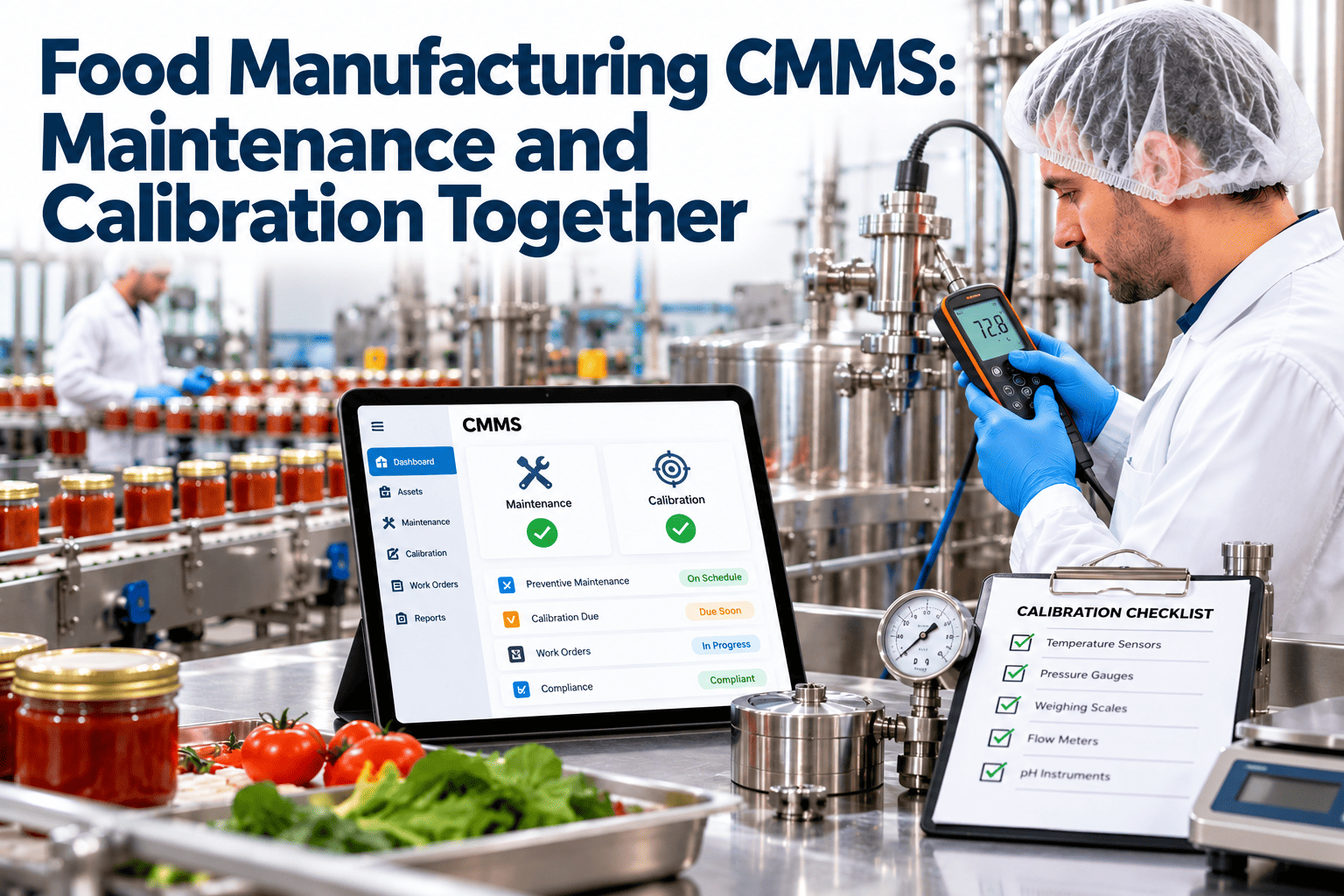
New technicians who cannot operate the CMMS are a productivity and compliance gap from day one. Oxmaint's mobile-first QR-scan workflow is designed to achieve technician competency in under two hours — not two weeks. Onboarding covers: scanning an asset QR code to pull up work history and open work orders, creating a reactive work order from a fault found on inspection, completing a PM checklist with photo evidence and digital sign-off, and understanding work order priority codes. All training is done on the technician's own mobile device — no desktop session, no classroom. Work order management becomes the primary workflow for every maintenance interaction from week one.
Preventive Maintenance Workflows and Schedule Ownership
New technicians must understand not just how to complete a PM work order, but why each task exists and what failure mode it prevents. A technician who understands that a quarterly seal inspection prevents the contamination pathway that would trigger a product recall completes that task differently than one who sees it as a checkbox. Walk through the PM schedule for every equipment class they will own, explain the failure mode behind each task interval, and have them complete their first PM cycle supervised before independent ownership. Preventive maintenance scheduling through Oxmaint auto-assigns work orders so the technician sees their schedule clearly from the first day of ownership.
Inspection and Compliance Documentation
Food plant maintenance technicians are compliance witnesses as much as they are equipment maintainers. Pre-operation equipment checks, post-maintenance sanitation verifications, allergen equipment changeover inspections, and calibration confirmations are all HACCP- and FSMA-required records — and all must be completed correctly and stored traceably. Train new technicians on the specific inspection checklists for each equipment class they own, how to capture photo evidence through Oxmaint's inspection management module, and what happens when a check fails (immediate escalation, equipment isolation, corrective action work order).
Parts and MRO Inventory Procedures
New technicians must know how to access, use, and return parts correctly — including the food-grade specification requirements that apply to certain part types (food-grade seals, NSF-approved gaskets, stainless-grade fasteners in food contact zones). Train on how to search the parts inventory in Oxmaint, how to request a parts reorder when stock falls below minimum, and the consequences of substituting a non-approved part grade in a food contact zone. Parts and inventory management prevents the improvised substitutions that cause contamination events and BRC audit findings.
Competency Reviews and Training Record Closure
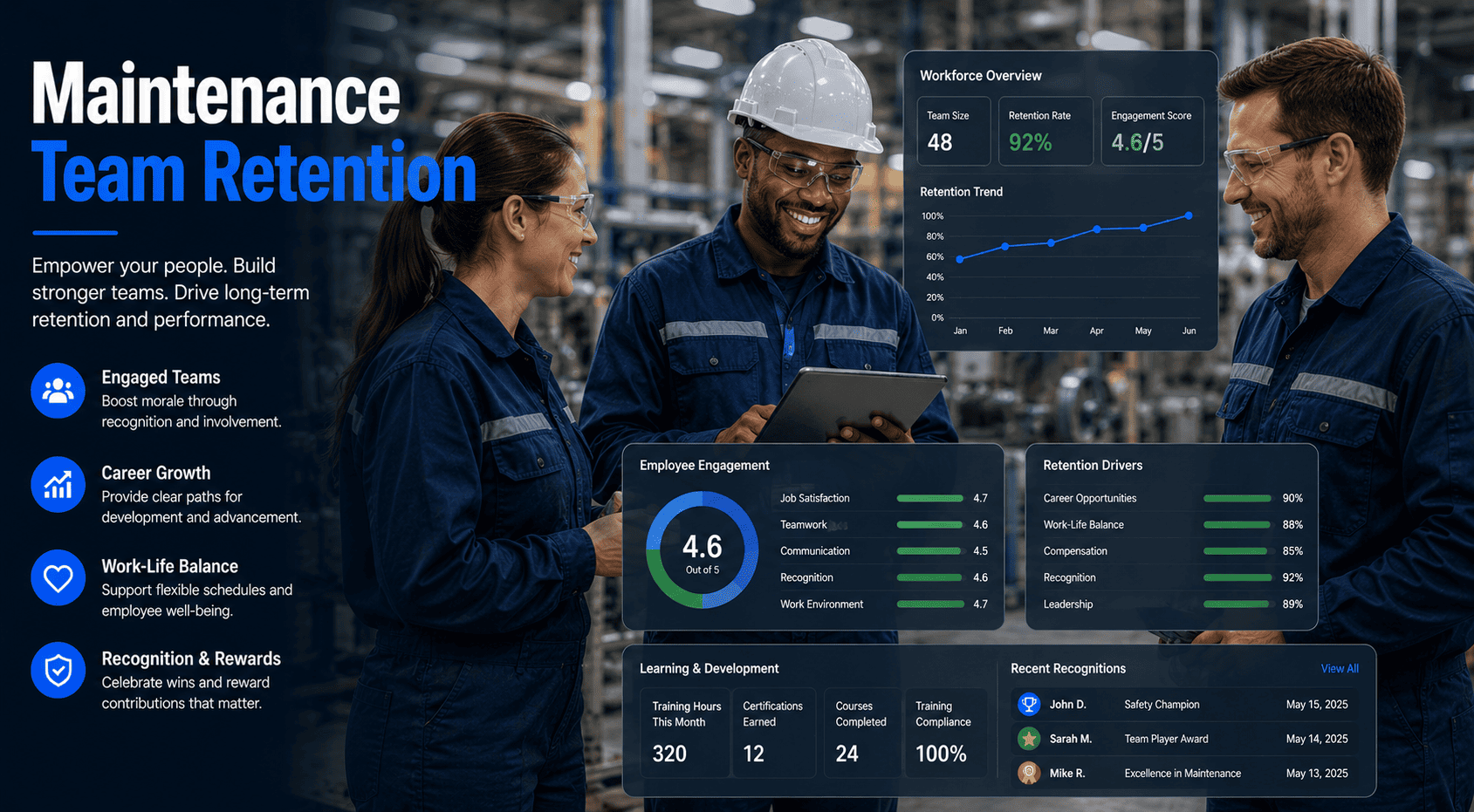
Structured check-ins at 30, 60, and 90 days close the onboarding loop and document competency formally. The 30-day review covers food safety and CMMS basics — can they operate independently, have any food safety knowledge gaps been flagged? The 60-day review covers PM schedule ownership and inspection quality — are their work orders being completed correctly and on time? The 90-day review is the formal sign-off: technician is cleared for independent operation across their assigned equipment portfolio, training record is complete, and supervisor countersigns in Oxmaint. This record becomes the evidence that satisfies FSMA, BRC, and SQF training requirements at your next audit.
4 Critical Risks When Food Plant Technician Onboarding Fails
Contamination Event from Wrong Lubricant
A technician without explicit food-grade lubricant training will reach for the nearest available lubricant — often a standard industrial grade that is not approved for food contact zones. One incorrect lubrication on a food-contact surface can contaminate an entire production run, trigger a recall, and generate an FDA FSMA finding that stays on your compliance record for years.
FSMA Risk · Product Recall RiskLOTO Failure in a Food-Contact Confined Space
Food plants have a higher density of confined spaces than most industrial facilities — tanks, hoppers, silos, and mixing vessels are all potential fatal traps for an undertrained technician. An OSHA violation from an inadequate LOTO program results in fines of up to $156,259 per willful violation and — more critically — puts technician lives at risk from the first unsupervised shift.
OSHA Violation · Life Safety RiskBRC/SQF Audit Finding — Missing Training Records
BRC Global Standard and SQF code both require documented evidence of food safety and equipment-specific maintenance training for every technician with production zone access. A new hire working without a signed training record is an automatic major nonconformance at a BRC audit — one that can suspend your certification and halt shipments to retail customers while corrective action is completed.
BRC / SQF Non-Conformance · Certification RiskEarly Turnover from Poor Onboarding Experience
Maintenance technicians who receive disorganized onboarding — unclear expectations, no documented workflow, no structured equipment handover — quit at significantly higher rates within the first 90 days. Replacing a food plant maintenance technician costs an estimated $15,000–$25,000 in recruiting, lost productivity, and overtime. A structured program with clear 30–60–90 milestones reduces 90-day turnover by demonstrating that the organization is professionally managed. Talk to an expert about building this structure into Oxmaint.
Retention Risk · $15K–$25K Replacement CostThe 30–60–90 Day Onboarding Schedule
Foundation
Goal: safe, compliant, CMMS-capable
- GMP and food safety orientation — signed Day 1
- LOTO training — supervised, per equipment class
- Food-grade lubricant and chemical handling
- Oxmaint QR-scan and work order workflow — under 2 hrs
- Site safety tour — all hazardous zones identified
- Emergency procedures and first aid locations
- PPE requirements per production zone
- Day 30 review — food safety and CMMS sign-off
Ownership
Goal: independent PM and inspection execution
- First supervised PM cycle per assigned equipment
- Inspection checklist training — HACCP CCP points
- Allergen changeover maintenance procedures
- Parts inventory access and food-grade spec awareness
- Reactive work order creation — fault classification
- Shift logbook and handover procedures
- Contractor supervision basics (when applicable)
- Day 60 review — PM quality and inspection accuracy
Independence
Goal: fully independent, training record complete
- Full PM schedule ownership — independent execution
- Oxmaint analytics — reading asset health trends
- Escalation and shutdown procedure ownership
- Compliance documentation review — quality check
- Advanced CMMS: predictive alerts, sensor data basics
- Peer mentoring readiness assessment
- 5-year career development path discussion
- Day 90 sign-off — supervisor countersign in Oxmaint
This schedule is a template — adjust interval lengths based on technician experience level, equipment complexity, and the regulatory requirements your facility is certified to. The key is that every milestone generates a signed, timestamped record stored in Oxmaint against the technician profile. Start a free trial to see how training records integrate with work order history and compliance reporting, or talk to an expert about adapting this to your FSMA or BRC requirements.
Onboarding on Paper vs Onboarding in Oxmaint
| Onboarding Element | Paper / Informal Program | Oxmaint-Supported Program |
|---|---|---|
| Training records | Binder in supervisor's office — lost or incomplete by audit time | Digital, timestamped, searchable — exportable for any audit in 2 minutes |
| CMMS onboarding time | 1–2 weeks of desktop training on legacy systems | Under 2 hours — QR-scan mobile workflow, no desktop required |
| First unsupervised PM task | Weeks after hire — no structured handover triggers | Week 2 — PM auto-assigned, checklist in hand, history accessible by QR scan |
| Inspection evidence | Clipboard entries — illegible, gaps, no photo evidence | Mobile checklist + photos + digital signature — audit-ready immediately |
| Lubricant spec access | Ask a senior tech or dig through a manual | Specified on the work order — zero ambiguity at the asset |
| 30/60/90 milestones | Informal conversation — rarely documented | Structured review with supervisor sign-off stored against technician profile |
| BRC/SQF audit readiness | Major nonconformance risk — records missing or incomplete | Full documented program — training, inspections, work orders, sign-offs |
Frequently Asked Questions
What food safety training is legally required for maintenance technicians in food manufacturing?
How long should maintenance technician onboarding take in a food plant?
Can Oxmaint store and manage maintenance technician training records?
What is the difference between GMP training and food safety training for maintenance staff?
Build the Program Once. Pass Every Audit After.
Your Maintenance Technician Onboarding Should Be as Rigorous as Your Food Safety Program — Because It Is Part of It.
Oxmaint gives food plant maintenance teams a single platform for technician training records, PM schedule ownership, inspection compliance, and work order documentation — everything an FSMA, BRC, or SQF auditor will ask for, stored automatically from day one of each new hire's program.
- Digital training records tied to technician profiles — audit-ready at all times
- QR-scan PM and inspection workflows — new hire productive within hours
- 30/60/90 day milestone tracking with supervisor sign-off in the platform
1,000+ teams · Food manufacturing, facilities, industrial · Live in days · No implementation project