Maintenance involvement during food plant equipment commissioning isn't optional — it's the difference between a smooth startup and a costly equipment failure six months into production.
Commissioning-Ready CMMS for Food Manufacturing
See how Oxmaint structures commissioning workflows, asset setup, and PM schedules from day one of new equipment installation.
- Equipment commissioned as assets with full PM schedules at startup
- Commissioning checklists with digital sign-off and audit trail
- Predictive baselines established from first operation — not after first failure
Trusted by 1,000+ maintenance teams in food manufacturing and industrial operations · Live in days, no IT project required
What Is Maintenance-Driven Equipment Commissioning in Food Manufacturing?
Equipment commissioning in food manufacturing is the structured process of installing, testing, validating, and handing over new production equipment to operational status. Maintenance-driven commissioning means the maintenance team is involved before the first bolt is tightened — not called in after the OEM engineer has left. That involvement covers installation verification, lubrication and alignment checks, PM schedule creation, spare parts stocking, sensor baseline establishment, and FSMA documentation setup.
Most food plants treat commissioning as an engineering handoff. Maintenance inherits equipment without PM schedules built, without critical spare parts on the shelf, and without sensor baselines established to distinguish normal operation from degradation. The predictable result is an early failure — often within 6–12 months — that looks like bad luck but was a preventable commissioning gap.
Getting commissioning right means the equipment's preventive maintenance schedule is active from day one, the asset is registered in your CMMS with full OEM documentation, and the AI prediction model has a healthy baseline — so when degradation begins, Oxmaint flags it weeks before it costs you production.
Equipment that goes live without a CMMS-based PM schedule is already on a countdown to its first unplanned failure — the only question is when.
The 6 Phases of Maintenance-Driven Commissioning
Maintenance reviews OEM documentation, identifies critical spare parts, confirms utility connections, and creates the asset record in the CMMS before equipment arrives. PM schedules are drafted before startup.
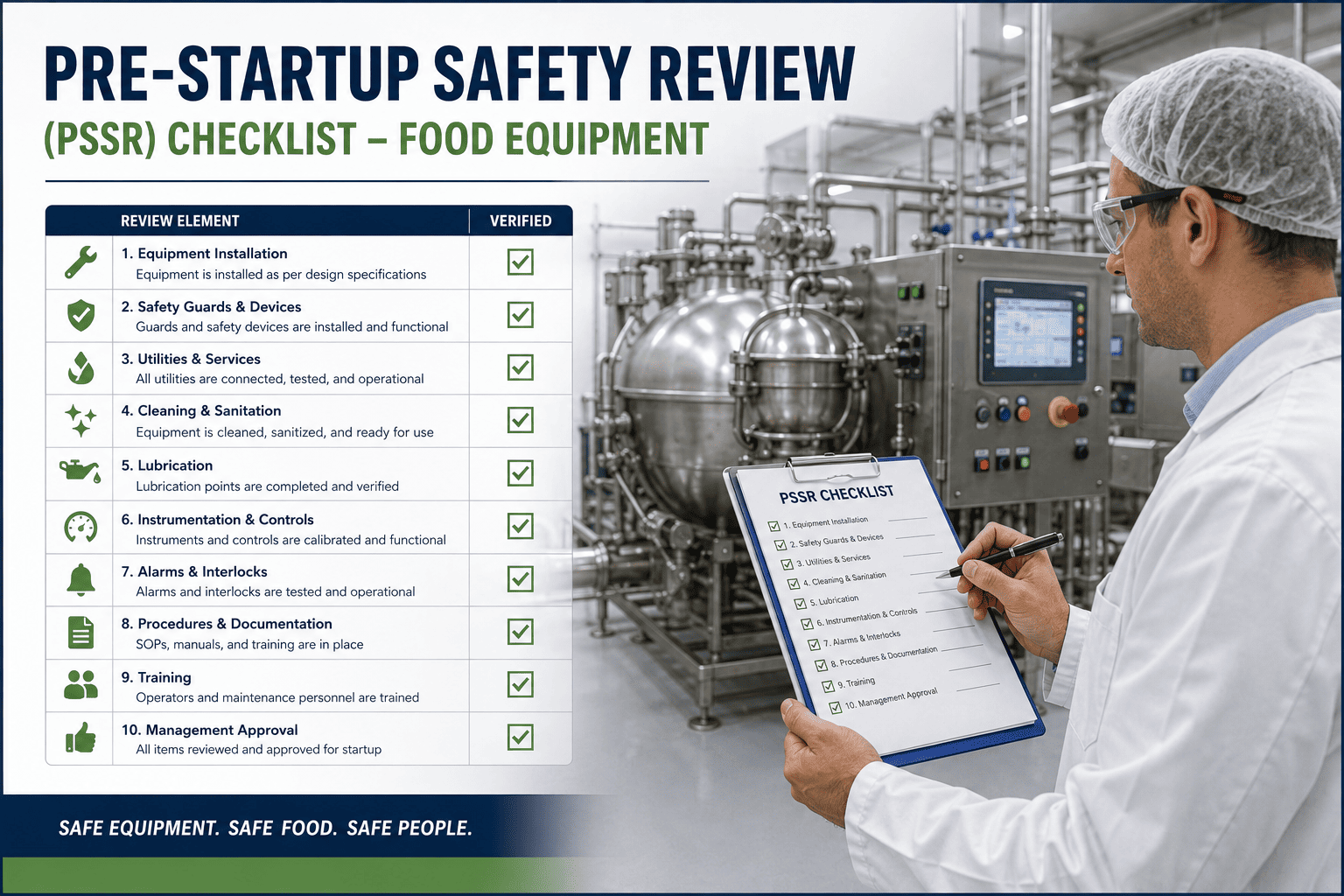
Maintenance completes a digital installation checklist — alignment, torque specs, lubrication, electrical connections, guarding — with technician sign-off captured in the CMMS work order. OEM punch-list items are tracked to closure.
First-run testing with maintenance present. Vibration, temperature, and power draw baselines are recorded and entered as IoT sensor reference points in Oxmaint. Any anomalies during startup are logged as work orders before production begins.
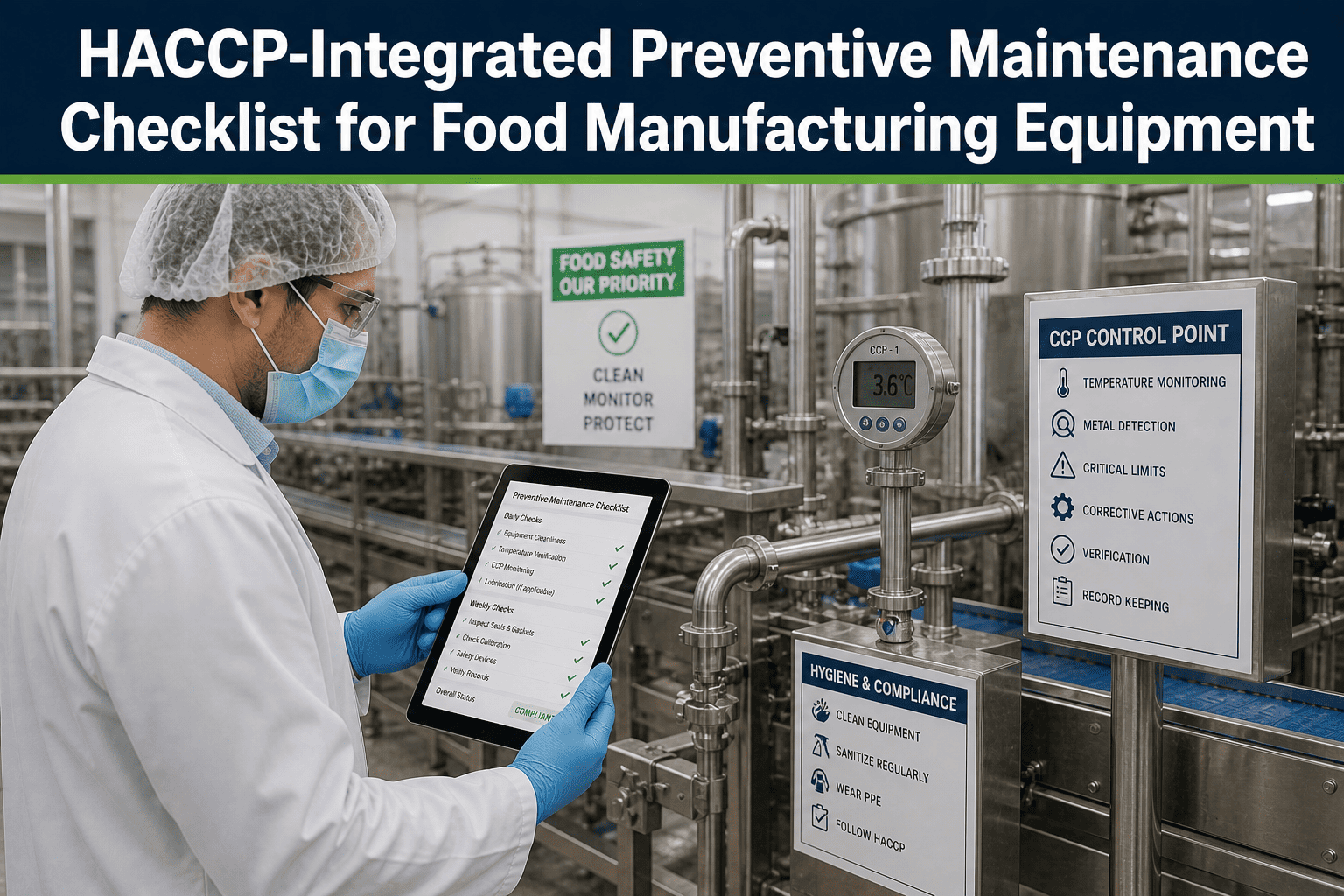
FSMA Preventive Controls documentation is established — maintenance procedures tied to this equipment, verification records, corrective action templates. SQF/BRC-relevant equipment gets allergen changeover and sanitation work order templates created.
Manufacturer-recommended PM intervals are entered, adjusted for actual operating conditions (temperature, shift hours, product type), and the first PM work orders are auto-scheduled. No manual calendar management.
After 2–4 weeks of healthy operation, Oxmaint's AI engine has enough sensor data to establish degradation baselines. From this point, the system begins flagging deviations before they become failures — typically 2–6 weeks ahead.
Where Commissioning Goes Wrong — and What It Costs
Equipment goes live with "we'll figure out the PM schedule later." Six months in, nothing has been maintained on a schedule, the equipment fails, and the investigation finds the lubrication interval was never established. A $15,000 gearbox failure that a $200 PM would have prevented.
OEM recommends specific spare parts at installation. Nobody orders them. Nine months later, a bearing fails at 11 PM before a major production run. The part is a three-day lead time. You lose 72 hours of production waiting for a part that should have been on the shelf.
Predictive maintenance only works if the AI knows what "healthy" looks like. Equipment that never had sensor readings established during commissioning means the first anomaly has nothing to compare against — by the time a threshold is exceeded, the failure is imminent.
FDA inspectors ask for maintenance records on a piece of production equipment. Nobody set up the FSMA Preventive Controls documentation when the equipment was commissioned. Records that should exist from day one don't exist at all — creating an inspection finding on brand-new equipment.
Every one of these failures is preventable with a structured commissioning process in a CMMS. Start a free trial and we'll help you build the commissioning workflow for your next installation.
The window to establish predictive baselines is the first 30 days of healthy operation. Miss that window and you're reacting, not predicting.
How Oxmaint Manages New Equipment Commissioning
Create the asset record, attach OEM manuals, upload installation specs, and draft PM schedules before the equipment arrives on site. Commissioning work orders are ready for execution the day installation begins.
Asset managementInstallation verification, alignment checks, electrical commissioning, food safety setup — all captured as digital work order checklists with technician sign-off, timestamps, and photo documentation. Audit-ready from day one.
Inspection managementConnect vibration, temperature, and runtime sensors during commissioning. Oxmaint's AI engine records the healthy operational signature from day one — enabling predictive failure detection within the first 30 days of operation.
Predictive maintenanceOEM-recommended spare parts are added to Oxmaint's inventory at commissioning, linked to the asset, with reorder thresholds set. The system auto-reorders before you hit zero — eliminating emergency procurement for new equipment.
Parts and inventoryPreventive Controls documentation, allergen changeover procedures, and CIP/sanitation work order templates are created during commissioning — so the regulatory record starts from the first day of operation, not the first audit.
Safety and compliancePM schedules go live automatically at commissioning sign-off. First work orders are auto-generated per OEM intervals. No manual scheduling, no missed first PMs — the maintenance program starts the moment production starts.
PM schedulingReactive Commissioning vs Maintenance-Led Commissioning
| Commissioning Stage | Reactive / Engineering-Led Only | Maintenance-Led with Oxmaint CMMS |
|---|---|---|
| PM schedule | Created weeks or months after startup | Active from day one of operation |
| Critical spare parts | Ordered reactively after first failure | Stocked at commissioning per OEM spec |
| Sensor baselines | Never established; anomalies have no reference | Captured during startup; AI uses from week 2 |
| FSMA documentation | Backfilled before audits; gaps common | Complete record from first operation |
| Installation verification | Verbal OEM sign-off only | Digital checklist with photo evidence |
| First failure timeline | Typically 6–12 months; expensive | Predictive alert 2–6 weeks ahead of failure |
| Sanitation/allergen setup | Ad hoc; created after production starts | Work order templates at commissioning |
| Audit readiness at 6 months | Incomplete — missing early operation records | Complete — full history from commissioning |
What Proper Commissioning Delivers in Year One
Your next equipment installation is the right time to build this process. Calculate the first-year ROI of proper commissioning, or book a demo and we'll map the commissioning workflow to your specific equipment type.
Frequently Asked Questions
What should maintenance do during new equipment commissioning in a food plant?
How do you create a maintenance commissioning checklist for food manufacturing equipment?
When should FSMA documentation be set up for new food manufacturing equipment?
How does predictive maintenance work during equipment commissioning?
Installing New Equipment in Your Food Plant?
Commission It Right — Or Pay for It Later
Every hour of commissioning done right saves days of unplanned downtime in year one. Oxmaint gives your maintenance team the structure, checklists, and AI baseline-setting tools to start every new asset on the right trajectory from day one.
- Digital commissioning checklists with photo sign-off — audit-ready from first operation
- IoT sensor baselines established at startup — predictive alerts within 30 days
- PM schedules, spare parts, and FSMA docs live before production begins
Trusted by 1,000+ maintenance teams in food manufacturing and industrial operations · Live in days, no IT project required