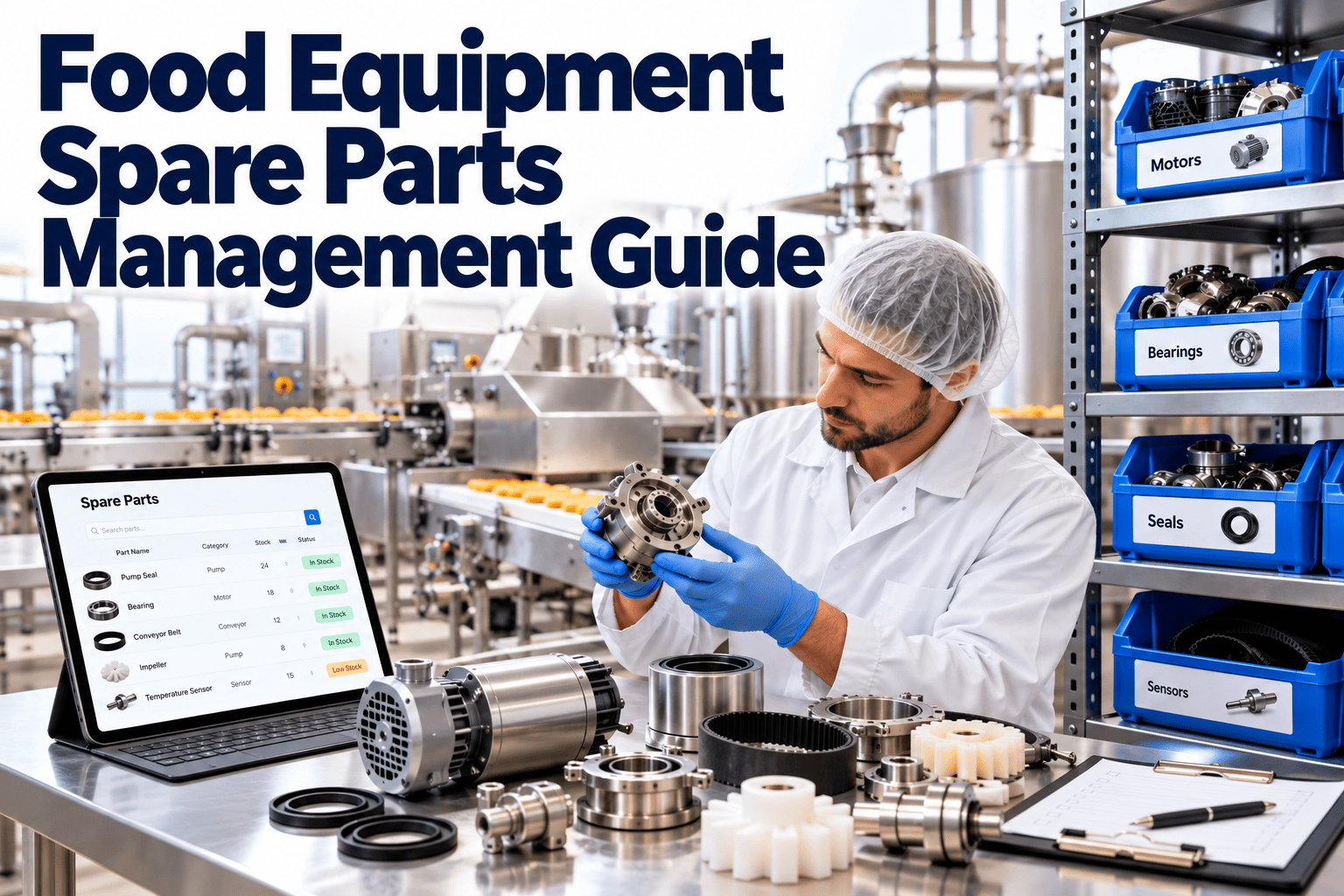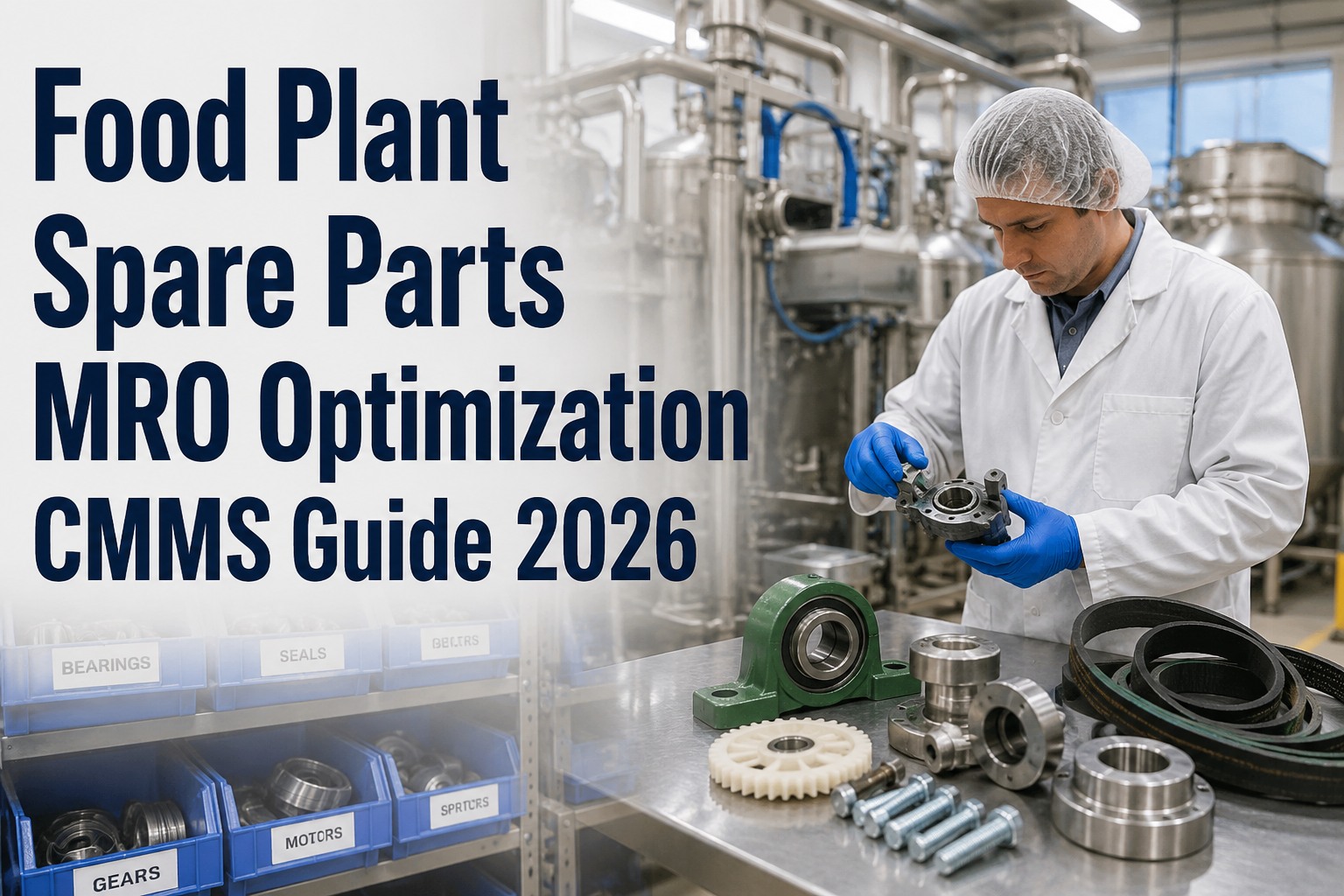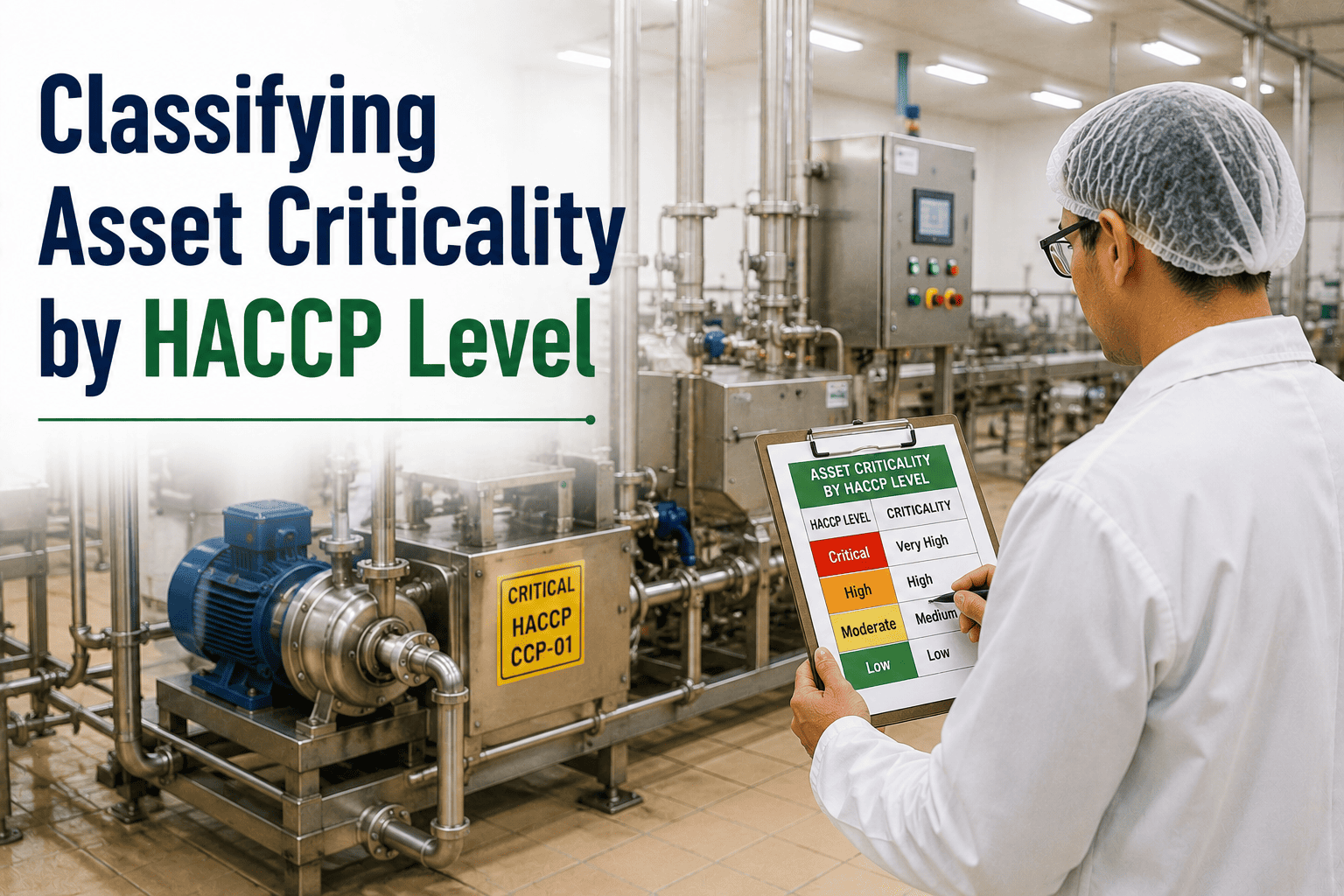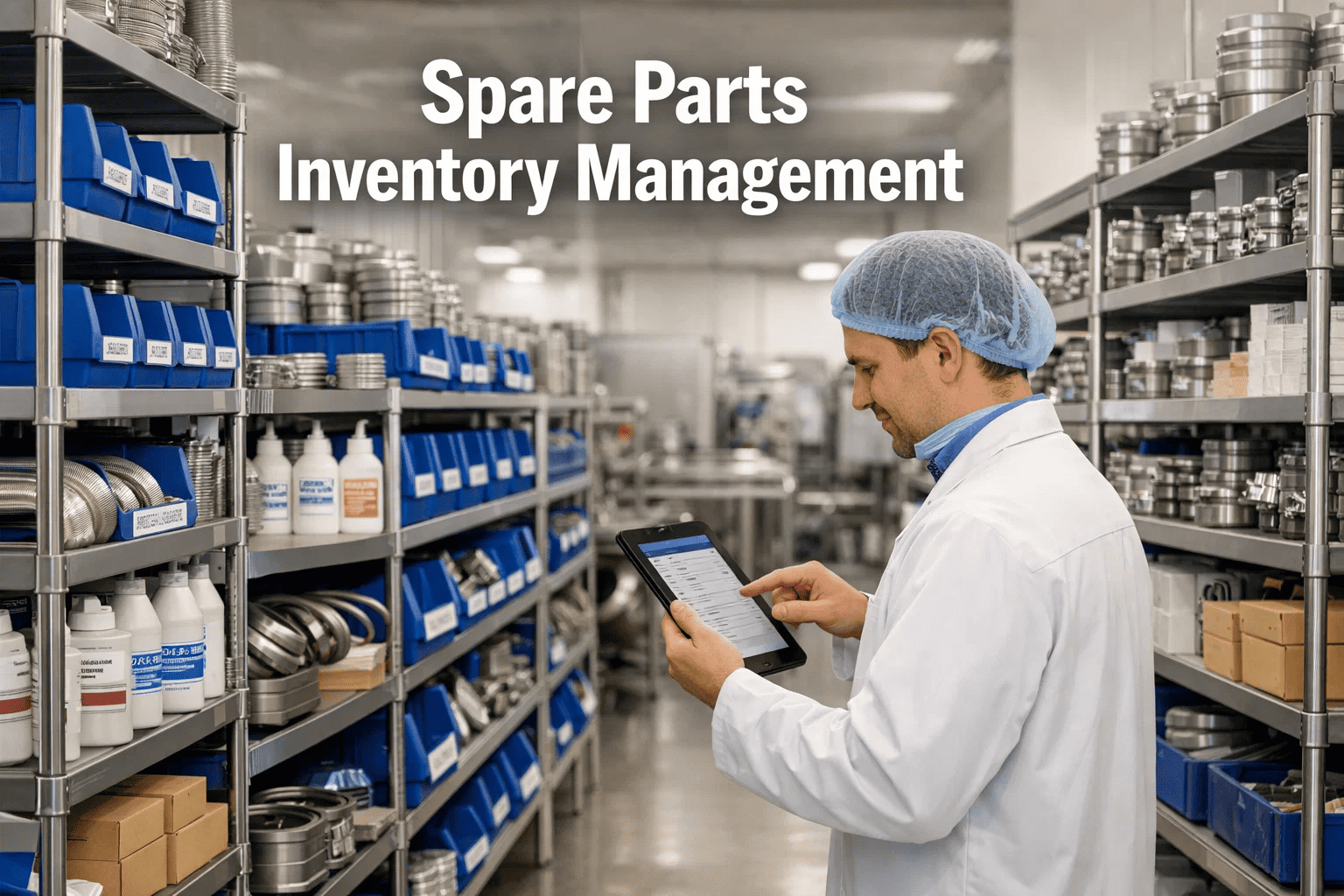
The stockout that hurts is not the one on a spare bolt in the storeroom. It is the food-grade seal, the sanitary gasket, or the specialty motor sitting on a 12-week backorder while a HACCP-critical line runs cold. In food plants, 15% of stockouts happen exactly when a critical component fails, and the average product recall triggered by an equipment-driven contamination event costs $2.8 million. The fix is not more inventory. It is smarter inventory built around criticality, lead time, and consumption, which is what a proper CMMS unlocks with a free trial or a quick demo.
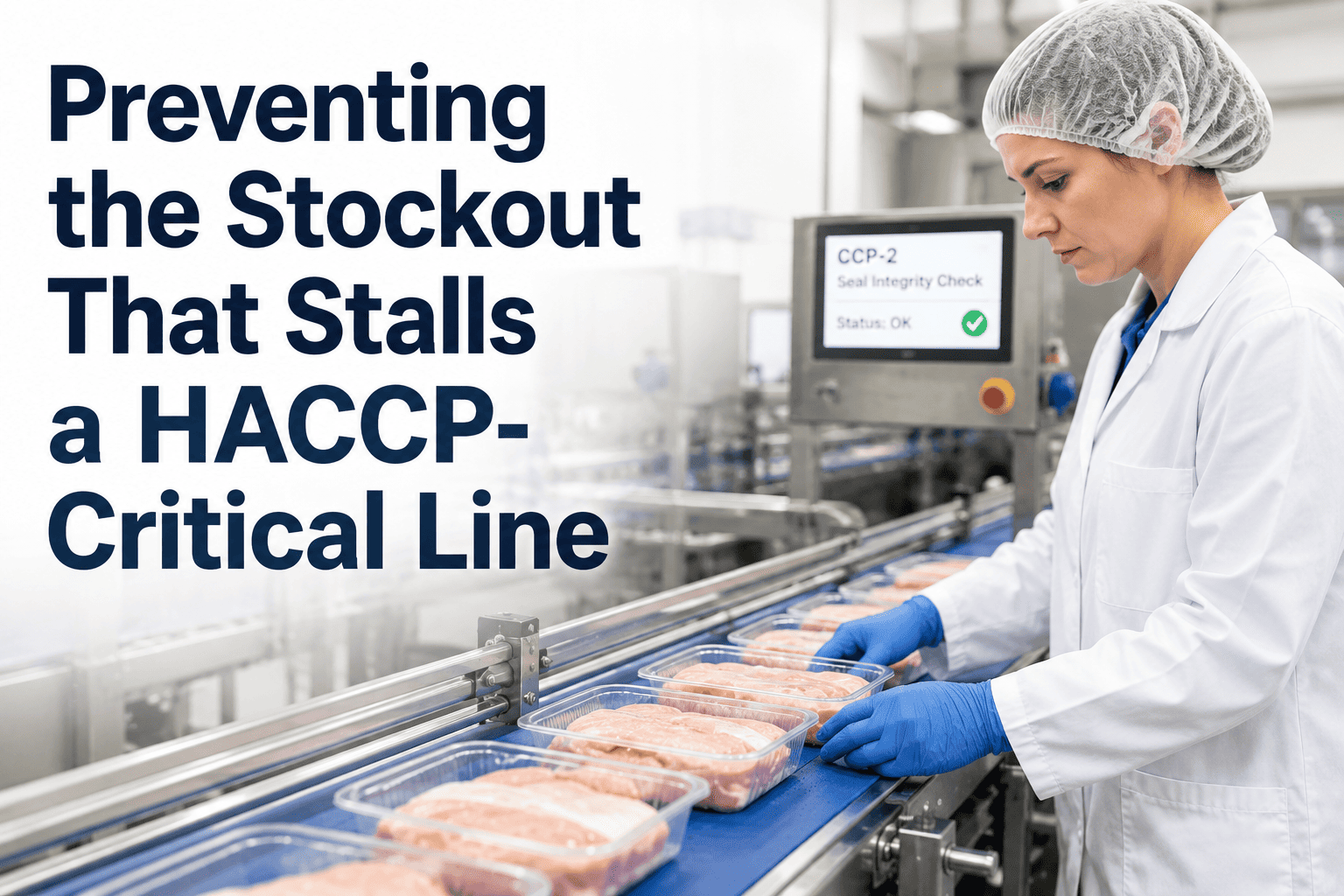
Preventing the Stockout That Stalls a HACCP-Critical Line
A food plant does not fail because it lacks parts. It fails because the parts it has are the wrong ones. Here is how to identify critical spares for HACCP-critical equipment and automate reorder before a stockout ever reaches the floor.
What a Single HACCP Stockout Actually Costs
A missing seal is never just a missing seal. It is the sanitation cycle that cannot restart, the batch that cannot be released, the audit finding that cannot be closed, and the customer order that ships late. Each layer stacks on top of the last, and the total is rarely what shows up on the purchase order.
A stalled HACCP-critical line can hit $50,000 per hour in lost production, and food plants rarely recover the shift with overtime because sanitation windows are fixed.
Emergency air freight and expedited shipping on food-grade parts routinely runs 4 to 8 times the standard cost, cutting straight into the plant's maintenance budget.
Work-in-progress caught mid-cycle when equipment fails often cannot be re-released under HACCP, turning a parts stockout directly into scrapped inventory.
A worn gasket run past its window because the replacement is on backorder is the exact failure mode behind $2.8M average recalls, the highest financial risk in food manufacturing.
FSMA and HACCP records must show timely repair of critical control equipment; a stockout that delays a repair becomes a documented deviation on the next audit.
Maintenance techs called in on off-hours to chase parts they should have had on the shelf is the fastest way to lose experienced staff on a food line.
The Criticality Matrix Every Food Plant Needs
Stocking every part at the same safety buffer wastes capital. Stocking critical parts lean invites disaster. The bridge between the two is a two-axis matrix, criticality of failure against difficulty of sourcing, that sorts every spare into a stocking strategy before a single reorder point is set.
Pasteurizer valves, ammonia compressor motors, metal-detector heads, custom sanitary gaskets. Failure stops the line and shipping takes weeks. Zero-stockout stocking.
Standard conveyor belts, common bearings, food-grade lubricants, thermocouples. Failure stops the line but replacements ship in days. Buffer to cover lead time plus safety.
Utility motors on packaging feeders, secondary conveyor components, spare guarding. Failure slows but does not halt production. Reorder-point automation with normal lead time.
Standard fasteners, generic hoses, common electrical fuses. Sourced in a day from local suppliers, hold minimal stock and free the storeroom capital for vital spares.
The Reorder Point Formula, Broken Down
A CMMS does not guess when to reorder. It calculates a reorder point per part and fires an alert the second stock crosses it. The formula is simple, but it is only useful when the CMMS is the one running it against live consumption and supplier lead-time data, not a spreadsheet updated once a quarter.
Usage 0.43 per day, supplier lead time 14 days, safety stock 5 units. Reorder point becomes (0.43 × 14) + 5 = 11 units. When the shelf hits 11, the CMMS files the PO. No stockout, no scramble, no emergency freight.
Move From Guessing to Automating in One Sprint
Oxmaint links every food-grade spare to the HACCP-critical asset it serves, applies a criticality tier, and fires a reorder alert the moment stock crosses the calculated threshold. The result is a storeroom that supports uptime instead of quietly draining your budget.
Where the Stockouts That Matter Actually Happen
Not every asset in a food plant deserves the same parts strategy. HACCP-critical equipment, the assets tied directly to critical control points, is where a stockout has the largest recall and downtime consequences. These are the equipment classes and the specific parts that belong on any food plant's vital-spare list.
The Automated Reorder Workflow, End to End
A reorder point without automation is just a note on a whiteboard. Inside a CMMS, the same number becomes a live trigger that flows from consumption logging through supplier PO, receipt, and audit-ready traceability, without a single manual handoff to slow it down.
Part scanned or logged against the work order the moment it comes off the shelf, updating stock and asset history in one action.
Live stock crosses the calculated reorder point; the CMMS fires an alert to the procurement owner immediately, not on a weekly report.
A purchase requisition drafts against the approved supplier at agreed pricing, ready for one-click approval by the buyer.
Delivery scanned into the bin location; the full chain from consumption to receipt is stamped for HACCP and FSMA traceability.
The Gap Between a Spreadsheet and a Live System
Most food plants still run spare parts on a shared spreadsheet updated weekly, if that. The comparison below is not about features; it is about which failures a CMMS quietly prevents that a manual system was never going to catch in time.
| Scenario | Spreadsheet Reality | CMMS Reality |
|---|---|---|
| Stock count accuracy | Weekly, often stale by the time it is checked | Live to the minute against every logged consumption |
| Reorder trigger | Human memory, spotted at the walk-through | Automatic alert the second stock crosses the point |
| Criticality tiering | Absent or held in one manager's head | Applied per part, visible on every work order |
| Lead-time data | Assumed, rarely revalidated | Tracked against actual PO-to-receipt history |
| HACCP traceability | Reconstructed from notes at audit time | Every part transaction stamped to asset and work order |
| Obsolete-stock cleanup | Discovered during annual inventory | Slow-moving parts flagged continuously by consumption data |
Frequently Asked Questions
How do we decide which parts are truly HACCP-critical?+
What reorder point should we set for a long-lead food-grade part?+
Can the system handle multi-plant parts sharing?+
Does automated reorder work with our approved vendor list?+
How fast can a food plant get this running?+
Stop the Stockout Before It Reaches the HACCP Line
A food plant that identifies its critical spares, tiers them by criticality and lead time, and lets a CMMS run the reorder points does not have stockouts on the parts that matter. See how Oxmaint applies the same model to your plant, with your assets, your parts, and your suppliers, in a single working session.