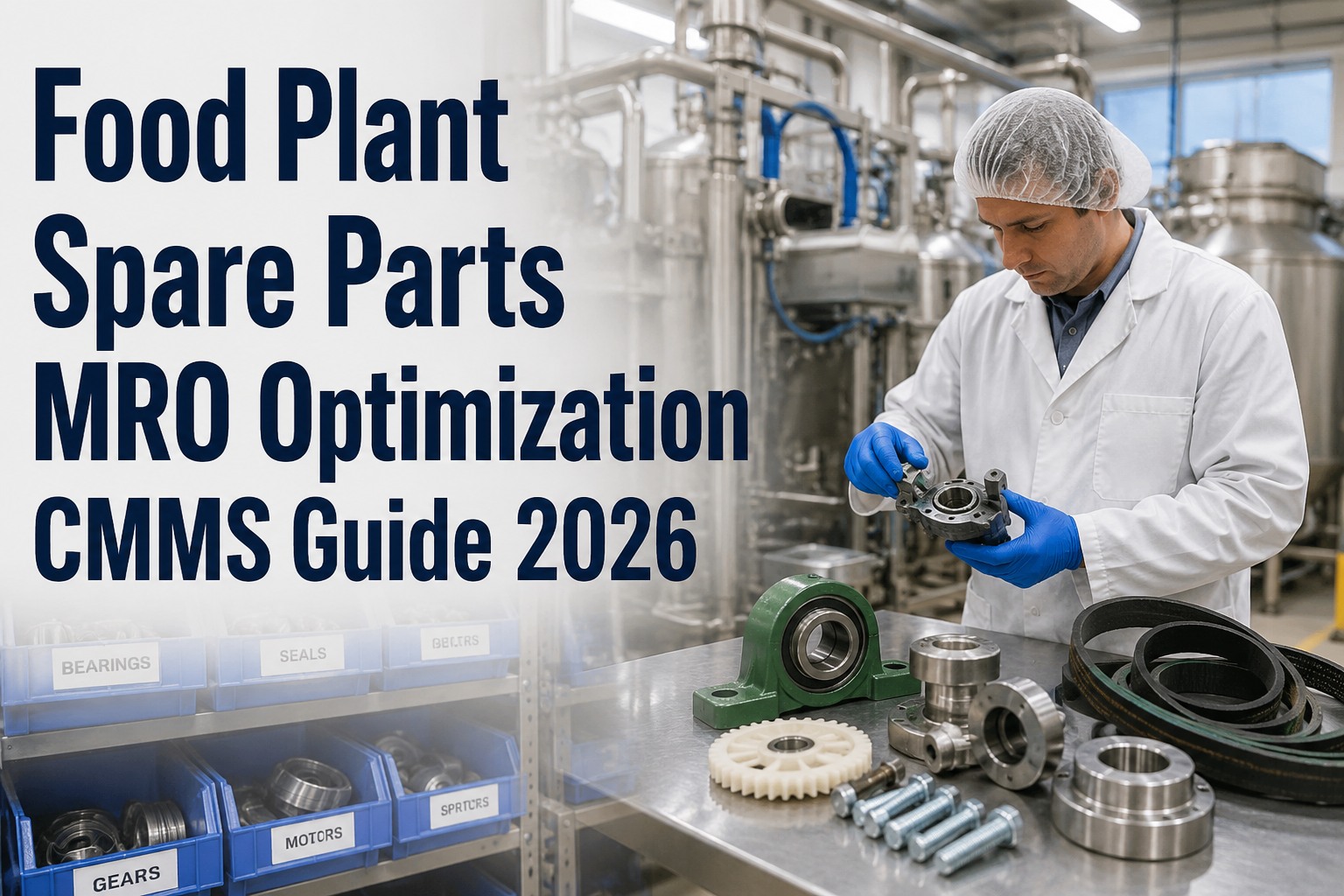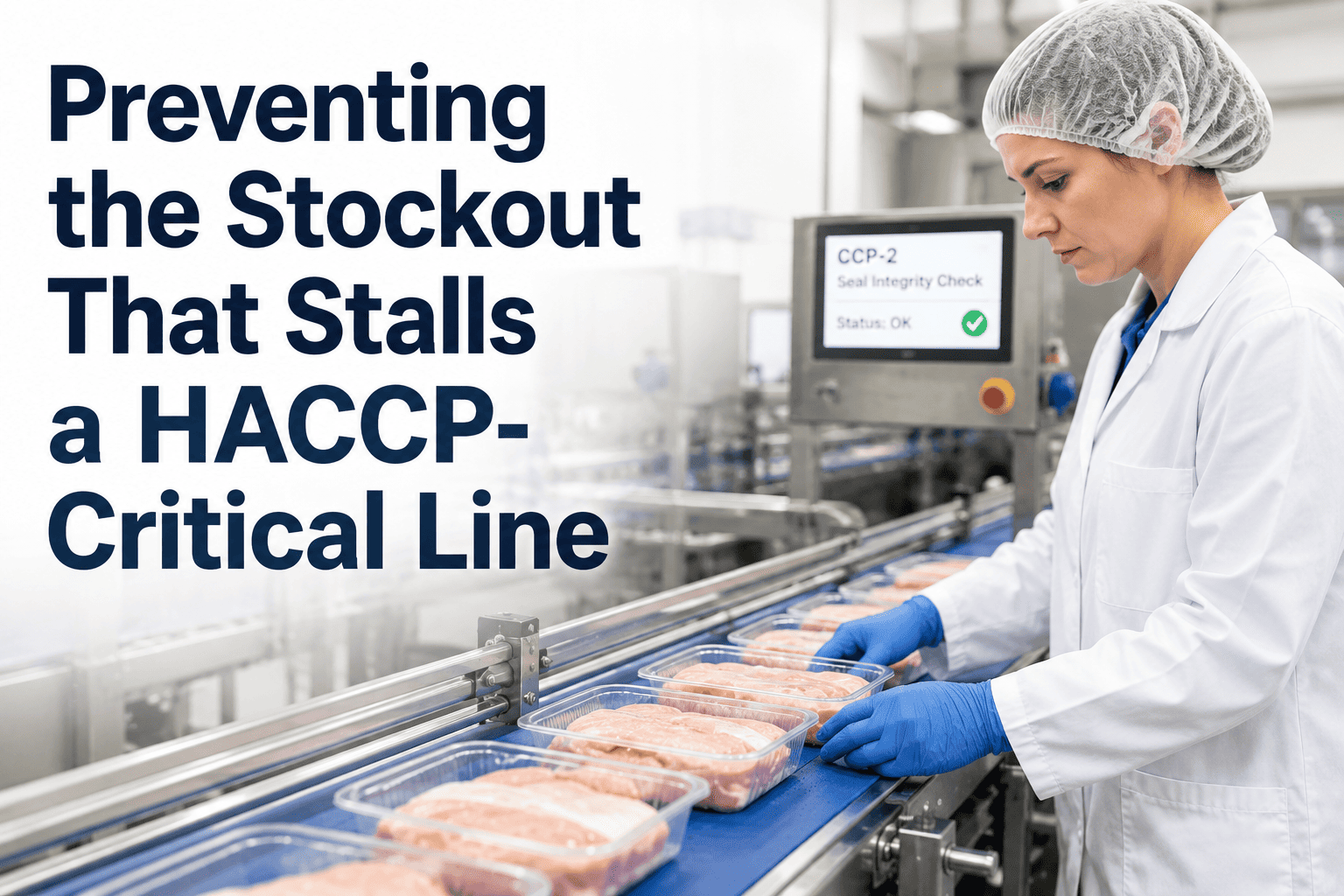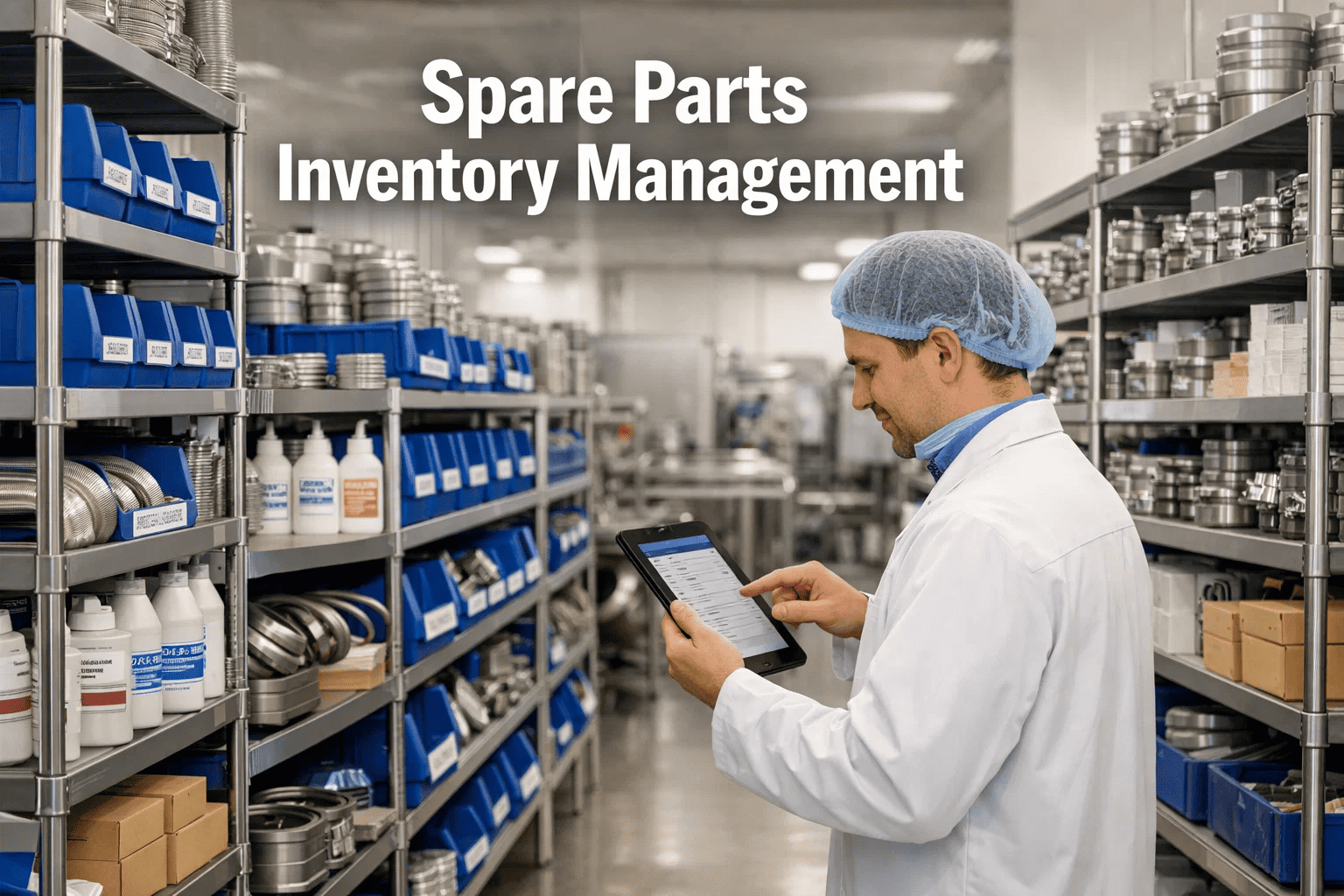
A single missing gasket on a filler line. A worn bearing on a conveyor drive. A corroded solenoid valve on a CIP skid. In food manufacturing, the difference between a 20-minute parts swap and an 8-hour production shutdown is rarely about the complexity of the repair — it is almost always about whether the right part was on the shelf when the technician needed it. 48% of food manufacturers still manage spare parts with spreadsheets, and the average stockout-driven downtime event costs between $8,000 and $28,000 per hour in lost production. The problem is not that plants carry too few parts — most carry too many of the wrong parts and too few of the critical ones. OxMaint's spare parts inventory module links every part directly to the asset it serves, automates min-max reordering from actual consumption data, and eliminates the guesswork that causes both stockouts and excess inventory simultaneously.
Food Plant Spare Parts Inventory: Prevent Stockouts, Cut Excess, Protect Production
A data-driven framework for managing MRO inventory in food manufacturing — with CMMS-linked reordering, criticality-based stocking, and audit-ready traceability that eliminates both stockouts and dead stock.
Why Spare Parts Management Is Different in Food Manufacturing
Food plants operate under constraints that general manufacturing does not face. Parts must be food-grade certified, material traceability is non-negotiable for FDA and GFSI audits, and a single contamination event from a wrong gasket material can trigger a product recall costing $10M or more. Generic inventory management approaches fail in this environment because they do not account for these food-specific requirements. Want to see how leading food plants manage this complexity? Start a free trial and book a demo to see OxMaint's food-grade inventory tracking in action.
The ABC-XYZ Framework for Food Plant Parts Classification
Not every spare part deserves the same stocking strategy. The ABC-XYZ matrix combines value impact (ABC) with demand predictability (XYZ) to create a classification system that tells you exactly how to stock each SKU. Plants that implement this framework typically reduce carrying costs by 15–25% while simultaneously improving critical parts availability to above 95%. This is not theory — it is the operational standard at every top-quartile food manufacturer. If your storeroom still treats every part the same, book a demo and start a free trial to see how OxMaint classifies parts automatically.
Spreadsheets vs. CMMS: The Real Cost of Manual Inventory
The spreadsheet is not a free tool — it is an expensive one that hides its costs in downtime, excess inventory, and audit failures. Here is what the data shows when you compare manual spare parts management against CMMS-driven inventory in food manufacturing environments.
Your Storeroom Data Already Knows Which Parts Will Run Out Next. OxMaint Reads It For You.
Stop counting shelves manually. OxMaint links every spare part to the asset it serves, tracks consumption from work order history, and triggers reorders before you run out — not after production stops.
How OxMaint Eliminates Stockouts and Excess Inventory Simultaneously
Most plants solve stockouts by over-ordering, which creates a dead stock problem. OxMaint solves both problems at once by connecting spare parts inventory directly to maintenance work orders, asset BOMs, and supplier lead times — so every stocking decision is based on actual data, not estimates. Curious how this works for your specific plant? Start a free trial and book a demo to walk through your own inventory data.
The Financial Impact of Getting Inventory Right
Spare parts inventory sits at the intersection of maintenance, procurement, and finance. Getting it wrong costs money in three directions: stockouts cause downtime losses, excess inventory ties up working capital, and poor traceability creates audit and compliance risk. Here is the ROI breakdown for a mid-size food plant implementing CMMS-based inventory management.
Frequently Asked Questions
How does OxMaint determine the right min-max levels for each spare part?
OxMaint calculates min-max levels from historical work order consumption data — not vendor recommendations or static guesses. The system analyses how frequently each part is consumed across all linked assets, factors in supplier lead time, and sets the reorder point to ensure stock arrives before the minimum is reached. As consumption patterns change — seasonal variations, new equipment additions, or PM frequency adjustments — the recommended min-max levels update automatically. Plants typically see a 15–20% reduction in carrying costs within the first 6 months of implementation.
Can OxMaint track food-grade certification and material compliance for spare parts?
Yes. Every part record in OxMaint includes fields for material specification, food contact certification (FDA 21 CFR, EU 1935/2004, 3-A), and approved manufacturer. When a technician opens a work order, the system shows only approved parts for that specific asset and application — preventing non-food-grade substitutions during emergency repairs. All certification documents are stored digitally against the part record, making them instantly retrievable during SQF, BRC, or FSSC 22000 audits without manual file searching.
How long does it take to set up spare parts inventory in OxMaint?
Most food plants complete initial inventory setup within 2–4 weeks. OxMaint supports bulk import from existing spreadsheets, so your current parts data transfers directly. The asset-to-part BOM linkage typically takes an additional 1–2 weeks as maintenance teams validate which parts serve which assets. Within 90 days of operation, the system has enough consumption data to begin generating accurate min-max recommendations. There are no heavy implementation fees or extended onboarding processes — you can start tracking parts from day one.
Does OxMaint integrate with existing ERP and procurement systems?
OxMaint integrates with major ERP platforms to synchronise purchase orders, supplier data, and inventory transactions. When the system generates an automatic reorder, the purchase request flows directly to your procurement workflow — whether that is through an ERP integration, email notification to your purchasing team, or a built-in approval process. This closed loop ensures that reorders happen at the right time without duplicate entries or manual transfer of data between systems.
Stop Losing Production to Missing Parts. Start Managing Inventory From Your Maintenance Data.
OxMaint connects every spare part to the asset it serves, calculates min-max levels from actual consumption, and triggers reorders automatically — so your storeroom always has the right parts at the right time, without the excess inventory that drains working capital.