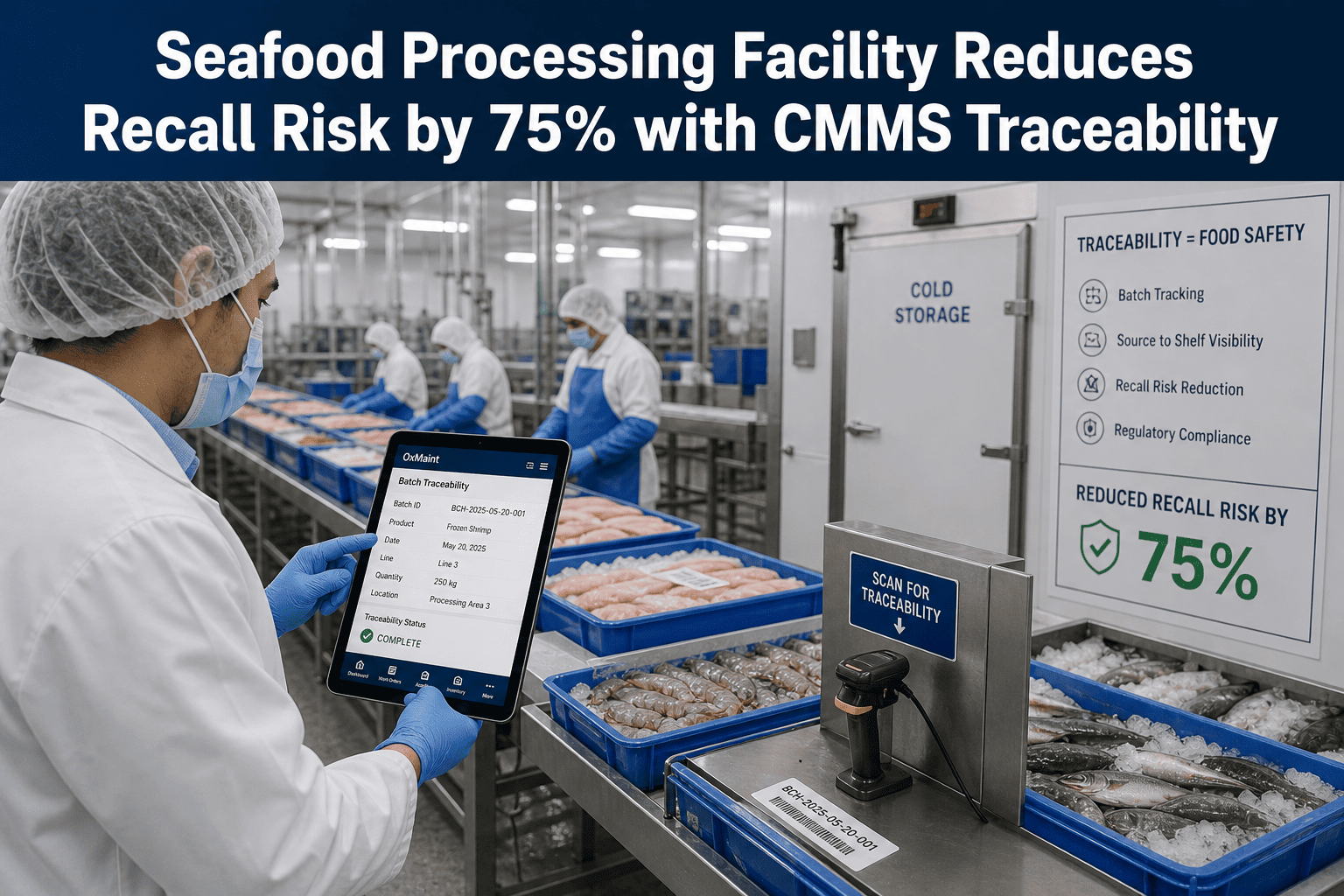
In 2024, the U.S. food industry recorded over 3,200 recall events — the second-highest annual total in six years. Behind many of those recalls sat a problem nobody talked about publicly: disconnected maintenance data. When a CIP system fails, a gasket degrades, or a conveyor bearing seizes, the maintenance record sits in one system, the batch record in another, and the allergen log in a spreadsheet no one updated. By the time an inspector asks which products were affected, the plant cannot answer with precision. That imprecision turns a targeted 3-batch recall into a facility-wide shutdown. This is the hidden risk of maintenance data silos in food manufacturing — and it is costing the industry billions of dollars every year in recalls that could have been contained, or prevented entirely.
The Hidden Risk in Food Manufacturing: Maintenance Data Silos That Cause Recalls
When equipment maintenance records are disconnected from production batch data, every equipment failure becomes an uncontrolled recall event. FDA now requires traceability records within 24 hours. Most food plants cannot comply. Here is why — and what to do about it.
What a Maintenance Data Silo Actually Looks Like
Most food plants use three to seven separate systems to manage operations. Maintenance work orders live in a CMMS — or worse, in paper binders. Production batch records live in an ERP. Sanitation logs sit in spreadsheets. Quality inspection results are in a QMS. Temperature logs come from a standalone sensor platform. None of these systems talk to each other. When a contamination event is traced back to a specific piece of equipment, the plant must manually cross-reference every system, every log, and every handwritten note to determine which batches were affected. In an FDA investigation, that process must be completed in 24 hours. For most plants, it takes days — or weeks.
Failure
How Data Silos Turn Equipment Failures Into Recalls
The path from an equipment failure to a facility-wide recall is shorter than most maintenance managers realize. When records cannot be cross-referenced instantly, the FDA and your own quality team must assume the worst-case scope.
Oxmaint connects equipment records to batch data in real time — so when the FDA asks, you answer in minutes, not days. Every work order is timestamped and linked to production context automatically.
The 5 Most Dangerous Maintenance Data Gaps in Food Plants
Not every silo looks like a disconnected system. Some are hidden in the way data is recorded — or not recorded — during normal operations. These five gaps are the most common root causes of expanded recall scope in food manufacturing.
FSMA 204 Changes Everything About Maintenance Records
The FDA's Food Traceability Rule under FSMA Section 204 requires food manufacturers handling high-risk foods to maintain detailed traceability records and produce them electronically within 24 hours of an FDA request. While the rule focuses on supply chain traceability, investigators routinely request maintenance records as part of any contamination investigation — because equipment failure is a leading root cause of food safety incidents. Failure to produce these records can result in facility registration suspension, effectively shutting down your plant.
Siloed Records vs. Centralized Maintenance Platform
When an FDA investigator arrives or a recall event is triggered, the difference between silos and centralized data is the difference between a targeted recall and a facility-wide shutdown.
How Oxmaint Eliminates Maintenance Data Silos
Centralized maintenance management is not just about efficiency — it is your primary defense against expanded recalls, compliance failures, and the brand damage that follows. Oxmaint connects every maintenance event to the production context it occurred in.
Every Day Without Centralized Records Is Another Day of Recall Exposure
Oxmaint gives food plant maintenance and quality teams a single platform where every equipment record, every PM completion, every sanitation log, and every shift observation is connected, timestamped, and FDA-ready. Protect your brand. Protect your facility. Protect your customers.
Frequently Asked Questions
The most important questions food plant managers, quality directors, and maintenance leaders ask about maintenance data silos and recall risk.