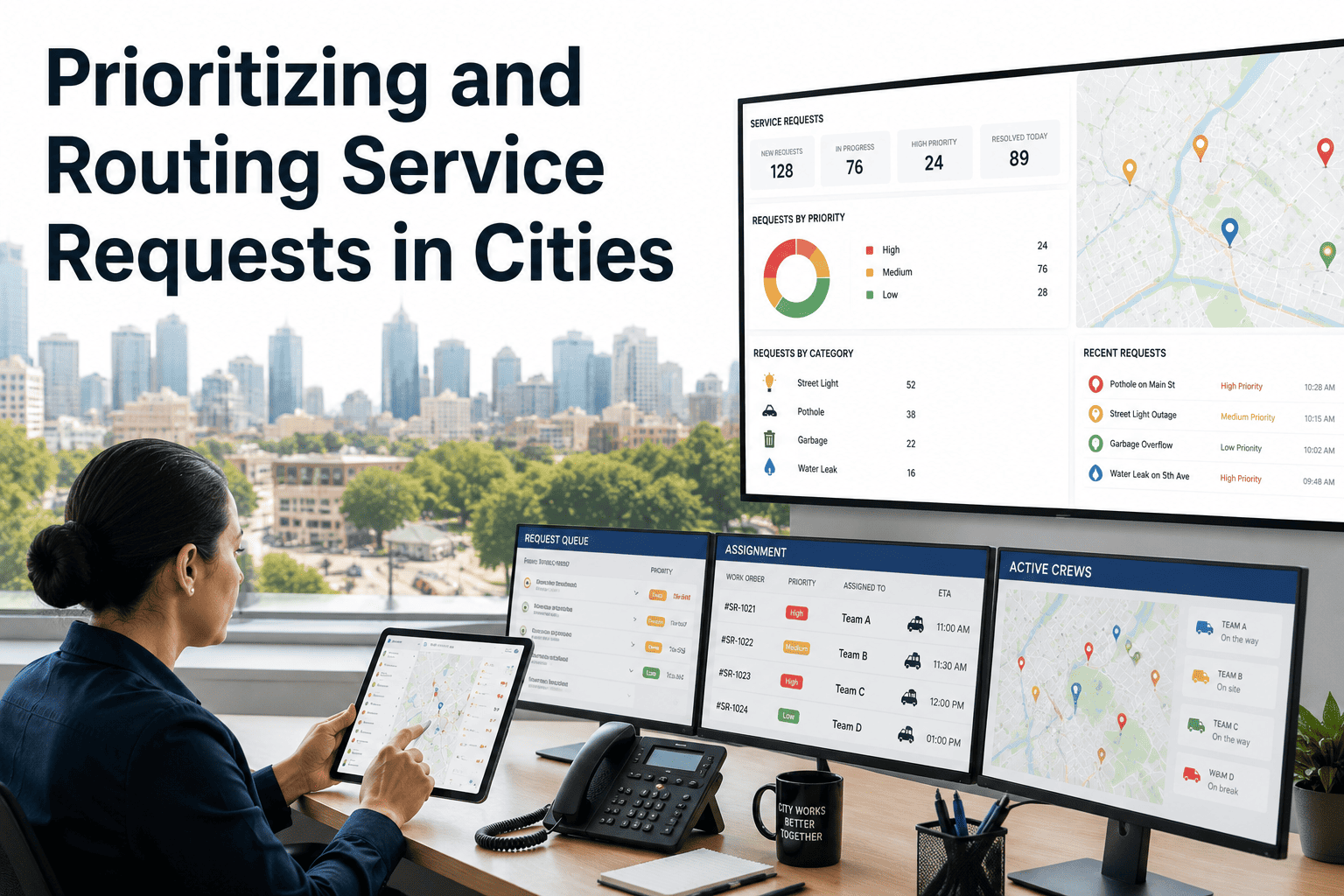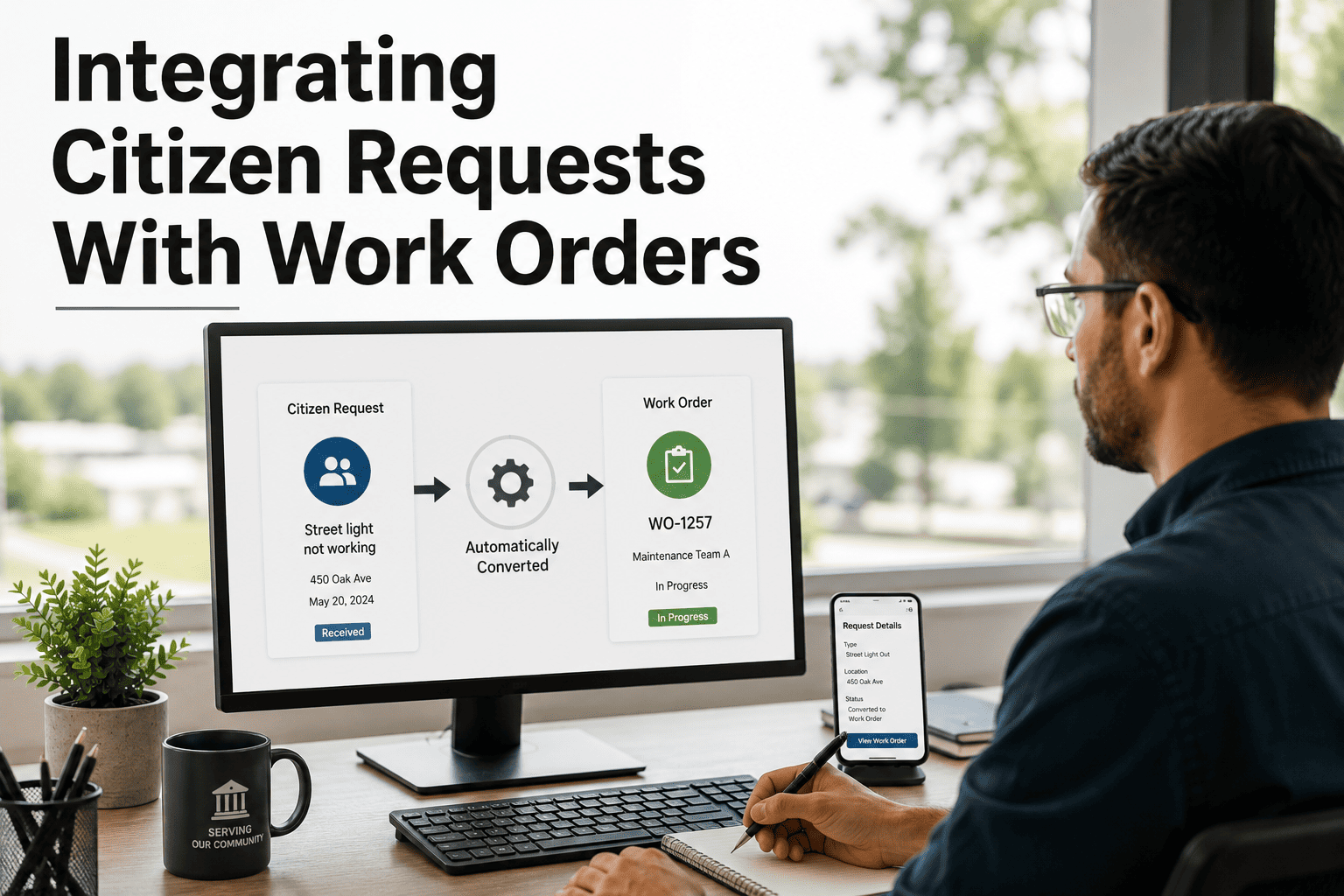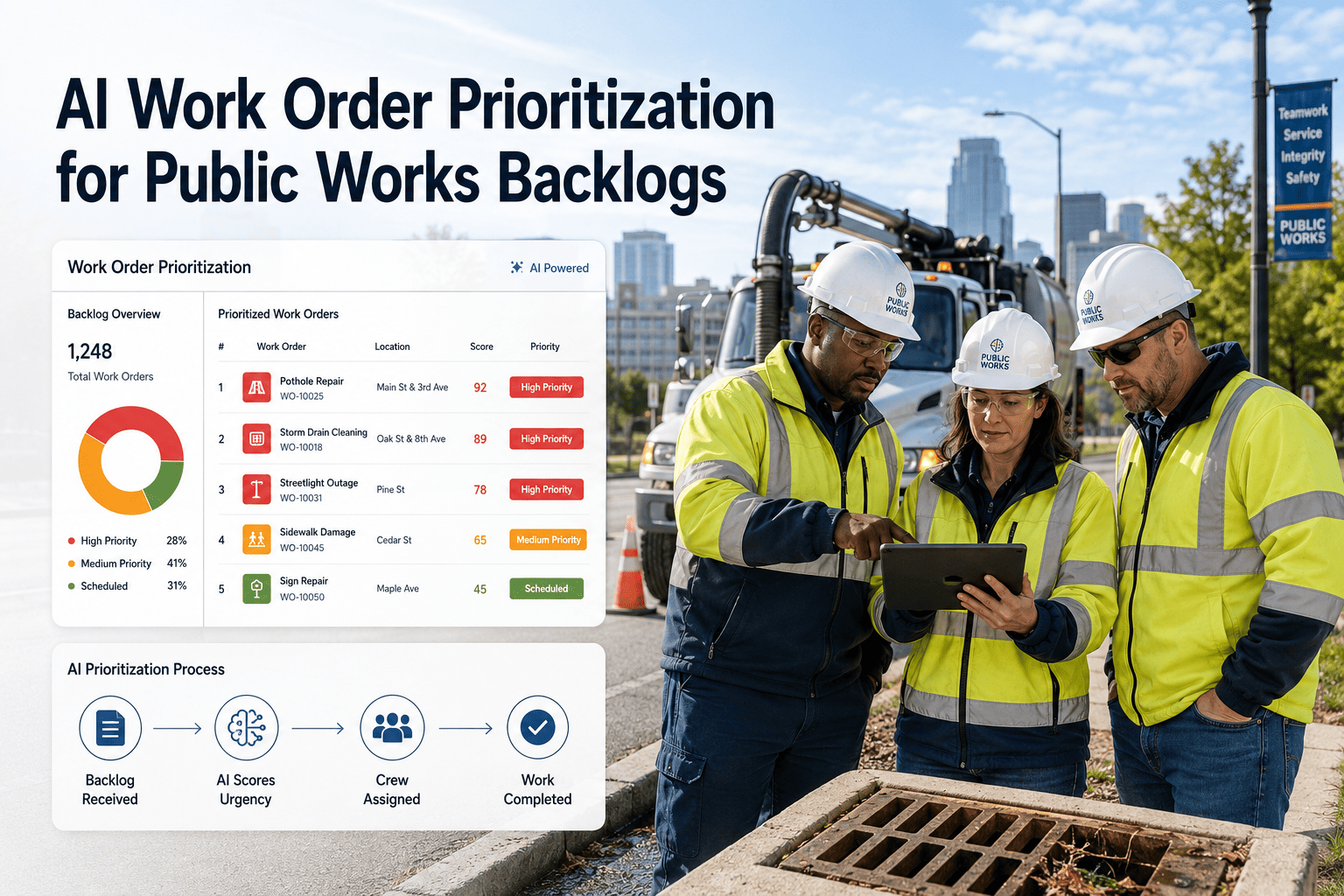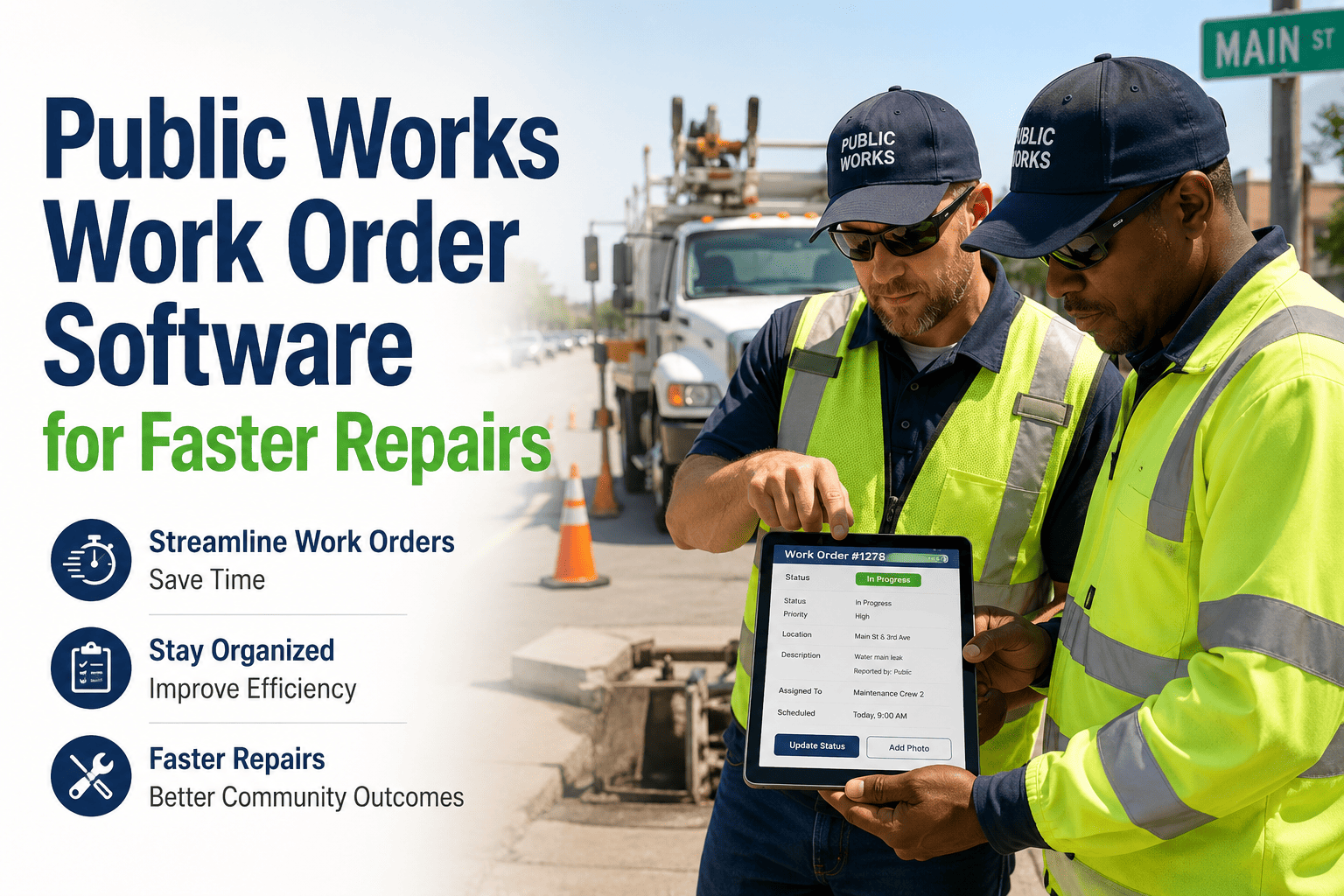
A pothole report, a sewage smell, a downed tree, and a noise complaint all land in the same 311 queue — and a tired operator has seconds to decide who handles each one. When that decision is manual, as much as 30% of tickets get misrouted, triage can add 48-plus hours of delay, and a third of requests never become a work order at all. Every misroute is a resident who escalates to a council member instead. AI triage fixes the front door: it reads each request, classifies it, scores its urgency, and routes it to the right department in under a minute — then keeps the resident informed automatically. This guide shows how to put that workflow to work with OxMaint's AI and request automation, or book a demo to see it routing your own request stream.
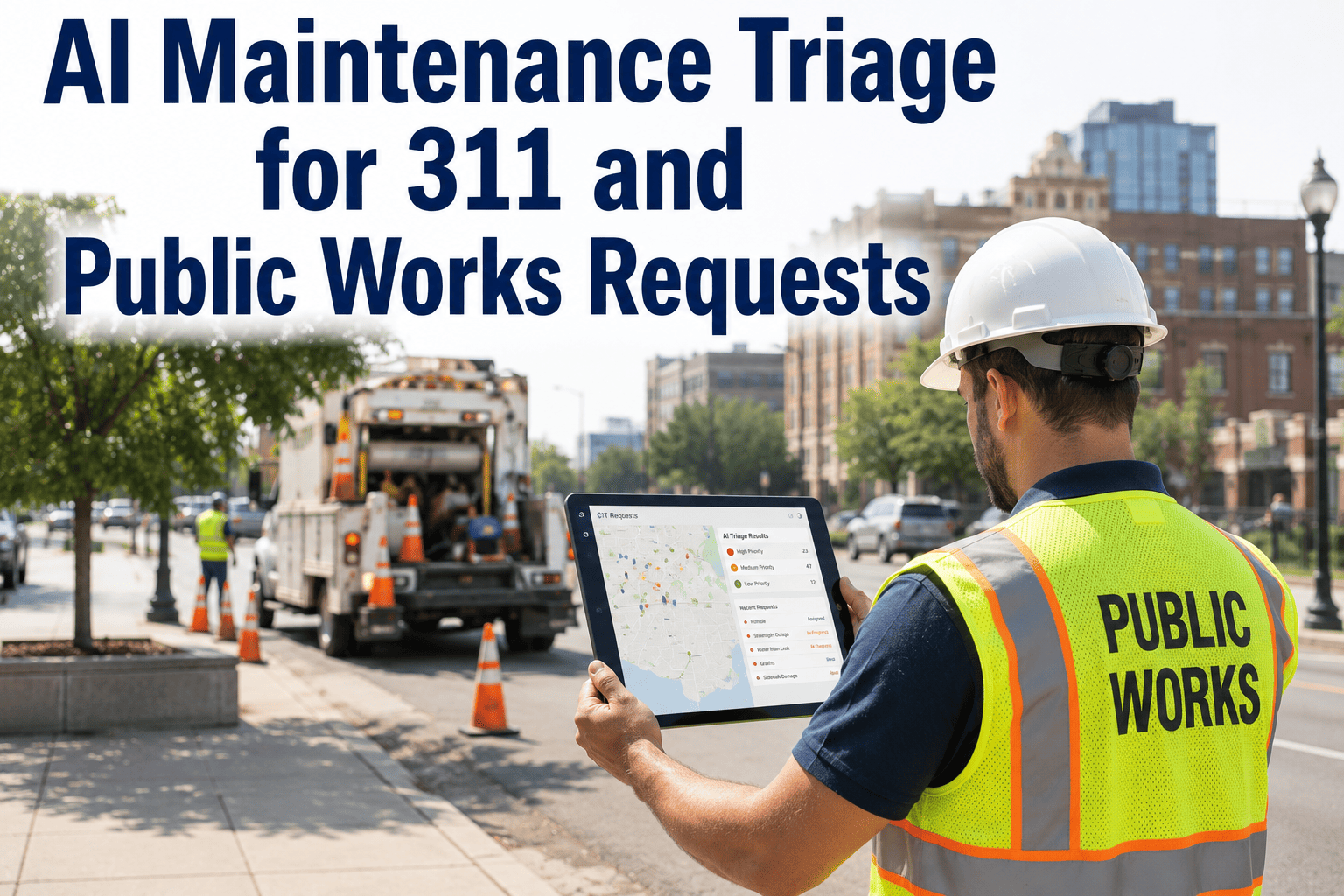
AI Maintenance Triage for 311 and Public Works Requests
Classify every citizen complaint, assign the right priority, route it to the right department, and push status back — automatically, in seconds.
Manual triage vs AI triage
The work doesn't change — a request still has to be understood, ranked, and routed. What changes is who does it, how fast, and how often it's right.
| Step | Manual triage | AI triage |
|---|---|---|
| Routing accuracy | Up to 30% misrouted | Category + location matched |
| Time to assign | Hours, sometimes days | Under 60 seconds |
| Requests captured | Up to a third lost | Every request becomes a work order |
| Duplicate handling | Caught by memory | Matched by GPS and category |
| Resident updates | Call back to check | Automatic status notifications |
| After-hours intake | Business hours only | Accepted 24/7 |
The request lifecycle, end to end
Every complaint follows the same path — and AI carries it from intake to the right crew without a manual handoff, then closes the loop back to the resident.
The final step feeds the first: status notifications cut the call-back volume that clogs the queue, so the next request gets through faster.
Route every request right the first time
OxMaint's AI turns a noisy 311 queue into clean, prioritized work orders — sent to the right department in under a minute.
Routing matrix: who gets what
Routing rules map each request type to a department, a starting priority, and a service-level target. These are configurable to your structure — a starting point, not a straitjacket.
| Request type | Routed to | Priority | SLA target |
|---|---|---|---|
| Water or sewer leak | Water Utilities | P1-P2 | Same day |
| Downed tree on road | Public Works | P1 | Immediate |
| Pothole / road damage | Public Works | P2-P3 | 2-5 days |
| Streetlight outage | Utilities | P3 | 5-7 days |
| Missed trash pickup | Solid Waste | P3 | Next service day |
| Graffiti / illegal dumping | Code Enforcement | P3-P4 | 7-10 days |
| Abandoned vehicle | Parking / Police liaison | P4 | Scheduled |
Priority rules that match urgency
Not every request is equal, and treating them alike is how safety issues wait behind cosmetic ones. Severity scoring sorts intake into clear lanes.
"Residents don't judge a city by its hardest repairs — they judge it by whether a simple report went somewhere. The damage from manual triage isn't just the misroute; it's the silence afterward, which is what turns a pothole into a council complaint. AI triage earns its keep on the boring middle: reading messy, real-world language, scoring urgency consistently, and routing without a human bottleneck. The piece people underrate is the status update at the end — automating that single message is what rebuilds trust and quietly drops your inbound call volume at the same time."
See your 311 stream triaged live
Walk through real requests being classified, prioritized, and routed in seconds — with status pushed back to residents automatically.
Frequently asked questions
Turn the 311 queue into resolved work orders
Stop losing requests to manual triage. Classify, prioritize, route, and update every citizen complaint automatically — and give residents a government that answers.