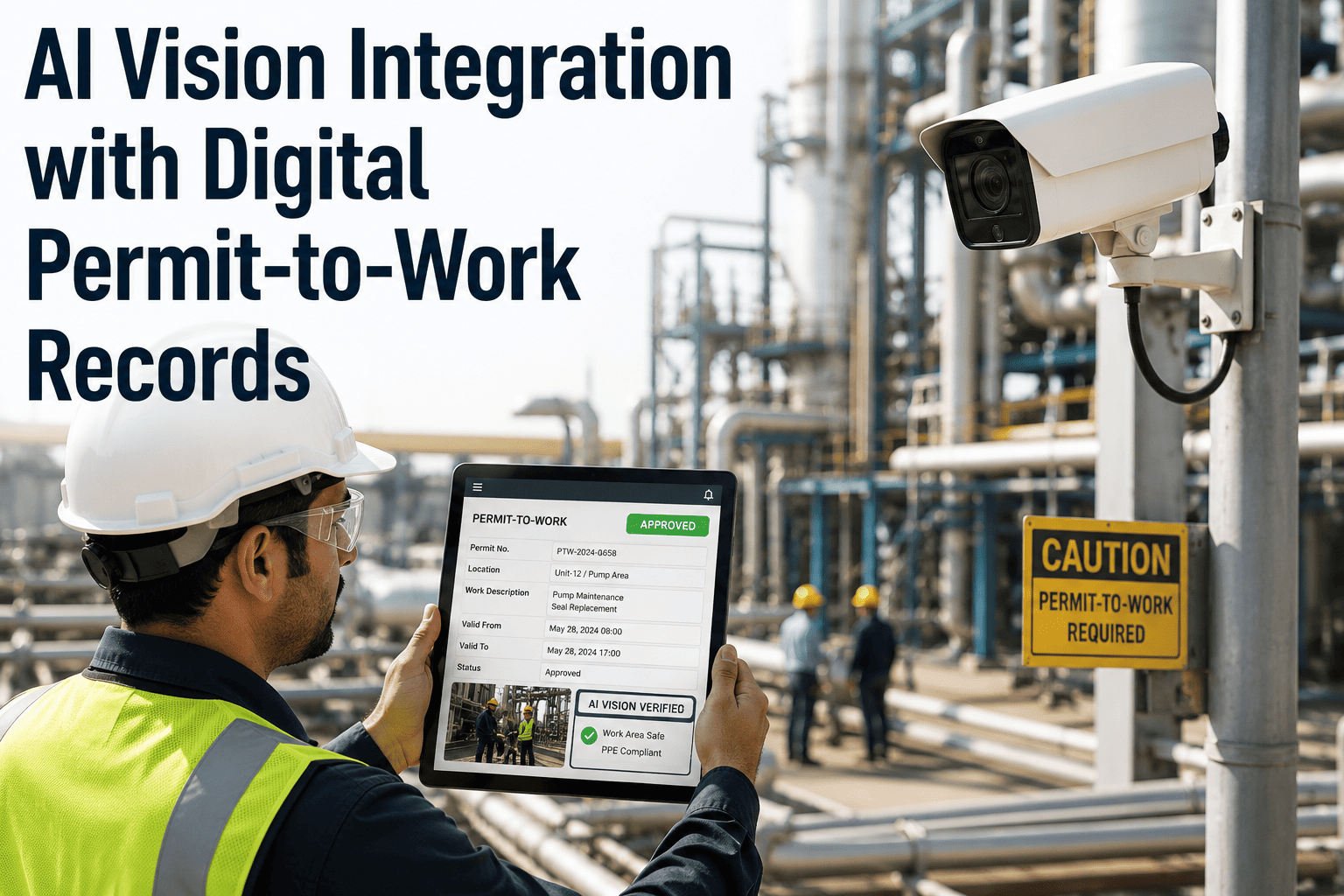
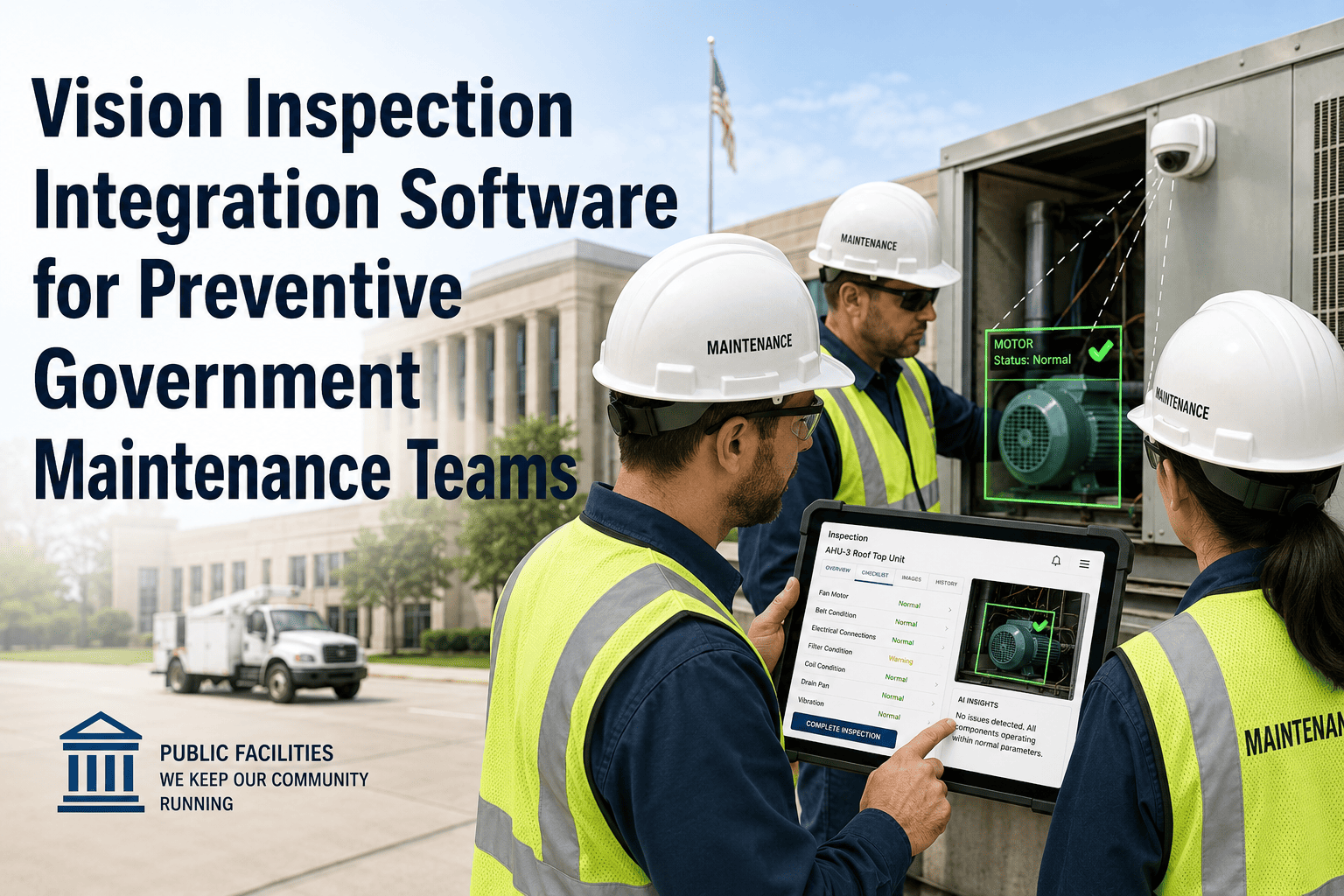
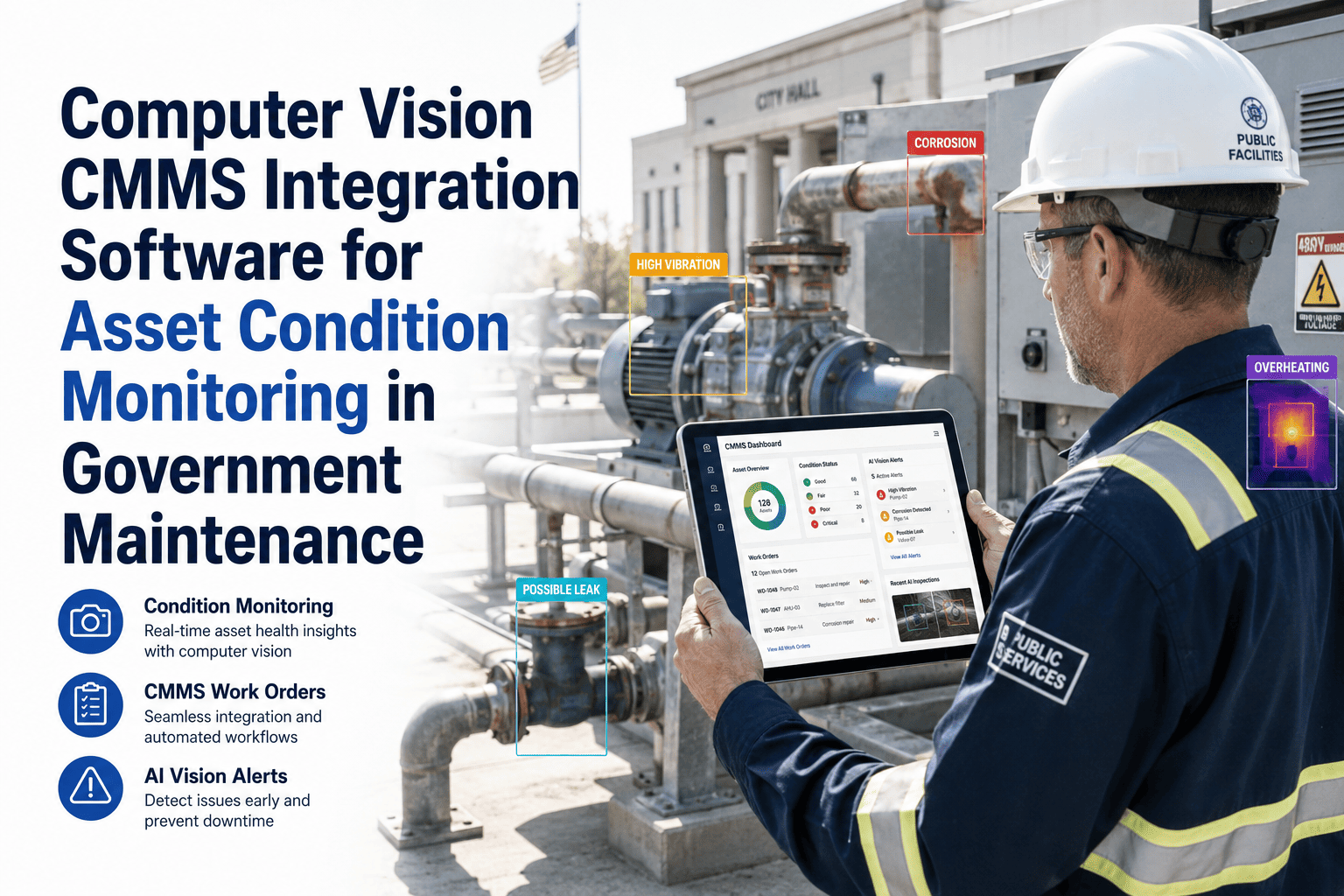
Public-sector maintenance teams are under growing pressure to demonstrate compliance, reduce paperwork delays, and produce audit-ready records for every job authorised under a permit-to-work system. Traditional PTW processes rely on paper checklists, manual sign-offs, and photographs stored in personal folders — making it nearly impossible to link visual evidence directly to the work order, the asset, or the permit record. Book a free demo with OxMaint to see how AI Vision connects directly with your digital permit-to-work records and closes the compliance gap your team may not know it has. AI vision integration changes this by capturing, classifying, and attaching visual evidence at the point of inspection — automatically associating images with the correct permit, asset ID, and work order in your CMMS before a technician even leaves the site.
Government / Public Works · AI Vision · Permit-to-Work Compliance
AI Vision Integration with Digital Permit-to-Work Records for Government Maintenance Teams
How public-sector inspection teams are eliminating compliance gaps by connecting camera evidence directly to permit workflows, asset records, and audit trails.
73%
of PTW compliance failures traced to missing or mislinked visual evidence during audits
4.2x
faster permit closure when AI vision automates evidence attachment to work records
91%
reduction in manual photo-filing time reported by government teams using integrated CMMS vision
100%
digital audit trail per permit when AI vision is fully integrated with government CMMS
The Core Problem
Why Government PTW Systems Break Down Without Visual Integration
Permit-to-work systems exist to protect workers and assets. But the compliance record is only as strong as the evidence attached to it. Most government maintenance teams operate with a visual evidence gap — technicians photograph work, but those images live in WhatsApp threads, shared drives, or personal phones rather than inside the permit record where auditors need them.
Disconnected Evidence
Photos taken at inspection are not linked to the permit record, work order, or asset ID. Audit teams cannot reconstruct what was observed, when, or by whom.
Manual Filing Delays
Supervisors manually attach images to records hours or days after work completion — introducing errors, missing files, and version conflicts in shared systems.
Incomplete Permit Closure
Permits closed without visual confirmation of safe reinstatement create liability. Regulatory inspectors increasingly expect photographic evidence at permit level, not just work order level.
No Severity Classification
Without AI analysis, all images are equal — a minor surface scratch and a structural crack receive identical treatment in the record. Priority escalation relies entirely on the technician's judgment.
Integration Architecture
How AI Vision Connects to Digital PTW Records
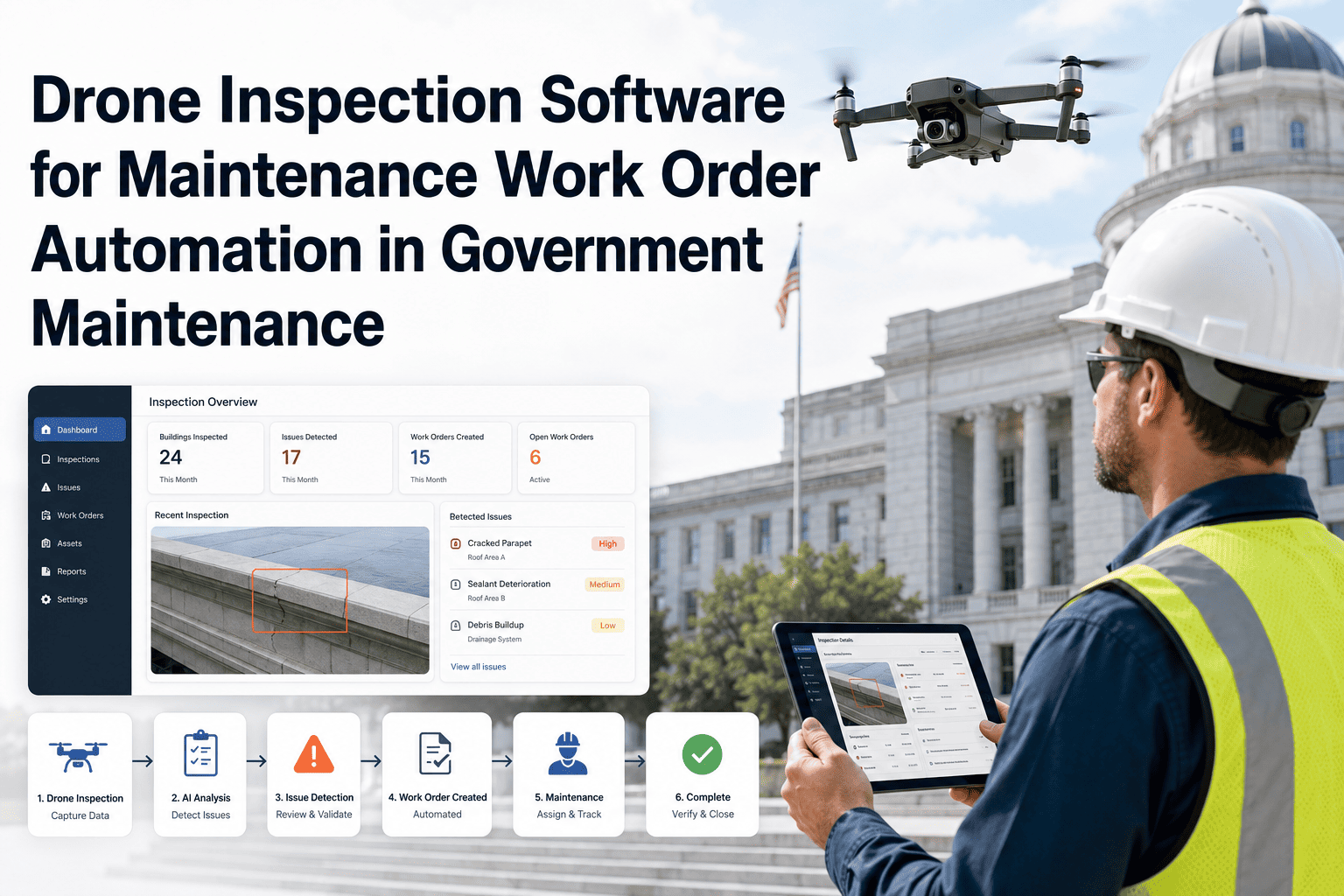
The integration between AI vision systems and digital permit-to-work records operates across four linked stages. Each stage produces structured data that feeds the next, creating a closed-loop record from permit issuance to permit closure.
01
Permit Issuance & Asset Linkage
Digital permit issued in CMMS. Asset ID, location, hazard classification, and required inspection points are pre-loaded. AI vision camera assigned to the permit in the system.
02
Real-Time Image Capture & Classification
Camera captures images at inspection checkpoints. AI model classifies condition, assigns severity score (1–5), and tags the image with asset ID, permit number, timestamp, and GPS coordinates.
03
Automatic Work Order Generation
Findings above severity threshold automatically generate work orders with the image, classification, asset context, and permit reference pre-populated. No manual data entry required.
04
Permit Closure & Audit Trail
All visual evidence, work orders, approvals, and completion confirmations are consolidated under the permit record. Permit cannot close unless all mandatory image checkpoints are fulfilled.
Comparison
Manual PTW Records vs. AI Vision-Integrated PTW Records
| Capability |
Manual PTW Process |
AI Vision-Integrated PTW |
| Evidence Attachment |
Manual upload — done hours or days later |
Automatic at point of capture — zero manual steps |
| Asset Linkage |
Text reference only — photo-to-asset link requires manual matching |
AI tags every image with asset ID, permit number, location |
| Severity Classification |
Technician judgment — inconsistent across teams and shifts |
AI scores 1–5 severity — standardised across all inspections |
| Work Order Trigger |
Supervisor reviews photos and manually creates work orders |
Automatic work order generation above threshold — no supervisor bottleneck |
| Permit Closure |
Closed when paperwork is complete — evidence optional |
Cannot close without visual confirmation at all required checkpoints |
| Audit Readiness |
Evidence reconstruction required — often incomplete |
Full timeline, images, approvals, and work orders available instantly per permit |
| Regulatory Risk |
High — gaps in evidence create liability during inspections |
Low — complete digital chain of custody per permit |
See OxMaint AI Vision + PTW Integration in Action
Government maintenance teams across public works, utilities, and municipal infrastructure are using OxMaint to close the evidence gap in their permit-to-work process. Book a demo specific to your agency's compliance requirements.
OxMaint Capability
What OxMaint Delivers for Government PTW Compliance
01
Visual Proof per Permit Checkpoint
Every mandatory inspection point on a digital permit requires photographic evidence before the checkpoint can be marked complete. OxMaint enforces this in the workflow — not as an optional step.
02
Asset-Mapped Inspection Records
Images are stored against the specific asset within your asset register — not just against the work order. This means the full inspection history is visible on the asset timeline, not buried in completed permits.
03
AI Severity Scoring
OxMaint's AI vision engine assigns a severity score to each finding. Scores above your configurable threshold automatically escalate to corrective work orders and notify the relevant supervisor or approver.
04
Approval Chain Integrated
Permit issuance, inspection sign-off, work order approval, and permit closure all follow a configured approval chain. Every step is timestamped, named, and attached to the permit record permanently.
05
Instant Audit Export
Any permit can be exported as a complete audit package — including all images, findings, severity scores, work orders created, and approval history — in seconds. No reconstruction, no missing files.
06
Reporting Dashboard
Supervisors and compliance officers see live permit status, outstanding checkpoints, overdue closures, and severity trend data across all active permits in a single operations dashboard.
"
The single biggest audit risk in government maintenance is not that the work was not done — it is that you cannot prove it was done correctly. Paper PTW records and manually filed photos give auditors nothing to verify against. When AI vision is directly integrated with the permit record, you have timestamped, geotagged, AI-classified evidence at every checkpoint. That is what regulators are moving towards requiring, and teams that have already built this into their CMMS process will be ahead of the next compliance cycle, not scrambling to catch up.
Senior Compliance Engineer, Government Infrastructure Maintenance
14 Years Public Works Maintenance · Specialises in PTW Digitalisation · Advisor to Municipal Asset Management Teams
Frequently Asked Questions
Can OxMaint AI Vision work with our existing permit-to-work software?
What happens when AI vision flags a finding during an active permit?
When OxMaint's AI engine detects a finding above your configured severity threshold during an active permit, it immediately creates a linked corrective work order, notifies the designated approver, and attaches the image and classification to the permit record. The permit inspection cannot proceed past that checkpoint until the finding is acknowledged and actioned according to your team's configured escalation rules. This prevents situations where known issues are photographed but not formally raised as work items.
Start a free trial to configure your severity thresholds and escalation rules.
How does AI vision integration reduce audit preparation time for government teams?
Traditional audit preparation for permit records can take days — sourcing photos from multiple locations, matching them to permits, verifying approvals, and assembling evidence packages. With OxMaint, the entire evidence package for any permit is assembled in real time as the work progresses. When an auditor requests documentation, it is exported directly from the permit record — all images, approvals, work orders, and completion confirmations in a single structured export. Government teams using this approach report audit preparation time reduced from days to under an hour per audit cycle.
Book a demo to see the audit export feature for your specific regulatory requirements.
Is the system suitable for field teams with limited connectivity?
OxMaint's mobile application supports offline operation for field inspections — images and inspection data are captured locally and synchronised automatically when connectivity is restored. This is designed specifically for government maintenance teams working in remote infrastructure, underground utilities, or facilities with restricted network access. All evidence captured offline is timestamped at capture, not at sync — preserving the integrity of the inspection record for audit purposes.
OxMaint · AI Vision · Government CMMS
Close the Evidence Gap in Your Permit-to-Work Process
OxMaint connects AI camera evidence directly to your digital permits, work orders, asset records, and approval workflows — giving your team a complete, audit-ready compliance record without manual filing or evidence reconstruction.