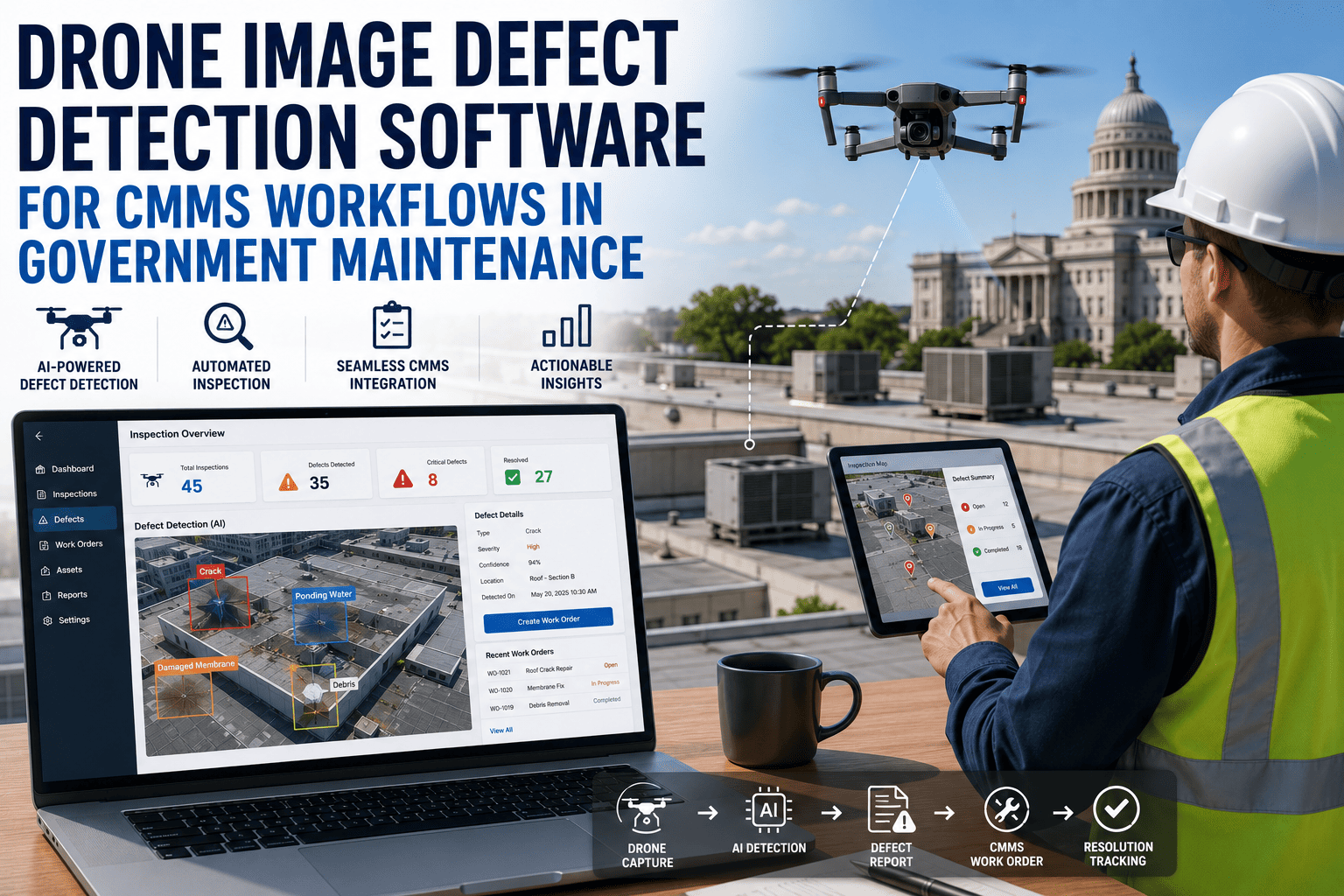
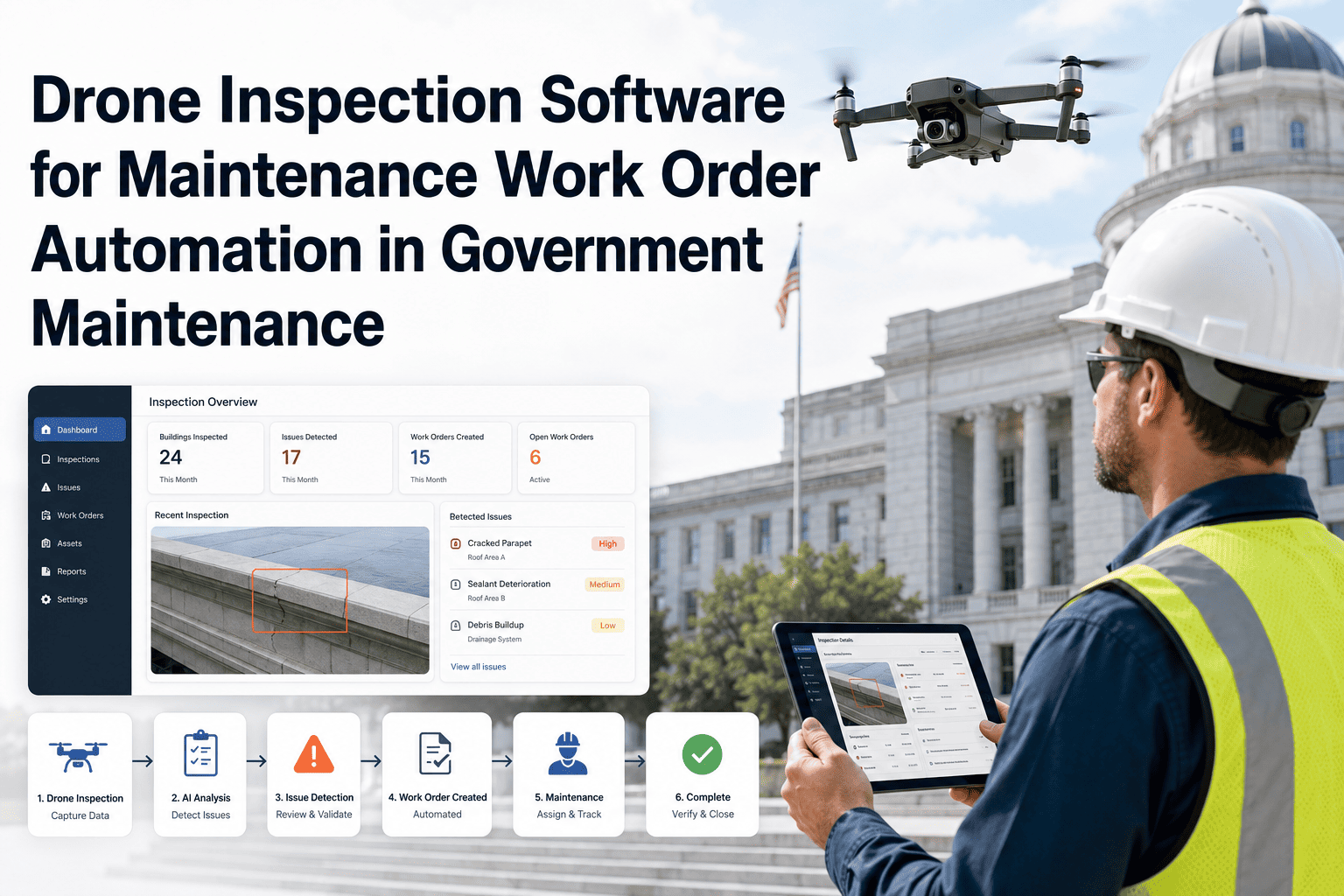
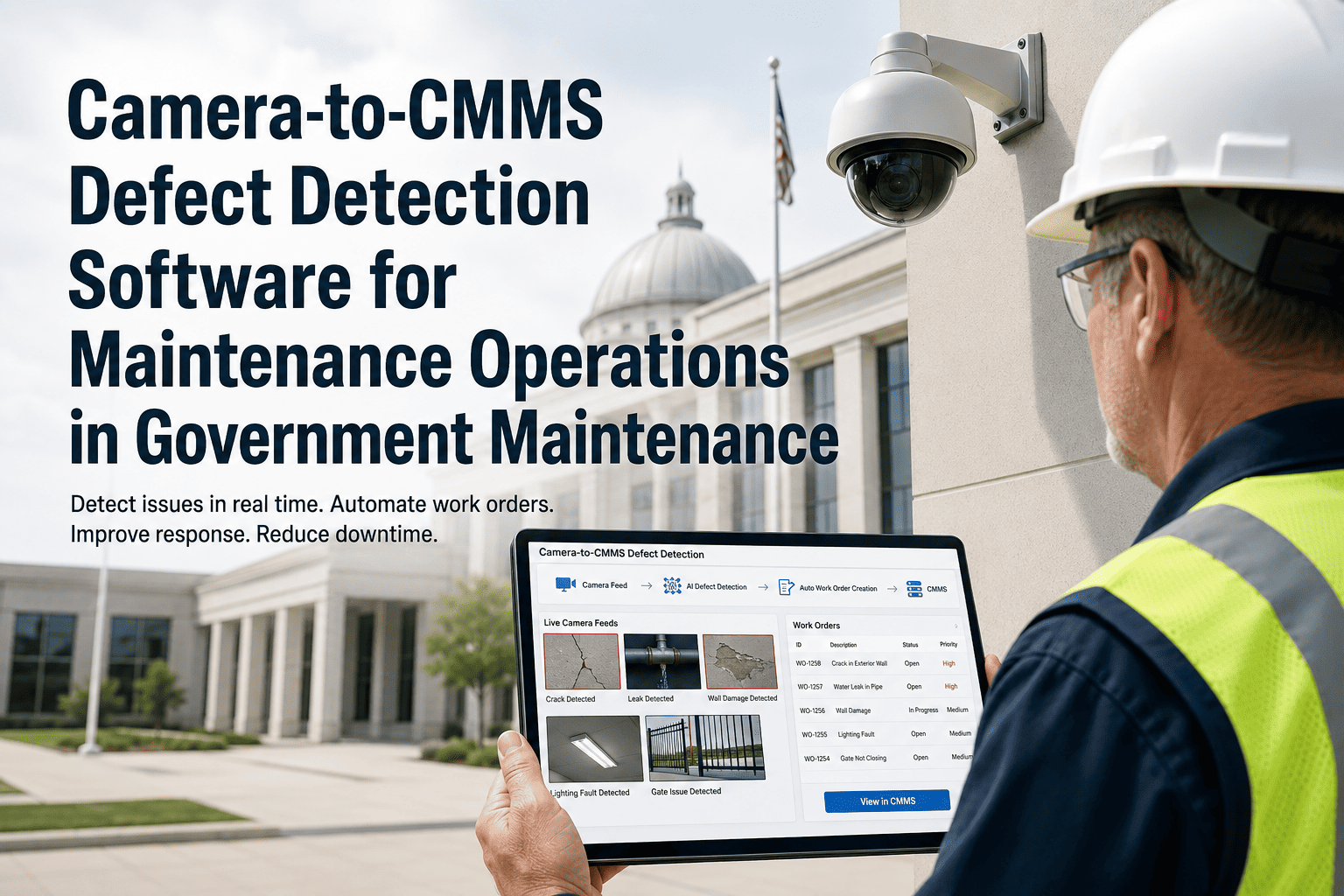
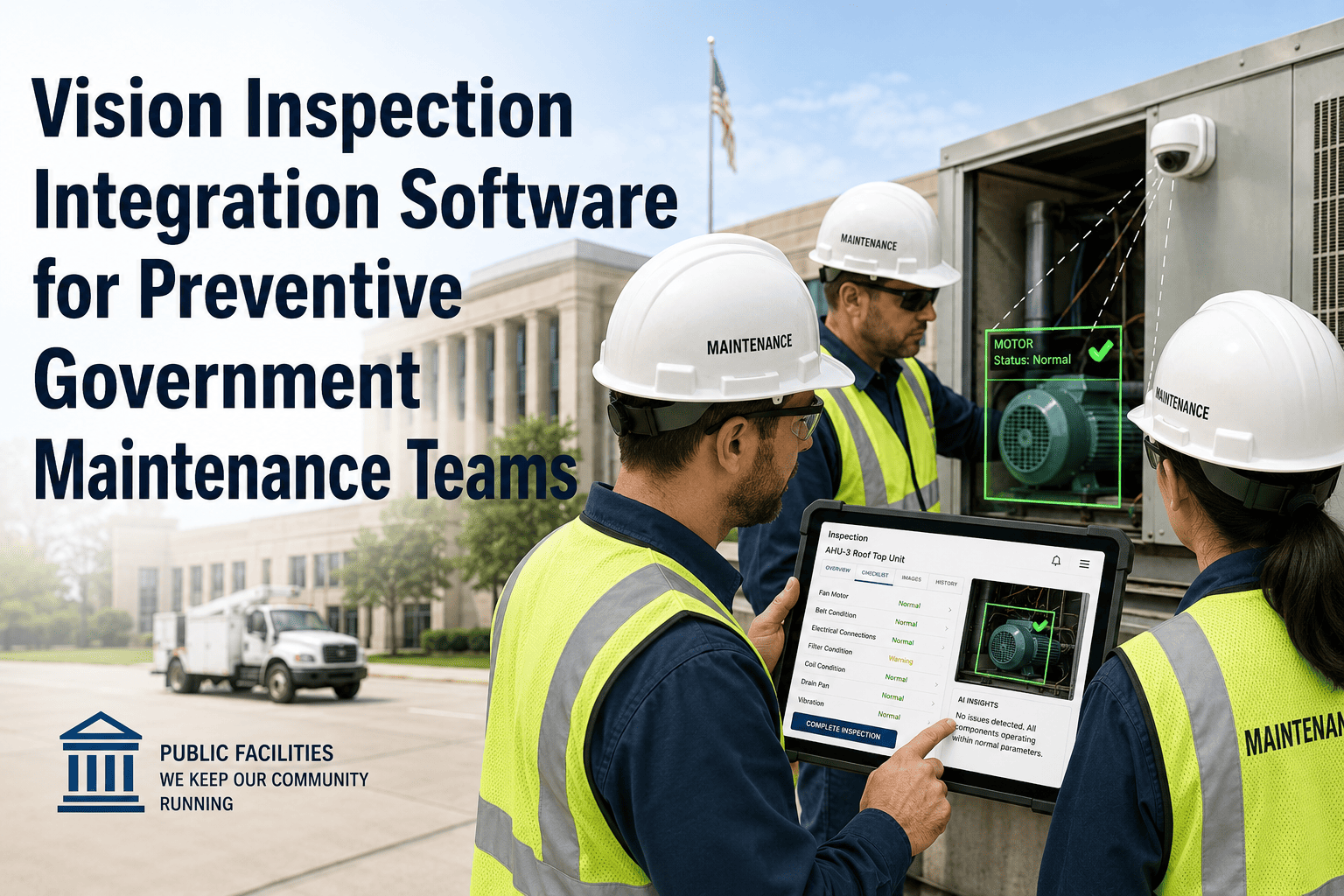
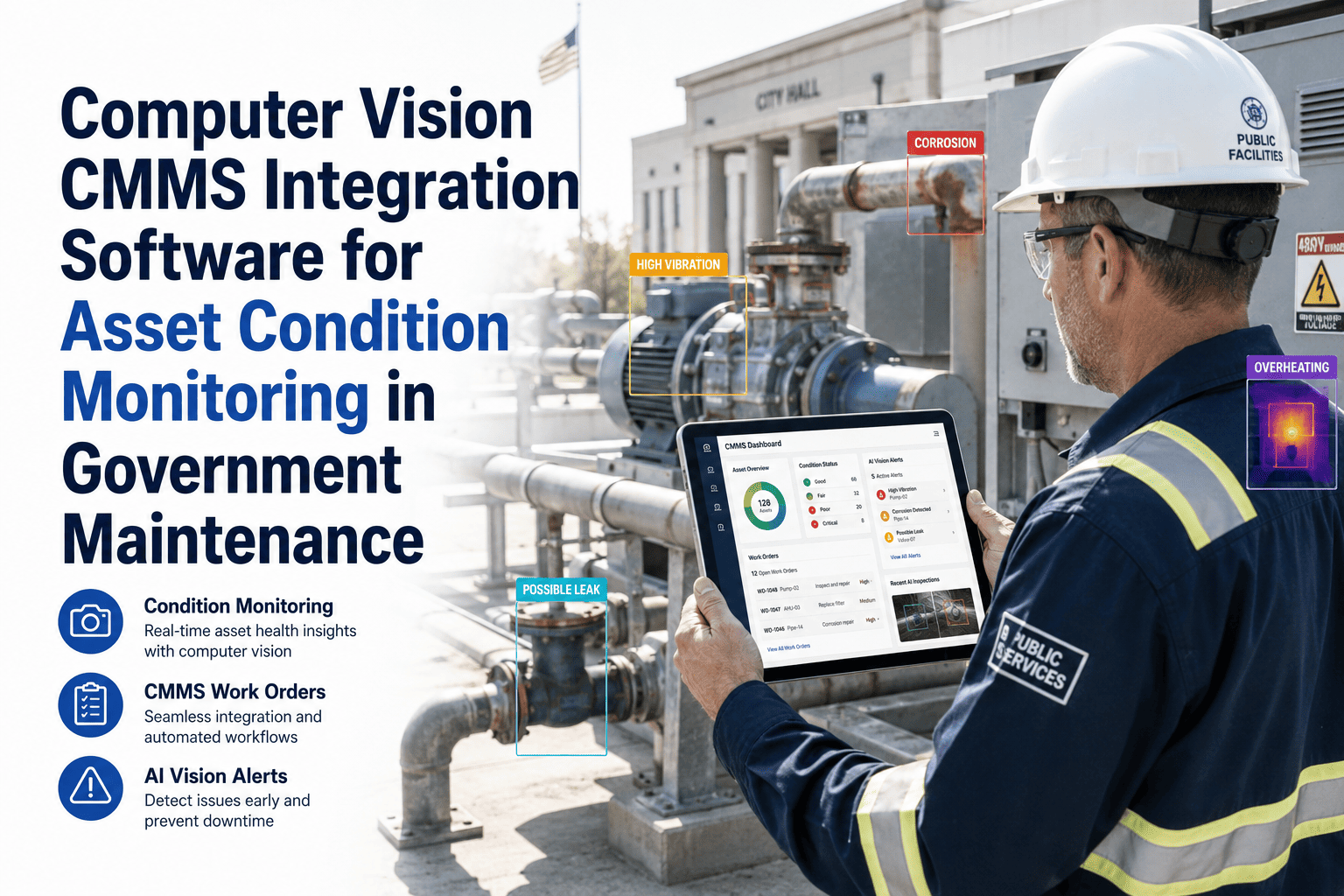
In government maintenance, the gap between a defect appearing and a work order being created is where infrastructure costs the most. A crack spotted on Monday morning may not become a work order until Wednesday — and by then, the repair scope has grown. OxMaint's AI camera integration eliminates that gap entirely: cameras detect anomalies automatically, AI scores severity in real time, and a fully documented work order is created and routed to the right crew within seconds — no manual entry, no delay, no missed findings. This page covers how automatic work order creation from AI cameras works in public-sector maintenance environments, what the data shows, and why government departments are adopting it now. Book a demo to see the workflow live with your agency's asset types.
AI Camera · Automatic Work Orders · Government CMMS
AI Camera Integration for Automatic Work Order Creation in Government Maintenance
From camera capture to crew assignment — in under 2 seconds. No manual entry. No inspection gaps. Full audit trail from every detection to every completed repair.
The Real Cost of Manual Work Order Entry in Government Maintenance
Every minute between detection and work order creation is time during which a defect can worsen — and during which no crew is dispatched. In public works, that lag is rarely minutes; it is often hours or days.
Day 0
Defect Appears
Crack, corrosion, or equipment anomaly develops on a public asset. No one is watching this shift.
Day 1–3
Manual Inspection Round
Technician on a scheduled route notices the defect. Takes a phone photo. Notes it mentally or on paper.
Day 1–4
Work Order Manual Entry
Back at the office, the technician logs into the CMMS and manually creates the work order — if it doesn't fall through the cracks.
Day 2–6
Crew Finally Dispatched
By the time repair begins, what started as a minor defect may require significantly larger scope — and budget.
With AI Camera Integration: detection to work order in under 2 seconds
vs
Manual process: 1–6 days from defect to crew dispatch
What an Automatically Created Work Order Contains
Asset ID
Bridge-N7 / Pier 3 East Face
Defect Type
Surface spalling — rebar exposure risk
Severity Score
4 / 5 — High Priority
Detection Time
June 14, 2025 — 06:42 AM
Assigned Crew
Bridge Maintenance — Team B
Evidence
Annotated image with bounding box + timestamped camera log attached
Recommended Action
Inspect for rebar exposure depth. Apply protective coating. Schedule structural review if depth exceeds 10mm.
Key Performance Data: AI Camera Work Order Automation
under 2s
Detection to work order creation time in OxMaint AI vision deployments
<5%
False alert rate vs 60–70% in legacy motion detection — crews respond only to real defects
41%
Reduction in unplanned downtime reported in AI-integrated CMMS facility deployments
14–30
Days to deployment — works with existing camera infrastructure, no custom builds required
Ready to eliminate manual work order entry from your inspection workflow?
OxMaint works with your existing cameras and CMMS infrastructure. No hardware replacement. No custom development. Government-grade audit trail from day one.
Government Asset Categories: Automatic Work Order Triggers
| Asset Type |
AI-Detected Defect |
Auto WO Priority |
Typical Response Time Goal |
| Bridge / Overpass |
Crack, spalling, joint gap |
High |
Same day inspection |
| Water Main / Sewer |
Visible leak, pipe corrosion |
Critical |
Immediate dispatch |
| Public Building |
Facade damage, roof tear |
Medium |
48 hours |
| Fleet Yard Equipment |
Fluid leak, body damage |
High |
Pre-shift resolution |
| Electrical Panel / Cabinet |
Corrosion, seal failure |
High |
Same day |
| Parks / Playground |
Equipment wear, vandalism |
Medium |
72 hours |
Expert Perspective
Automatic work order creation from camera-detected defects removes the single most error-prone step in public-sector maintenance: the hand-off between field observation and office entry. Government agencies that implement AI camera integration see two immediate gains — speed of response and completeness of the compliance record. Neither is achievable at scale with manual processes, no matter how disciplined the team.
Government Infrastructure Technology Consultant — Municipal Maintenance Advisory
Frequently Asked Questions
Can the AI create work orders in our existing CMMS, or do we have to switch platforms?
OxMaint can operate as your primary CMMS or integrate with existing systems to push automatically created work orders into your current platform. Most government agencies connect in 14–30 days using standard APIs. The AI detection layer feeds work orders directly into your existing crew assignment and tracking workflows.
Book a demo to discuss your current CMMS setup.
Who decides what severity level triggers a work order — us or the AI?
Both. OxMaint lets government teams configure severity thresholds per asset category and zone. The AI scores each detection on a 1–5 severity scale based on defect type, asset criticality, and historical failure data. Your team defines which score levels trigger automatic work orders, which go to supervisor review, and which are logged without immediate dispatch.
Start a trial and configure thresholds during onboarding with our team.
Does automatically generated documentation hold up for government audits and compliance reviews?
Yes. Every auto-generated work order includes a timestamped annotated image, defect classification, asset ID, AI confidence score, and the complete trail from detection to work order close. Records are stored as immutable logs — tamper-resistant and exportable on demand. This satisfies federal, state, and local government infrastructure documentation requirements and provides legal-grade evidence for incident liability reviews.
What happens if the camera misses something or there's a blind spot in coverage?
AI camera integration supplements but does not replace technician judgment — crews still conduct targeted inspections in areas with limited camera coverage. OxMaint supports both automatic AI-detected work orders and manual field-created work orders in the same platform, giving supervisors a unified view of all asset conditions. Coverage gap mapping is included during onboarding to identify zones needing additional cameras or mobile inspection support.
Book a demo to review your current coverage layout.
The next infrastructure failure in your jurisdiction will be visible in camera footage — hours before it costs you.
OxMaint connects your cameras to automatic work orders, documented evidence, and the crews who can stop it — before the public finds out the hard way.