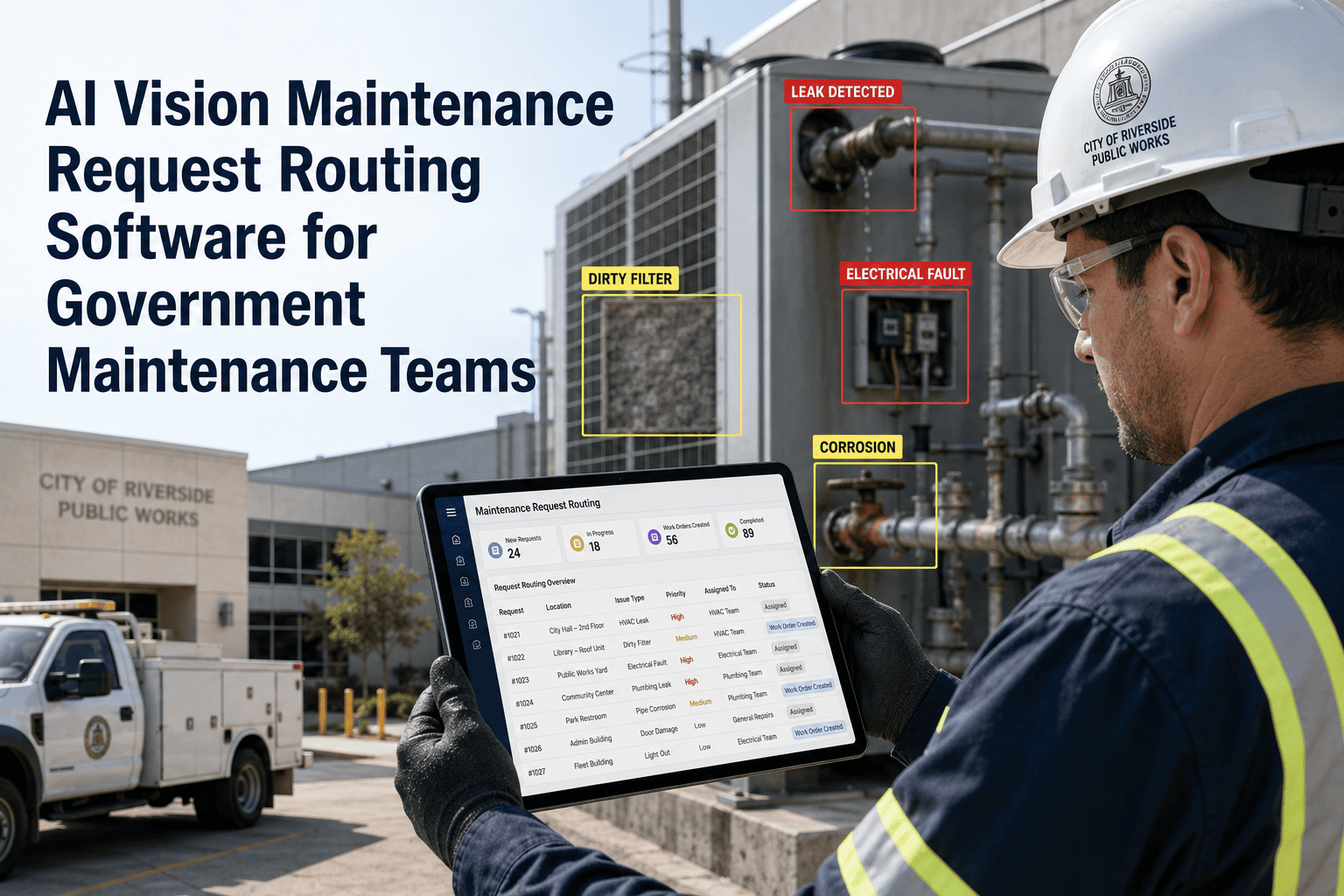
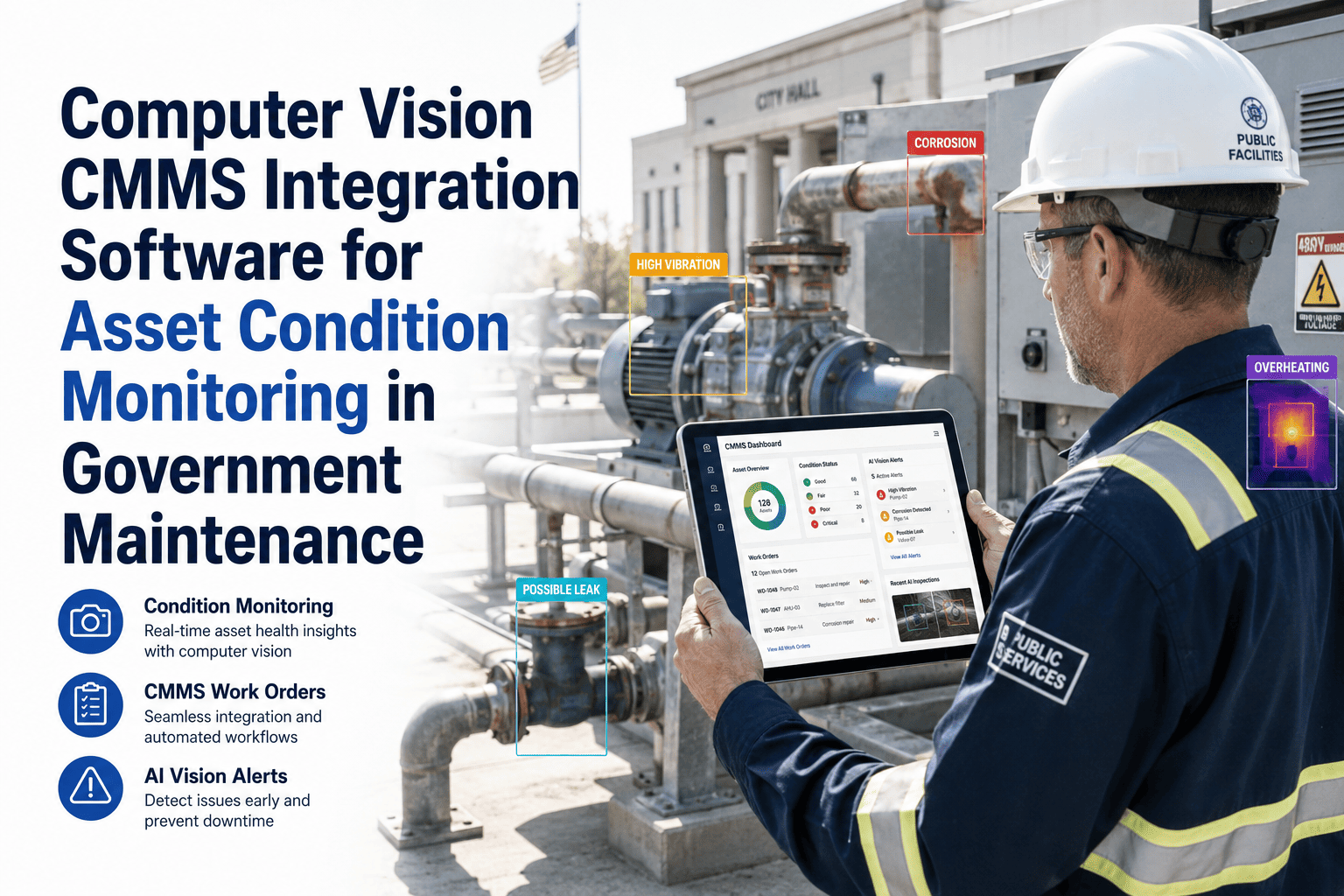
Government-owned building roofs are one of the most consistently under-inspected asset classes in public sector maintenance programs. Municipal recreation centers, courthouses, libraries, schools, and public works facilities collectively manage millions of square feet of roofing — yet most inspection programs still rely on manual walk-arounds that put staff at fall risk, miss subsurface moisture anomalies invisible to the naked eye, and produce PDF findings that never make it into a maintenance work order. AI vision drone inspection changes this equation entirely: thermal UAV sensors identify hidden membrane delamination, water infiltration under roof surfaces, and HVAC equipment hotspots that human inspectors miss on 50% of visits. When integrated with OxMaint CMMS, each AI-classified roof defect becomes a geo-tagged work order routed to the right maintenance crew within 60 seconds of analysis — not 3 weeks after a PDF report circulates. Government roof maintenance teams using this workflow report 75% faster survey completion, zero fall-risk staff exposure on rooftop inspections, and a documented reduction in leak-related interior damage costs because defects are caught in the early deterioration stage rather than at the point of active failure. Book a demo to see AI vision roof inspection integrated with OxMaint for your government building portfolio.
Why Thermal Drone Inspection Outperforms Manual Roof Walks
A human inspector on a flat roof sees surface-level defects — visible membrane punctures, standing water, and obvious HVAC damage. A drone carrying thermal and RGB sensors sees through the surface: subsurface moisture trapped between membrane layers, insulation R-value degradation, and HVAC hotspots invisible from the roofline. Below is what each method captures across a standard government building roof survey.
| Inspection Capability | Manual Walk-Around | AI Thermal Drone |
|---|---|---|
| Surface membrane defects | Detected | Detected + GPS tagged |
| Subsurface moisture / trapped water | Not visible | Thermal imaging detects |
| Insulation R-value degradation | Not detectable | Thermal gradient analysis |
| HVAC equipment hotspots | Visible only if severe | Full thermal profile |
| Drain blockage / water pooling | Detected | Detected + area quantified |
| Automatic work order creation | Manual entry required | Auto-generated in OxMaint |
| Defect location precision | Verbal description only | GPS coordinates ± 1 meter |
| Inspector fall risk | Present on every survey | Zero — drone only |
AI Vision to OxMaint Work Order — The 5-Step Flow
Thermal + RGB Drone Survey
Drone executes a pre-programmed flight grid over the building roof — capturing radiometric thermal imagery and 4K RGB video simultaneously across the entire roof area including parapet walls, drain zones, and HVAC equipment pads.
AI Defect Detection
Computer vision models process thermal and RGB data to identify and classify membrane delamination, moisture infiltration zones, drain failures, structural movement cracks, and HVAC thermal anomalies — with severity grading and precise GPS coordinates for each finding.
Structured Finding Report
AI findings compile into a structured inspection record: asset ID, defect type, severity tier, annotated thermal image, GPS pin, and recommended corrective action — formatted to OxMaint's asset record schema automatically.
Auto Work Order in OxMaint
Defects above configured severity thresholds trigger automatic work order creation in OxMaint within 60 seconds of analysis completion — with full finding context, photo evidence, and priority flag attached for technician assignment.
Repair Tracking and Trending
Completed repairs close against the original AI finding — building an inspection history that tracks roof condition across multiple survey cycles and powers condition-based maintenance scheduling for your entire government building portfolio.
Configure AI vision roof inspection integrated with OxMaint for your government building portfolio.
What AI Vision Detects on Government Building Roofs
Membrane Delamination
AI detects thermal differential between adhered and separated membrane zones — identifying delamination 6 to 12 months before water infiltration becomes visible from interior.
Trapped Moisture Zones
Thermal cameras identify heat retention patterns indicating trapped water beneath membrane surfaces — a primary accelerant of structural deck corrosion in government buildings.
HVAC Equipment Hotspots
Full thermal profiling of rooftop HVAC units identifies compressor anomalies, failing seals, and refrigerant leak indicators — enabling predictive maintenance before system failure.
Drain Blockage and Ponding
Drone imagery combined with AI pooling analysis identifies drain blockages and standing water zones — catalogued with area measurements and GPS locations for immediate work order dispatch.
"We had three roofs with active interior water damage before we started thermal drone surveys — and in all three cases, manual inspections had missed the subsurface moisture for over two years. Connecting the drone AI findings directly to OxMaint work orders meant our crew had GPS-pinned repair locations on their phones before they left the building. We resolved all three in a single week rather than the usual three-month report-review-schedule cycle."
Frequently Asked Questions
Stop Walking Roofs. Start Flying Intelligence.
OxMaint connects AI thermal drone roof surveys to automated work orders, building condition dashboards, and capital planning reports — so your government maintenance team catches every roof defect early, safely, and on record.