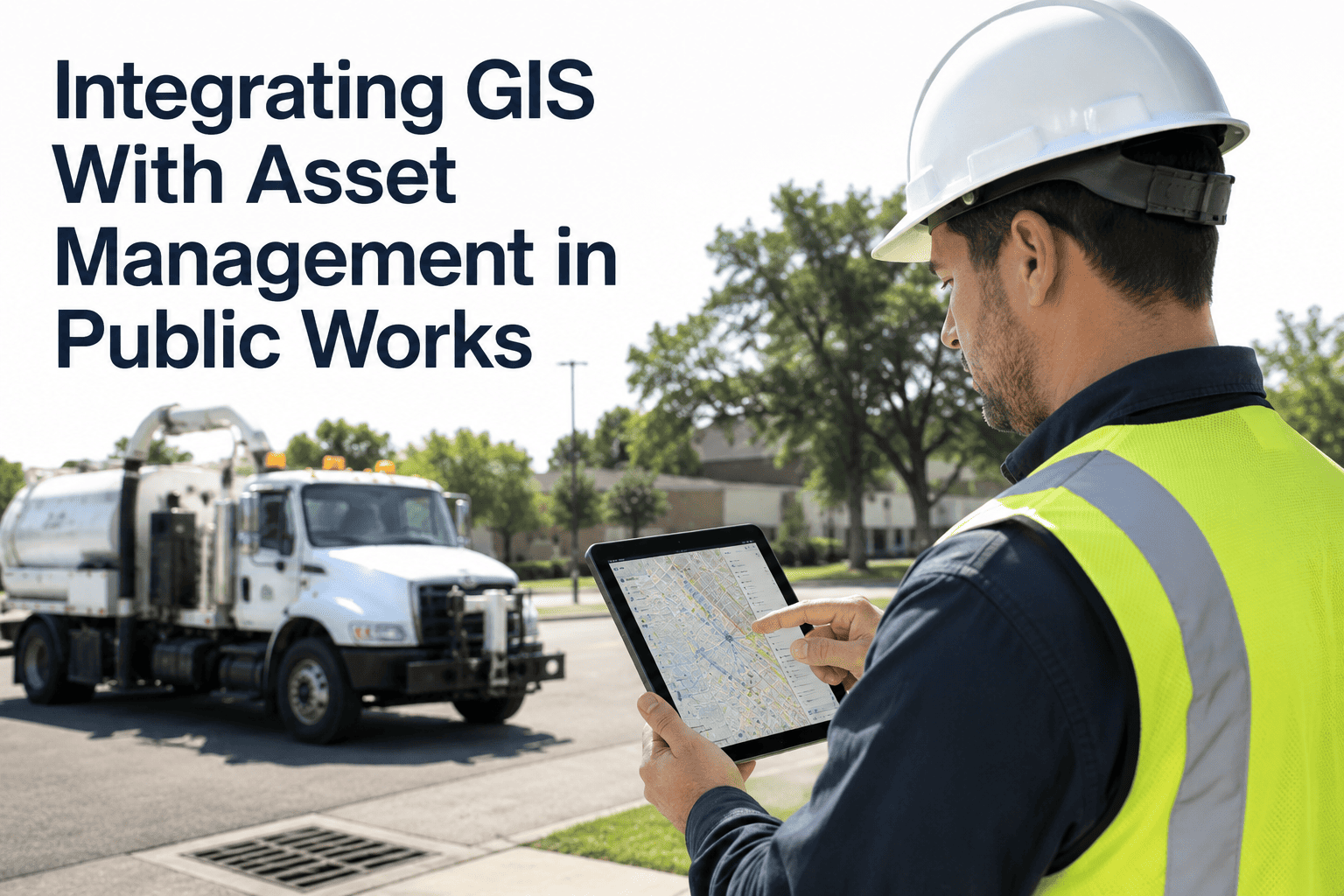
Your roads crew logs pothole repairs in one spreadsheet. Water keeps pipe age and break history in a different system entirely. Fleet tracks vehicle hours on paper work orders, and facilities has its own aging database nobody outside that office can open. Every department can answer questions about its own assets, but nobody in the building can answer a simple question about all of them at once — what's the total replacement value of infrastructure past its service life this year? Multiply that across six departments and a budget season, and leadership ends up approving capital requests based on gut feel instead of a real picture of asset condition. Closing that gap starts with a unified asset register that every department feeds into.
Infrastructure Asset Management · Asset Managers
Your Asset Data Isn't Missing. It's Just Scattered Across Six Departments
Roads, water, fleet, facilities, parks, and IT each keep their own version of the truth. Here's what it takes to give leadership one accurate view of every asset your government owns.
6+
Departments typically tracking assets in separate systems
80%
Of government departments report working with siloed data
1
Register needed to see condition and cost across the fleet
Where Your Asset Data Actually Lives Right Now
Before you can unify anything, it helps to see the shape of the problem. Most local governments have the same six pockets of disconnected asset data, each grown independently over years of separate budgets and separate software purchases.
Roads & Pavement
Pavement condition ratings and repair history, often in a GIS layer nobody else in the building has access to.
Water & Sewer
Pipe age, material, and break records kept in a utility billing system built for revenue, not maintenance.
Fleet & Equipment
Vehicle hours and service records tracked on paper work orders or a spreadsheet the shop foreman maintains alone.
Facilities & Buildings
HVAC, roof, and structural inspection data sitting in a legacy database from a system replaced years ago elsewhere.
Parks & Recreation
Playground and irrigation asset records kept informally, often known only to the crew that services them.
IT & GIS
Holds the mapping layer everyone needs but rarely has the maintenance context to make it operationally useful.
See Every Department's Assets on One Register
OxMaint brings roads, water, fleet, facilities, and parks asset records into a single system of record, so an asset manager can pull condition and cost data for the entire portfolio without a single phone call to another department.
What Fragmented Asset Data Actually Costs a Government
Data silos aren't just an IT annoyance. Every one of these gaps shows up later as a missed budget request, a duplicated purchase, or an asset that fails without warning.
One Register Changes What a Budget Meeting Looks Like
Working in Silos
Pulling condition data means emailing five department heads and waiting on replies
Replacement priority is decided by whoever asks loudest, not by actual asset risk
Maintenance cost per asset class is a rough estimate, not a real number
Every department presents its own version of "what needs funding this year"
Working From One View
Condition and cost data for every asset class is on one dashboard before the meeting starts
Replacement priority is ranked by risk and cost across the entire portfolio
Maintenance spend per unit is pulled directly from closed work orders
Leadership sees one prioritized list instead of six competing requests
Infrastructure Asset Manager
County Public Works, Asset Planning, 12 Years
Every budget cycle used to start with me chasing spreadsheets from five different offices, and half the numbers wouldn't line up when I got them. Once condition data for roads, water, and fleet lived in the same register, the conversation with the board changed completely. We stopped arguing about whose numbers were right and started arguing about actual priorities, which is a much better argument to have.
How OxMaint Brings Your Asset Data Together
1
Import every existing register
Bring in existing spreadsheets, legacy databases, and GIS layers from each department without asking anyone to re-enter data from scratch.
2
Standardize asset records
Every asset gets a consistent record structure, so a road segment, a pump, and a truck can all be compared on condition, age, and cost.
3
Connect maintenance history
Work orders, inspections, and repair costs attach directly to each asset, building a real maintenance cost history over time.
4
Give leadership one dashboard
Department heads keep their own workflows while asset managers and leadership see the full portfolio in a single reporting view.
Frequently Asked Questions
Do departments have to give up their existing software to join a unified register?
No — OxMaint is built to import and sync with what each department already uses, including spreadsheets, legacy databases, and GIS systems. Departments keep their day-to-day workflow while the asset manager gets a consolidated view.
Book a demo to see how your current systems connect.
How long does it take to get a unified view of assets across departments?
Most governments see a working consolidated register within a few weeks, since existing data is imported rather than rebuilt. Full standardization across every asset class typically completes within one budget cycle.
Start a free trial to see your own timeline.
Can each department still control access to its own asset data?
Yes, OxMaint supports department-level permissions, so roads, water, and fleet staff see their own detailed records while asset managers and leadership see the rolled-up view across every department without exposing unrelated internal data.
What does a unified asset view actually change for budget planning?
Instead of six separate replacement lists built on different assumptions, leadership gets one prioritized list ranked by real condition and maintenance cost data. That turns capital requests into evidence-backed decisions rather than department-by-department negotiation.
Talk to our team about your next budget cycle.
Is a unified asset register only useful for large cities with big IT teams?
No — smaller counties and towns often see the biggest benefit, since they usually lack a dedicated data team to stitch departments together manually. A unified register replaces that manual effort with a system that keeps itself current.
Give Your Asset Managers One View of Everything You Own
Stop reconstructing your infrastructure picture department by department every budget season. OxMaint unifies roads, water, fleet, facilities, and parks asset data into one register your whole organization can trust.