A single unprotected garden hose, an aging boiler loop, or a chemical feed line is sometimes the only thing standing between a public water main and a contamination event. Cross-connections stay invisible during normal operation and turn dangerous the moment pressure drops, which is why regulators require every water utility to run a documented cross-connection control program with annual testing, site surveys, and audit-ready records. Spreadsheets and paper renewal letters make it easy for a single overdue backflow assembly to slip past its test date for months without anyone noticing. Oxmaint gives water and wastewater operators one system to track every assembly, hazard level, and test cycle across the entire service area. Explore app.oxmaint.ai to see how a connected cross-connection control program keeps every device compliant.
Compliance Management / Cross-Connection Control / Backflow Prevention
Run a Cross-Connection Control Program That Never Loses Track of a Backflow Assembly
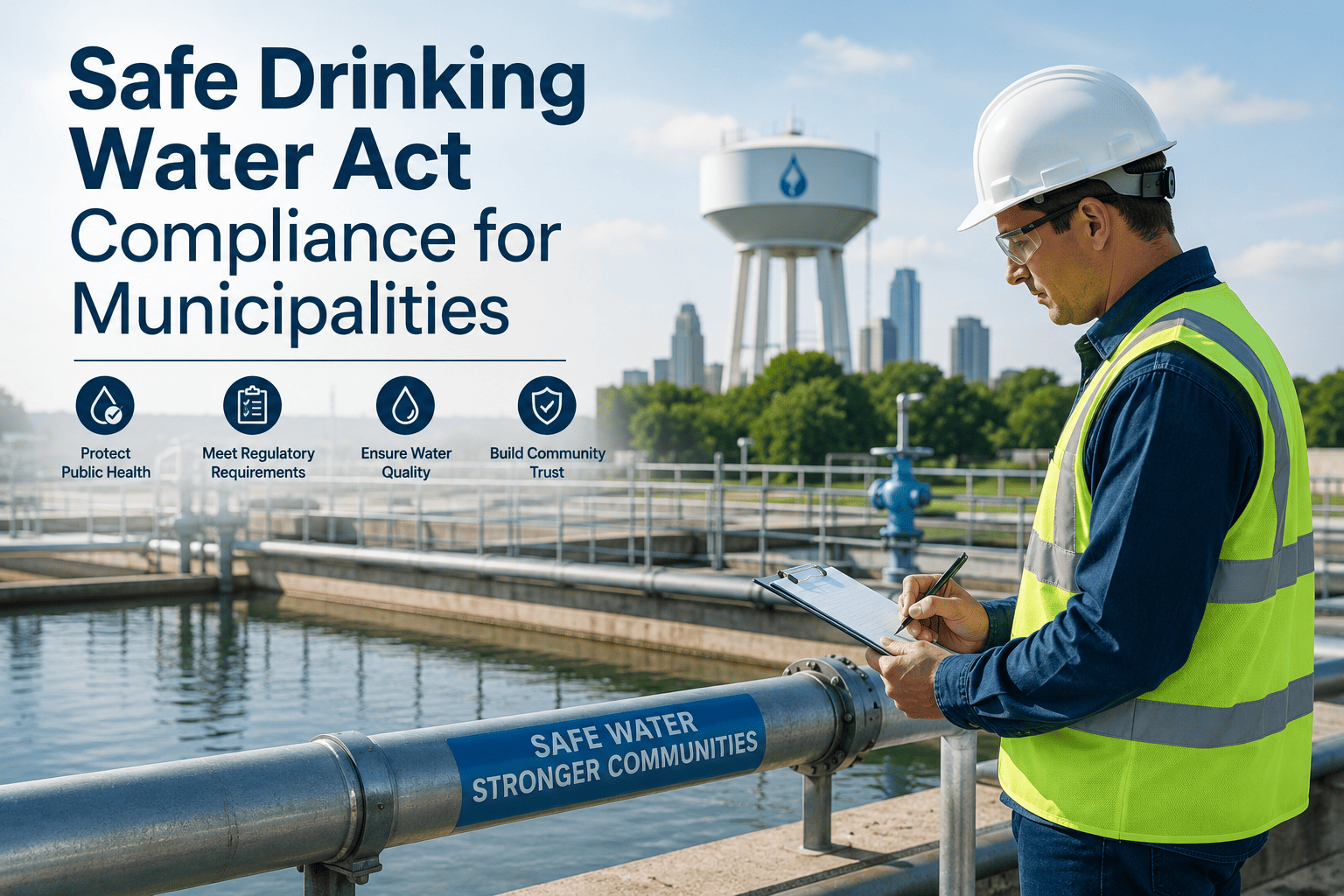
The Safe Drinking Water Act requires public water systems to control cross-connections, but most backflow incidents go undetected because assemblies fail quietly between test cycles. Oxmaint tracks every device, hazard classification, and renewal date so your team catches lapses before a regulator or a contamination event does.
Federal
mandate under the Safe Drinking Water Act for cross-connection control
Annual
testing typically required for testable backflow assemblies
Silent
failures are common — most backflow events go undetected without active tracking
One
unprotected connection can put an entire distribution system at risk
Get Started
Replace the Renewal-Letter Spreadsheet With a Live Compliance Dashboard
Oxmaint centralizes every backflow assembly, hazard survey, and test report so your utility always knows exactly which properties are compliant and which need a visit this week.
What a Cross-Connection Control Program Actually Covers
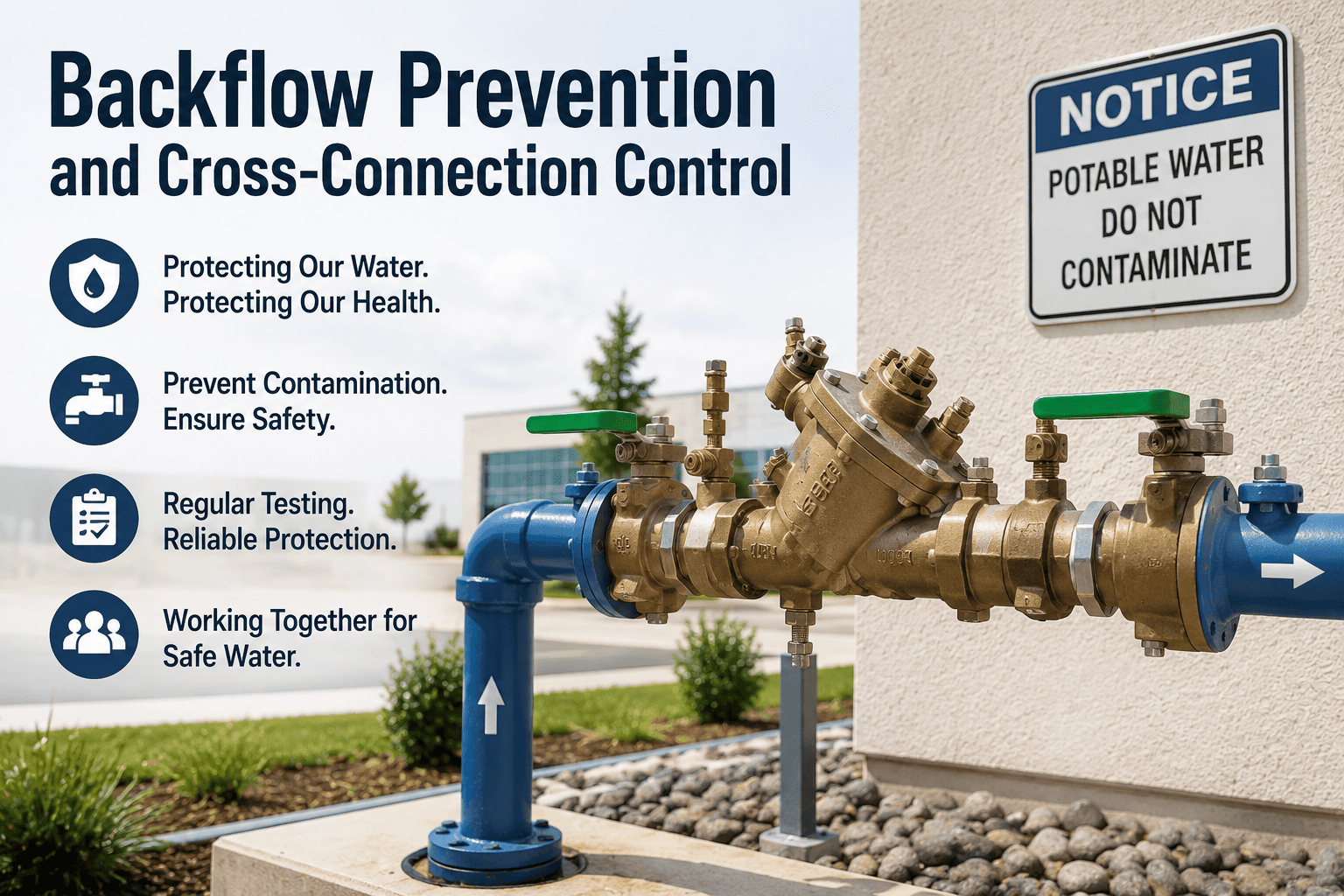
A cross-connection is any point where safe drinking water plumbing physically links to a source of contamination — an irrigation system, a boiler loop, a fire sprinkler system, a well, or a chemical process line. Backflow happens when a pressure drop or pressure surge reverses the normal direction of flow, pulling whatever is on the customer side back toward the main. A cross-connection control program is the utility's ongoing process for finding these hazards, requiring the right backflow preventer for each one, and confirming every assembly still works through scheduled testing. Utilities that run this manually often discover gaps only after a violation notice or a contamination scare.
Backflow Assembly Hierarchy — Matching Protection to Hazard Level
Level 1
Low Hazard
Aesthetic or nuisance risk only
A dual check valve is generally sufficient. Routine testing keeps the record current without added risk to the main.
Level 2
Moderate Hazard
Non-health pollutant risk
A double check valve assembly is typically required, with annual testing tracked against the site's hazard survey.
Level 3
High Hazard
Potential health hazard present
A reduced pressure zone assembly is usually mandated. Missed testing here carries the highest compliance exposure.
Level 4
Severe / Direct Risk
Auxiliary supply or chemical feed connection
Containment plus isolation is required. These sites need the tightest testing interval and fastest violation follow-up.
Four Ways Cross-Connection Programs Break Down Without a System
01
Renewal Letters Get Lost, Not Ignored
Annual test notices sent by mail or spreadsheet reminder are easy for a property owner or a busy tech to overlook, and a missed deadline can trigger a violation before anyone realizes the device lapsed.
02
Hazard Surveys Fall Out of Date
Properties change use, add irrigation, or install new equipment without notifying the utility, leaving the hazard classification on file inaccurate until the next manual inspection catches it.
03
Test Reports Live in Paper Files
Certified tester reports submitted by mail or email are difficult to search during an audit, and a missing report looks identical to a missed test from the regulator's point of view.
04
Large Customer Bases Outgrow Spreadsheets
A utility tracking thousands of commercial and residential assemblies on a spreadsheet cannot easily flag which accounts are overdue, at risk, or due for re-survey this quarter.
How Oxmaint Manages Your Cross-Connection Control Program
Oxmaint gives water and wastewater operators a single asset register for every backflow prevention assembly in the service area, connected to automated renewal reminders, digital test reports, and compliance work orders. Instead of chasing paper files during an audit, your team pulls up the full history of any device in seconds.
01
Centralized Assembly Registry
Every backflow preventer is logged by property, device type, hazard classification, and location, replacing scattered spreadsheets with one searchable record.
Full assembly history in one lookup
02
Automated Testing Reminders
Renewal notices go out to property owners and testers ahead of the annual due date, with escalation alerts to your team when a deadline is approaching unaddressed.
Fewer missed test windows
03
Digital Test Report Capture
Certified testers submit results directly into the record, timestamped and attached to the correct assembly, so reports are never separated from the device they cover.
Audit-ready documentation
04
Compliance Work Order Automation
Overdue or failed devices automatically generate a follow-up work order, assigned to field staff instead of sitting unnoticed on a spreadsheet tab.
Overdue devices closed faster
05
Hazard Survey Scheduling
Site surveys and re-inspections are scheduled and tracked against property history, keeping hazard classifications current as buildings and equipment change.
Classifications stay accurate
06
Program-Wide Compliance Dashboard
Managers see the full program status at a glance — compliant, overdue, and upcoming renewals across every account, ready for the next regulatory report.
Program status in one view
Manual Tracking vs. Oxmaint Compliance Management
| Category | Manual / Spreadsheet | Oxmaint | Program Impact |
| Test due date tracking |
Paper letters and manual calendar entries |
Automated reminders with escalation alerts |
Fewer lapsed assemblies |
| Test report storage |
Filed by hand, hard to search |
Digitally attached to each assembly record |
Faster audit response |
| Hazard survey status |
Updated only during manual review |
Scheduled and tracked continuously |
Accurate classifications |
| Overdue follow-up |
Manual review of spreadsheet rows |
Work orders generated automatically |
Faster resolution |
| Program reporting |
Built by hand before each audit |
Live dashboard, exportable anytime |
Reduced admin hours |
What Utilities Gain From a Managed Program
Fewer
missed annual test deadlines
Automated reminders replace manual letter tracking across the entire service area
Faster
audit and inspection preparation
Digital records mean no scrambling through paper files before a regulator visit
Clearer
hazard classification accuracy
Scheduled re-surveys catch property changes before they become blind spots
Lower
violation and liability exposure
Overdue devices are flagged and worked before they become compliance failures
Frequently Asked Questions
What is a cross-connection control program?+
It is a utility's ongoing process for identifying cross-connections, assigning the correct backflow preventer to each hazard level, and confirming every assembly through scheduled testing. Learn how Oxmaint organizes this at
app.oxmaint.ai.
How often must backflow assemblies be tested?+
Most testable backflow prevention assemblies require certification at installation and then annually, though local code and hazard level can shorten that interval. A tracked renewal schedule keeps every device current.
What is the difference between containment and isolation?+
Containment protects the public main at the property's service connection, while isolation protects individual hazards inside a building, such as a boiler loop or lab sink. Many high-hazard sites need both.
Who pays for backflow prevention testing?+
In most jurisdictions the property owner is responsible for installation, testing, and maintenance costs, while the utility oversees compliance and record-keeping for the program as a whole.
How does Oxmaint support a cross-connection control program?+
Oxmaint centralizes every assembly record, automates renewal reminders, captures digital test reports, and gives managers a live compliance dashboard.
Book a demo to see it configured for your utility.
Cross-Connection Control — Oxmaint
Stop Chasing Renewal Letters and Start Managing a Compliance Program
Oxmaint keeps every backflow assembly, hazard survey, and test report in one connected system, so your utility always knows what is compliant, what is overdue, and what needs attention before the next audit.
One registry
for every backflow assembly in the service area
Automated
renewal reminders and escalation alerts
Digital
test reports attached to every device record
Live
dashboard ready for the next regulatory report