When a water main breaks at 2 a.m., the gap between a two-hour fix and a two-day ordeal usually comes down to one question: do your isolation valves actually turn? Across most municipal systems a meaningful share of distribution valves sit stuck, buried, or undocumented — and crews only discover it at the worst possible moment, when the isolation zone has to expand and hundreds more customers lose service. A disciplined valve exercising program finds those failures on a schedule instead of during an emergency, extends valve life, and keeps shutdowns small. This guide covers exercising frequency, the field data worth capturing, and how to turn every stuck valve into a tracked repair with OxMaint's preventive maintenance and GIS tools, or you can book a 30-minute demo to see it mapped on your own network.
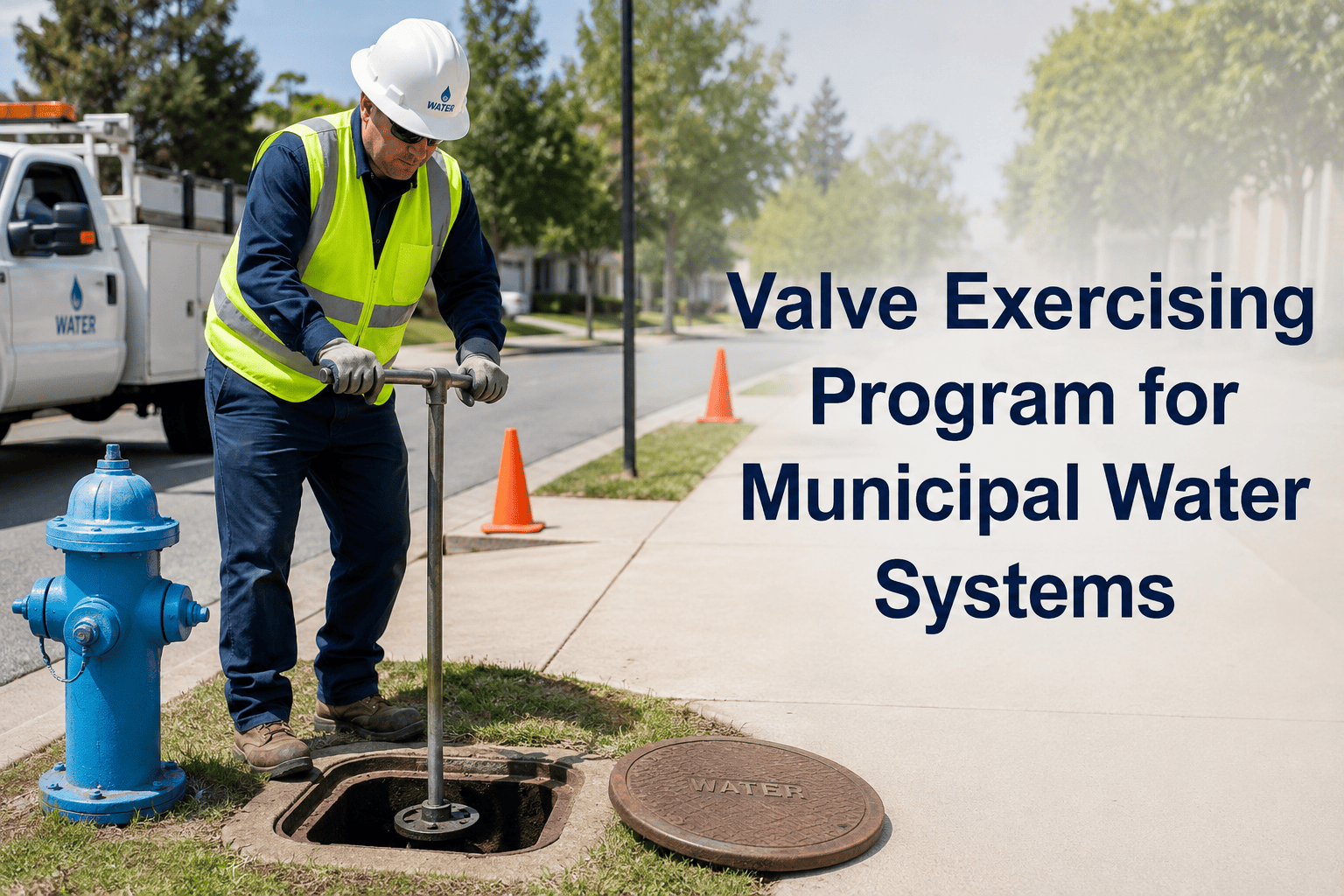
Valve Exercising Program for Municipal Water Systems
Schedule exercising, capture field condition, map failures, and convert stuck valves into repair work orders — before the next main break tests your network.
What one stuck valve really costs
Valves spend years in one position. When they seize, crews can't isolate the broken segment they planned for — they have to keep closing valves outward until they hit ones that work. That single failure cascades into a far larger outage.
- Isolate the planned 1-block segment
- ~6-10 customers off water
- Repair restored in under 2 hours
- Labor, equipment and water loss stay low
- Zone expands to the next working valves
- Dozens to hundreds of customers off water
- Repair stretches to a full shift or longer
- Larger crew, more trucks, higher water loss
With roughly one in five mains across the US and Canada already past their useful life, isolation reliability is no longer optional — exercising is the cheapest insurance a distribution team can buy.
How often to exercise each valve
Frequency follows consequence. The valves that protect hospitals, schools, and large transmission mains earn an annual cycle; the rest fit a multi-year rotation that still touches every asset.
| Valve category | Exercise interval | Why it matters |
|---|---|---|
| Transmission & mains 16" and larger | Annual | One failure can isolate an entire trunk line |
| Critical-facility feeds (hospital, school) | Annual | Highest public-health and safety consequence |
| Distribution gate valves | 1-5 yr rotation | Cover the whole system within a set cycle |
| Hydrant auxiliary valves | Annual | Tested alongside hydrant and flushing programs |
| Newly installed or repaired valves | Within first year | Confirms correct install before it's relied on |
A large utility may carry 70,000-plus valves and still reach every one across a planned five-year rotation — proof the math works at any system size when the schedule is enforced, not improvised.
Stop guessing which valves still turn
OxMaint builds your exercising schedule by criticality and routes crews to the right valves — with the full history one tap away in the field.
The exercising cycle, step by step
Every valve gets the same disciplined sequence. The point isn't just turning the wheel — it's capturing condition so a weak valve is caught before it fully fails.
From field note to closed work order
The value of exercising is lost if condition notes die in a notebook. OxMaint keeps the thread connected from the valve box to the repair sign-off.
"The utilities that ride out a bad main break aren't the ones with the newest pipe — they're the ones whose valves turn on the first try. Most failed valves give warning signs a season early: extra torque, a half-turn short of closing, a slow leak past the seat. A program only pays off if those notes leave the field and become scheduled repairs. Tying exercising to GIS and automatic work orders is what separates a real reliability program from a binder nobody opens."
Program maturity benchmarks
Use these markers to judge where your program sits today and what a top-performing distribution team looks like.
| Metric | Lagging | Target |
|---|---|---|
| Valves GIS-located & verified | <60% | >95% |
| System exercised per rotation | Ad hoc | 100% in cycle |
| Stuck valves turned into work orders | Manual / lost | Automatic |
| Critical valves on annual cadence | Untracked | 100% |
| Failed-valve backlog | Unknown | Tracked & closed |
See your valves on a live map
Walk through a demo on your own network: schedule by criticality, capture condition in the field, and watch a stuck valve become a work order in seconds.
Frequently asked questions
Build a valve program that holds up under pressure
Turn scattered field notes into a scheduled, mapped, work-order-driven program — and never get caught by a stuck valve again.