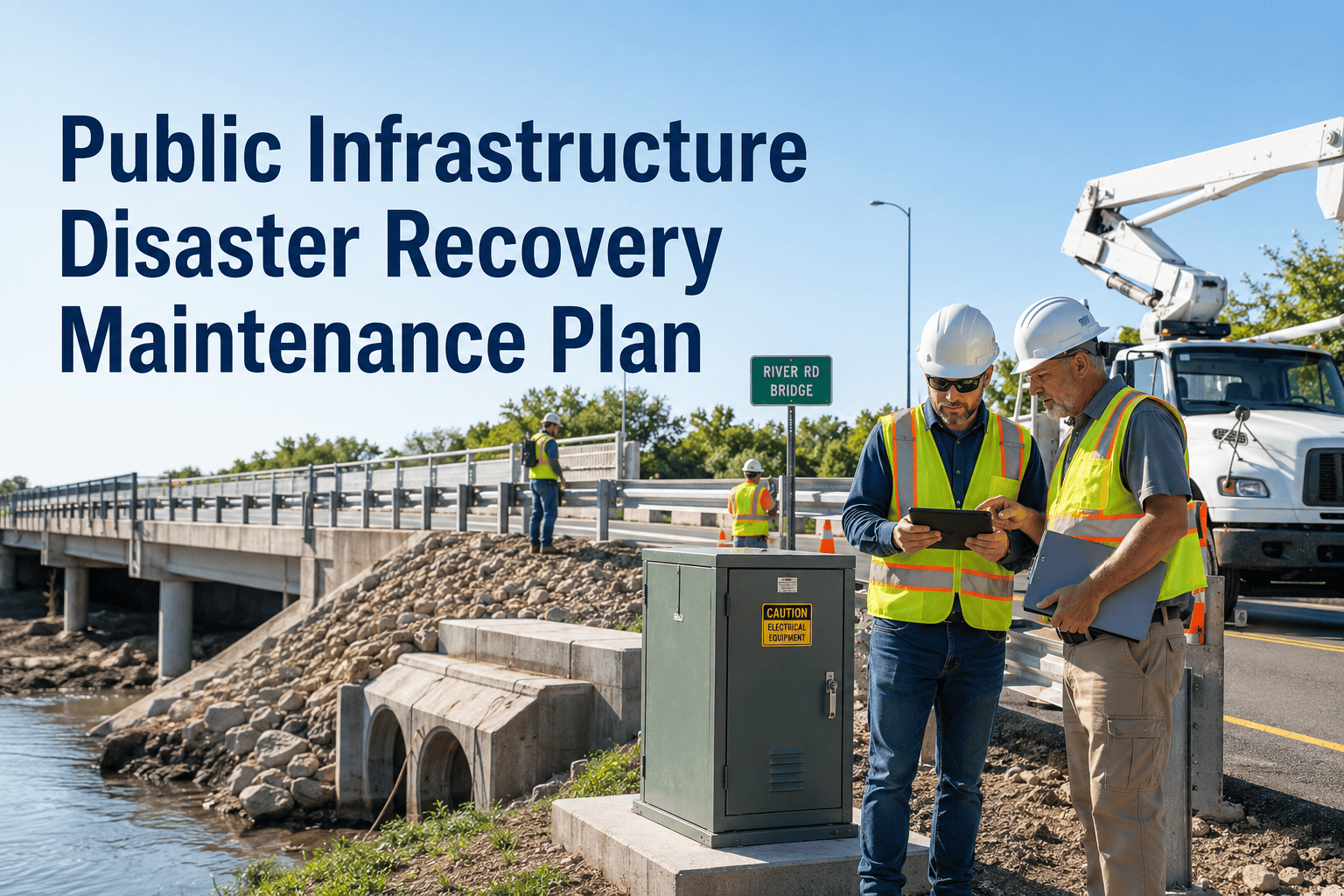
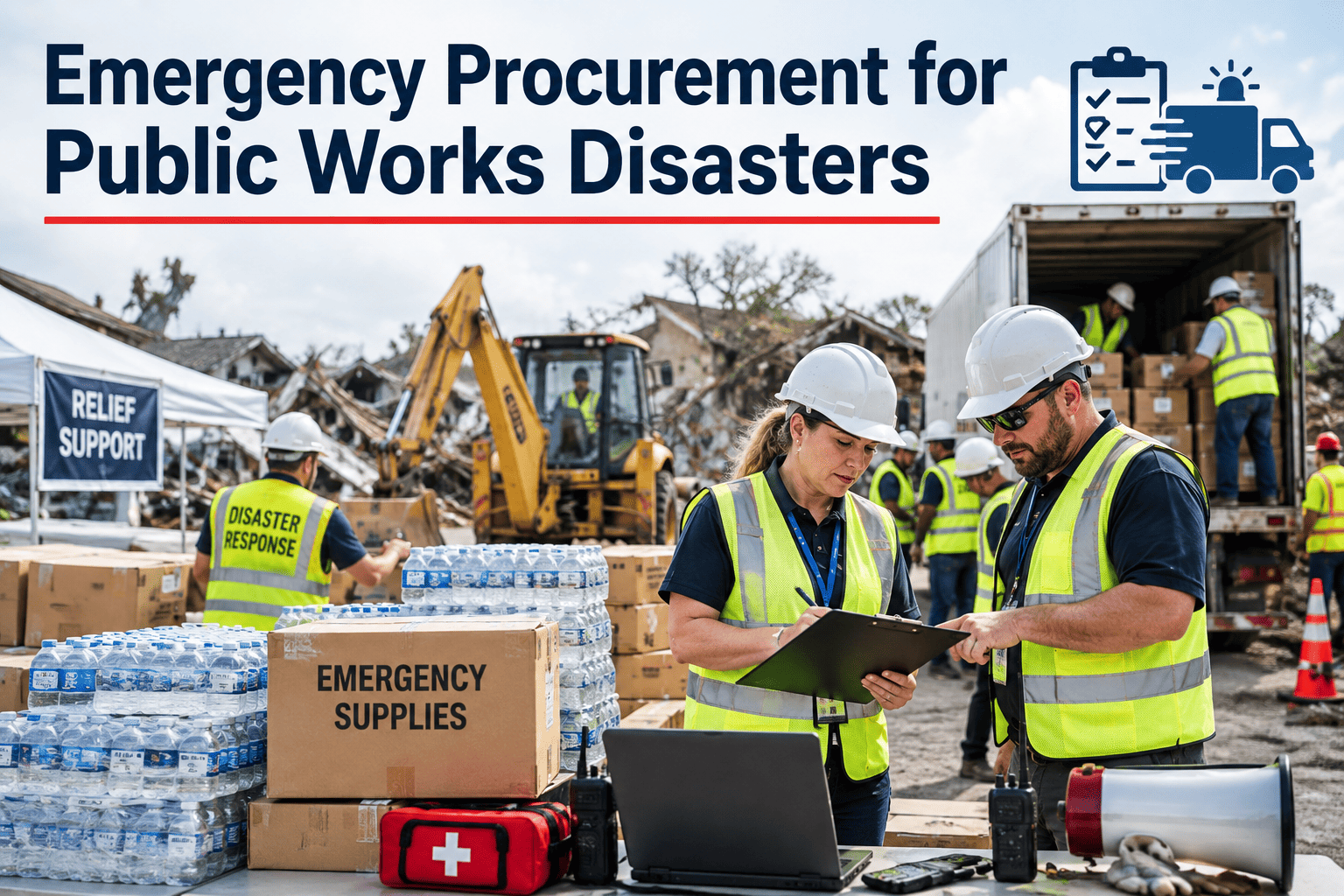
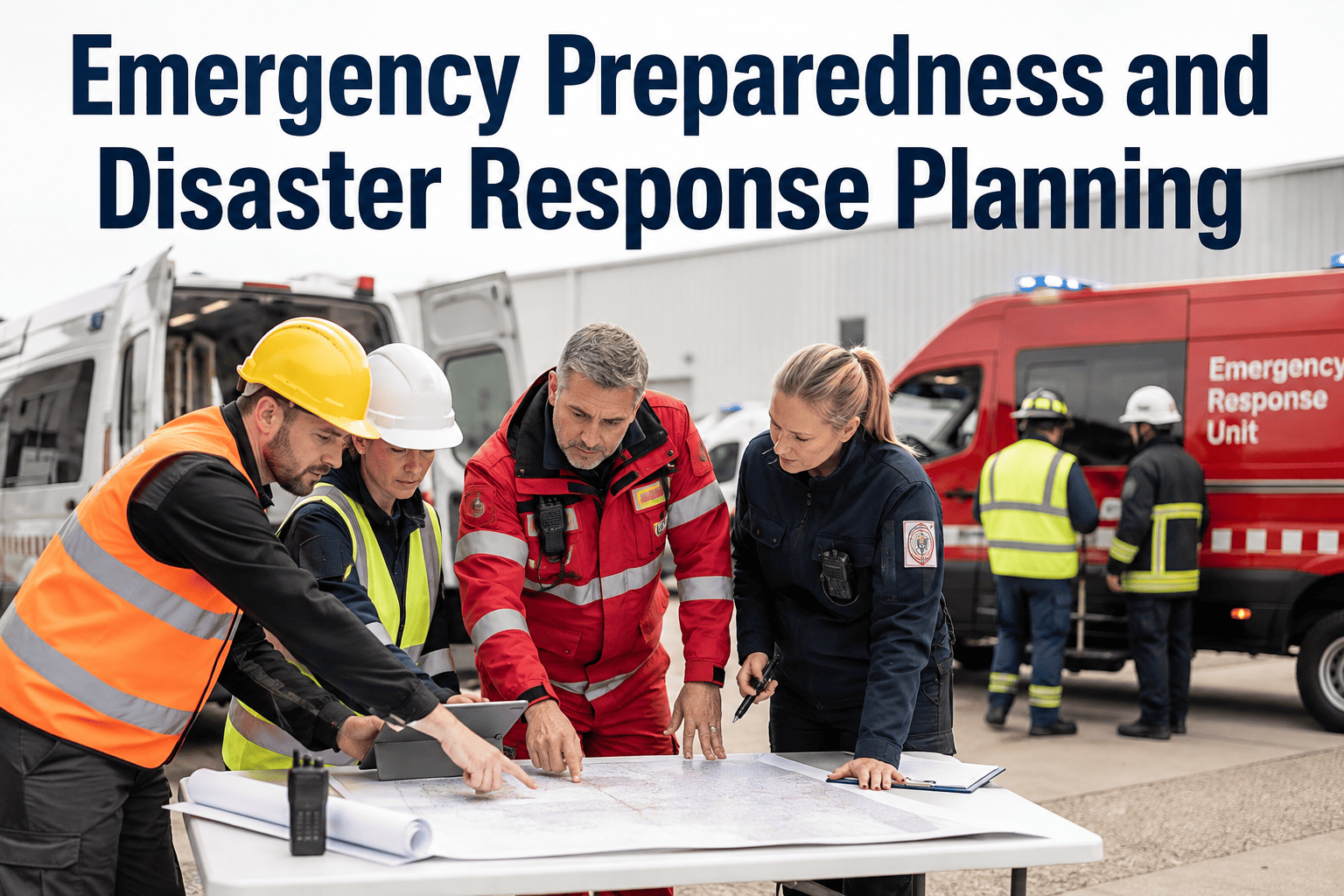
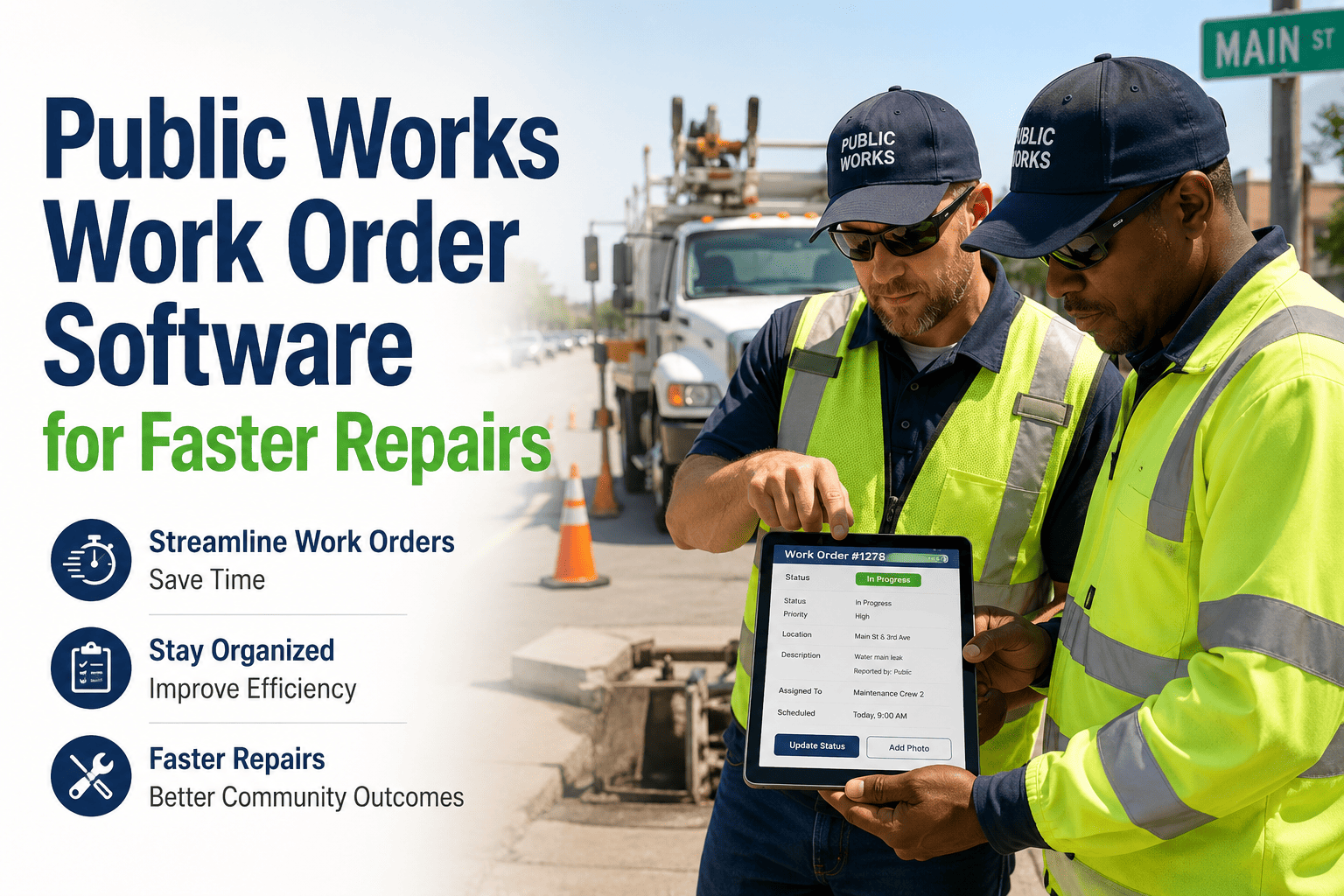
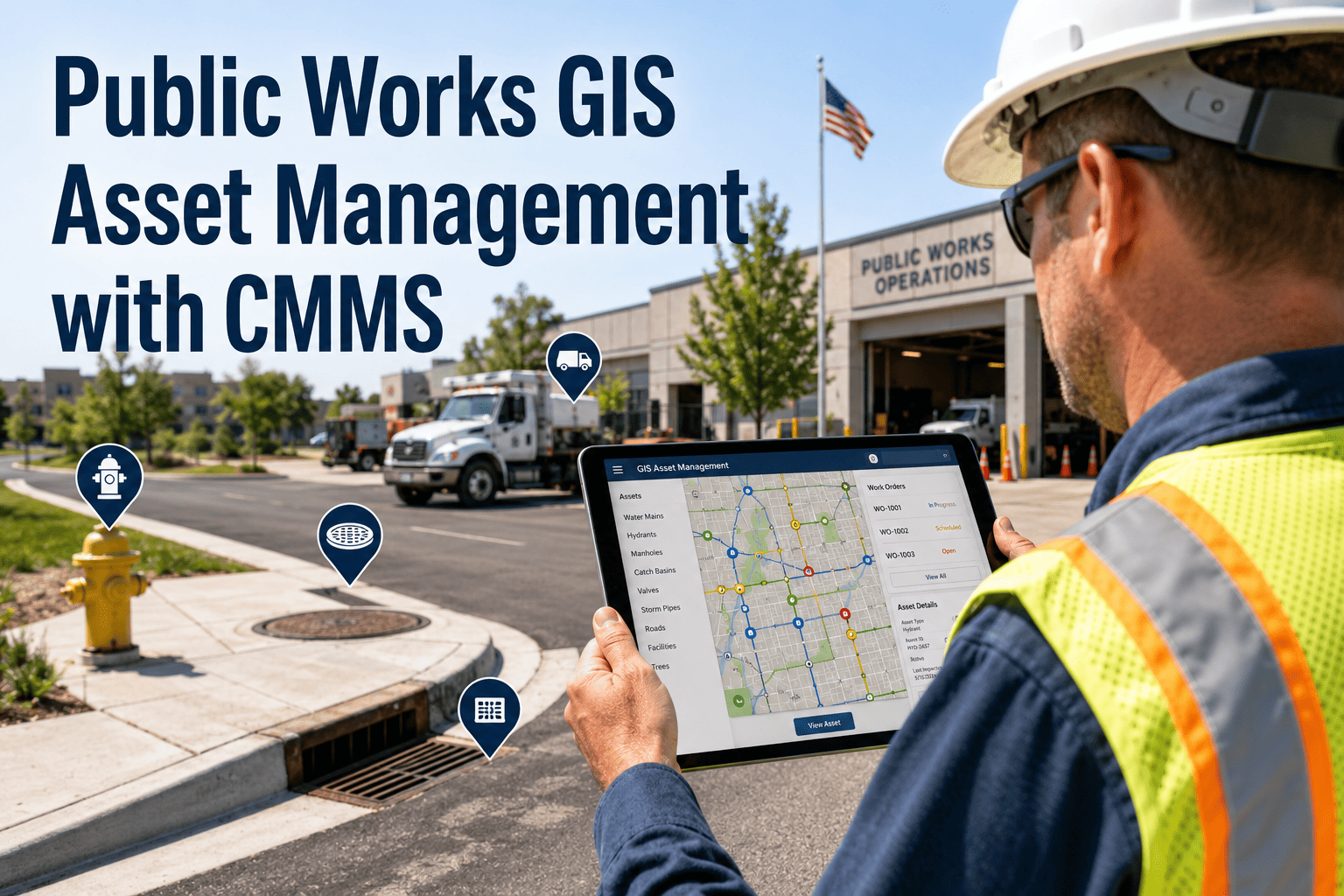
Public infrastructure doesn't fail gradually — it fails in cascades. A flooded pump station takes down water supply. A storm-damaged bridge closes three evacuation routes. A power grid fault during a heatwave becomes a public health emergency within hours. Government and municipal maintenance teams are the last line of defense, yet most operate without a structured disaster recovery maintenance plan backed by real-time work order systems. The cost of that gap isn't just financial — it's measured in service outages, safety failures, and public trust. Oxmaint AI gives public works teams the shutdown management and emergency workflow tools to respond faster, document every action, and recover infrastructure with full audit trails.
73%
of municipalities lack a digital emergency maintenance workflow
4.2x
faster asset restoration when CMMS work orders are pre-configured for disaster scenarios
$2.8M
average cost of unplanned critical infrastructure failure in mid-size municipalities
68%
of post-disaster audits cite missing maintenance records as a compliance gap
Why Standard Maintenance Plans Fail During Disasters
Routine maintenance programs are built for predictable schedules — quarterly inspections, annual overhauls, calendar-based PMs. Disaster recovery demands the opposite: instant priority reordering, dynamic crew dispatch, multi-site coordination under pressure, and real-time documentation for FEMA reimbursement and regulatory review. A spreadsheet or paper-based system collapses exactly when reliability matters most.
01
No Centralized Asset Status
Teams don't know which assets are operational, damaged, or offline across multiple sites simultaneously. Recovery decisions get made on incomplete information.
02
Work Orders Created Manually
Emergency work orders require manual creation, routing, and assignment. Every minute spent on paperwork is a minute not spent on restoration.
03
No Priority Override Mechanism
Existing scheduled PMs compete with emergency tasks in the same queue. Critical repairs get delayed because the system can't distinguish severity levels.
04
Audit Trail Gaps
Post-disaster, FEMA and insurance audits require timestamped records of every action taken. Paper logs have gaps. Verbal reports don't satisfy regulators.
The 5-Phase Disaster Recovery Maintenance Framework
Effective infrastructure disaster recovery isn't improvised — it follows a repeatable phase structure where each stage has defined CMMS actions, responsible roles, and documentation requirements. Below is the framework that leading public works departments use, and how Oxmaint AI supports each phase with structured shutdown management workflows.
Phase 1
Pre-Disaster Readiness
Pre-configure emergency work order templates for flood, storm, seismic, and grid failure scenarios. Register all critical assets with risk tier classification. Set minimum spare parts inventory thresholds.
CMMS Action: Asset risk registry + emergency WO templates pre-loaded
Phase 2
Immediate Response
Activate shutdown management protocols. Suspend non-critical scheduled PMs. Deploy pre-built emergency work orders to field crews with location, priority, and safety instructions attached.
CMMS Action: PM suspension + bulk emergency WO activation
Phase 3
Damage Assessment
Field teams submit damage inspection work orders with photo documentation. Asset status updated in real time. Priority scoring assigns restoration sequence based on community impact and safety risk.
CMMS Action: Mobile damage reports + asset status dashboard
Phase 4
Restoration Operations
Multi-crew work order coordination across sites. Parts consumption tracked against emergency inventory. Contractor work orders logged alongside internal team activity for unified record keeping.
CMMS Action: Multi-site WO tracking + parts consumption records
Phase 5
Audit and Reimbursement
Export complete work order history with timestamps, crew sign-offs, materials used, and photos for FEMA reimbursement packages, insurance claims, and council reporting.
CMMS Action: One-click audit export with full documentation chain
Shutdown Management for Public Works
Is Your Municipality Ready for the Next Event?
Oxmaint AI pre-configures emergency work order templates, shutdown protocols, and audit-ready documentation for public infrastructure teams. Setup takes days, not months.
Asset Priority Matrix for Emergency Response
Not every infrastructure failure carries equal urgency. A working priority matrix embedded in your CMMS ensures that field teams and dispatchers apply the same severity logic under pressure — without needing a manager to make every call. The matrix below reflects standard public works emergency prioritization criteria.
| Asset Category |
Disaster Risk Level |
Response Target |
CMMS Priority Code |
Shutdown Protocol |
| Water Treatment Plant |
Critical |
2 hours |
P1 — Emergency |
Full shutdown + bypass activation WO |
| Stormwater Pump Stations |
Critical |
4 hours |
P1 — Emergency |
Backup pump deployment WO |
| Traffic Signal Network |
High |
8 hours |
P2 — Urgent |
Manual control deployment + repair WO |
| Bridges and Overpasses |
High |
12 hours |
P2 — Urgent |
Inspection WO + closure notification |
| Public Building HVAC |
Medium |
24 hours |
P3 — Standard |
Emergency repair WO |
| Street Lighting |
Medium |
48 hours |
P3 — Standard |
Assessment WO + repair queue |
| Parks Infrastructure |
Low |
72 hours |
P4 — Deferred |
Scheduled post-event repair WO |
Shutdown Management: What the CMMS Must Handle
Shutdown management in a public infrastructure context means more than taking an asset offline. It means coordinating the downstream effects — rerouting services, notifying departments, activating backup systems, and documenting every step for regulatory and insurance purposes. A correctly configured CMMS handles all of this as structured workflow, not improvised communication.
01
Pre-Built Shutdown Checklists
Every critical asset has a pre-loaded shutdown sequence in the CMMS — valve close order, isolation steps, notification requirements, and safety confirmations — so field teams execute correctly under pressure without referencing paper manuals.
02
Automatic PM Suspension
When emergency mode activates, non-critical scheduled PMs are automatically suspended and rescheduled. Crews see only emergency and high-priority work orders during the active event window.
03
Multi-Crew Dispatch Coordination
Work orders assigned to multiple crews across different sites show real-time completion status. Supervisors see who is on what task, what's pending, and what's blocked without calling each team individually.
04
Contractor Work Order Logging
Third-party contractors enter their own work completions directly into the system. Every action — internal or external — appears in the same audit record, eliminating the gap between contractor activity and internal documentation.
"
The municipalities that recover fastest from infrastructure disasters are not the ones with the biggest budgets — they are the ones with the best pre-configured response systems. When work orders, shutdown checklists, and asset data are already in the system before the event, field teams execute instead of improvise. That difference in the first 4 hours determines whether a 2-day recovery becomes a 2-week crisis.
David Okonkwo
Director of Public Works Infrastructure Resilience, Urban Systems Institute
FEMA Reimbursement: Why Documentation is the Recovery
Most municipalities leave significant FEMA Public Assistance funding on the table — not because they don't qualify, but because they cannot produce the timestamped, technician-signed work records that PA Category B and C reimbursements require. A CMMS that captures every action automatically builds the documentation package as operations proceed, eliminating the post-event scramble to reconstruct records from memory and scattered email chains.
Category B
Emergency Protective Measures
Requires: work orders with timestamps, crew hours, materials used, and safety actions documented
Category C
Road Systems Repair
Requires: pre-disaster inspection records, damage assessment work orders, and post-repair condition documentation
Category D
Water Control Facilities
Requires: asset maintenance history, damage extent records, and contractor work order documentation with cost breakdown
Audit-Ready from Day One
Stop Losing FEMA Reimbursements to Documentation Gaps
Oxmaint AI automatically builds the timestamped, technician-signed work order records that FEMA PA reimbursement and insurance audits require — no manual reconstruction after the event.
Frequently Asked Questions
What is a disaster recovery maintenance plan for public infrastructure?
A disaster recovery maintenance plan is a structured, pre-configured set of response protocols, work order templates, and asset prioritization rules that activate when an emergency event impacts public infrastructure. Unlike routine maintenance programs, it defines exactly which assets get restored first, which scheduled work gets suspended, how field crews are dispatched, and how every action is documented for regulatory compliance.
Oxmaint AI configures these plans inside a CMMS so they execute automatically when triggered — not improvised during the event.
How does shutdown management software differ from a standard CMMS?
Standard CMMS platforms are designed for routine, scheduled maintenance — calendar-based PMs, asset tracking, and work order management in stable operating conditions. Shutdown management adds emergency-specific capabilities: the ability to suspend all non-critical work instantly, activate pre-built emergency work order sequences, coordinate multi-site multi-crew response, and generate the documentation packages that FEMA, insurance, and regulatory audits require.
Book a demo to see how Oxmaint AI handles both functions in one platform configured for public sector requirements.
Which FEMA Public Assistance categories require CMMS documentation?
FEMA Public Assistance Categories B through F all require documentation of labor hours, materials, equipment use, and contractor activity with timestamps. Category B (Emergency Protective Measures), Category C (Roads and Bridges), and Category D (Water Control Facilities) have the strictest documentation requirements and are the most commonly claimed by municipalities. A CMMS that captures work orders, crew sign-offs, and parts consumption in real time provides the complete record needed without post-event reconstruction — which is where most reimbursement claims fail during audit.
How quickly can Oxmaint AI be configured for emergency preparedness workflows?
Most public works departments complete the core emergency workflow configuration — asset risk registry, emergency work order templates, shutdown checklists, and priority matrix setup — within 2 to 3 weeks of onboarding. Full integration of existing asset data and historical maintenance records typically completes within 6 weeks. Because emergency templates are pre-built before an event, the first real activation of the system requires zero configuration work under pressure — field teams simply execute the pre-loaded protocols.
Start your free trial to begin configuration today.
Can Oxmaint AI handle contractor work orders during a disaster recovery event?
Yes. Oxmaint AI supports contractor-facing work order access so that third-party crews log their activity — labor hours, materials used, task completions, and photo documentation — directly into the same system as internal teams. This unified record eliminates the gap that typically appears in post-disaster audits where internal work is documented but contractor activity exists only in separate invoices or email threads. Every action, regardless of who performed it, appears in the same timestamped audit trail.