Biosolids are not a waste product to be disposed of as cheaply as possible. They are the concentrated output of every treatment stage in a wastewater plant — and they carry the operational, regulatory, and financial weight that comes with that. Digesters that drift outside temperature control windows, dewatering centrifuges running past service intervals, and land application records that cannot survive a regulatory audit are not isolated maintenance failures. They are the predictable result of managing a complex, high-throughput solids handling process without a structured system behind it. Start a free OxMaint trial to bring your biosolids equipment maintenance and compliance documentation under one managed platform, or book a demo to see how wastewater plants run their solids handling programs on OxMaint.
$3.4B
US sludge management and dewatering market size in 2024 — growing with tightening regulations
90%
reduction in sludge volume achievable through combined thickening, digestion, and dewatering
503
EPA 40 CFR Part 503 — the federal standard governing biosolids quality, pathogen limits, and land application
Section 01
The 4 Stages of Biosolids Processing — and Where Equipment Failures Hit Hardest
Every wastewater treatment plant producing biosolids runs the same fundamental process chain: thickening, digestion, dewatering, and final use or disposal. Each stage depends on mechanical equipment operating within tight parameters. When that equipment is not maintained on schedule, the consequences compound downstream — a poorly maintained thickener loads excess water into the digester, which reduces biogas yield and extends detention time, which backs up dewatering capacity, which delays hauling and land application compliance. Sign up for OxMaint to schedule preventive maintenance across every stage of the solids handling train, or book a demo to see how PM compliance is tracked automatically.
01
Thickening
Gravity thickeners, dissolved air flotation units, and rotary drum thickeners reduce sludge volume before digestion. Rag and grit accumulation in thickeners is a primary cause of downstream digester inefficiency — increasing hydraulic load, reducing volatile solids reduction, and cutting biogas output.
Primary failure mode
Rag blinding, grit accumulation, drive bearing wear
02
Anaerobic Digestion
Anaerobic digesters operate within narrow temperature bands — mesophilic at 95°F–104°F (35°C–38°C) or thermophilic at 131°F–140°F (55°C–60°C). Temperature deviations outside these windows disrupt microbial communities, reduce volatile solids destruction, and compromise Class B pathogen reduction requirements. Heat exchanger fouling and mixing system failures are the leading causes of digester temperature drift.
Primary failure mode
Heat exchanger fouling, mixing failure, temperature drift
03
Dewatering
Centrifuges, belt filter presses, and screw presses reduce digested sludge to a manageable cake solids content — typically 20–28% dry solids for centrifuge cake. Running dewatering equipment beyond maintenance intervals causes bowl wear in centrifuges, belt blinding in filter presses, and polymer overdose from degraded polymer systems. Each failure increases hauling volume and disposal cost directly.
Primary failure mode
Bowl wear, belt blinding, polymer system degradation
04
Land Application and Final Use
Class B biosolids applied to agricultural land under EPA Part 503 require documented pathogen and pollutant concentration compliance, site-specific agronomic rate calculations, buffer zone adherence, and monitoring records retained for a minimum of five years. Class A biosolids — further treated to meet exceptional quality standards — command higher value markets but require stricter process documentation throughout the treatment chain.
Primary compliance gap
Missing records, late monitoring, buffer violations
Every Digester Check Logged. Every Dewatering Run Documented. Every Land Application Record Audit-Ready.
OxMaint schedules preventive maintenance for every piece of solids handling equipment, captures digital sign-off for every inspection, generates corrective work orders on deviation, and exports compliance reports in regulator-ready format — for every stage from thickening to land application.
Start your free trial or
book a demo to see a full biosolids program configured.
Section 02
Digester Maintenance: The Highest-Consequence Equipment in the Plant
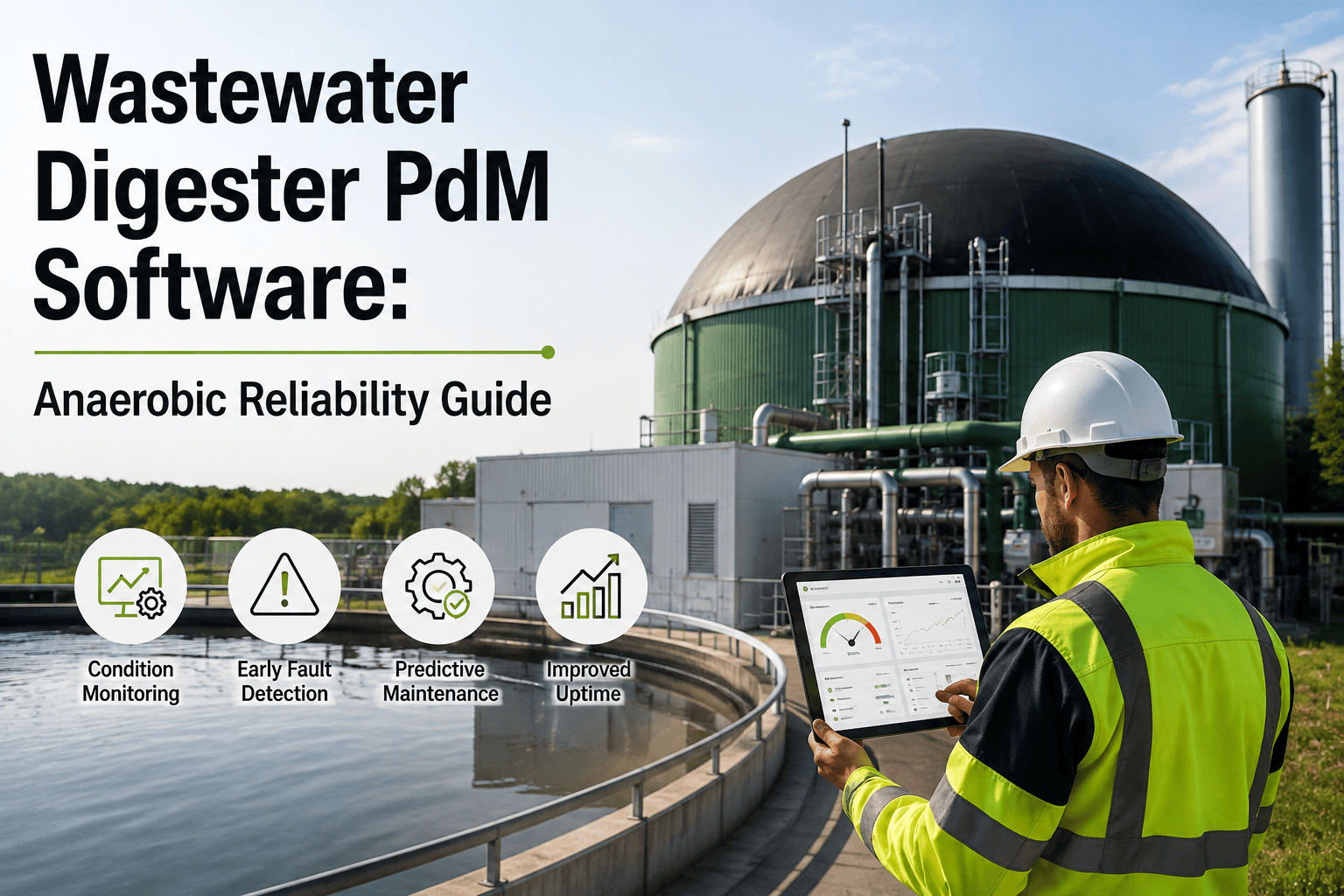
An anaerobic digester is the most operationally sensitive vessel in a wastewater treatment plant. It is also one of the most frequently undermaintained — because failures develop slowly, show no visible warning, and become critical only when the regulatory documentation is assembled for an audit or an incident review. Sign up for OxMaint to automate your digester maintenance schedule and monitoring log, or book a demo to walk through a digester PM program configured for your plant's vessel count and operating mode.
Heat exchanger
Inspect and clean tube bundle quarterly — scale and biofilm accumulation reduces heat transfer efficiency
Digester temperature drops below operational band — volatile solids destruction falls, Class B pathogen compliance at risk
Mixing system
Inspect impellers, draft tubes, or gas injection nozzles monthly — grit accumulation and wear reduce mixing intensity
Stratification reduces contact between microorganisms and substrate — volatile solids reduction drops, scum layer builds
Gas handling system
Monthly inspection of gas pressure relief valves, flame trap, condensate traps, and gas meters
Safety risk from undetected gas leak or relief valve failure — regulatory incident reporting obligation triggered
Feed and withdrawal pumps
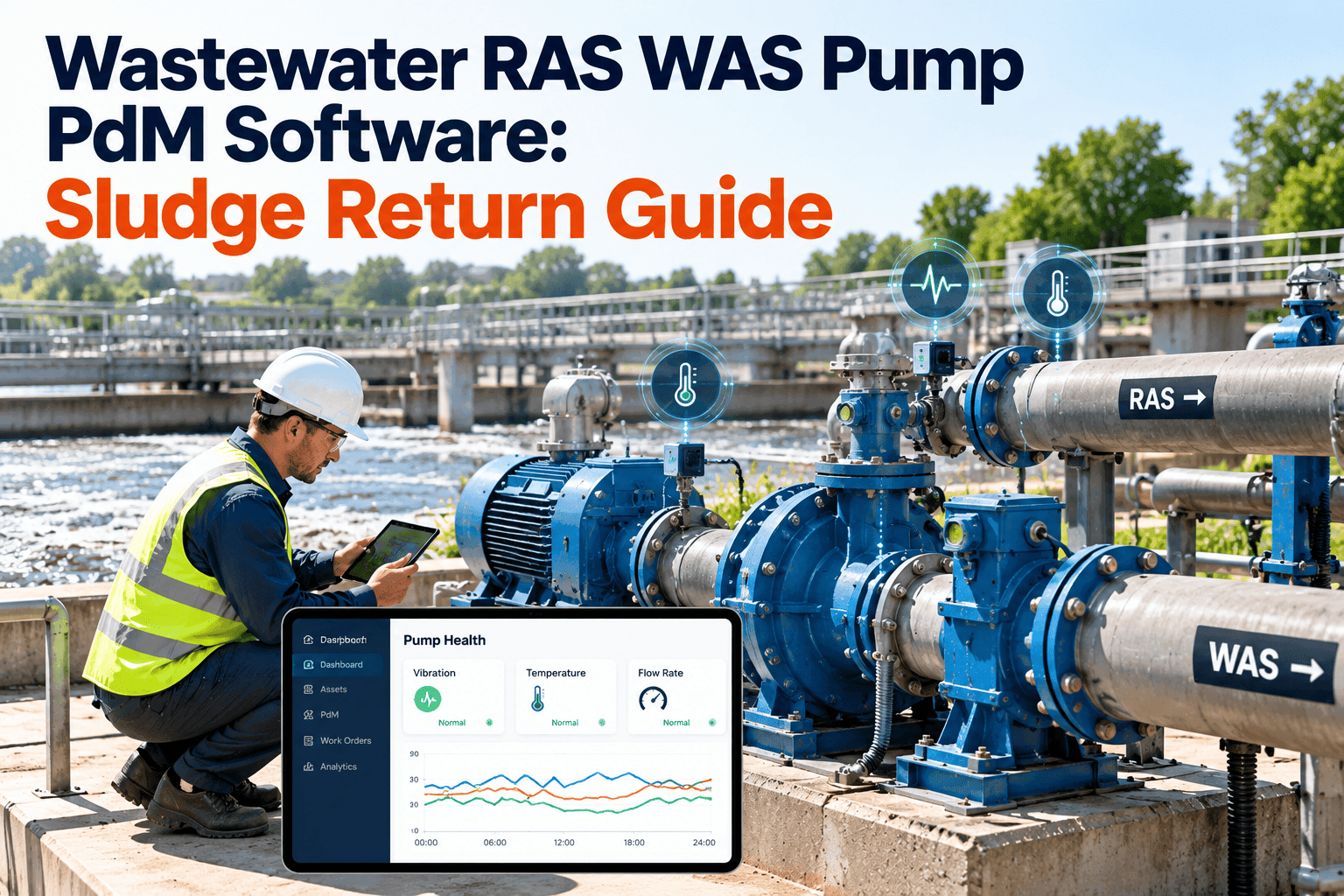
Bearing inspection and seal check monthly — rag accumulation is the leading cause of pump failure in sludge feed systems
Digester feed interruption — detention time shortfall compromises pathogen treatment compliance documentation
Level and temperature instruments
Calibration check quarterly — fouling on probes introduces reading drift that appears gradual but compounds over months
Operating outside true control limits without knowing — compliance data is inaccurate before the exceedance is discovered
Section 03
Dewatering Equipment: Where Maintenance Directly Affects Disposal Cost
Dewatering performance is measured in one number: cake solids percentage. A centrifuge or belt press operating below optimal performance produces wetter cake — more tonnes per dry tonne of solids, higher hauling cost, higher disposal or land application fees, and higher polymer consumption. The relationship between maintenance schedule adherence and dewatering cost per tonne is direct and quantifiable. Book a demo to see how OxMaint tracks dewatering equipment PM compliance and links it to operational cost reporting.
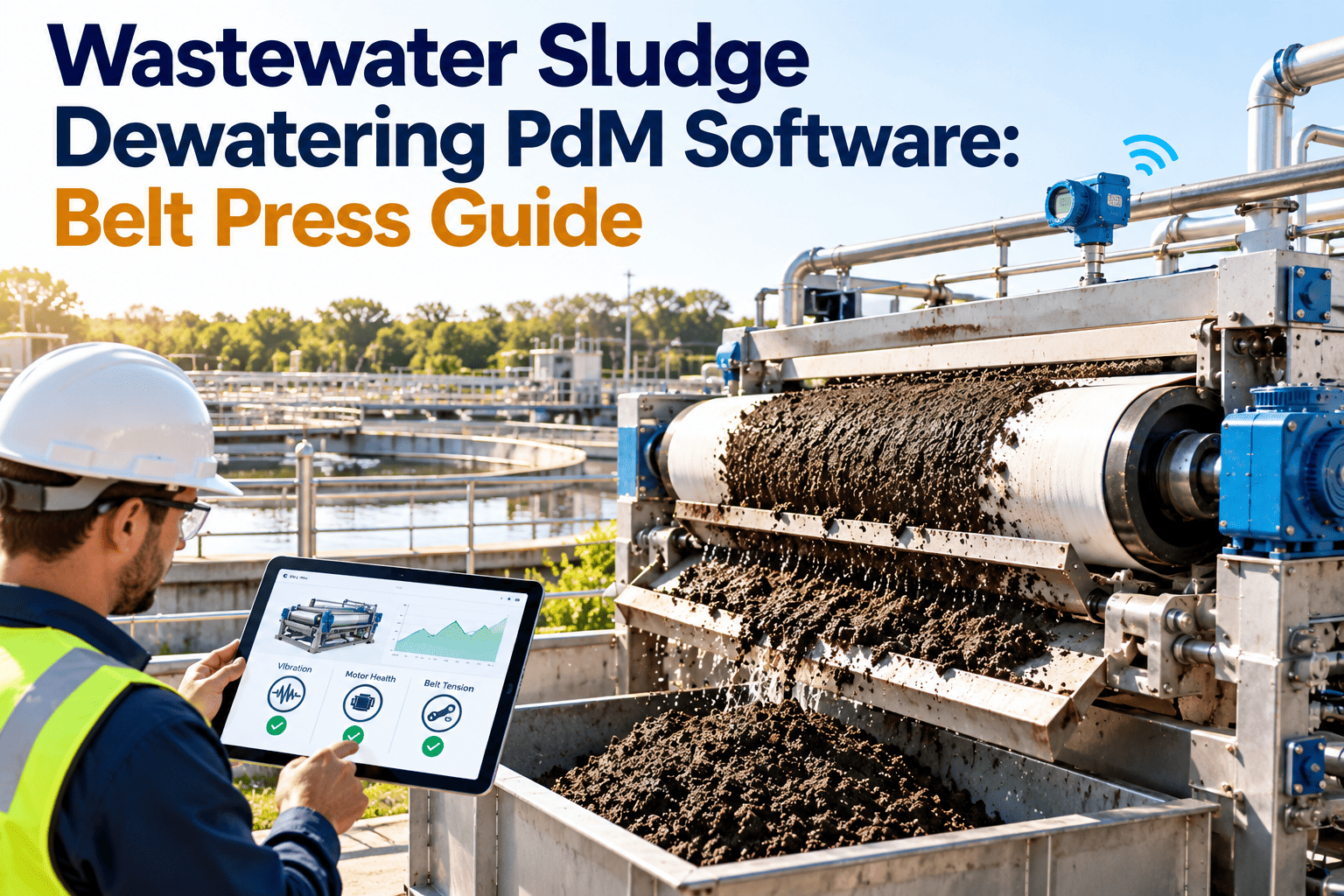
Bowl and scroll wear are the primary performance degradation pathways. Vibration monitoring and scroll differential speed adjustment are key maintenance indicators. Running past bearing service intervals on high-speed centrifuges is the single most common cause of unplanned dewatering downtime in municipal plants.
Target cake solids
22–28% dry solids
PM interval (bearings)
Per OEM — typically 4,000–8,000 hrs
Belt blinding from inadequate wash water pressure or frequency is the leading cause of belt filter press performance deterioration. Belt tracking misalignment and roller wear follow. Belt replacement on schedule — not after blinding is visible — is the difference between 18% and 24% cake solids on the same feed.
Target cake solids
18–24% dry solids
Belt wash check
Pressure and nozzle inspection weekly
Screw presses offer lower energy consumption and simpler maintenance than centrifuges but are sensitive to screenings contamination and feed consistency variation. Screen panel inspection and screw wear monitoring are the critical PM tasks. Screw press installations replacing older belt presses have reported 47% electricity savings when maintained to OEM schedules.
Energy advantage
Up to 47% vs centrifuge
Screen inspection
Monthly minimum
Section 04
Before and After: Reactive Biosolids Maintenance vs OxMaint-Managed Program
Task
Without OxMaint
With OxMaint
Digester monitoring
Temperature, pH, and volatile acids logged in operator notebooks — no trend visibility, no alert when drift begins
Digital log with control limit thresholds — deviation triggers corrective work order before pathogen compliance is at risk
Dewatering PM
Bearing service performed when vibration becomes noticeable — unplanned downtime averages 2–4 days per event
OEM-scheduled bearing and wear part replacement auto-scheduled — zero unplanned centrifuge downtime in 6-month benchmark period
Land application records
Paper logs assembled before each regulatory submission — missing entries discovered only during audit preparation
Every application event logged digitally with site, rate, volume, and agronomic calculation — exported in EPA Part 503 report format
Compliance reporting
3–5 days of manual assembly before every annual report or regulatory inspection
Complete biosolids management compliance report generated in under 15 minutes — timestamped, signed, photo-documented
Biosolids Compliance Is Documentation. OxMaint Builds It Automatically.
EPA Part 503 compliance, Class B pathogen documentation, land application records, digester operating logs — OxMaint captures all of it automatically from work order completion, inspection sign-off, and sensor integration. No manual assembly before audits.
Sign up free or
book a demo to see a full Part 503 compliance record generated from live plant data.
Frequently Asked Questions
What are the EPA Part 503 record-keeping requirements for biosolids land application?
+
EPA 40 CFR Part 503 requires that land appliers of Class B biosolids retain records of application site locations, application dates, biosolids volume applied, agronomic rate calculations, pollutant concentration analysis results, and pathogen reduction process documentation. These records must be kept for a minimum of five years and made available to regulators on request. Class A biosolids with Exceptional Quality designation have separate record-keeping requirements focused on process verification. Monitoring frequency depends on annual biosolids production volume — ranging from once per year for smaller operations to monthly for those exceeding 290 dry metric tonnes per year.
Sign up for OxMaint to automate the collection of every required record at the point of activity.
What temperature must an anaerobic digester maintain for Class B pathogen compliance?
+
Under EPA Part 503, Class B pathogen reduction using anaerobic digestion can be demonstrated through mean cell residence time and temperature requirements. Mesophilic digestion requires a minimum of 15 days detention time at 35°C–55°C (95°F–131°F). Thermophilic digestion requires 10 days minimum at temperatures above 55°C (131°F). Continuous monitoring and logging of digester temperature is essential — regulators expect a complete, unbroken temperature record across the entire treatment period for each batch or continuous flow operation. Temperature drift outside these parameters without a documented corrective action chain constitutes a compliance gap.
Book a demo to see how OxMaint logs digester temperature continuously and generates corrective work orders on deviation.
What is the typical PM schedule for a decanter centrifuge in a biosolids dewatering application?
+
Maintenance intervals vary by OEM and operating conditions, but typical decanter centrifuge PM schedules include daily vibration checks and lubrication verification, weekly visual inspection of scroll wear indicator and bowl speed, monthly polymer system check and wash water nozzle inspection, and bearing replacement at OEM-specified hour intervals — generally between 4,000 and 8,000 operating hours depending on the model and feed characteristics. Plants that defer bearing replacement until vibration becomes apparent typically experience 2–4 days of unplanned downtime per event, with associated hauling delays and disposal cost increases.
Sign up for OxMaint to auto-schedule your centrifuge PM tasks based on operating hours tracked in real time.
How does OxMaint support biosolids compliance documentation?
+
OxMaint captures biosolids compliance documentation at the point of activity — digester temperature logs from connected sensors or manual entry, dewatering run records from work order close-out, land application event details from mobile field entry, and corrective action chains from exceedance work orders. All records are timestamped, attributed to a named operator, and stored in a searchable audit trail. At any point, a complete EPA Part 503 compliance record can be exported — covering monitoring data, application records, pathogen reduction documentation, and corrective action history — ready for regulatory submission without manual assembly.
Start a free trial or
book a demo to configure OxMaint for your plant's specific biosolids program requirements.
Free to Start — No IT Project Required
Biosolids management that fails compliance does so because of missing records, not missing treatment.
OxMaint manages the complete biosolids equipment maintenance and compliance documentation program for wastewater plants — digester monitoring logs, dewatering PM schedules, land application records, corrective action work orders, and audit-ready EPA Part 503 reports generated automatically from your plant's live operational data.
Start your free trial today, or
book a demo for a configuration walkthrough for your facility's biosolids program.