Federal and state grant dollars now buy a growing share of the vehicles, sensors, and equipment sitting in local government fleets, and 2 CFR 200 attaches strict property standards to every one of those purchases. A missing serial number, a stale location record, or a skipped physical count can turn a routine single audit into a repayment demand months later. Documentation is the only evidence an agency accepts that a grant funded asset was tagged, used for its intended program, and disposed of correctly. This page walks through what 2 CFR 200.313 requires in a property record, the thresholds that decide what gets tracked, and the tagging-to-disposition workflow that keeps every award defensible. Grants and public works teams building this workflow can start a free trial to see how OxMaint links every grant funded asset to its award record.
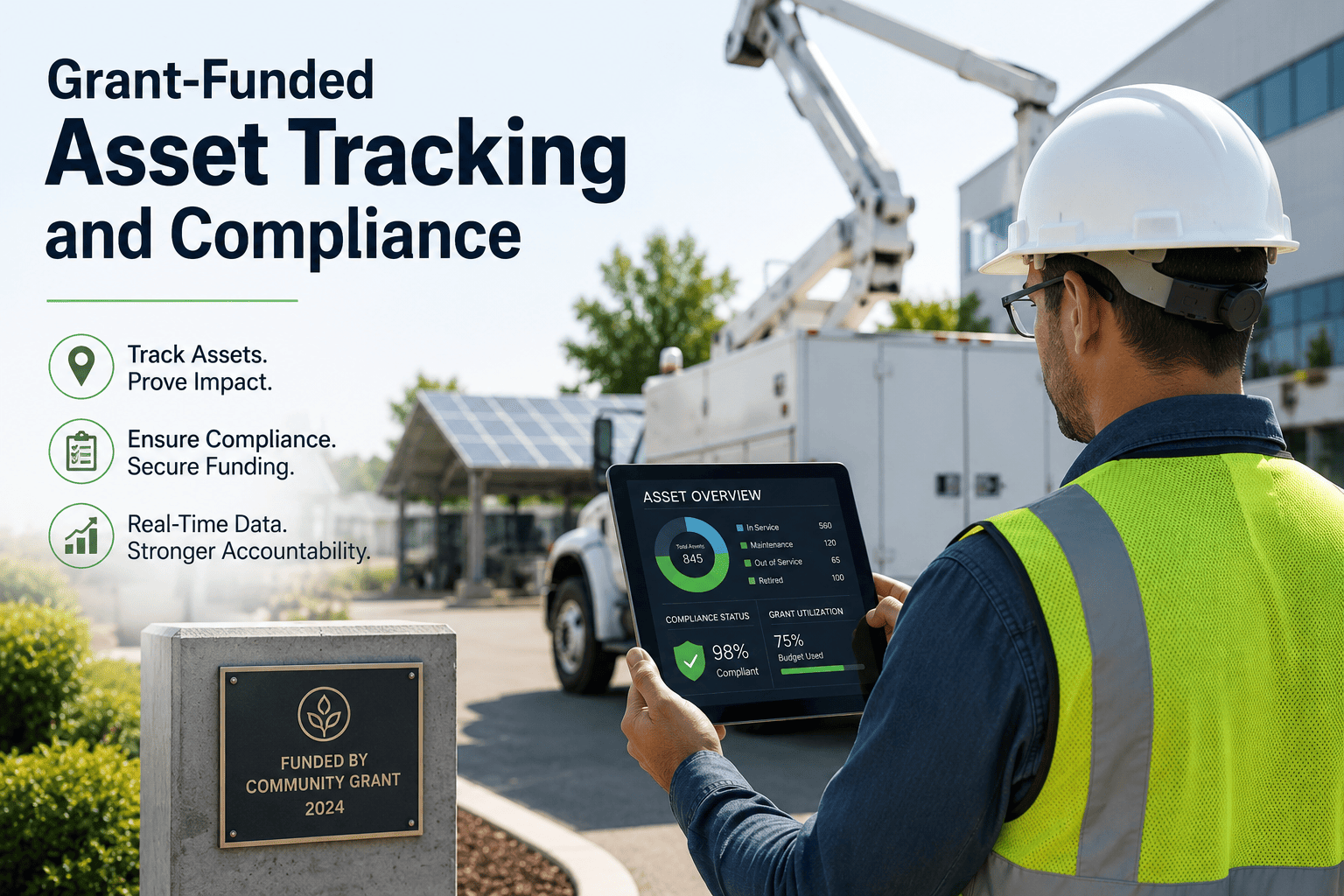
Grant-Funded Asset Tracking and Compliance for Government
An untracked grant funded vehicle, sensor, or piece of equipment is not just a maintenance gap — it is an audit finding waiting to happen. Structured tracking turns 2 CFR 200 obligations into a routine workflow instead of a scramble before the auditor arrives.
From Missing Tag to Repayment Demand — The Grant Compliance Failure Sequence
Grant asset compliance failures rarely start as a crisis — they start as a skipped step that compounds over the life of the award. Understanding the sequence is what makes it preventable at every stage, well before an auditor ever opens a file.
What 2 CFR 200.313 Requires in Every Property Record
Section 200.313 of the Uniform Guidance lists exactly what a compliant property record must contain for grant funded equipment. Missing any one of these fields is the single most common finding in property management audits.
Every Field an Auditor Asks For Should Already Be on File
OxMaint links every grant funded asset to its award from the day it is purchased, so the ten fields 2 CFR 200.313 requires are captured once and stay current through every inventory cycle.
Grant Asset Categories, Dollar Thresholds, and What Each One Requires
Not every grant funded purchase carries the same tracking obligation. The dollar threshold and asset category determine whether an item needs prior approval, biennial inventory, or formal disposition instructions before it can be sold or scrapped.
| Asset Category | Threshold | Governing Requirement | Action Needed |
|---|---|---|---|
| General Purpose Equipment | $10,000 per unit | Capitalized and tracked under 200.313 | Tag, register, include in biennial inventory |
| Special Purpose Equipment | $5,000 per unit | Prior written agency approval as a direct cost, 200.439 | Obtain written approval before purchase |
| Supplies & Materials | $10,000 aggregate residual value | Tracked if unused value exceeds threshold at closeout | Report balance and request disposition instructions |
| Real Property (Land, Buildings) | Any value | Insurance and disposition instructions required, 200.311 | Maintain title, use, and compensation records |
| Information Technology Systems | $10,000 per unit | Included within the equipment definition, 200.1 | Tag and inventory the same as other equipment |
Building a Grant Asset Compliance Program — 4 Phases
Most grant asset compliance gaps trace back to a program that exists on paper but is not run consistently. The four phases below turn 2 CFR 200 obligations into a repeatable cycle instead of a pre-audit scramble.
Capture the FAIN, award number, funding percentage, cost, and acquisition date the moment the asset is received, before it ever reaches the field.
Log where each asset is deployed and confirm it still serves the funded program, keeping the required program nexus intact throughout its life.
Run a physical count against the property record on the schedule 200.313 requires, and correct any gap before it becomes an audit finding.
When an asset is no longer needed, request disposition instructions and calculate any compensation owed based on the federal share of its value.
How OxMaint Manages Grant-Funded Asset Compliance
OxMaint applies the same structured asset tracking used for fleet and facility maintenance to grant funded property — giving grants and public works teams the registry, documentation, and audit trail that 2 CFR 200 expects. Teams can start a free trial or book a demo to configure a grant asset workflow.
Record the FAIN, funding percentage, title holder, and cost against every asset the moment it is purchased, so the award link never gets lost.
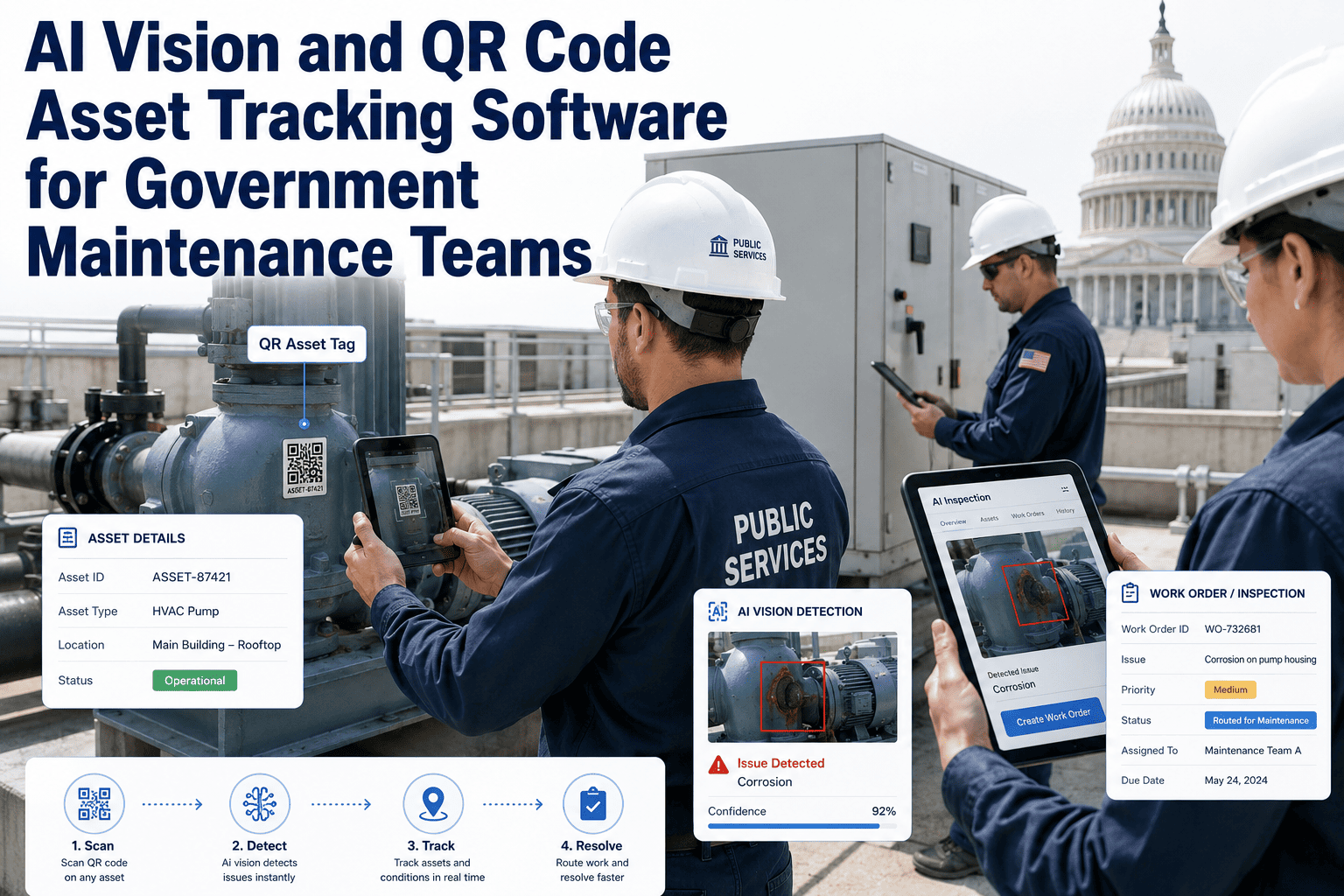
Field and warehouse teams tag assets on a mobile device at intake, attaching photos and identifiers directly to the property record.
Every transfer, deployment, or relocation updates the record automatically, keeping the use-and-condition field current between audits.
OxMaint schedules and tracks the physical count required every two years, flagging any asset that cannot be located or verified.
When an asset is retired, OxMaint calculates the federal share owed based on fair market value and the original funding percentage.
Generate the full property record for any asset or award in one export, formatted for single audit review and grantor documentation requests.
Frequently Asked Questions
What counts as "equipment" under a federal grant?+
How often must grant funded equipment be physically inventoried?+
What happens if we cannot produce a property record during a grant audit?+
Can grant funded equipment be sold or transferred?+
Do IIJA-funded infrastructure assets follow the same 2 CFR 200 rules?+
The Next Single Audit Will Test Your Property Records Whether They Are Ready or Not
Every grant funded asset without a complete property record is a potential finding waiting for the next audit cycle. OxMaint builds the registry, use log, and disposition trail that keeps your awards defensible from acquisition through closeout.