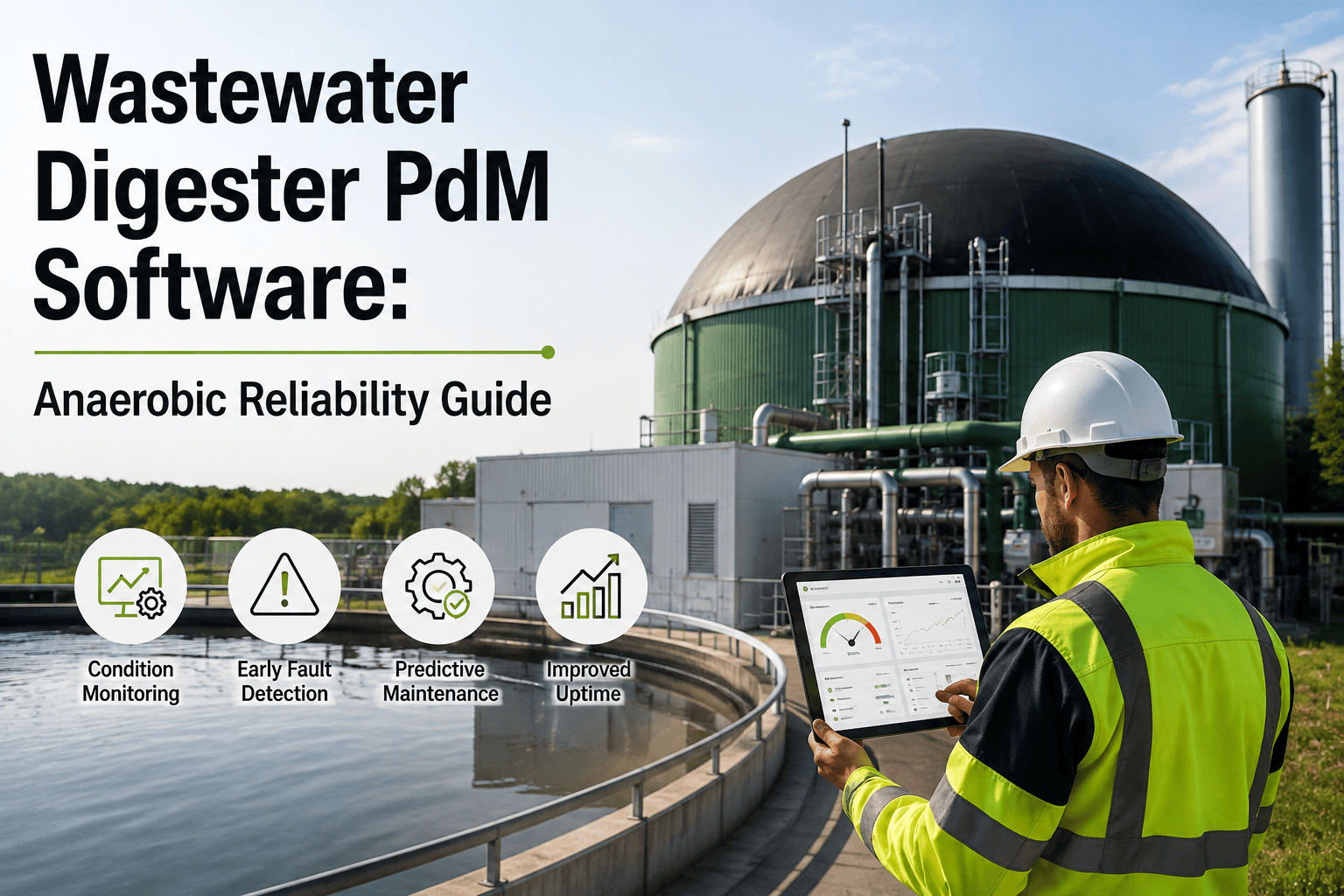
An anaerobic digester runs quietly for months, generating methane and stabilizing biosolids without complaint, until a mixer bearing seizes or a gas mixing valve sticks and the whole vessel goes sour. When that happens, a treatment plant does not just lose a piece of equipment, it loses gas production, boiler heat, and weeks of digester recovery time while biology re-stabilizes. Most utilities still run digester maintenance on calendar intervals or reactive tickets, which means the first sign of trouble is a foaming tank or a flared-off gas stream that should have been fueling the boiler. Predictive maintenance built for anaerobic digestion changes that timeline by watching the handful of assets that actually determine digester health. Talk to our team about building a digester PdM program around your plant's mixers, valves, and boilers.
Anaerobic Digestion Reliability Guide
Wastewater Digester PdM Software for Methane-Recovery Reliability
A practical framework for tracking mixer bearing condition, gas mixer valve health, and boiler performance so anaerobic digesters keep producing usable methane instead of consuming it.
30-45
Days a digester typically needs to restabilize after a major mixing failure
60%
Share of digester gas that many plants flare instead of recovering as boiler or CHP fuel
3-5x
Cost multiplier of an unplanned mixer pull versus a scheduled bearing replacement
24/7
Continuous condition visibility needed for gas mixing and boiler assets that never truly shut down
Why Digester Assets Need Their Own PdM Strategy
Anaerobic digesters behave more like a living biological process than a static mechanical system, which makes generic CMMS scheduling a poor fit. A digester mixer that runs rough for two weeks can shift volatile fatty acid levels long before a technician ever opens a work order. Treating mixer, gas valve, and boiler health as a single monitored group, rather than three unrelated maintenance line items, is what lets a plant catch the chain reaction early instead of after the tank has already gone anaerobic in the wrong sense.
Mixer Bearing Vibration
Continuous vibration trending on draft tube and gas mixers flags bearing wear weeks before a seizure interrupts digester mixing cycles.
Gas Mixer Valve Health
Solenoid and control valve cycle counts, response lag, and pressure differential logging catch sticking valves before biogas recirculation stalls.
Boiler Combustion Trending
Stack temperature, flame signal strength, and fuel-air ratio drift show boiler inefficiency long before a trip takes heat offline.
Volatile Fatty Acid Correlation
Linking mechanical asset data to VFA-to-alkalinity ratios connects equipment condition directly to digester biology, not just uptime.
Methane Yield Tracking
Gas flow and methane percentage trends reveal when mixing inefficiency is quietly reducing recoverable energy, asset by asset.
Work Order Traceability
Every inspection, repair, and part swap on digester assets is logged against the specific tank and mixer, supporting audits and grants.
Core Digester Assets and What to Monitor
A digester PdM program does not need to track hundreds of data points. It needs the right handful of parameters on the assets that actually drive gas production and biological stability. The table below outlines the monitoring baseline most treatment plants start with before expanding into predictive analytics.
| Asset |
Key Parameters |
Failure Signal |
Typical Response Window |
| Draft Tube / Gas Mixer |
Bearing vibration, motor amps, mixing cycle time |
Rising vibration trend, amp draw spikes |
2 to 4 weeks |
| Gas Mixing Valves |
Cycle count, response lag, differential pressure |
Slow actuation, pressure drift |
1 to 3 weeks |
| Boiler / Heat Exchanger |
Stack temperature, flame signal, fuel-air ratio |
Combustion inefficiency, temperature creep |
2 to 6 weeks |
| Recirculation Pumps |
Flow rate, suction pressure, motor temperature |
Flow degradation, cavitation noise |
1 to 4 weeks |
| Sludge Heating Coils |
Inlet/outlet temperature delta, scaling rate |
Reduced heat transfer efficiency |
4 to 8 weeks |
Put Digester Monitoring on Autopilot
Oxmaint connects mixer, valve, and boiler condition data to work orders automatically, so digester alarms turn into scheduled repairs instead of emergency call-outs.
The Digester Reliability Maturity Scale
Most WWTPs sit somewhere between reactive digester repairs and a fully predictive program. The scale below helps operations leadership place their plant honestly and identify the single next step that moves reliability forward without a wholesale program overhaul.
1
Reactive Repair
Mixers and valves are fixed after they fail. Gas flaring spikes are the first real warning sign of trouble.
2
Scheduled Preventive
Bearing checks and valve inspections run on fixed calendar intervals regardless of actual asset condition.
3
Condition-Informed
Operators manually log vibration and temperature readings, but data lives in spreadsheets disconnected from work orders.
4
Digitally Integrated
Sensor data feeds a CMMS directly, generating work orders automatically when thresholds are crossed on key assets.
5
Predictive and Biologically Linked
Mechanical trends are correlated with digester chemistry, giving operators early warning before biology or gas yield is affected.
What Digester Downtime Actually Costs
The financial impact of a digester upset rarely shows up as a single line item. It spreads across flared gas, purchased backup fuel, overtime labor, and the slow biological recovery that follows any major mixing interruption. The breakdown below reflects the typical cost progression treatment plants report as an issue goes unaddressed.
Early Sensor Flag
Minor — Inspection Only
Scheduled Repair
Planned Parts and Labor
Gas Flaring Increase
Lost Recoverable Energy
Backup Fuel Purchase
Direct Budget Impact
Digester Upset
Weeks of Biological Recovery
Building a Digester PdM Program in Five Phases
Rolling out predictive maintenance on digester assets works best as a phased effort rather than a single big-bang deployment. Each phase builds the data foundation the next one depends on, and plants typically see measurable gas recovery improvement well before the full program is complete.
1
Asset Baseline and Criticality Ranking
Identify every mixer, valve, and boiler component tied to gas production, then rank them by impact on digester stability if they fail.
2
Sensor and Manual Round Setup
Deploy vibration and temperature sensors where budget allows, and structure manual inspection rounds for everything else.
3
Threshold and Alert Configuration
Set condition thresholds per asset type so alerts trigger work orders automatically instead of relying on someone noticing a trend.
4
Work Order and Parts Integration
Connect alerts to technician work orders and spare parts inventory so a flagged bearing already has a replacement staged.
5
Trend Review and Gas Yield Correlation
Review monthly trends against methane yield and flaring rates to continually tighten thresholds and prove program value.
Our digester used to be the plant's biggest question mark. We would find out something was wrong when the gas storage sphere started dropping or the boiler tripped on low fuel pressure. Once we started tracking mixer vibration and valve response time, we caught two bearing failures and one sticking valve before they touched gas production. Flaring dropped and our CHP unit finally ran on a predictable fuel supply.
Chief Operator, Regional Wastewater Treatment Plant
Frequently Asked Questions
What is digester predictive maintenance, exactly?
It means tracking condition data on mixers, gas valves, and boilers continuously, then generating work orders when readings drift from normal instead of waiting for calendar-based checks or an outright failure to prompt a repair.
Do we need sensors on every digester asset to start?
No. Most plants begin with manual inspection rounds logged through
a mobile CMMS and add sensors gradually on the highest-criticality mixers and valves as budget allows.
How does mixer condition actually affect gas yield?
Poor mixing lets solids stratify and volatile fatty acids accumulate unevenly, which slows methanogenesis and reduces the total gas a digester produces well before any mechanical failure occurs.
Can this connect to our existing SCADA or historian?
Yes, condition data from SCADA and historian systems can feed directly into asset records so maintenance and process teams work from the same trend lines instead of separate reports.
How fast can a treatment plant see results?
Most plants catch their first preventable failure within 60 to 90 days of establishing baseline monitoring, well before the full five-phase program is complete.
Build Your Digester Reliability Program
See how Oxmaint helps wastewater teams track mixer bearings, gas mixer valves, and boiler condition in one connected system built for methane recovery.