The United States has over 45,000 structurally deficient bridges currently in service — and the gap between traditional biennial inspection cycles and real-world structural degradation is growing. AI vision inspection and maintenance analytics are rewriting how bridge owners identify, prioritize, and respond to structural deficiencies before they become closures or catastrophic failures. OxMaint's AI vision inspection platform connects field inspection data directly to maintenance workflows, giving bridge owners and state DOTs actionable intelligence — not just inspection reports. Book a demo and see how it works on your bridge inventory.
AI-Powered Bridge Inspection Intelligence
Biennial Inspections Miss What AI Catches Daily
Bridge inspectors find what is visible on inspection day. AI vision systems find what is forming weeks and months before — in the crack propagation patterns, deflection anomalies, and corrosion signatures that traditional walkthroughs cannot detect at scale.
45K+
Structurally deficient bridges in active service across the U.S.
$125B
Deferred bridge maintenance backlog — growing by $8B annually
70%
Reduction in missed deficiency detections with AI vision vs. manual inspection
Crack detected — 6 weeks before visible
Corrosion growth — active monitoring
The Problem With Traditional Bridge Inspection Workflows
National Bridge Inspection Standards (NBIS) mandate biennial inspections for most bridges — but structural degradation does not wait for inspection cycles. Load-induced fatigue cracking, chloride-accelerated corrosion, and scour events can progress from detectable to dangerous in weeks. The inspection workflow gap is not a staffing problem; it is a technology gap.
2-Year Inspection Blind Spots
Biennial inspection cycles mean the average bridge goes 730 days between formal condition assessments. Fatigue cracks in high-traffic highway bridges can propagate from hairline to structurally significant in 60 to 120 days under heavy truck loading — entirely invisible to the inspection record.
Inspection Reports Without Action Triggers
Traditional inspection workflows produce condition ratings and written reports — but those reports must be manually translated into maintenance work orders, budget requests, and repair timelines by a separate team. The gap between inspection finding and maintenance action averages 8 to 14 months in state DOT systems.
Inspector Variability in Condition Ratings
Studies by the Federal Highway Administration document significant variability in condition ratings assigned by different inspectors evaluating the same bridge element. AI vision inspection provides consistent, quantified deficiency detection that does not vary by inspector experience, visibility conditions, or access limitations.
How AI Vision Inspection Changes the Workflow
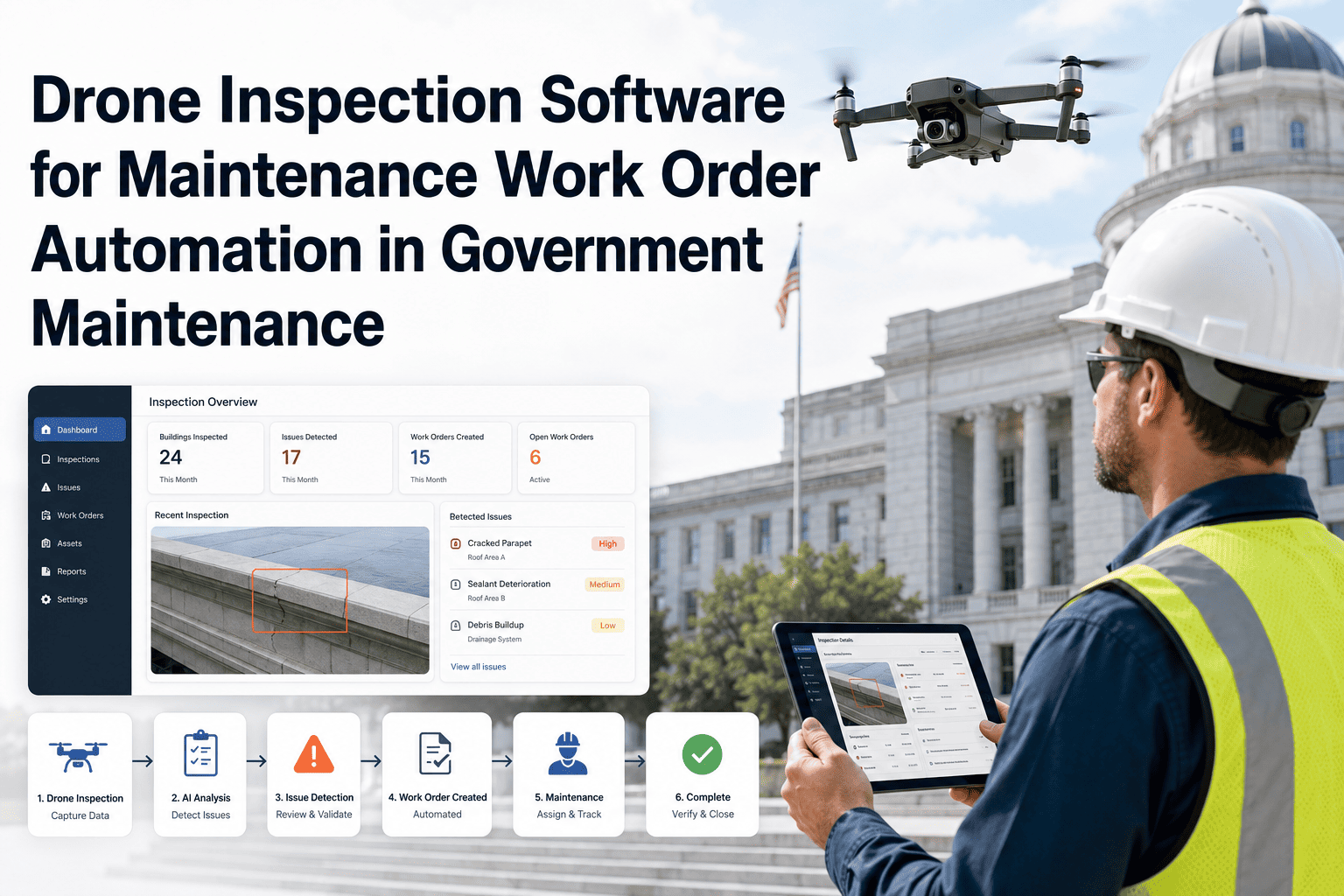
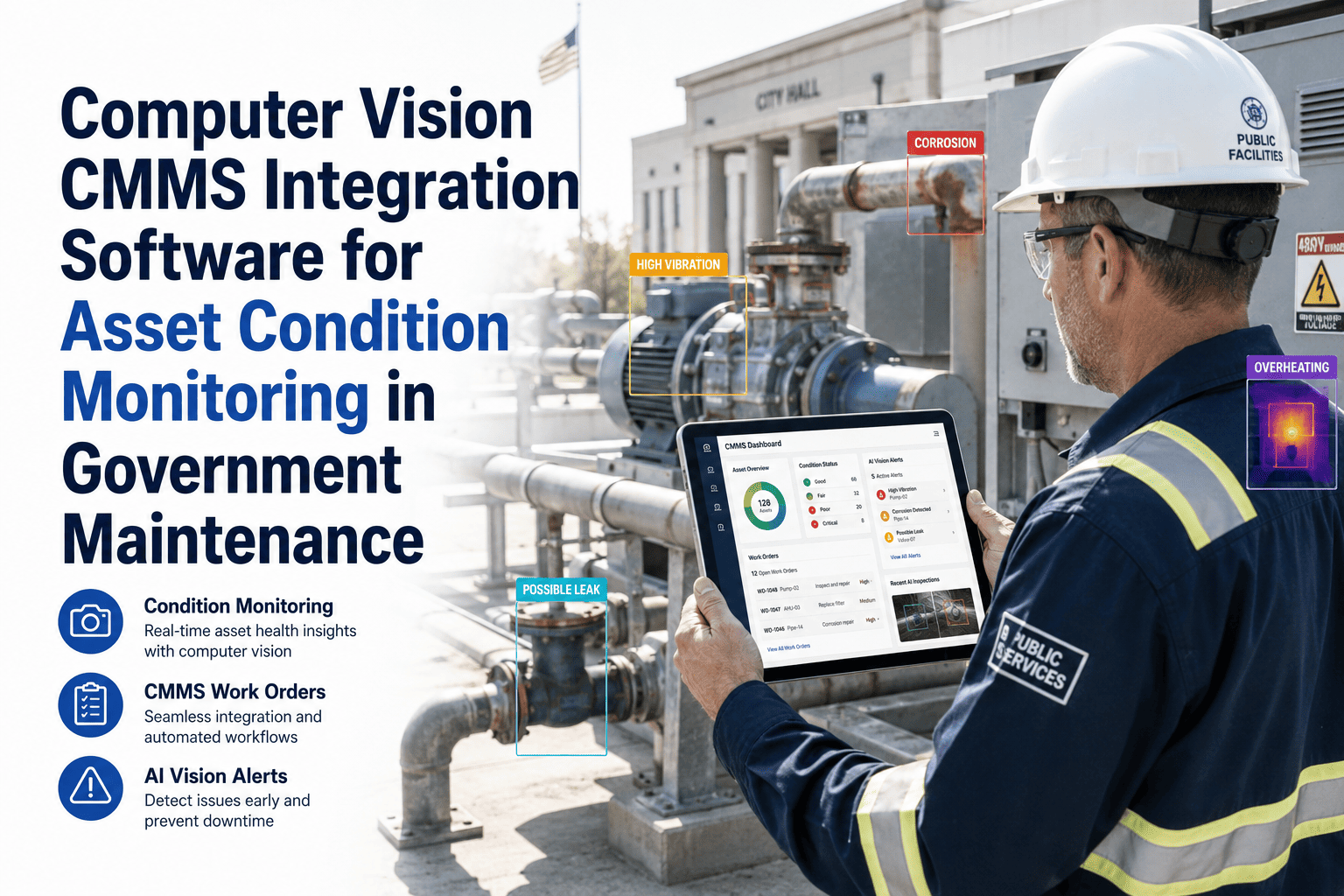
OxMaint integrates AI vision analysis — from drone imagery, high-resolution cameras, and mobile inspector devices — directly into the bridge maintenance workflow. Every deficiency detected by the AI vision engine automatically generates a work order with priority classification, repair cost estimate, and timeline recommendation.
1
Image Capture
Drone, robotic, or mobile device captures high-resolution imagery of structural elements — decks, beams, columns, bearings, joints, and scour zones
2
AI Deficiency Analysis
Computer vision models identify crack types, measure width, classify corrosion severity, detect delamination and spalling — with FHWA element-level condition ratings assigned automatically
3
Prioritized Work Order
High-priority findings auto-generate maintenance work orders in OxMaint with severity rating, repair category, cost range estimate, and recommended repair window
4
Trend Tracking
Each deficiency is tracked over time — crack propagation velocity, corrosion growth rate — enabling predictive intervention before the deficiency crosses a structural significance threshold
See AI vision inspection on your bridge inventory
OxMaint's implementation team will map your bridge assets and show live deficiency detection in your first session.
AI Inspection vs. Traditional Inspection — Performance Data
| Inspection Capability |
Traditional Manual |
AI Vision + OxMaint |
| Inspection cycle |
Every 24 months (NBIS minimum) |
Continuous + scheduled cycles |
| Crack detection threshold |
0.3mm+ (human visual limit) |
0.05mm (high-resolution AI) |
| Deficiency coverage per inspection |
Accessible areas only |
100% surface coverage via drone |
| Time from inspection to work order |
8–14 months average |
Automated — same day |
| Inspector variability in ratings |
High (documented by FHWA) |
Consistent — AI-rated against standards |
| Deficiency trend tracking |
Manual comparison across reports |
Automated — crack growth velocity charted |
Documented Outcomes from AI Bridge Inspection Programs
68%
Virginia DOT
More deficiencies detected per bridge using AI vision inspection compared to traditional visual inspection on the same structures — confirmed in a 2023 VDOT pilot study across 47 bridges.
$4.2M
Minnesota DOT
Avoided in emergency repair and bridge closure costs after AI monitoring flagged scour erosion on a priority river crossing 11 weeks before the next scheduled inspection was due.
3.4x
Pennsylvania DOT
More bridges inspected per field crew day using drone-based AI vision — allowing the same inspection budget to cover a significantly larger portion of the state's aging bridge inventory.
Expert Perspective
The two-year inspection cycle was designed around the capabilities of manual inspection — not around the rate at which bridge deficiencies actually develop. AI vision systems that can inspect a bridge in hours, detect sub-millimeter cracks, and automatically generate maintenance priorities are not a replacement for structural engineers. They are a force multiplier that allows engineering judgment to be applied where it matters most — on the deficiencies already identified and quantified by the AI.
State DOTs are managing bridge portfolios with inspection workforces that have not grown proportionally with the inventory. AI-assisted inspection is not about reducing inspector involvement — it is about ensuring that every inspector's time is spent on the highest-value analytical tasks, with the data collection and deficiency detection handled by systems that do not fatigue, miss elements, or vary in rating consistency from one inspection to the next.
Frequently Asked Questions
Does AI bridge inspection replace NBIS-certified bridge inspectors?
No. AI vision inspection tools are used alongside certified bridge inspectors — not in place of them. FHWA and state DOT regulations require NBIS-certified inspection teams for official condition rating and NBI reporting. AI vision platforms like OxMaint handle systematic deficiency detection, measurement, and trend tracking — which enhances the certified inspector's capacity and accuracy rather than replacing their professional judgment and regulatory role.
Book a demo to see how OxMaint integrates with your existing inspection team workflow.
What types of bridge deficiencies can AI vision inspection detect?
Current AI vision systems deployed in bridge inspection contexts reliably detect surface cracks (including hairline cracks below human visual thresholds), concrete spalling and delamination, active and arrested corrosion zones, joint seal failures, bearing condition issues, deck surface deterioration, and scour erosion at pier foundations when combined with underwater imaging. Detection accuracy for classified deficiency types in controlled studies consistently exceeds 90 percent for visible surface anomalies under good lighting conditions.
Sign up free to explore the deficiency library.
How does OxMaint connect bridge inspection findings to maintenance budgeting?
OxMaint's bridge analytics module converts FHWA element condition ratings and AI-detected deficiency classifications into prioritized maintenance cost estimates — using FHWA Pontis element deterioration models and local unit cost databases. State DOT bridge programs can generate five-year maintenance funding needs analyses directly from the current inspection and condition data in the OxMaint database, formatted for STIP and TIP programming submissions. This eliminates the manual cost estimation step that typically adds months to the programming cycle.
Can OxMaint integrate with existing NBI and bridge management system data?
Yes. OxMaint connects to National Bridge Inventory data exports, Pontis/AASHTOWare Bridge Management System records, and most state bridge management databases via standard data interchange formats. Bridge element condition histories, inspection dates, and NBI ratings import automatically — so your existing inspection investment forms the baseline for the AI analytics layer, rather than requiring a data rebuild from scratch. Contact our team at
app.oxmaint.ai to confirm connectivity with your specific state system.
From inspection report to maintenance action — automatically
Your Bridge Inspection Data Should Drive Maintenance. Right Now, It Probably Doesn't.
OxMaint connects AI vision inspection findings directly to prioritized work orders, maintenance scheduling, and budget programming — closing the 8-to-14-month gap between what inspectors find and what maintenance crews fix.