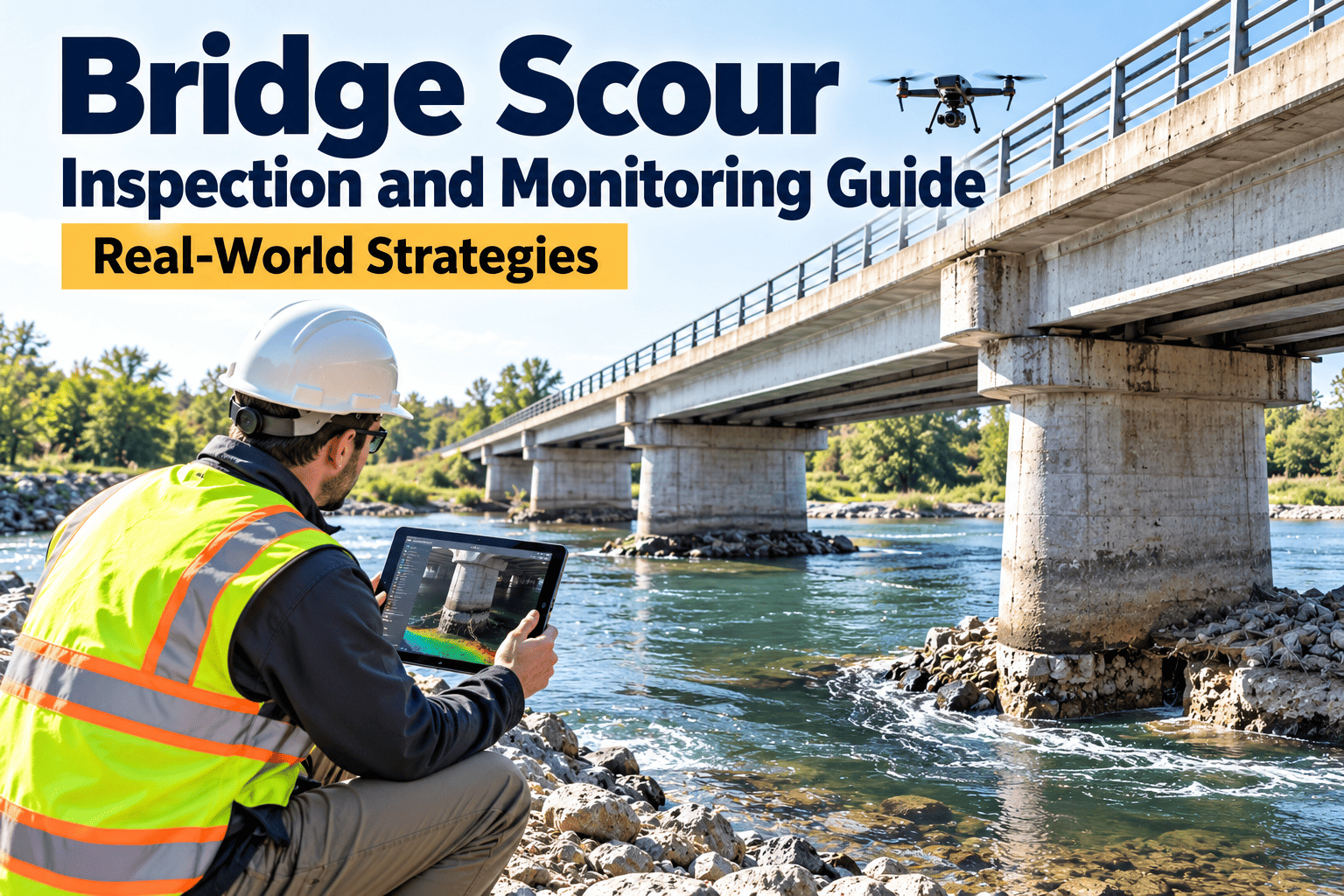
Scour is the removal of streambed material around bridge foundations, and it is a major cause of bridge failures in the United States. It is hard to manage because the damage happens under water, often during a flood, and may refill with sediment before anyone looks. A solid program depends on consistent inspections, repeatable measurements and a clear response when conditions change. This guide explains what to record, how to track trends and how to run scour work through a maintenance management platform such as Oxmaint, alongside your engineers and the national bridge inspection standards.
Bridge Scour Inspection and Monitoring Guide
Spot scour risk early with inspection schedules, photo history and trend tracking, then connect findings to work orders and countermeasures.
The three kinds of scour inspectors look for
Around piers and abutments
Flow accelerates and forms vortices at the foundation, digging holes next to the structure. This is the type most visible during a pier inspection.
Across the whole channel
The bridge and its approach embankments narrow the flow path, so velocity rises and lowers the bed under the opening.
Along the stream reach
Long-term lowering of the channel from natural processes, sediment changes, mining or upstream works, independent of the bridge.
Total scour at a pier is the combination of these effects, which is why single point measurements rarely tell the whole story.
Conditions that raise scour risk
Site factors
- Erodible sand, silt or weathered rock at the footing
- Shallow spread footings or short piles
- Bends, confluences or steep channel slopes
- Skewed piers or abutments facing the flow
Event factors
- High flows from storms, snowmelt or dam releases
- Debris jams that block openings and redirect flow
- Ice floes in colder climates
- Rapid rise and fall of water levels
Management factors
- Missing or outdated scour evaluations
- No recorded baseline channel profile
- Inconsistent measurement locations between visits
- Findings that never become work orders
Building a scour inspection program
Establish the scour evaluation status
Confirm which bridges over water have a scour evaluation, which are rated scour critical and which are unknown foundations. Coordinate with your bridge engineer, because this is a professional determination.
Set routine inspection intervals
Routine inspections follow the national bridge inspection standards and your agency's program, with more frequent attention for scour critical and high-risk structures.
Define fixed measurement stations
Mark cross-section points at each pier and abutment, so each visit measures the same places and trends are meaningful.
Plan underwater work where needed
Foundations that cannot be assessed from above or by probing may require qualified diving or sonar surveys on a longer cycle.
Prepare plans of action
For scour critical bridges, document the monitoring triggers, closure criteria and responsibilities before the next flood arrives.
Link findings to maintenance
Every defect, from exposed footing to missing riprap, becomes a tracked work order with an owner and a due date.
Keep bridge inspection history in one place
Oxmaint helps maintenance teams schedule inspections, record photos and findings against each bridge asset and turn defects into tracked work.
What to record on every visit
| Item | What to capture | Why it matters |
|---|---|---|
| Bed elevation at stations | Measured depth at the same points, with the reference datum | Shows how the bed is changing over time |
| Foundation exposure | Visible footing or pile length and condition | Indicates loss of cover or embedment |
| Countermeasure condition | Riprap, mats, guide banks, with displacement or voids | Shows whether protection is still working |
| Debris and flow alignment | Accumulation at piers, blocked openings, channel shifts | Debris concentrates flow and raises scour |
| Bank and approach condition | Erosion, slumping and embankment damage | Approach failure can precede foundation issues |
| Photos and sketches | Standard angles from fixed positions with date and flow level | Allows visual comparison between visits |
| Water level and weather | Stage, recent rainfall and flow conditions | Explains differences between measurements |
Trend tracking turns measurements into early warning
A single sounding says where the bed is today. A series says where it is heading. The sample log below shows the layout to use. The entries are placeholders for illustration, not real measurements.
| Visit | Pier 2 bed depth | Change from baseline | Event since last visit | Action |
|---|---|---|---|---|
| Baseline | Recorded | None | None | Continue schedule |
| Routine visit | Recorded | Small change | Seasonal high flow | Note and watch |
| Post-flood visit | Recorded | Larger change | Named storm event | Engineer review, work order |
| Follow-up | Recorded | Still changing | None | Countermeasure planned |
Triggers are an engineering decision
The depth or change that should trigger closure, restricted loading or emergency repair belongs to your qualified bridge engineer and the bridge's plan of action. The maintenance system records, reminds and tracks, but it does not set the threshold.
Flood response workflow
Monitoring technology and where it fits
Where the maintenance system fits
Scour management creates a steady stream of records: measurements, photos, findings and repair actions. A CMMS such as Oxmaint ties them to each bridge as an asset, so history does not depend on an individual inspector's files.
Useful capabilities for bridge teams
- Recurring inspection schedules for routine and post-flood visits
- Mobile forms with photos, measurements and notes
- Defects that convert to work orders with owners and dates
- Asset history showing every inspection and repair
- Reports on overdue inspections and open bridge work
Record discipline
- Use the same stations and angles every time.
- Record water level with each photo set.
- Attach engineer reviews to the bridge record.
- Close work orders with before and after evidence.
Common scour program mistakes
Common countermeasures and how to track them
| Countermeasure | What it does | What to check on inspection |
|---|---|---|
| Riprap at piers and abutments | Armors the bed and banks against flow | Displaced or missing stone, voids, undermined edges, sizing and extent |
| Grout bags and articulated mats | Fill scour holes and cover erodible material | Gaps, edge undercutting and lifted sections |
| Guide banks and spur dikes | Direct flow through the opening | Erosion, slumping and loss of stone |
| Footing underpinning | Extends or reinforces exposed foundations | Cracks, movement and connection condition |
| Debris removal programs | Keeps openings clear and flow predictable | Accumulation after high water, and the date of last clearing |
Design belongs to engineers
Selecting and sizing countermeasures follows hydraulic engineering guidance, such as the FHWA hydraulic engineering circulars on scour. Maintenance teams track installation, condition and recurring needs, and raise concerns when conditions change.
Rank bridges so attention goes where risk is highest
| Ranking input | Higher priority when | Source in your records |
|---|---|---|
| Scour evaluation status | Rated scour critical or unknown foundation | Bridge file, engineer review |
| Foundation type | Spread footings on erodible material or shallow piles | Plans and inspection notes |
| Observed bed change | A pattern of lowering across visits | Measurement history |
| Flood exposure | Frequent high flows or past damage | Event log and gauge data |
| Consequence of failure | High traffic, emergency route or no detour | Traffic and network data |
| Overdue work | Open countermeasure or debris work orders | Work order backlog |
Field safety during scour inspections
A yearly calendar for scour work
- Remove debris and vegetation near openings
- Repair known countermeasure damage
- Update the priority list and contacts for the plan of action
- Watch gauge and forecast triggers
- Perform post-flood inspections on priority bridges
- Log findings and engineer decisions the same day
- Review trend data and compare to baselines
- Schedule countermeasure repairs and underwater work
- Report open items and funding needs
Collect a baseline file for every bridge over water
Structure data
- Foundation type, footing elevation and pile details from plans
- Construction and rehabilitation history
- Pier and abutment layout with consistent numbering
- Existing countermeasures and their installation date
Hydraulic data
- Scour evaluation and the engineer's findings
- Channel cross-section at the bridge and a reference upstream
- Nearest stream gauge and flood history
- Channel type, bed material and known instability
Management data
- Plan of action where one is required
- Inspection interval and the last inspection dates
- Open work orders and deferred repairs
- Contacts for engineers, divers and emergency response
Keep measurements consistent between inspectors
Reporting scour status to owners and funders
Bridge programs compete for capital funding, and scour projects can be hard to explain because the evidence is under water. Clear records shift the conversation from opinion to documented change over time.
A useful summary includes
- Number of bridges over water, by evaluation status
- Inspections completed against those due
- Bridges with measured bed change since baseline
- Open and overdue countermeasure and debris work
- Post-flood inspections completed after each event
Keep the story honest
- Separate measured facts from engineering interpretation.
- State unknowns, such as foundations of unknown depth.
- Show the date of each measurement shown.
- Use photos from matching positions to illustrate change.
What a useful scour work order contains
Signs inspectors should escalate the same day
Do not wait for the next report cycle
Notify the responsible engineer immediately if you see visible settlement or tilt of a pier, new cracking in a footing or cap, a footing or pile exposed where it was previously covered, a sudden change in channel alignment, or major debris lodged against the structure. Record the time of notification and the instruction received on the bridge's work order.
Frequently asked questions
What is a bridge scour inspection?
It is an assessment of how streambed erosion is affecting bridge foundations, including measurements, photos and the condition of protective measures.
How often should scour be checked?
Follow the national bridge inspection standards and your agency program, and add inspections after major floods or for scour critical bridges. Your bridge engineer sets the specifics.
What is a scour critical bridge?
It is a bridge whose foundation is determined to be unstable for observed or calculated scour conditions. These bridges usually have a plan of action.
Can a CMMS replace engineering judgment?
No. It stores inspections, schedules and repair history, while engineers interpret the data. A CMMS keeps that history organized and available.
How can Oxmaint help bridge maintenance teams?
Oxmaint supports inspection scheduling, mobile findings, work orders and asset history. You can book a demo to see a bridge workflow.
Know what is happening beneath your bridges
Schedule the inspections, keep the photo and measurement history and turn findings into tracked work. Oxmaint helps bridge teams stay ahead of scour risk.