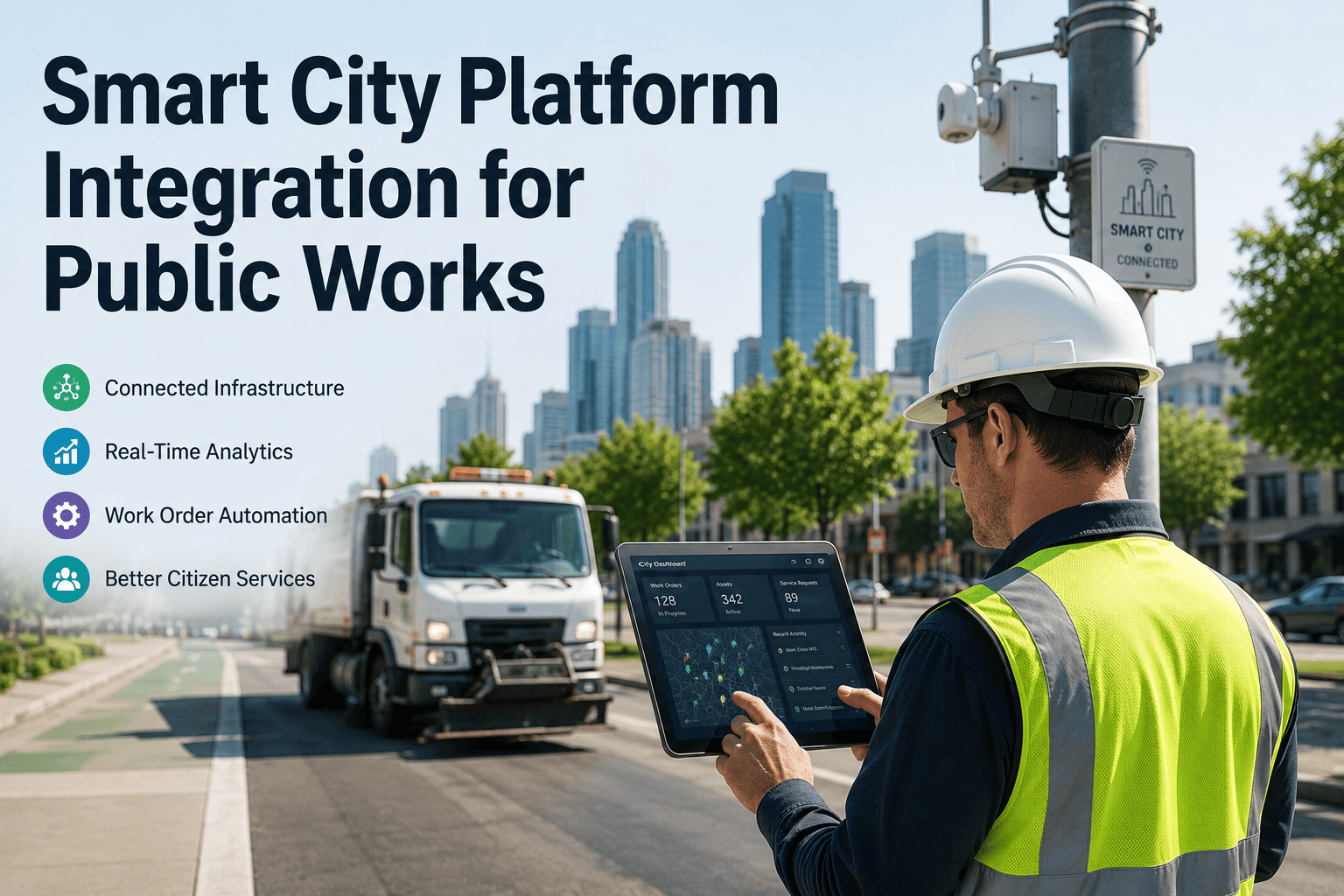
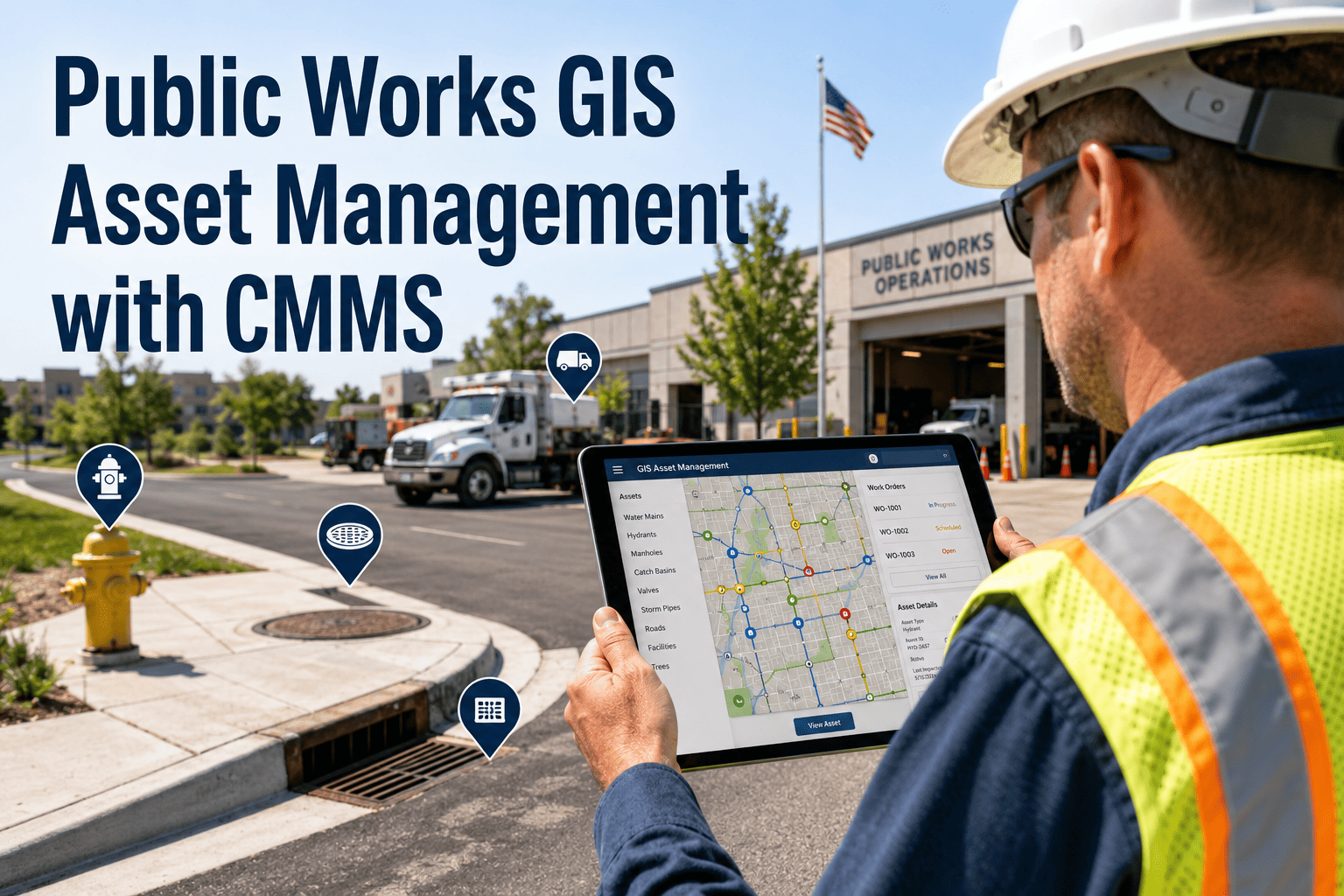
Before their digital transformation, Metropolis Municipal Government faced a growing infrastructure crisis. Aging grid systems, scattered municipal assets, and reactive maintenance protocols meant the city was constantly one step behind. Streetlight outages were only discovered after citizen complaints, traffic signal failures led to hours of gridlock before technicians were even dispatched, and environmental sensors failed silently. A progressive city deployed OxMaint with IoT integration across smart streetlights, traffic systems, and environmental sensors — reducing infrastructure maintenance costs 31%, improving response time 52%, and extending asset life 28%, smart city CMMS case study, IoT maintenance results, OxMaint smart city, connected infrastructure results, smart city maintenance savings, IoT government maintenance, smart city transformation, municipal IoT CMMS, connected city results, smart infrastructure optimization, government IoT maintenance results. This case study demonstrates how public works departments can evolve from reactive triage to proactive, data-driven municipal management.
Client Profile: Metropolis Municipal Government
Service Area
2.5M residents
Connected Assets
45,000 smart nodes
Operating Districts
8 municipal zones
Maintenance Budget
$32M annual operations
The Challenge: Blind Spots in Municipal Infrastructure
The city's rapid expansion exposed severe limitations in their legacy maintenance systems. Without real-time visibility into their distributed assets, the public works department operated entirely on reactive, complaint-driven workflows that drained budgets and frustrated citizens.
✗Complaint-Driven Operations: 85% of streetlight outages and traffic signal faults were reported by angry citizens. Without automated alerts, assets remained broken for days before a paper work order was even generated.
✗Inefficient Truck Rolls: Technicians were dispatched without knowing the specific fault code or required parts. Crews frequently arrived at a traffic cabinet only to realize they needed to return to the depot for specialized components, doubling labor costs.
✗Siloed Software Systems: Environmental sensors, streetlights, and traffic controllers operated on completely separate, proprietary dashboards. The city had no unified view of infrastructure health across its 8 municipal zones.
✗Zero Predictive Capability: Components were run to failure. There was no tracking of run-hours or operating cycles, meaning catastrophic failures occurred during peak traffic hours instead of being addressed during planned off-peak maintenance windows.
"We were spending millions of dollars just driving around looking for broken equipment. Our 'smart' infrastructure wasn't smart at all because the data wasn't connected to the people actually turning the wrenches. When a major intersection went dark, we relied on 911 calls instead of system alerts. It was inefficient, expensive, and unacceptable for a city of our size."
— Marcus Thorne
Director of Public Works, Metropolis Municipal Government
If your municipality is struggling with disconnected assets and reactive public works workflows, schedule a 30-minute consultation to see how an IoT-integrated CMMS can centralize your city's infrastructure management.
Modernize Municipal Reliability Using AI + IoT Data
Metropolis implemented OxMaint CMMS as their unified command center for all public works operations, focusing on four integrated capabilities: IoT condition monitoring, automated mobile dispatch, AI-driven predictive maintenance, and real-time vendor SLA tracking.
✓IoT Condition Monitoring: 45,000 streetlights, traffic controllers, and air quality sensors were integrated via API directly into OxMaint. The system now tracks voltage anomalies, communication drops, and component degradation in real-time, completely bypassing the need for citizen reporting.
✓Automated Mobile Dispatch: When an IoT node reports a fault, OxMaint automatically generates a work order containing the exact GPS coordinates, fault code, and required parts list. The ticket is instantly routed to the mobile device of the nearest qualified field technician.
✓Predictive Maintenance AI: Machine learning algorithms analyze historical failure data and current sensor telemetry to predict component burnout. The system automatically schedules LED replacements and traffic cabinet battery swaps 30 days before their predicted failure dates.
✓Unified Command Dashboard: All 8 municipal zones now operate on a single pane of glass. City managers can view real-time maps of infrastructure health, track technician routes, and monitor live maintenance costs against the $32M annual budget.
✓Vendor SLA Management: Outsourced repairs are tracked automatically. The system monitors the time from fault detection to resolution, automatically flagging vendors who fail to meet their contracted response times for critical intersection repairs.
Cities ready to implement IoT-enabled smart infrastructure can start with a free 30-day trial that includes API integration guides, pre-built municipal checklists, and predictive maintenance templates designed specifically for public works.
Designing a Data-Driven Program — A Connected City Framework
The city's connected infrastructure framework integrates four critical data streams into a closed-loop optimization cycle: (1) IoT sensors detect an anomaly (e.g., voltage drop in a streetlight circuit) → (2) API triggers an automated OxMaint work order → (3) AI assigns the ticket to the optimal technician route with the correct parts list → (4) The technician resolves the issue via mobile app, logging time and materials → (5) Analytics refine the predictive model for future lifecycle planning.
Example integration: A smart traffic controller at 5th & Main reported a backup battery degradation of 20% over a 48-hour period. OxMaint's AI correlated this with historical patterns showing that this specific degradation curve precedes total failure by 7 days. The system automatically generated a preventive maintenance work order for a battery swap during off-peak night hours. Cost: $350 for parts and planned labor. Avoided cost: A $4,500 emergency police dispatch for traffic control and urgent contractor fees during rush hour gridlock. By applying this framework city-wide, the government achieved unprecedented municipal IoT CMMS results.
To configure similar predictive workflows for your city's infrastructure, schedule a technical consultation. Our specialists will review your asset inventory, current telemetry capabilities, and integration requirements to build a customized smart city implementation roadmap.
Results: Measurable Smart City Transformation
31%
Maintenance Cost Reduction
Slashed reactive overtime and duplicate truck rolls, yielding millions in annual operational savings.
52%
Faster Response Time
Time from component failure to technician dispatch dropped from 9.4 hours to under 4.5 hours.
28%
Asset Life Extension
Predictive part replacements prevented cascading electrical failures, extending the life of major traffic systems.
100%
Network Visibility
Achieved real-time tracking and mapping of all 45,000 smart nodes across 8 municipal zones.
88%
Drop in Citizen Complaints
Infrastructure issues are now resolved before the public is impacted or even notices a fault.
410%
ROI Over 2 Years
The CMMS and IoT integration paid for itself within the first 6 months of full city deployment.
"The OxMaint deployment fundamentally changed how we govern. We no longer wait for the city to break before we fix it. Last month, a critical environmental monitoring station experienced a subtle flow anomaly. The system automatically dispatched a crew with the exact replacement valve needed before the station failed entirely. We saved a $120,000 asset with a $40 part. That is the definition of smart city maintenance."
— Sarah Jenkins
Chief Innovation Officer, Metropolis Municipal Government
Municipalities managing distributed public assets can achieve similar transformations. Start your free 30-day trial to begin building the IoT monitoring and preventive maintenance infrastructure that protects your city's investments—no credit card required, full API access, and dedicated onboarding support.
Key Takeaways for Municipal Governments
→IoT integration eliminates blind spots: Connecting physical infrastructure to a central CMMS shifts operations from complaint-driven to data-driven, catching faults the second they occur.
→Automated mobile dispatching reduces labor waste: Routing technicians directly to exact GPS coordinates with precise fault codes eliminates exploratory truck rolls and drastically cuts overtime spending.
→Predictive maintenance AI preserves capital: Tracking run-hours and telemetry allows cities to replace degrading parts before they cause catastrophic, expensive system-wide failures.
→Unified dashboards enforce vendor accountability: Centralizing data provides undeniable, real-time metrics on SLA compliance for outsourced electrical, traffic, and environmental contractors.
→Proactive management rebuilds public trust: Fixing streetlights and traffic signals before they impact the commute drastically reduces 311 complaint volume and improves citizen satisfaction.
Ready to Transform Your City's Infrastructure?
See how progressive municipalities achieve a 31% reduction in maintenance costs using OxMaint CMMS—unifying IoT monitoring, predictive maintenance, and mobile work order automation in one platform.