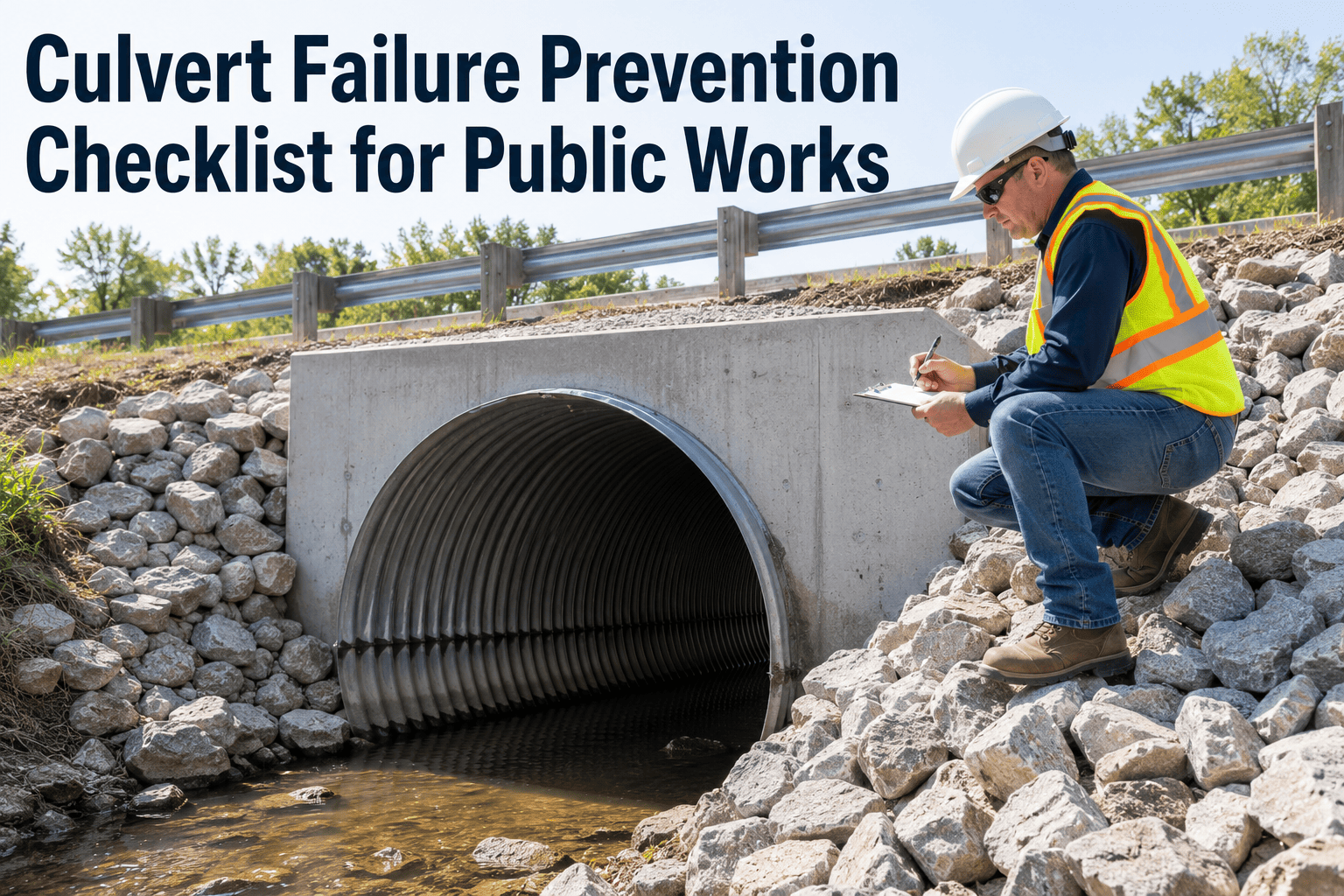
Culverts are the most neglected category of public road infrastructure in the United States — an estimated 4 million miles of drainage structures sit beneath roads with no formal inventory, no inspection schedule, and no documented condition history in most municipalities. When a culvert clogs or fails, the result is not a maintenance ticket — it is a road washout, a flooded intersection, an emergency closure, and a repair bill that routinely exceeds $50,000 per structure. Caltrans alone has identified over 212,000 culverts in its state highway system, with 11 percent rated in poor condition and requiring major rehabilitation or replacement costing $40,000 to over $1.4 million each. The preventive alternative — structured inventory, scheduled cleaning, and condition-scored inspection cycles — costs a fraction of emergency replacement and protects both the road structure and the municipality from flooding liability. Public works teams ready to build a culvert maintenance program can start a free trial or book a demo to see how OxMaint manages drainage asset inventories, inspection workflows, and cleaning schedules for municipalities.
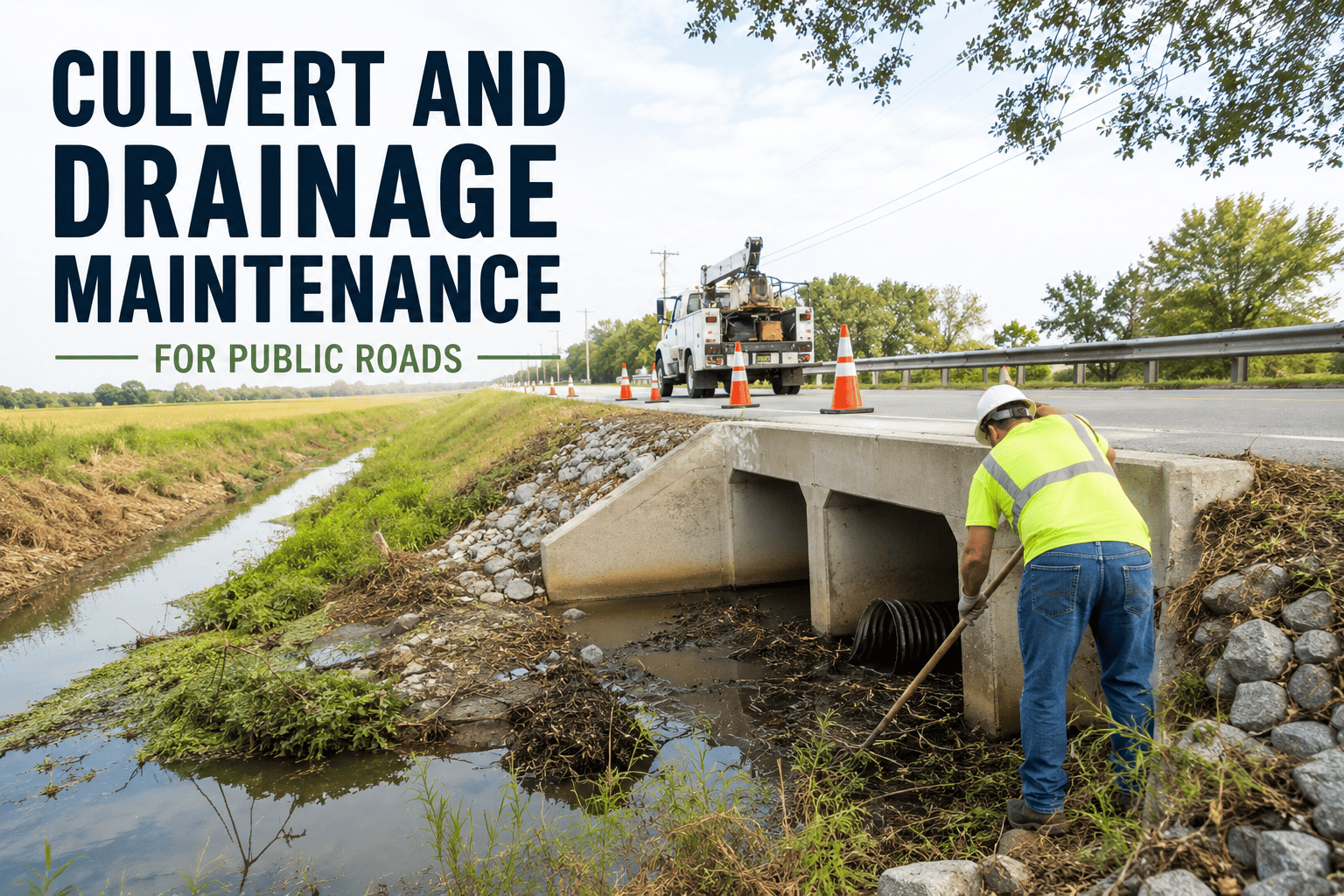
Culvert and Drainage Maintenance for Public Roads
A clogged culvert does not send a warning — it sends floodwater across the road surface. Structured drainage maintenance replaces emergency washout repairs with scheduled inspections, proactive cleaning, and condition-based capital planning.
How a Clogged Culvert Becomes a Road Washout — The 5-Stage Failure Sequence
Culvert failures are not sudden — they follow a predictable sequence that is preventable at every stage with routine maintenance. Understanding this cascade is the foundation for building an inspection and cleaning program that stops failures before they reach the road surface.
The 8-Point Culvert Inspection Checklist for Municipal Public Works
A standardized inspection captures both structural condition and hydraulic performance in a single site visit. The checklist below covers the critical assessment points used by state DOTs and recommended by the FHWA Culvert Inspection Manual — adapted for municipal and county-level programs.
Every Stage of the Failure Cascade Is Preventable with Scheduled Maintenance
OxMaint turns culvert maintenance from a reactive emergency response into a scheduled program — inventory, inspection, cleaning, and condition tracking that catches Stage 1 problems before they become Stage 5 road closures.
Culvert Material Types and Expected Service Life — Planning Replacement Timelines
Culvert material determines both the expected service life and the dominant failure mode. Corrugated metal pipe (CMP) — the most common culvert material installed in the mid-20th century — has a maximum service life of 60 to 65 years, and corrosion at the invert is the primary failure mechanism. Knowing the material and installation date of every culvert in the network is the foundation for proactive replacement planning.
| Culvert Material | Expected Service Life | Primary Failure Mode | Maintenance Priority |
|---|---|---|---|
| Corrugated Metal Pipe (CMP) | 40 – 65 years | Invert corrosion, rust-through, structural collapse | Inspect annually; prioritize if installed before 1980 |
| Reinforced Concrete Pipe (RCP) | 70 – 100+ years | Cracking, rebar exposure, joint separation | Inspect every 2 – 4 years; check joints and rebar condition |
| Concrete Box Culvert | 75 – 100+ years | Scour undermining, wing wall failure, spalling | Monitor scour at inlet/outlet; structural inspection required |
| High-Density Polyethylene (HDPE) | 50 – 75+ years | Deflection, UV degradation at exposed ends, joint separation | Check deflection and alignment; resistant to corrosion |
| Structural Steel Plate | 50 – 75 years | Bolt corrosion, plate buckling, invert wear | Inspect bolt connections and coating condition annually |
Preventive Cleaning vs. Emergency Replacement — The Cost Gap That Destroys Budgets
The cost difference between scheduled culvert cleaning and emergency replacement after failure is not incremental — it is an order of magnitude. A single emergency culvert replacement with road reconstruction can consume the annual drainage maintenance budget for an entire district. The visualization below shows the cost comparison that justifies every dollar invested in preventive culvert maintenance.
Building a Municipal Culvert Maintenance Program — 4-Phase Approach
Most municipalities do not have a formal culvert program — drainage structures receive attention only when they fail. The four-phase framework below converts reactive emergency spending into a structured maintenance cycle that extends culvert service life, prevents road washouts, and produces the asset condition data needed for capital replacement planning.
GPS-locate every culvert, catch basin, and drainage crossing in the road network. Record material type, diameter, length, installation date (if known), and road classification. This register is the foundation — inspection schedules, work orders, and capital planning all depend on it.
Inspect every inventoried structure using the 8-point checklist. Assign a condition score (good, fair, poor) based on structural integrity, hydraulic capacity, and safety risk. Photograph every inlet, outlet, and visible deficiency. This assessment establishes the starting condition for the entire drainage network.
Rank structures by a combination of condition score, road traffic volume, flood zone proximity, and downstream impact. Schedule preventive cleaning for all culverts annually; schedule repair work orders for fair-condition structures; flag poor-condition structures for capital replacement budgeting.
Log every cleaning, inspection, and repair as a timestamped record. Track condition changes over time to identify structures approaching failure. Generate 5-year capital replacement forecasts from condition trend data — giving council and budget committees defensible funding requests.
How OxMaint Manages Municipal Culvert and Drainage Programs
OxMaint applies the same structured asset management framework used for fleet and facility maintenance to drainage infrastructure — giving public works teams the inventory, inspection, scheduling, and reporting tools that culvert programs require. Teams can start a free trial or book a demo to configure their drainage maintenance program.
Catalog each drainage structure with GPS location, material type, diameter, length, installation year, and road classification. Build the asset register that makes scheduled maintenance and capital planning possible.
Field crews complete standardized inspections on mobile devices with condition scoring, deficiency notes, and geo-tagged photos that attach directly to the asset record. No paper forms, no data re-entry.
OxMaint generates cleaning work orders ranked by condition score and seasonal timing — pre-storm clearing in fall, post-melt inspections in spring — so crews address the highest-risk structures first.
Every inspection updates the condition score history. Structures trending from good to fair or fair to poor surface in priority reports before they fail — enabling proactive repair instead of emergency replacement.
Condition scores, material age, and repair history feed capital replacement forecasts. Give council and budget committees defensible funding requests backed by asset condition evidence, not guesswork.
Every inspection, cleaning, and repair is logged with date, crew, photos, and condition score. These records demonstrate reasonable care and are exportable for flood liability defense and grant applications.
Frequently Asked Questions
How often should municipal culverts be inspected?+
What is the biggest cause of culvert failure in municipal road systems?+
How do we start a culvert inventory when we have no existing records?+
When should a culvert be replaced versus repaired or relined?+
Does OxMaint support grant application documentation for drainage projects?+
The Next Storm Will Test Your Culverts Whether You Have Inspected Them or Not
Every uninspected culvert is a potential road washout waiting for the next heavy rain event. OxMaint builds your drainage inventory, inspection schedule, and capital replacement forecast so your municipality responds to storms with data — not emergency repair contracts.