Guardrail maintenance and roadside safety hardware inspection are life-safety functions every DOT, municipal public works department, and transportation agency owns — and skipped or delayed inspections routinely show up in crash-litigation discovery. A damaged guardrail provides a false sense of security and fails exactly when it is needed most, turning a survivable run-off-road event into a fatal one or a multi-million-dollar liability claim. This guide breaks down how to build a MASH-compliant guardrail inspection program, classify damage, and execute roadside barrier maintenance using a CMMS so your agency stays defensible under FHWA scrutiny. Ready to modernize your road safety barrier maintenance? You can Start Free Trial of OxMaint today.
Guardrail Inspection & Maintenance
Can your agency prove its guardrails were inspected and road-ready the day of a crash?
When litigation hits, plaintiffs request maintenance logs first. If your roadside safety hardware maintenance relies on paper checklists and memory, your municipality is carrying catastrophic, indefensible liability. Shift to a CMMS-driven guardrail management program.
The Cost of Inaction
Why Guardrail Maintenance is a Life-Safety and Liability Imperative
There are over 2.5 million miles of guardrail lining U.S. roadways. When a vehicle strikes a guardrail, the system is designed to decelerate the car safely and prevent rollover — but only if the hardware is intact. A missing end cap, a crushed blockout, or a post leaned 5 degrees out of plumb transforms the barrier into a spear or a rigid wall. Jury verdicts and settlements for guardrail-related fatalities frequently exceed $5M to $15M per incident, and a significant portion of those cases hinge on whether the municipality knew or should have known about the defect. Without a documented guardrail inspection program, agencies cannot prove they exercised due diligence.
$15M
Average Settlement for Fatal Guardrail Failure Claims
14 Days
Maximum FHWA-Recommended Window for Critical Damage Repair
35%
Of Municipal Agencies Lack Digital Maintenance Audit Trails
MASH Compliance & Standards
How to Build a Defensible Guardrail Inspection Program
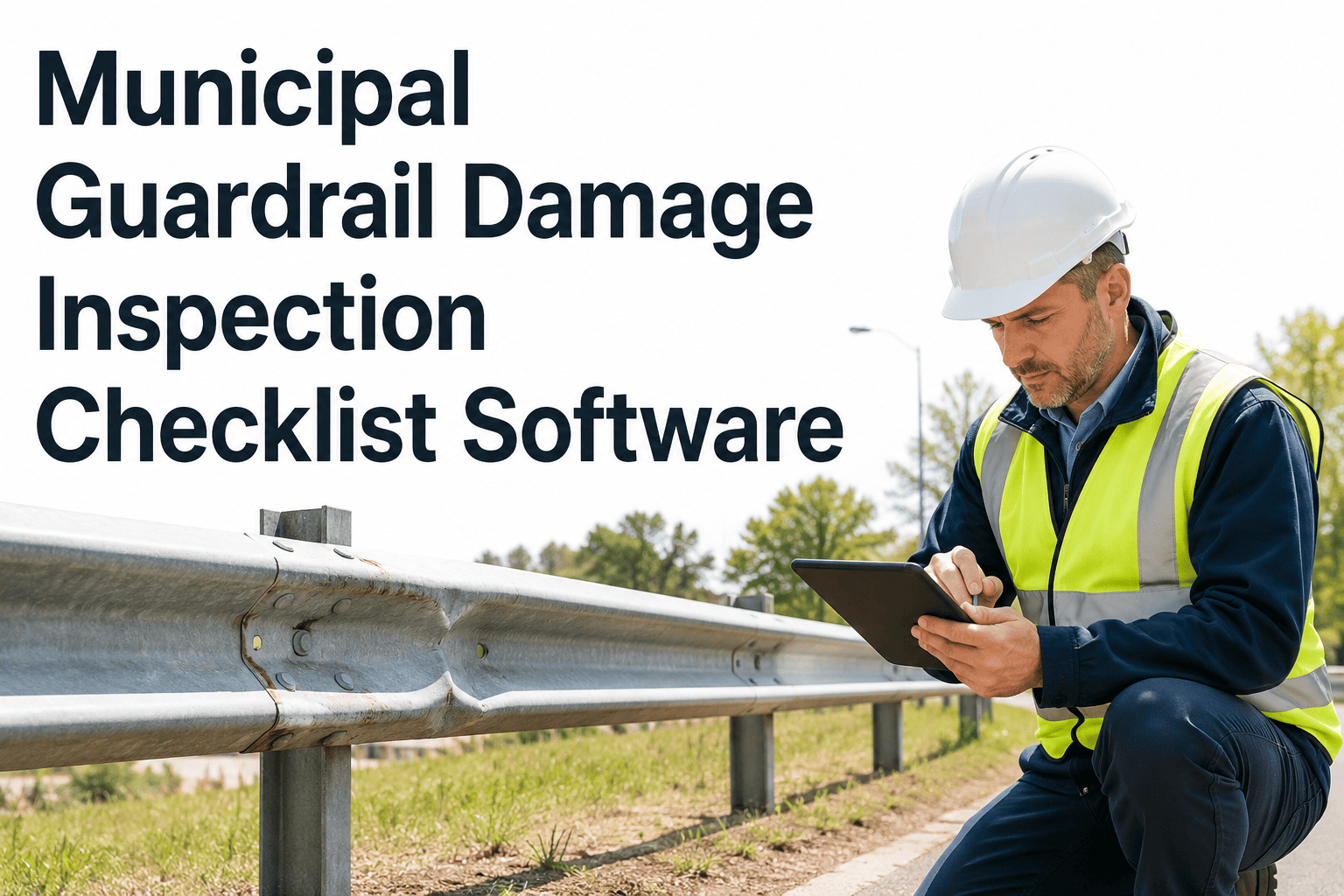
Under AASHTO and FHWA guidance, roadside safety hardware must be evaluated for compliance with the Manual for Assessing Safety Hardware (MASH). A robust guardrail inspection program requires routine, documented, and systematic evaluations. Inspectors must assess post alignment, blockout deterioration, rail height (minimum 31 inches for modern W-beam systems), splices, and end terminal functionality. Transitioning from paper forms to a digital CMMS ensures every inspection is time-stamped, GPS-verified, and instantly searchable during legal discovery.
Routine Annual Inspection
- Measure rail height from ground to top of W-beam (31" min)
- Inspect wood/plastic blockouts for rot, crushing, or missing hardware
- Check post plumbness and soil erosion around base
- Document MASH-compliant end terminal condition
- Verify reflectivity and delineator placement
Post-Crash Damage Assessment
- Log impact location and vehicle direction of travel
- Classify damage level: Minor, Moderate, or Critical
- Flag damaged energy-absorbing end terminals immediately
- Photograph upstream and downstream transition zones
- Generate priority work order within 24 hours of impact
Environmental & Seasonal Checks
- Snow plow damage assessment post-winter season
- Drainage and erosion inspection around barrier foundations
- Corrosion and rust scaling on galvanized steel elements
- Vegetation overgrowth obscuring sightlines or hardware
- Verify reflectivity after harsh weather seasons
Repair vs. Replace Matrix
Guardrail Repair Government Decision Framework
Not all damage requires a full panel replacement, but misclassifying damage leads to wasted public works budgets or catastrophic safety failures. Guardrail repair for government agencies must follow strict thresholds. Use the decision matrix below to standardize roadside hardware inspection outcomes and trigger the correct CMMS work order automatically.
| Damage Classification | Field Indicators | Action Required | Target Repair Window |
|---|---|---|---|
| Level 1: Critical | End terminal impacted, rail detached from posts, missing sections | Immediate temporary traffic control & full system replacement | Within 24-48 Hours |
| Level 2: Moderate | Posts leaning over 5 degrees, crushed blockouts, rail height below 28" | Replace damaged posts/blockouts, re-tension rail | Within 7-14 Days |
| Level 3: Minor | Surface rust, superficial scrapes, missing single bolt, faded delineators | Schedule preventive maintenance and parts replacement | Within 30-60 Days |
Protect Your Municipality
Stop gambling with paper logs and reactive guardrail maintenance.
See how OxMaint digitizes your roadside safety hardware program, automates MASH-compliant work orders, and provides bulletproof audit trails. Book a 30-minute demo tailored to your DOT or public works agency.
CMMS Software Solution
How OxMaint Powers Your Roadside Safety Maintenance
OxMaint replaces fragmented spreadsheets and clipboards with a centralized, AI-powered CMMS built for asset-intensive government operations. By mapping guardrail segments and roadside hardware as geo-located assets, OxMaint ensures your team never misses an inspection or repair deadline, dramatically reducing liability exposure.
Geo-Located Asset Tracking
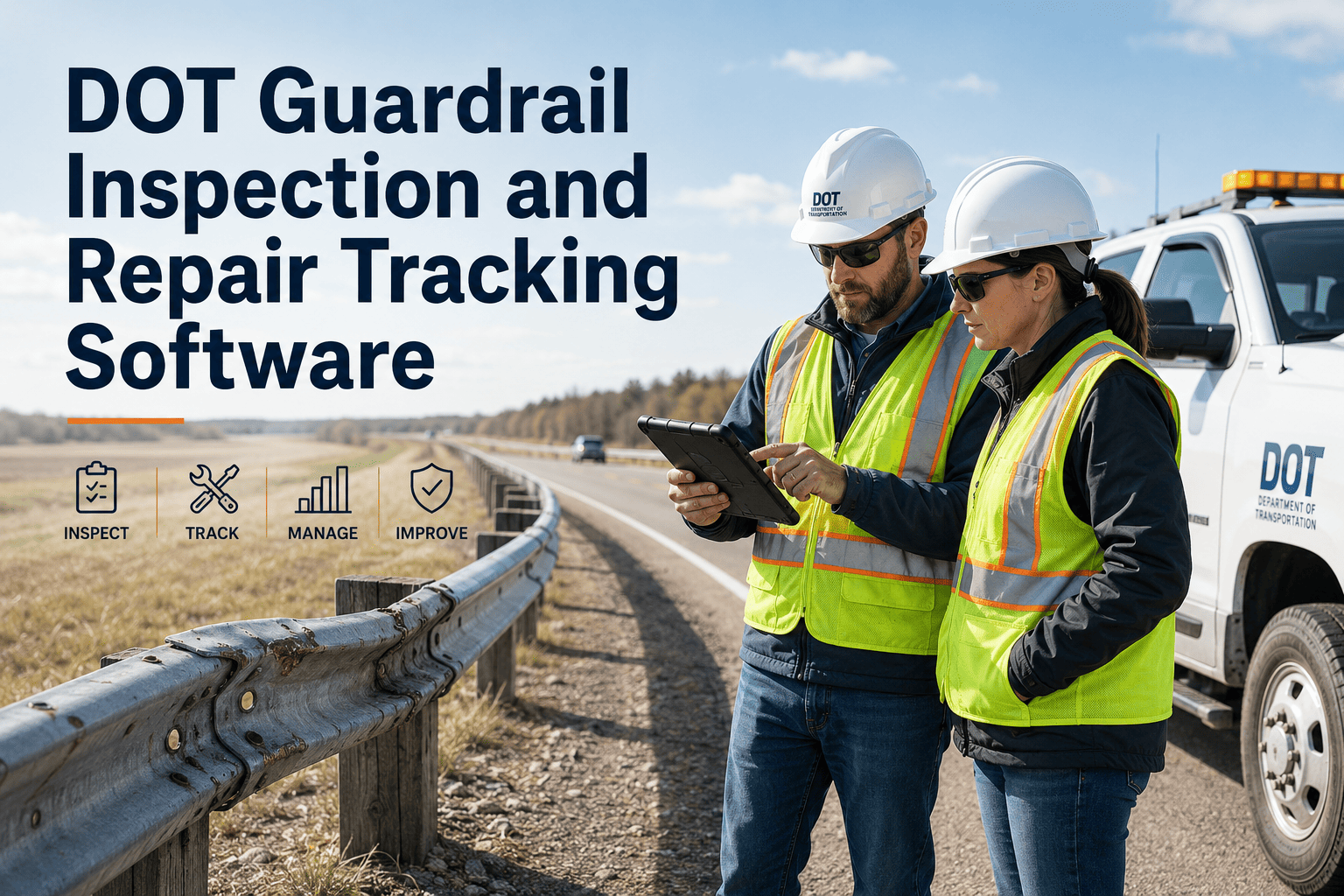
Map every guardrail segment, end terminal, and crash attenuator by GPS. Field crews tap an asset on their mobile app to log damage instantly, eliminating paperwork and pin-pointing exact repair locations.
Automated Work Orders
Trigger priority repair tickets automatically when inspectors flag Level 1 or 2 damage. Route work orders to the nearest maintenance crew with parts lists, SLA timers, and compliance checklists attached.
Tamper-Proof Audit Trails
Every inspection, signature, status change, and photo is time-stamped and immutably logged. Generate a complete defense package for any guardrail segment in seconds when facing litigation or FHWA audits.
Predictive Maintenance Analytics
OxMaint AI analyzes historical damage data, traffic volumes, and seasonal weather to predict which barrier segments are highest risk, allowing you to proactively schedule roadside safety maintenance before crashes occur.
Real-World Scenario
A Mid-Sized County Public Works Agency
A county managing 1,200 miles of roadway transitioned from annual paper windshield surveys to OxMaint. By moving guardrail public works inspections to mobile devices, they identified 340 previously unrecorded Level 2 defects in the first 90 days. Automated work orders reduced average repair time from 45 days to 12 days, cutting liability exposure by an estimated 60% and eliminating 15 hours of weekly administrative reporting.
Frequently Asked Questions
Guardrail Maintenance & Inspection FAQs
How often should guardrails be inspected?
Most DOTs and FHWA guidelines require a routine guardrail inspection at least annually, with additional post-crash and post-storm assessments. High-traffic roadways or areas with heavy snow plow activity may require quarterly or bi-annual roadside safety hardware inspections to ensure MASH compliance and catch shifted posts or damaged end terminals early.
What is the minimum height for a MASH-compliant guardrail?
For modern W-beam guardrail systems, the standard rail height is 31 inches from the ground to the top of the rail. Guardrails that have dropped below 28 inches due to pavement overlay, soil erosion, or post crushing must be flagged for immediate repair, as lower heights can cause vehicle vaulting or rollover.
How long does a municipality have to fix a damaged guardrail?
While exact statutes vary by state, best practices for guardrail repair government guidelines dictate that critical damage (impacted end terminals, missing rail sections) be repaired within 24 to 48 hours. Moderate damage should be addressed within 14 days. Leaving known hazards un-repaired beyond these windows drastically increases municipal liability. You can Start Free Trial to automate these SLA deadlines.
What is the difference between guardrail maintenance and roadside safety hardware maintenance?
Guardrail maintenance refers specifically to W-beam and thrie-beam barriers and their end terminals. Roadside safety hardware maintenance is a broader category that also includes crash cushions (attenuators), breakaway sign supports, cable barriers, and concrete median barriers. A comprehensive road safety barrier maintenance program manages all of these assets. To see how OxMaint handles both, Book a Demo today.
Can a CMMS help with FHWA compliance audits?
Yes. An AI-powered CMMS like OxMaint creates digital, time-stamped, and geo-tagged inspection records that are instantly retrievable. Instead of digging through paper filing cabinets during an FHWA audit or crash litigation discovery, agencies can export a complete, tamper-proof maintenance history for any asset in seconds, proving due diligence.
Get Started Today
Modernize Your Roadside Safety Hardware Maintenance
Join the public works agencies using OxMaint to eliminate paper inspections, cut repair cycle times, and build bulletproof audit trails. Book a personalized demo and see the platform on your road assets.
Free 14-day trial · No credit card required