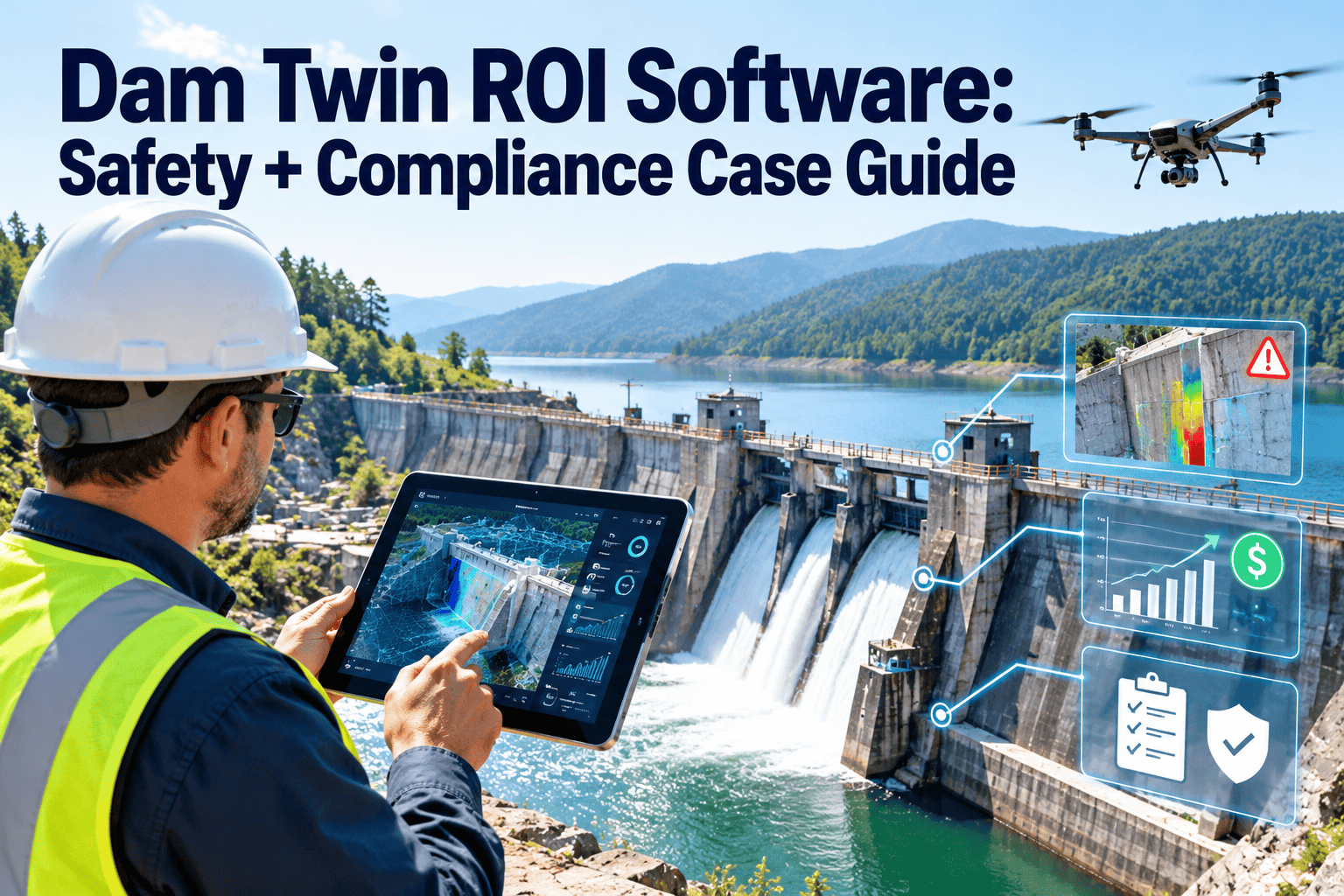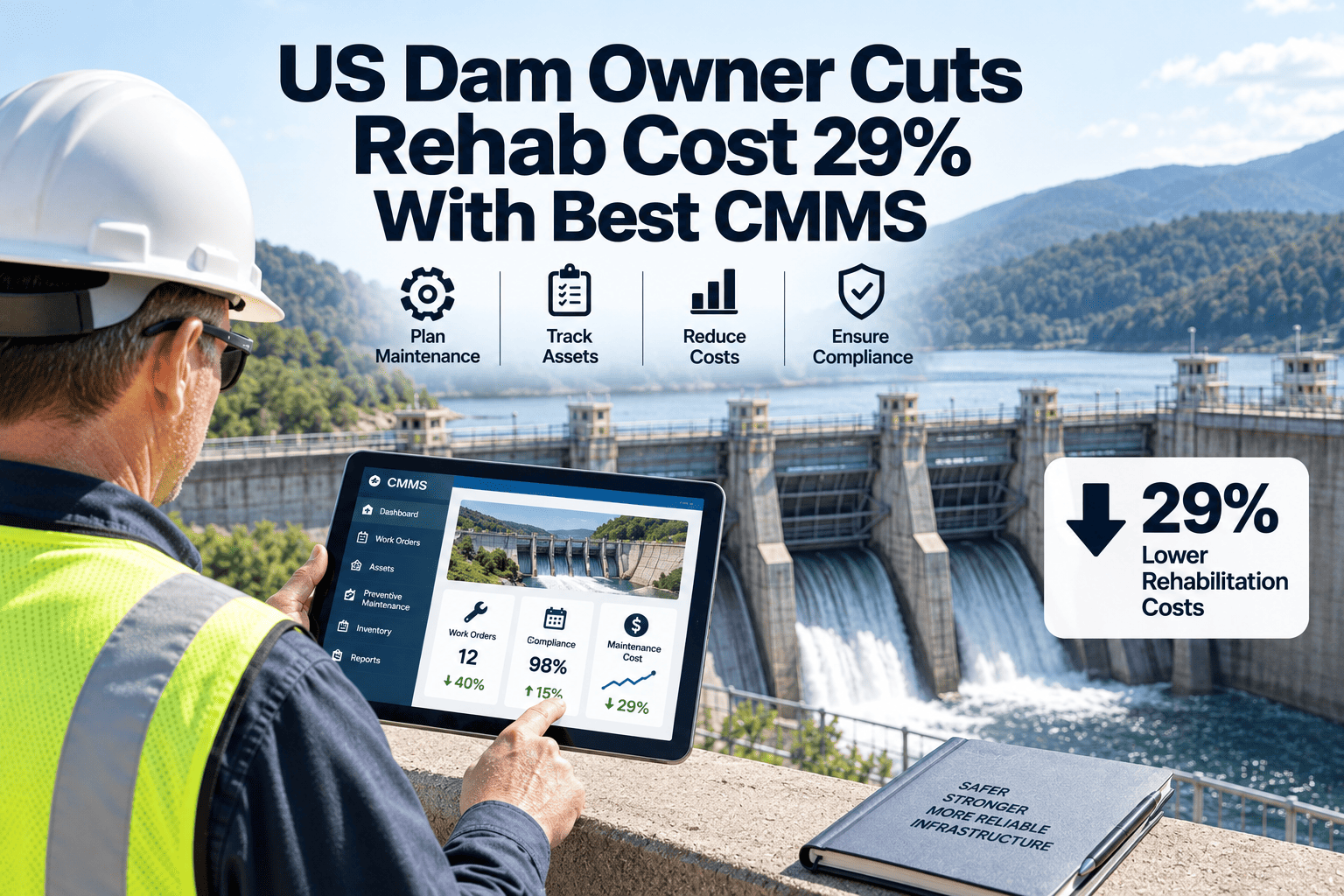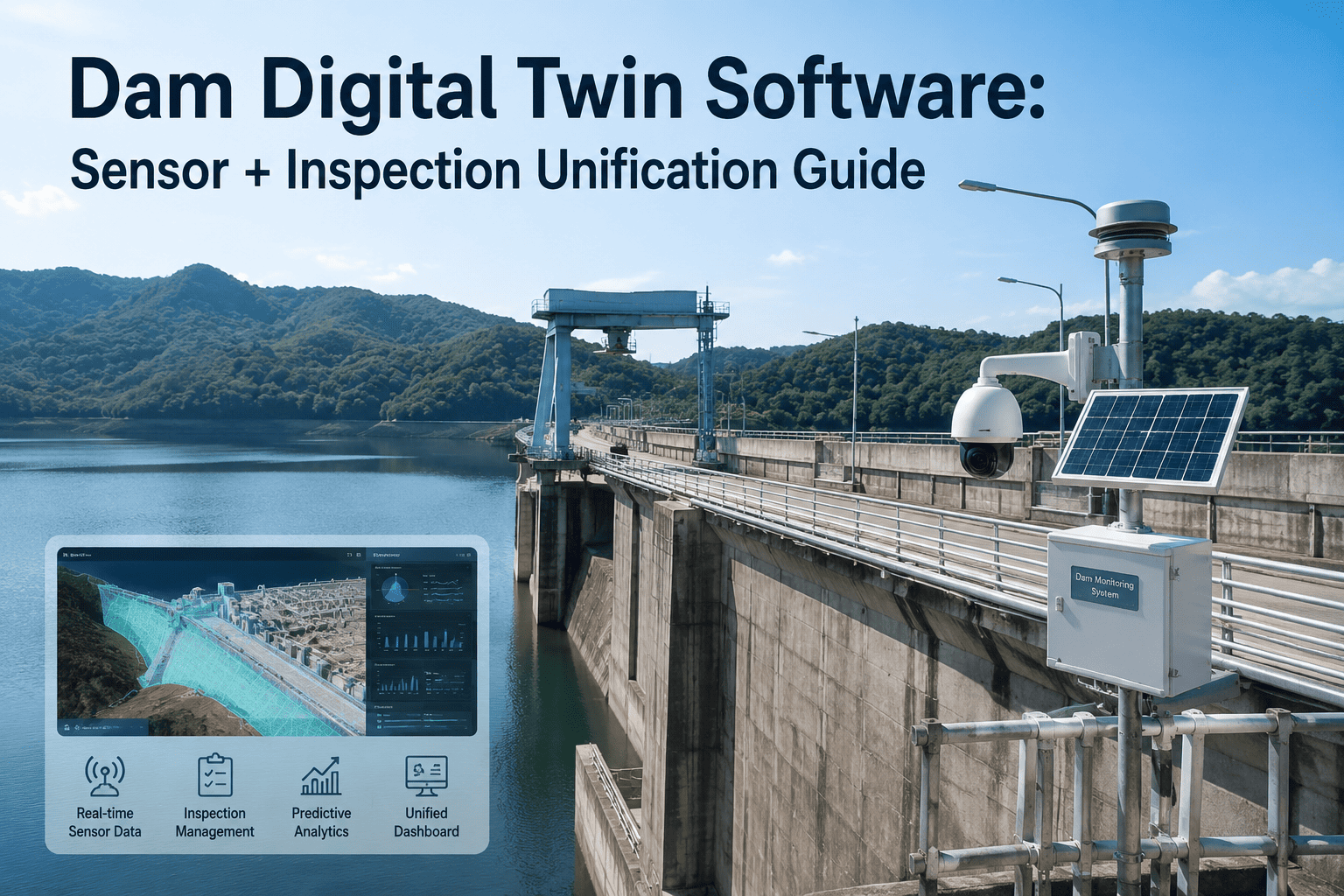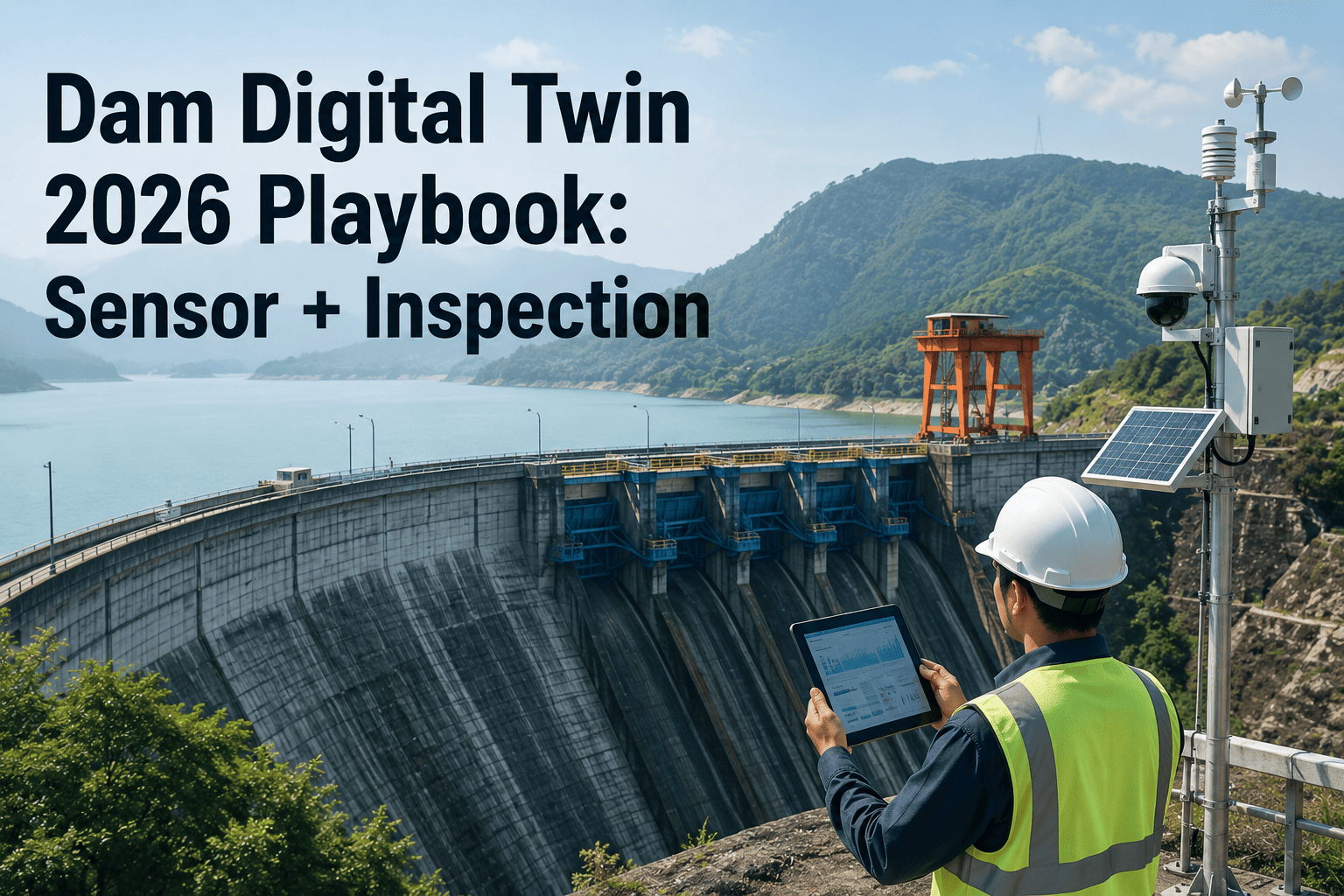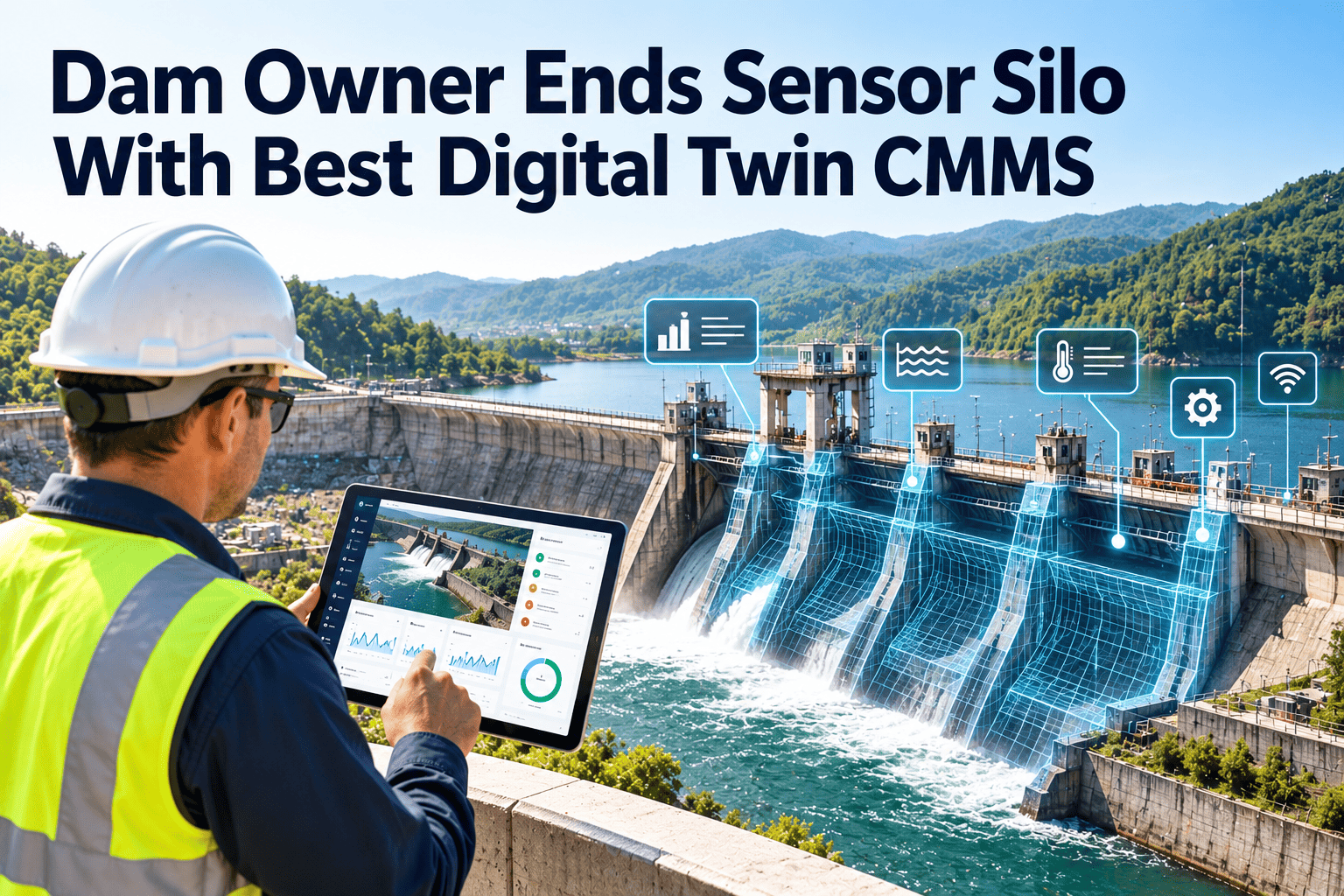
Dam safety teams collect more data than ever: piezometers, seepage weirs, inclinometers, reservoir gauges, and regular inspection findings. The problem is that these streams often live in separate tools, so a rising piezometer reading and a wet-spot inspection note about the same embankment never meet. This case study describes how a US dam owner with 12 high-hazard dams connected sensor data and inspection records through a digital twin inside a CMMS. It covers the starting problem, the rollout approach, and where the reported $4.3M annual saving came from. If your program faces a similar gap, you can book a demo to review it against your own dams.
Case Study: Dam Owner Ends Sensor Silo With Digital Twin CMMS
How a US owner of 12 high-hazard dams unified sensors, inspections, and maintenance into one asset record.
Program snapshot
- Owner type
- US dam owner
- Portfolio
- 12 high-hazard potential dams
- Starting condition
- Sensor data and inspection records in separate systems
- Solution
- Digital twin workflow inside Oxmaint CMMS
- Reported result
- $4.3M annual saving across the portfolio
Figures are as reported for this program. Savings depend on dam condition, staffing, and existing monitoring, so treat them as one example, not a guarantee.
The challenge: three silos, one dam
Instrument data
Inspection records
Maintenance work
- Engineers had to open several tools to judge one seepage concern.
- Inspection deficiencies were not tied to the instruments that could confirm them.
- Maintenance backlog was difficult to rank by dam risk.
- Emergency action plan and inspection records were hard to assemble on short notice.
Before and after the digital twin
| Area | Before | After |
|---|---|---|
| Data location | Separate sensor, report, and work tools | One asset record per dam and component |
| Anomaly response | Reading reviewed alone, inspection reviewed later | Threshold breach linked to nearby inspection history |
| Deficiency tracking | Listed in reports | Converted to work orders with owner and due date |
| Prioritization | By individual judgment | By hazard class, condition, and open findings |
| Audit readiness | Manual assembly of files | Searchable history per dam |
Map your dam portfolio into one record
The rollout, phase by phase
Asset hierarchy
Instrument linkage
Inspection integration
Work and risk workflow
Portfolio reporting
Where the savings come from
The reported $4.3M annual figure is a portfolio total. Savings of this kind generally come from a few repeatable sources.
Avoided emergency work
Targeted capital spending
Inspection efficiency
Reduced duplicate monitoring
A line-by-line breakdown should come from the owner's own cost records. Ask for it during a demo so it can be matched to your portfolio.
Capabilities used in the program
- Asset management with component-level hierarchy for each dam
- Mobile inspections with photo and location capture
- Work orders and corrective maintenance tied to findings
- Preventive maintenance for gates, drains, and instrumentation checks
- Condition-based workflows triggered by sensor thresholds
- Compliance records, dashboards, and reporting by dam