In November 2024, a major rail freight corridor faced an abrupt, week-long shutdown after a structural masonry failure inside a 19th-century tunnel went undetected during standard manual inspections. The post-incident forensic analysis revealed a sobering reality: high-resolution drone imagery of the tunnel crown had been captured months prior, but the sheer volume of data—thousands of overlapping images—meant that the hairline stress fractures preceding the collapse were overlooked by human reviewers. Simultaneously, vibration sensors near the tunnel entrance had recorded anomalous harmonic frequencies as heavy freight loads passed, but this data was siloed in a separate engineering portal, disconnected from the central maintenance system. The resulting emergency closure cost the regional economy millions and disrupted critical supply chains. A single integrated platform using Drone Inspections for Railways Tracks, Bridges, Tunnels & Stations would have fused the AI vision defect detection with sensor telemetry to flag the structural risk long before the collapse. Schedule a demo to see how Oxmaint bridges the gap between massive inspection data and preventative action.
Railway operators and public works agencies are managing aging infrastructure under the pressure of increased frequency and extreme weather. Traditional manual "walking" inspections are no longer sufficient to ensure safety across thousands of miles of track and complex station facilities. This page explores how Drone Inspections for Railways Tracks, Bridges, Tunnels & Stations improves maintenance outcomes for public agencies. Oxmaint AI integrates drones, robots, sensors, and analytics to automate inspections, reduce downtime, and keep passengers safe. By transforming raw data into a continuous digital twin, operators can move from reactive repairs to intelligent, predictive asset management. Start a free trial today to modernize your rail infrastructure programme.
The Challenge of Multi-Domain Railway Asset Management
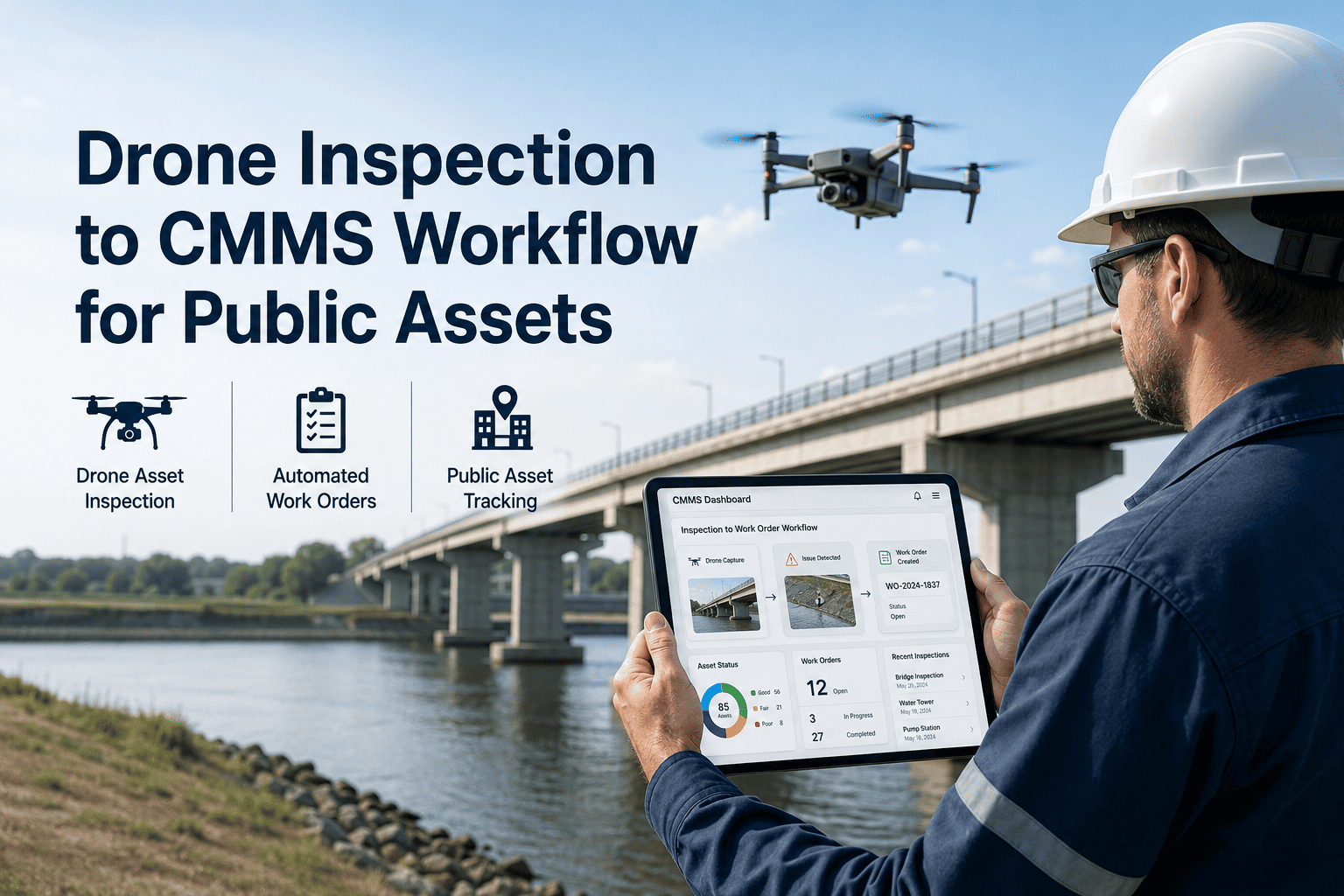
Rail networks are unique in their complexity, requiring synchronized maintenance across disparate asset types. Drones provide orthomosaic maps of tracks, LiDAR-equipped robots scan tunnel clearances, and IoT sensors monitor bridge spans for thermal expansion. When these data streams remain siloed, the compound failure signatures—such as track geometry shifts correlated with heavy rain and high-frequency freight loads—remain invisible. The Oxmaint CMMS acts as the central intelligence hub, aggregating drone inspection workflows and sensor data into a unified asset health dashboard. This allows for automated work orders to be triggered the moment a defect is identified, ensuring that maintenance crews are dispatched with precise GPS locations and visual context.
The convergence of these technologies allows Oxmaint to create a "Living Track" model. By correlating mission logs from drone inspection workflows with live IoT traffic data, the system predicts structural fatigue in bridges and tunnels before it manifests as a visible crack. This unified view ensures that public infrastructure remains resilient and that government agencies can document every inspection for compliance. Book a demo to see the Rail Hub in action.
Railway Maintenance Maturity: From Manual to Autonomous
Most railway agencies still rely on labor-intensive manual inspections that are both dangerous and prone to human error. Moving toward a usage-based, AI-driven model allows for more frequent data collection without increasing headcount or risk. Use the matrix below to evaluate your current railway asset management capabilities.
Deployment Roadmap: Digitizing Rail Corridors
Implementing a drone and AI-driven inspection program is a strategic shift that begins with the most critical bridges and tunnels. Over time, the program scales to include track geometry and station facility management. This roadmap highlights the milestones for a modern rail maintenance program.
Asset Health Dashboard & Rail KPIs
Measuring the effectiveness of your digital transformation requires tracking specific operational metrics. These KPIs allow railway directors to justify investments and demonstrate improved safety levels to regulatory bodies. Schedule a demo to see these live dashboards.
Expert Perspective: Intelligence Over Intuition
Before Oxmaint, our bridge inspection program was a race against the clock. We were using bucket trucks and scaffolding to inspect spans, which meant constant track closures and high risks for our engineers. By deploying drone inspection workflows and integrating them into our CMMS, we’ve achieved something remarkable: we can now 'see' the health of our entire network in real-time. Last year, the AI vision defect detection flagged a hairline fissure in a bridge pier that would have been invisible to the naked eye for another two years. We fixed it for $50k during a scheduled maintenance window. Had it failed, the reconstruction would have cost $12M and closed a major freight line for six months. The ROI on moving to a digital twin and IoT-based model isn't just about money—it's about absolute network reliability.
The future of railway asset management lies in the seamless fusion of hardware and software. Drone Inspections for Railways Tracks, Bridges, Tunnels & Stations provide the visual intelligence, while IoT monitoring provides the physical load data. Oxmaint’s CMMS integration brings these together, giving government infrastructure owners the tools to maintain safety, optimize budgets, and eliminate the "guessing game" of aging infrastructure. Start your free trial today to begin your journey toward predictive rail excellence.