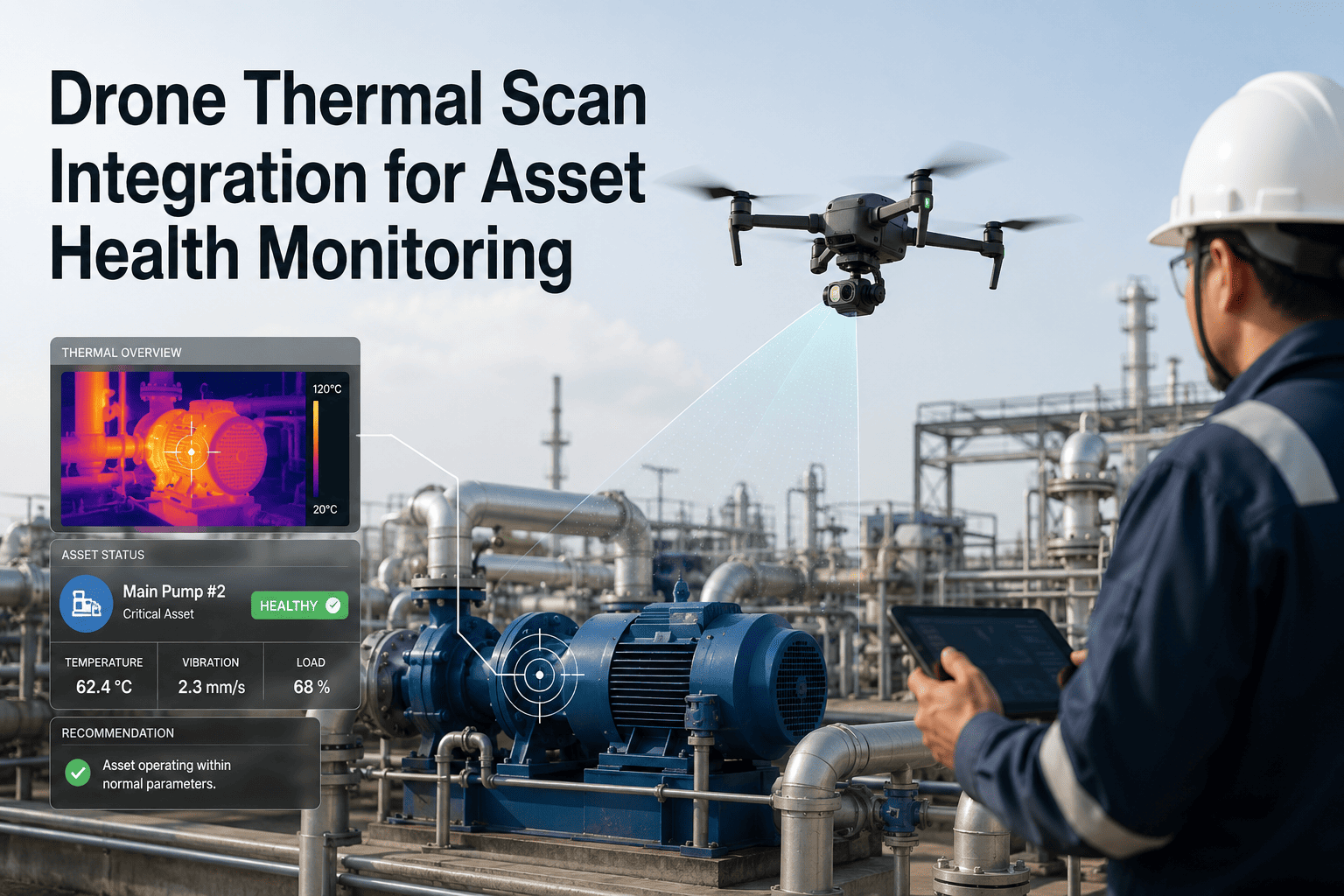
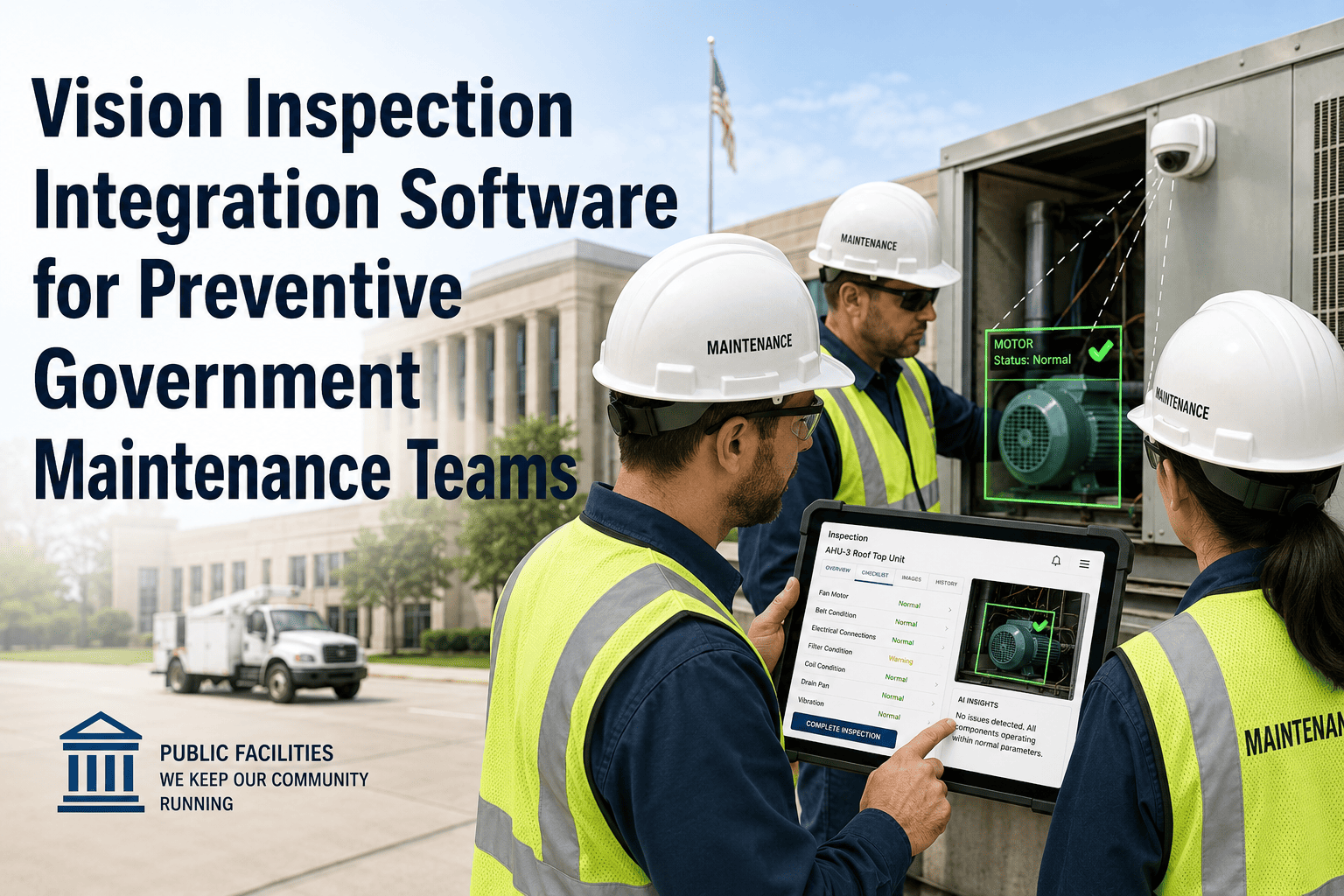
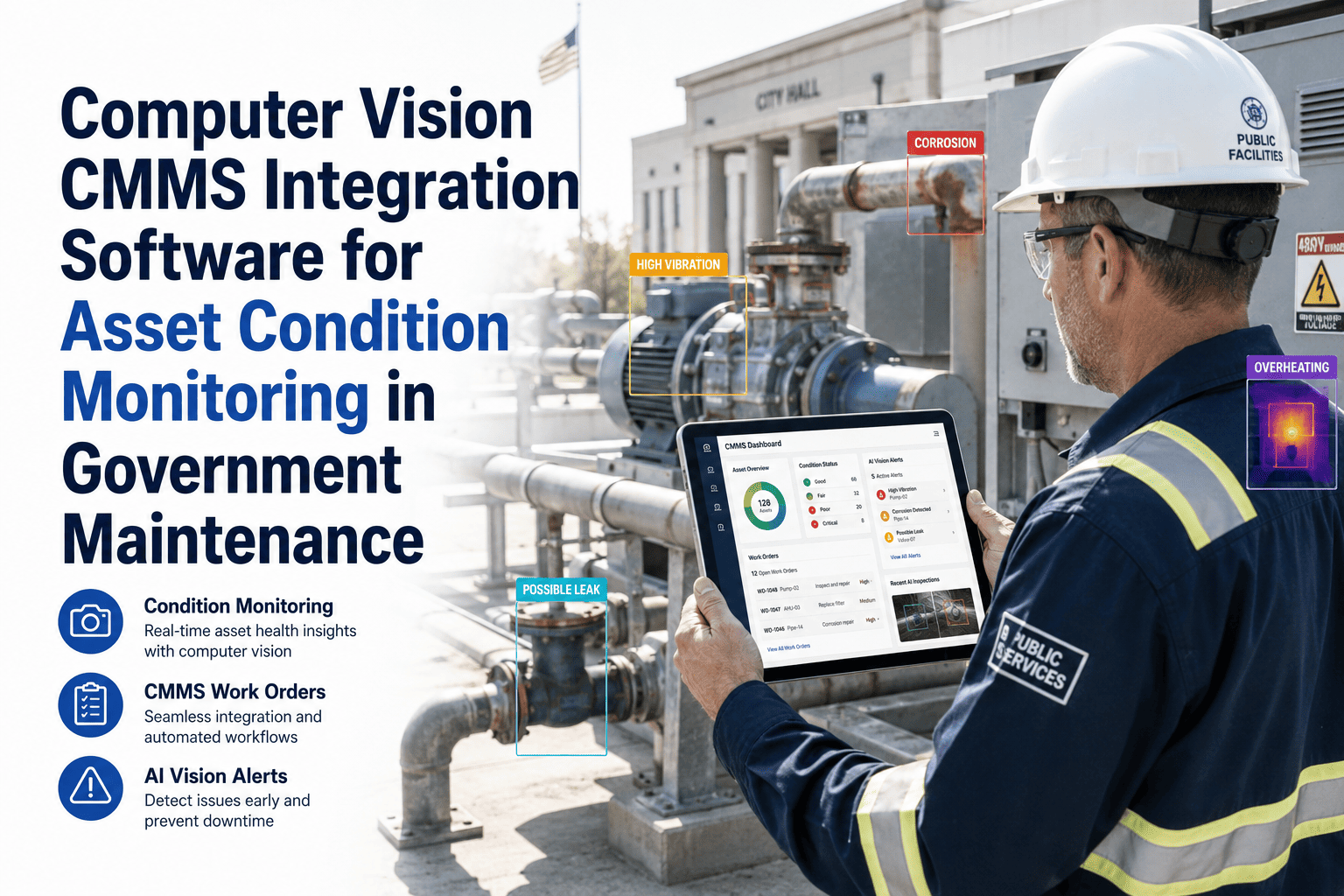
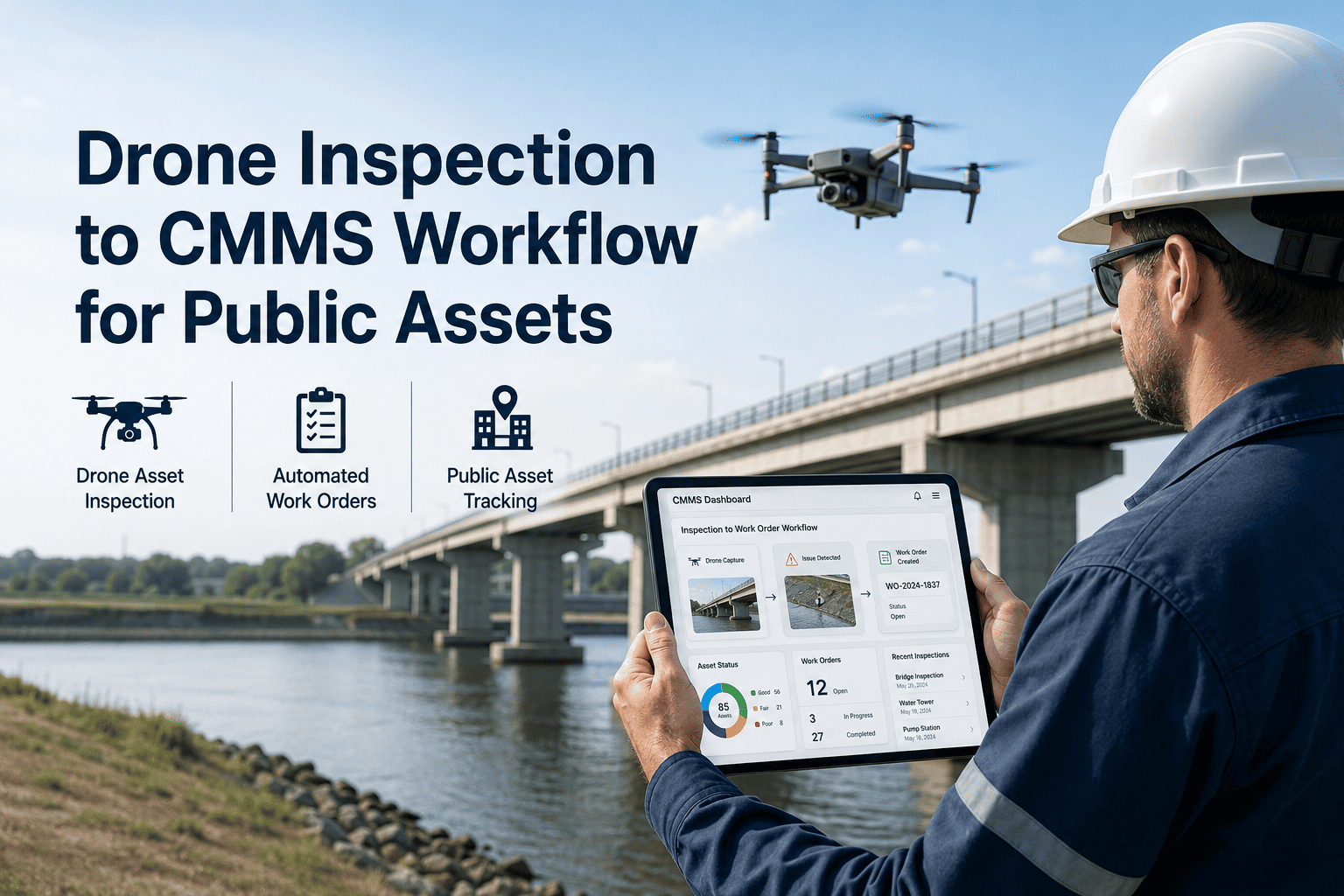
A bridge deck can look perfectly fine in a visual photo while delamination is already spreading underneath the surface — the kind of damage that only shows up as a temperature differential, not a crack you can see. Government infrastructure teams responsible for bridges, water towers, and public buildings rarely have the budget to thermal-scan everything on foot, so most subsurface deterioration goes undetected until it becomes a visible, expensive problem. A drone-mounted thermal camera captures that differential across an entire structure in one pass. OxMaint reads the thermal data, scores each asset's condition, and tracks that score scan over scan so a slow decline gets caught long before an emergency repair. Book a demo to see how a thermal scan becomes an asset health record.
Drone Thermal Scan · Asset Health Monitoring · Government CMMS
See the Damage That Hasn't Reached the Surface Yet
OxMaint turns drone thermal scans of bridges, water towers, and public buildings into a tracked asset health score, not a one-time PDF report.
What a Thermal Differential Usually Means
Normal RangeWatchAnomaly
Bridge Deck
Warm differential often indicates delamination or trapped moisture below the surface.
Water Tower
Cold spots on the shell can point to failing insulation or coating breakdown.
Electrical Cabinet
Localized hot spots flag loose connections before a breaker trips.
Roof Membrane
Warm patches after sundown usually trace back to trapped moisture intrusion.
A single thermal scan is a snapshot. The real value comes from comparing this quarter's scan to last quarter's, asset by asset, to see what is actually getting worse.
Asset Health Score Tracked Scan Over Scan
Example: a bridge deck's health score declining across four quarterly scans — the kind of trend that triggers a planned repair before an emergency closure.
Visual Inspection Alone vs Thermal Scan + OxMaint
| Capability | Visual Inspection Only | Thermal Scan + OxMaint |
| Subsurface defect detection |
Not visible until it reaches the surface |
Flagged as a temperature differential first |
| Condition over time |
Each report is a standalone document |
Health score tracked and compared scan over scan |
| Repair prioritization |
Based on what is visibly worst today |
Based on which assets are declining fastest |
| Record for budget planning |
Scattered PDFs across different inspections |
One asset history feeding capital planning |
Expert Review
"Thermal imaging is most useful when it's read as a trend, not a single report. A bridge deck that's a little warmer than last year's scan in the same spot is the signal worth acting on — that pattern is easy to miss if every scan sits in its own folder instead of one continuous asset record."
Neha Sharma — Facility Operations Consultant, OxMaint
Frequently Asked Questions
What kind of defects does a drone thermal scan actually catch that a visual inspection misses?
Thermal scans reveal subsurface issues like bridge deck delamination, trapped roof moisture, and insulation failure on water towers — problems that show up as a temperature differential well before any visible crack or stain appears.
Start a free trial to review supported thermal data formats.
How does OxMaint calculate an asset's health score from thermal data?
Each asset's thermal readings are compared against its own baseline and prior scans, with the rate and direction of change feeding into a single health score that's easier to track than raw temperature data alone.
Can thermal scan findings be linked directly to a repair work order?
Yes. When a thermal anomaly crosses a configured threshold, OxMaint creates a work order with the scan image and location attached, so the finding moves straight into the repair queue.
Book a demo to see this workflow in action.
How often should government infrastructure assets be thermal-scanned?
Frequency depends on asset type and age, but quarterly or seasonal scans are common for bridges and water towers, since trend tracking needs more than one data point per year to be meaningful.
Can thermal scan history support capital budget planning across a portfolio of assets?
Yes. Tracked health scores across multiple assets let planning teams compare decline rates and prioritize capital repair budgets by actual urgency instead of visible condition alone.
Sign up free to start tracking your asset portfolio.
Catch the Decline Before It Becomes an Emergency Repair
Thermal data is only useful if someone is tracking the trend. OxMaint turns every scan into part of one continuous asset health record.