When a pumper rolls out of the bay or a unit is dispatched to a cardiac call, there is zero margin for a no-start, a brake fade, or a hydraulic failure mid-scene. Emergency vehicle fleet readiness is the operational KPI that translates directly into response time, on-scene capability, and community survivability outcomes — yet most agencies still manage apparatus with clipboards, spreadsheets, and overdue service reminders. NFPA 1911, OEM periodicity schedules, and a CMMS-driven emergency fleet program exist precisely to close that gap. This guide breaks down the inspections, PM intervals, and software backbone that keep fire, ambulance, and rescue availability at the 95 percent-plus threshold response models actually assume — and you can put it into practice today when you Start Free Trial.
When a 911 call drops, will every apparatus in your bay start on the first key turn?
A single out-of-service engine can push a station's first-due response time past the 8-minute NFPA 1710 threshold before anyone realizes the rig never left. Readiness is not a maintenance metric — it is a life-safety outcome.
The baseline standard every emergency fleet must clear
NFPA 1911 defines the inspection, maintenance, testing, and retirement requirements for fire apparatus — and increasingly, agencies are extending its framework to ambulances and rescue units because the discipline translates directly to uptime.
Each apparatus receives a documented walk-around at shift change: fluids, tires, brakes, lights, sirens, SCBA seats, and equipment inventory. NFPA 1911 Ch. 6 requires records retained for the life of the vehicle.
Pumpers run a static and pressure test at rated capacity, logged with discharge pressures, intake readings, and elapsed time. Anomalies trigger immediate service — no apparatus returns to front-line status with a flagged pump.
A certified inspector validates pump capacity, pressure-relief operation, priming system, and chassis braking. The NFPA 1911 annual is non-negotiable for insurance rating continuity and ISO credibility.
Pump tank, plumbing, and pressure vessels undergo hydrostatic testing at 1.5× rated working pressure. This is the most-missed milestone in paper-based fleets and a top root cause of mid-incident pump failure.
A formal condition appraisal determines front-line vs. reserve status. Apparatus past 25 years must be retired or re-certified — a timeline most volunteer departments miss without automated lifecycle alerts.
Aerial device dielectric, ladder, and elevation tests per NFPA 1914. Ladder rungs, cables, hydraulic cylinders, and rotation gears are non-destructively tested and NDT-loggged for the apparatus life record.
Service intervals that match the duty cycle
A Type I ambulance on a 40,000-mile rural circuit does not share a PM schedule with a quint that logs 4,200 miles a year but runs the pump 200+ hours. Match intervals to severity, not just odometers.
| Asset Class | Daily Check | Preventive Interval | Critical System | Bench Uptime |
|---|---|---|---|---|
| Type I/III Ambulance | Shift walk-around | 5,000 mi / 200 hrs | Module HVAC, O2 system, cot hydraulics, alternator | 96%+ |
| Pumper / Engine | Shift + pump-ready | 250 hrs / 6 months | Pump transmission, intake relief, foam proportioner | 95%+ |
| Aerial / Quint | Shift + aerial visual | 500 hrs / 12 months | Ladder cables, hydraulic elevation, turntable brake | 94%+ |
| Rescue / Heavy Rescue | Shift walk-around | 5,000 mi / 6 months | Hydraulic rescue tool PTO, generator, air cascade | 95%+ |
| Battalion / Command | Weekly | 7,500 mi / 6 months | Comms rack, inverter, scene lighting | 98%+ |
| Tanker / Tender | Shift + tank visual | 250 hrs / 6 months | Dump valve, tank-to-pump, baffles, CVRA braking | 95%+ |
What downtime actually costs a community
Fleet availability math is unforgiving. Every out-of-service apparatus either extends response geometry (a neighboring unit covering more area) or removes a capability from the run card entirely.
Measured monthly per station and rolled up department-wide. Anything below 95 percent triggers a mutual-aid dependency in most NFPA 1710 response models.
Tracked per asset class. A healthy pumper runs 600+ operating hours between unplanned failures; under 300 indicates deferred PMs or an end-of-life drivetrain.
A mid-size department running 22 front-line apparatus at 91 percent readiness averages two units out of service on any given shift. Modeling mutual-aid mileage, overtime backfill, and ISO credit impact, that 4-point gap equals roughly $340,000 in annual exposure — before any single catastrophic roadside failure. Bringing readiness to 96 percent via CMMS-driven PM compliance typically recovers that cost inside 9 months.
The software backbone that makes readiness repeatable
Paper logs fail at the moment they matter most — the 0200 callout when the oncoming driver has to trust the previous shift's word that the brakes were fine. A CMMS closes that loop digitally.
Asset Registry & Lifecycle Baseline
Every apparatus carries a full digital record: VIN, OEM specs, pump hours, warranty, brake CVRA dates, tire age, and component-level serials. NFPA 1911 records survive any personnel turnover.
Automated PM Scheduling by Severity
Intervals trigger on mileage, pump hours, calendar days, or any combination. A quint that ran the pump 80 hours during a 3-day wildland deployment automatically pulls its next service forward.
Mobile Shift Inspection Capture
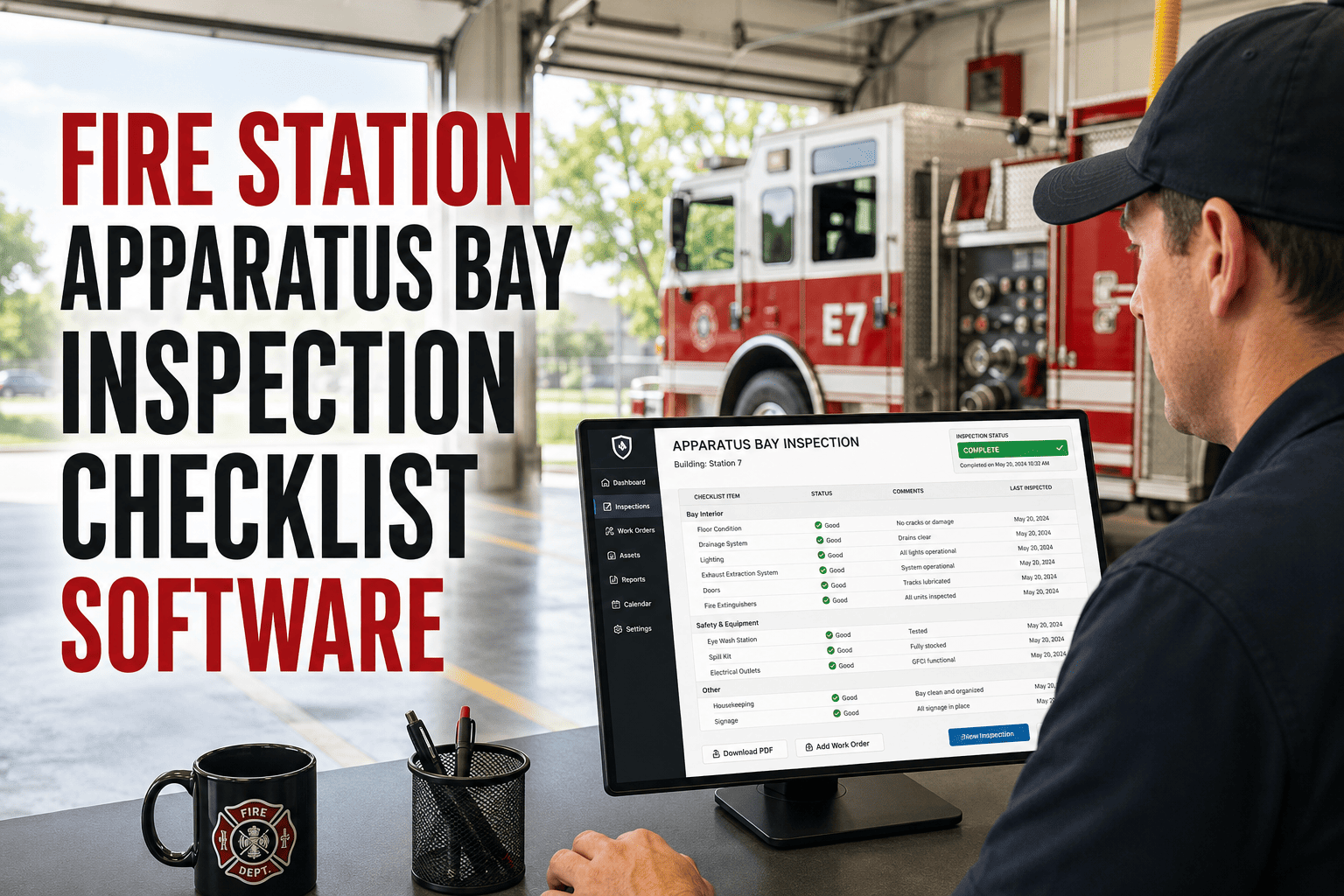
Drivers complete the NFPA 1911 daily check on a tablet, with defects photo-tagged and routed instantly to the shop floor. No apparatus leaves the bay with an open critical defect.
Parts, Vendors & Outside Repair Authorizations
Stock levels for filters, brake pads, and cot hydraulics auto-decrement on work-order close. Vendor turn-around times are tracked, so the fleet officer knows which dealerships actually keep apparatus in service.
Readiness Dashboard for Command Staff
A live view shows green/amber/red per station, per asset class, and per capability (pump, aerial, ALS transport, rescue). The chief sees the same number the shop supervisor sees — no reconciliation meetings.
Stop learning about brake failure at 0200 on a cardiac call.
Move your emergency fleet onto a CMMS that catches the defect at the shift check — not at the scene.
Emergency fleet readiness, answered
Does NFPA 1911 apply to ambulances and rescue units, or only fire apparatus?
Strictly, NFPA 1911 governs fire apparatus and NFPA 1917 covers ambulances — but the inspection cadence, record-retention, and testing discipline of 1911 are widely adopted across all emergency fleets because the operational stakes are identical. Most CMMS platforms, including oxmaint.ai, let you apply 1911-style workflows to every asset class so a single program covers the entire public safety fleet.
What fleet availability percentage should our department target?
Career departments following NFPA 1710 response models should hold 95 percent or higher front-line availability. Volunteer and combination systems typically target 93 percent. Below 90 percent, mutual-aid dependency becomes structural and ISO credit ratings can be affected — a hidden cost that rarely shows up in a maintenance budget line.
How quickly can a CMMS improve readiness for a paper-based fleet?
Most agencies see a measurable availability lift within 60 to 90 days — primarily by surfacing overdue PMs and open defects that paper logs had buried. A 4 to 6 percentage-point gain inside the first quarter is typical for a 20-asset department moving from spreadsheets to a CMMS like the one you can pilot when you book a demo.
What is the single most-missed PM milestone in emergency fleets?
The five-year hydrostatic test on pump assemblies and pressure vessels. It requires a certified contractor, downtime of one to three days, and is easy to defer when it is tracked on a paper calendar. CMMS alerts tied to in-service date eliminate the deferral pattern that causes mid-incident pump failures.
How do we justify the cost of a CMMS to a city council or fire board?
Frame it in three buckets: avoided towing and roadside repair (typically $8K–$25K per incident), reduced overtime backfill from out-of-service apparatus, and preserved ISO rating. Most mid-size departments recover the CMMS subscription cost inside the first quarter through avoided roadside failures alone.
Every apparatus in your bay should answer the call.
Stand up a CMMS-driven emergency fleet program in days, not quarters — and put readiness above 95 percent where it belongs.
Free 14-day trial · No credit card