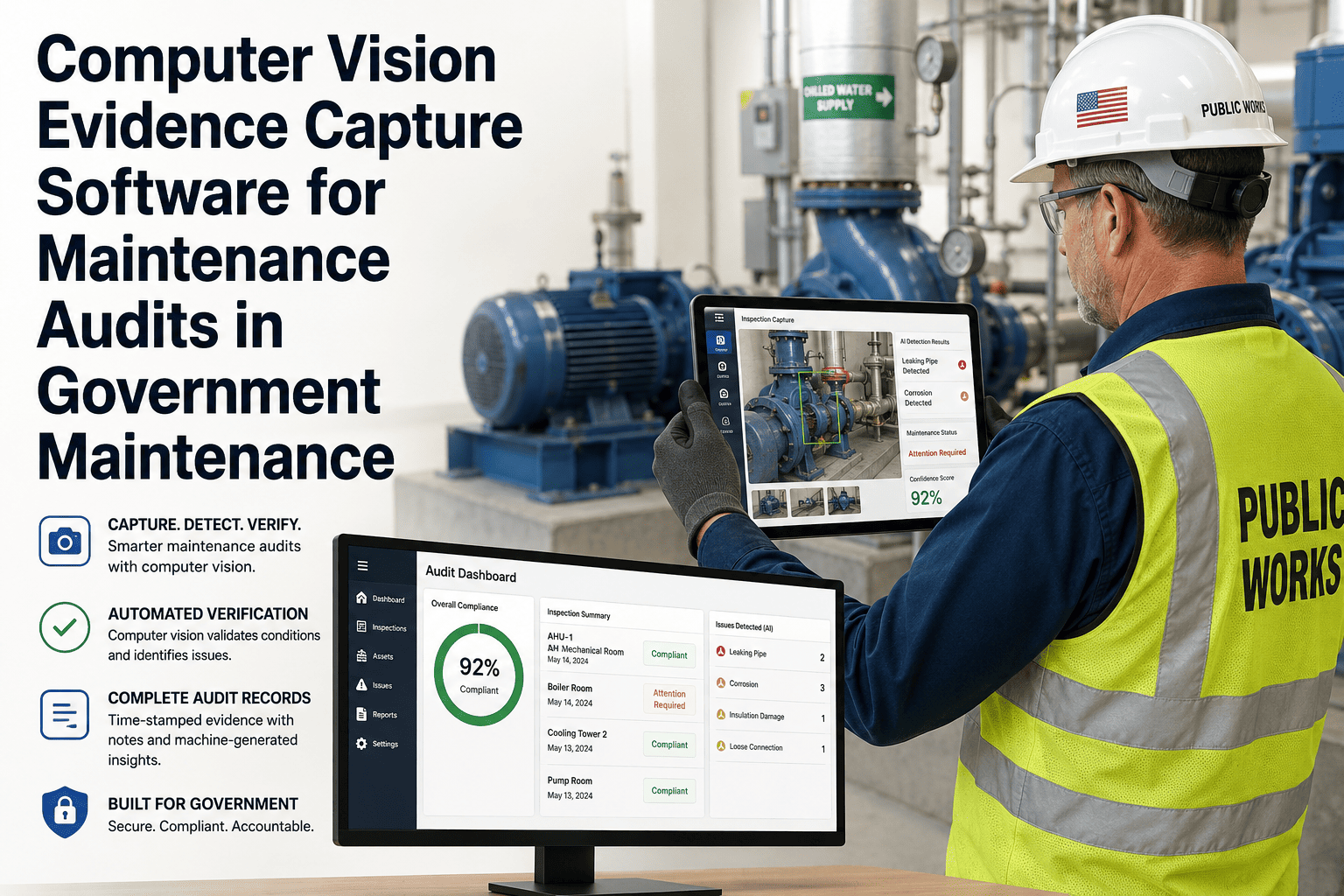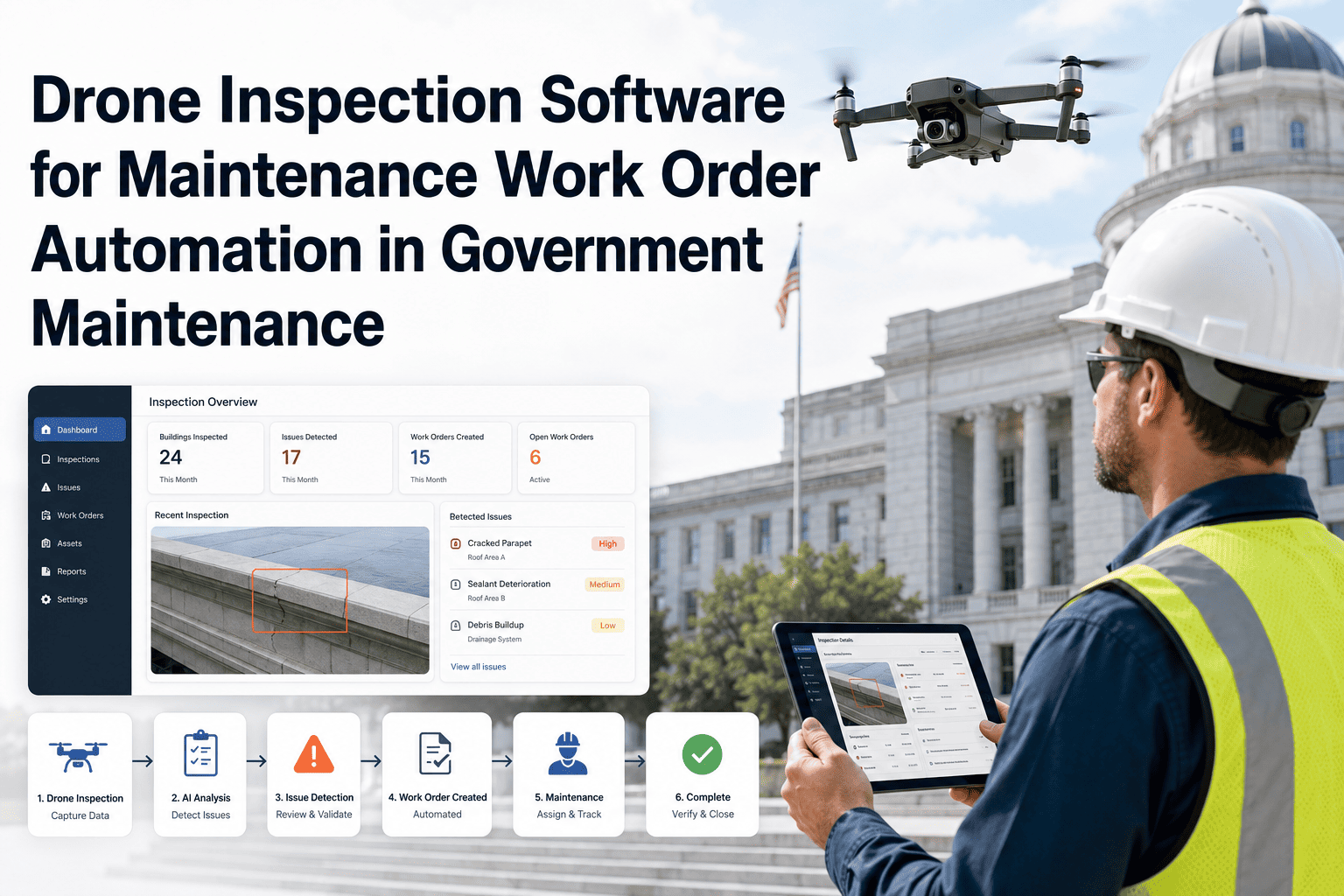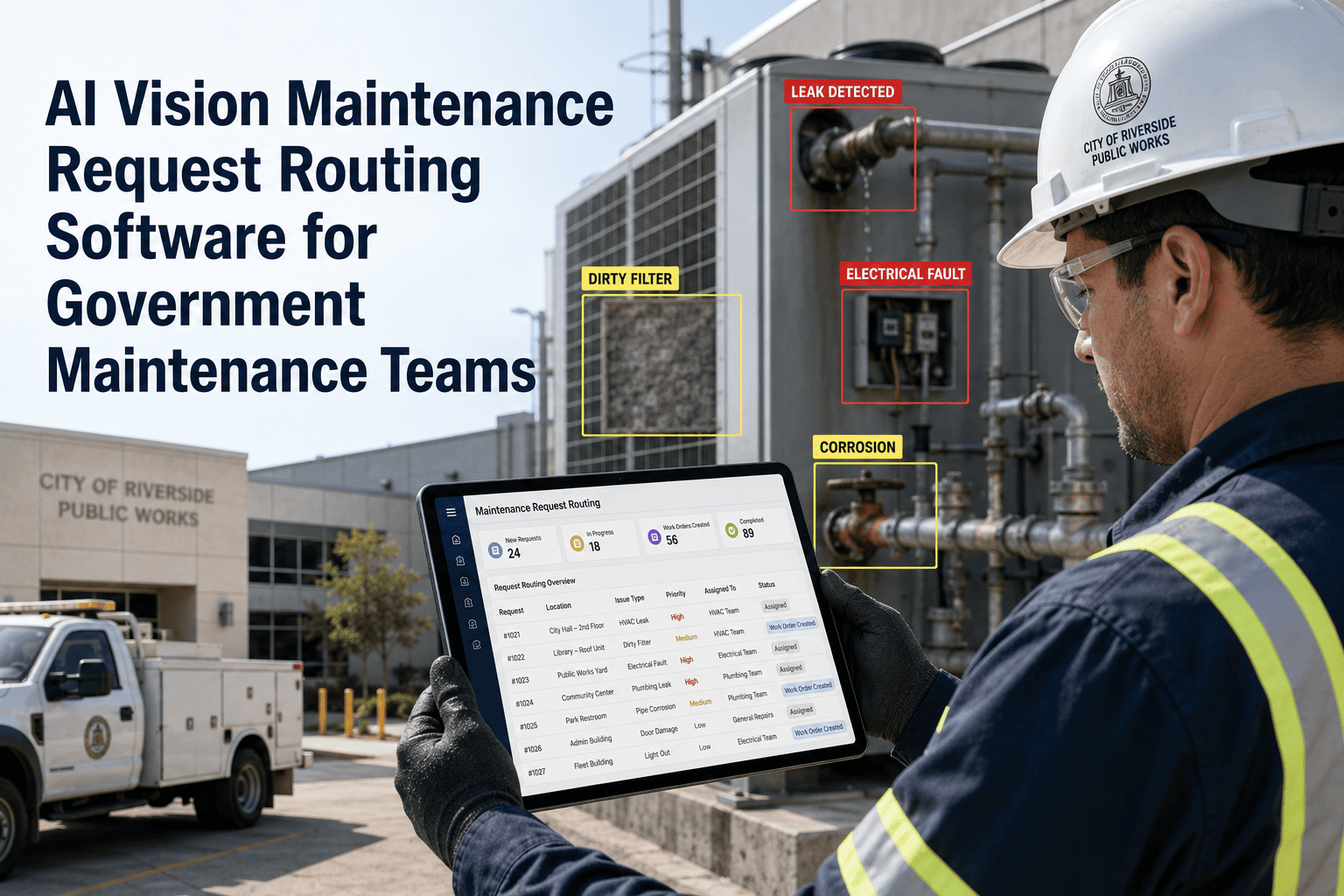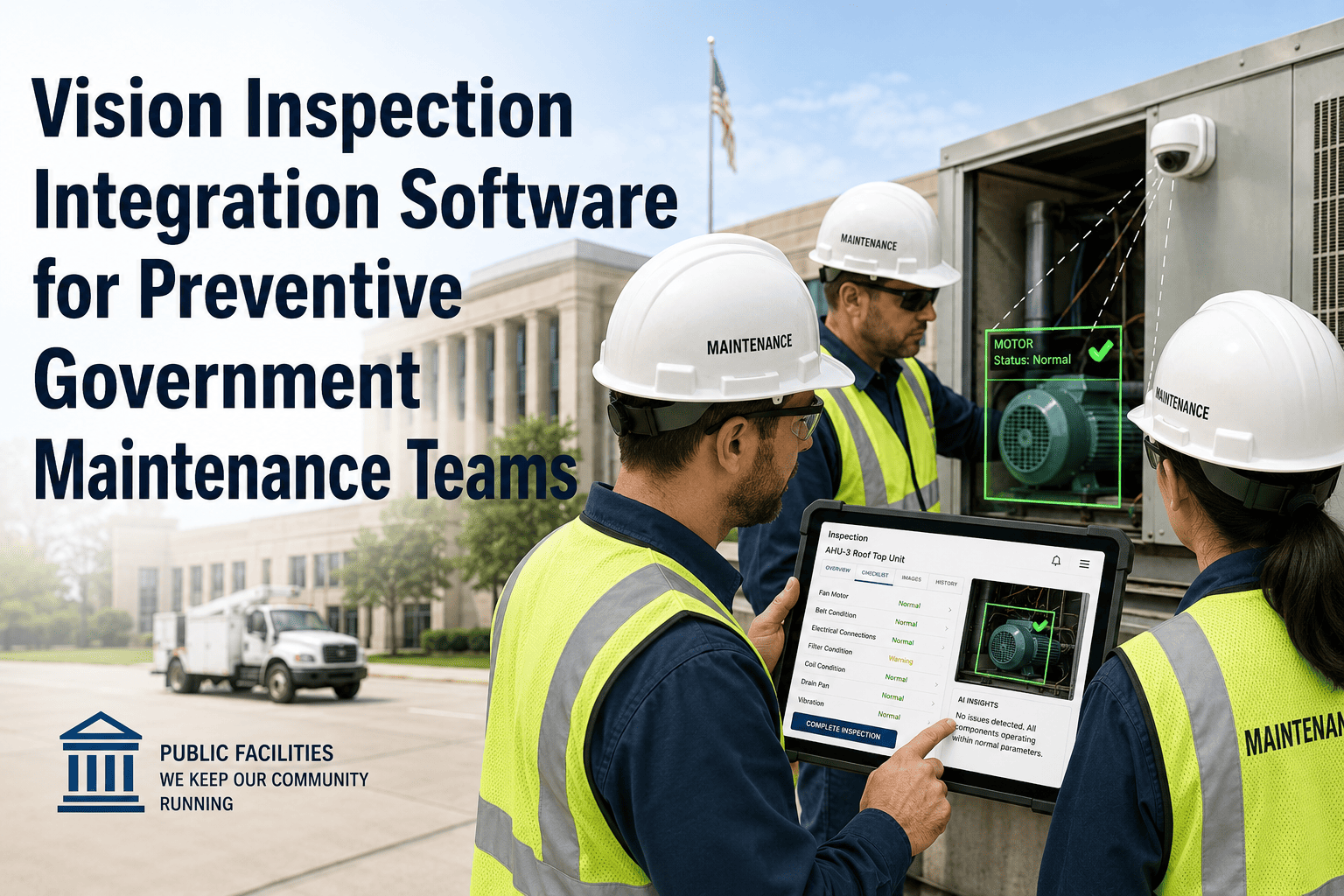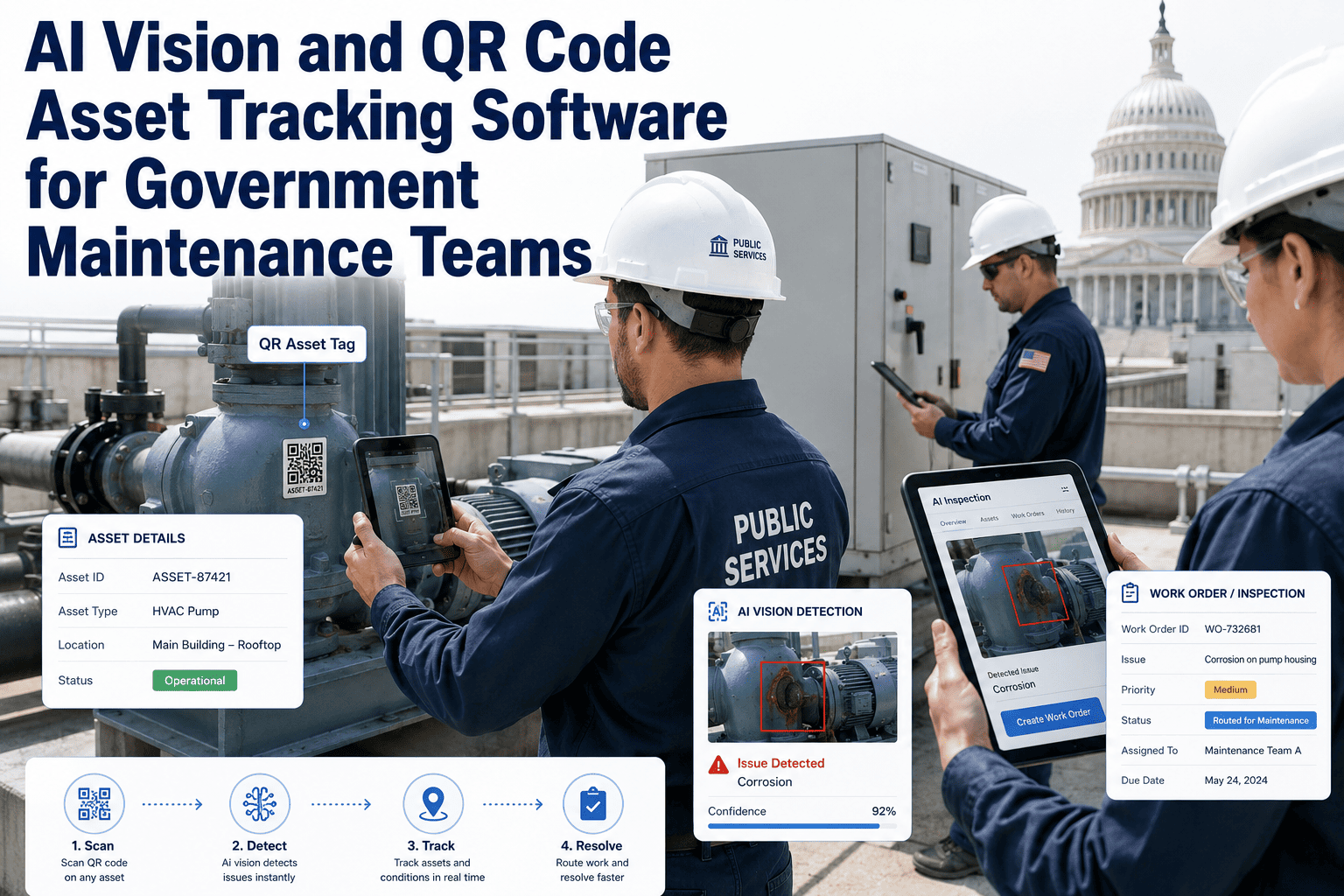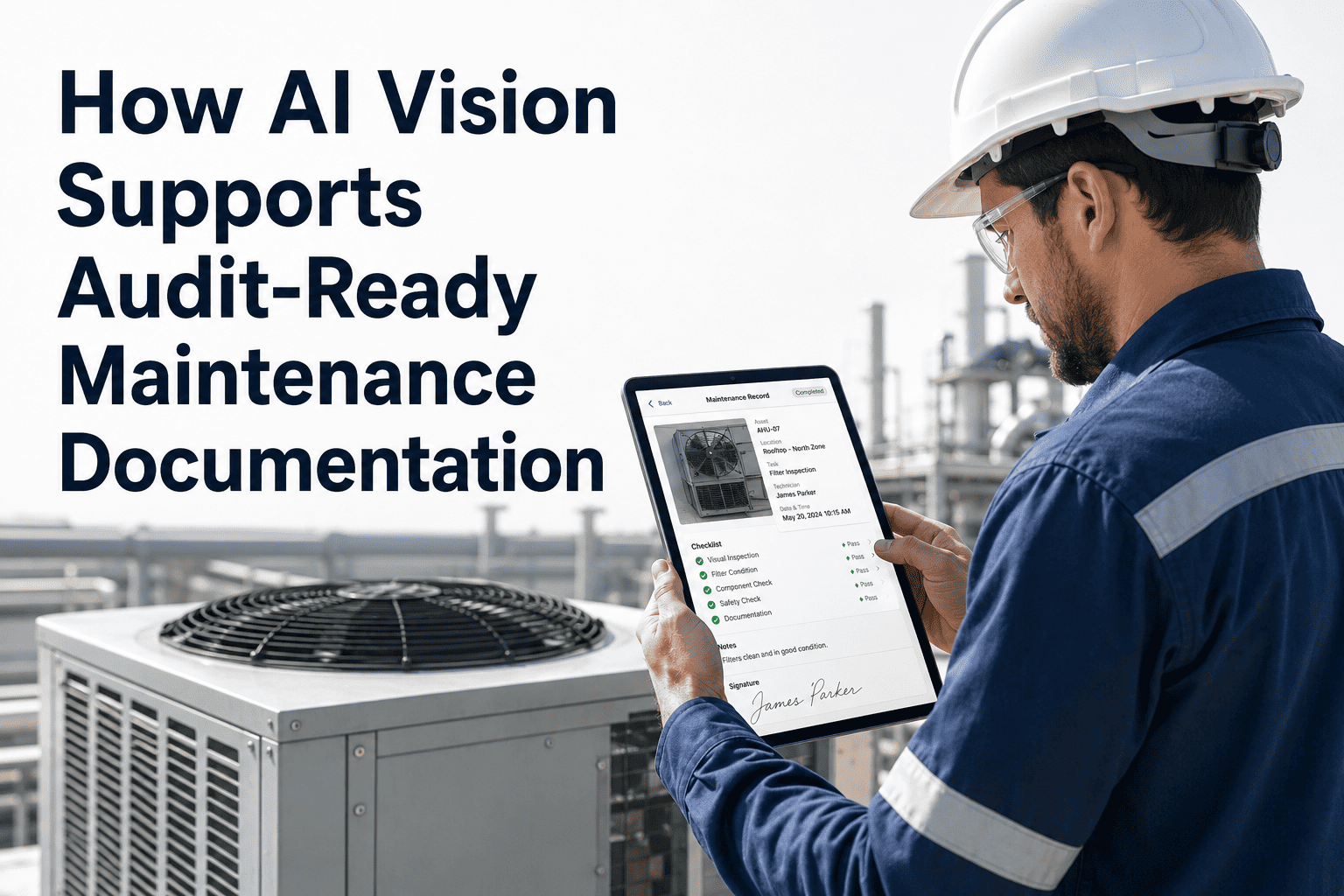
Government maintenance teams face a documentation burden that private sector operations rarely encounter at the same scale: every inspection finding, repair action, and corrective closure must be traceable, timestamped, and retrievable on demand — not just for internal records, but for regulatory audits, public accountability reviews, and legal defensibility in the event of infrastructure failure. The challenge is that this documentation standard is difficult to meet when it depends on field staff manually completing paperwork or entering data after the fact. AI vision integrated with a CMMS changes this equation by automating the evidence capture that audit-ready records require, creating a continuous documentation trail without adding to technician workload. This guide explains how that works for government maintenance teams using OxMaint's compliance documentation tools.
What a Complete Audit-Ready Maintenance Record Contains
An audit-ready maintenance record is not a single document — it is a chain of connected events, each with its own timestamp and evidence. AI vision automates the capture of the first link in that chain, and CMMS integration ensures every subsequent link is connected automatically.
Timestamped photo, defect classification, severity rating, GPS coordinates, asset ID, camera ID
WO number, linked detection record, assigned technician, priority level, response deadline, supervisor
Mobile confirmation, additional site photos, parts used, root cause classification, technician signature
Completion timestamp, before/after photos, supervisor sign-off, compliance field confirmation, record locked
Every AI Finding Becomes a Complete, Auditable Maintenance Record
OxMaint captures the full detection-to-closure chain automatically — no manual documentation required from field technicians beyond their standard work completion steps.
Where Government Maintenance Audit Trails Typically Break
| Documentation Gap | Audit Risk | How AI + CMMS Integration Closes It |
|---|---|---|
| Finding recorded without photo evidence | High — no visual verification of condition at time of inspection | AI camera auto-captures photo; field mobile adds secondary image at verification |
| Work order created without link to inspection finding | Medium — break in chain of custody | CMMS auto-creates WO with AI detection event as parent record — link is structural, not manual |
| Closure recorded without before/after comparison | High — no proof repair addressed the specific finding | Closure workflow requires before/after photo pair before WO can be closed in system |
| No supervisor sign-off on high-risk repairs | Critical — liability gap for public infrastructure | Priority-based sign-off rules configured in CMMS — P1 closures require supervisor approval |
| Records in multiple systems — no unified audit export | High — audit preparation requires manual reconciliation | All records in single CMMS — audit export generates complete chain in one report |
The audit question I ask first is always the same: show me the chain of evidence from the day a defect was first observable to the day it was confirmed repaired. Most government maintenance teams can answer the beginning and the end — they have inspection reports and closure records — but the middle is missing. There is no documented moment when the defect triggered a response, no record of who made the priority decision, no evidence that the right repair was done and not just something on the asset. AI vision with CMMS integration fills exactly that middle. It creates a timestamped record at the moment of detection that no human can retroactively alter — which is precisely what auditors want to see.
Frequently Asked Questions
Can AI-generated maintenance records be considered legally defensible evidence in the event of an infrastructure incident?
AI-generated maintenance records stored in a CMMS with tamper-evident logging can support legal defensibility, but the key factors are: immutability of the original detection record, clear chain of custody from detection to repair action, timestamp integrity, and system audit logs showing who accessed or modified records. Government legal teams typically require that records meet the same evidentiary standard as manually signed paper records, which means the system must be able to demonstrate that records were not altered after creation. OxMaint maintains audit-locked records with system-generated timestamps. For jurisdiction-specific defensibility requirements, legal counsel review of the record structure is recommended before using records as primary evidence. Book a demo to review the record locking and audit log capabilities.
How long should government teams retain AI vision inspection records and linked work orders for compliance purposes?
Retention requirements vary by asset type, jurisdiction, and regulatory framework — but government infrastructure records are typically subject to retention periods of 5 to 25 years, with some categories like bridge inspection records and water system maintenance logs subject to permanent retention requirements. Before deploying AI vision, government teams should confirm retention requirements with their records management and legal teams, then verify that their CMMS supports configurable retention policies by asset class. Storing everything indefinitely in a single system is not always the right answer — data volume and storage cost must be managed alongside retention compliance. OxMaint's records management module supports configurable retention by asset class and record type.
What happens to audit-readiness when a work order is cancelled before closure — does the AI detection record persist?
A cancelled work order should never delete or orphan the original AI detection record. The detection event is a factual record of a finding — cancelling the work order is an administrative action that should be documented as part of the chain, not as an erasure. In OxMaint's compliance model, cancelled work orders are closed with a cancellation reason and supervisor sign-off, and the original AI detection record remains linked and intact. This means auditors can see not only that a finding was detected but also that it was assessed, a work order was created, and a documented decision was made to cancel or defer — which is a compliant outcome, unlike a gap in the record.
How do government teams handle AI false positives without creating misleading compliance records?
False positives — AI detections that field verification confirms are not real defects — should be recorded as "not confirmed" outcomes in the work order, not deleted. The record should show: detection event, work order created, field technician dispatched, finding not confirmed on site, work order closed with "false positive" disposition. This creates a more accurate compliance record than deletion does, and it builds the feedback dataset that improves AI detection accuracy over time. Regulators reviewing government maintenance records generally prefer documented false positive handling over the absence of any record of the event. OxMaint's mobile verification workflow includes a false positive closure path specifically for this scenario.
Can audit-ready records from OxMaint be exported in formats that regulators and oversight bodies can directly review?
Government maintenance records need to be accessible to parties who are not OxMaint users — auditors, council members, regulatory inspectors, and legal teams. OxMaint supports export of compliance records in PDF report format, structured CSV, and through read-only external access links for specific report views. The PDF export includes all chain-of-custody elements: detection timestamp, AI classification, work order number, assigned technician, verification notes, before/after photos, and closure sign-off in a format that requires no CMMS access to review. Book a demo to see the audit export format for government compliance records.
Build Audit-Ready Documentation Into Every Maintenance Activity — Not Before Audits
OxMaint's AI vision integration creates complete, tamper-evident, audit-ready maintenance records from the moment a defect is detected to the day it is confirmed repaired — automatically, for every asset in your portfolio.