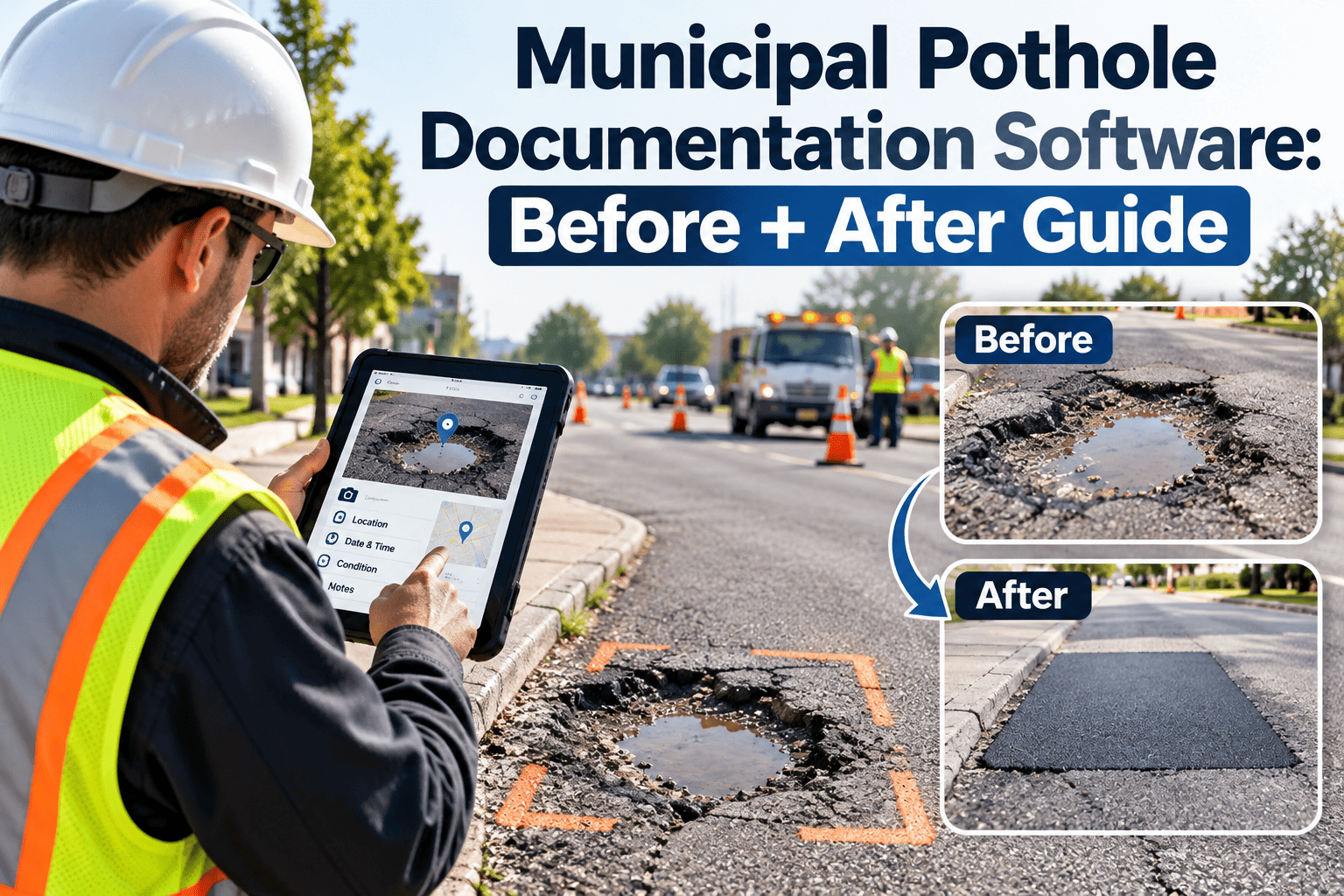
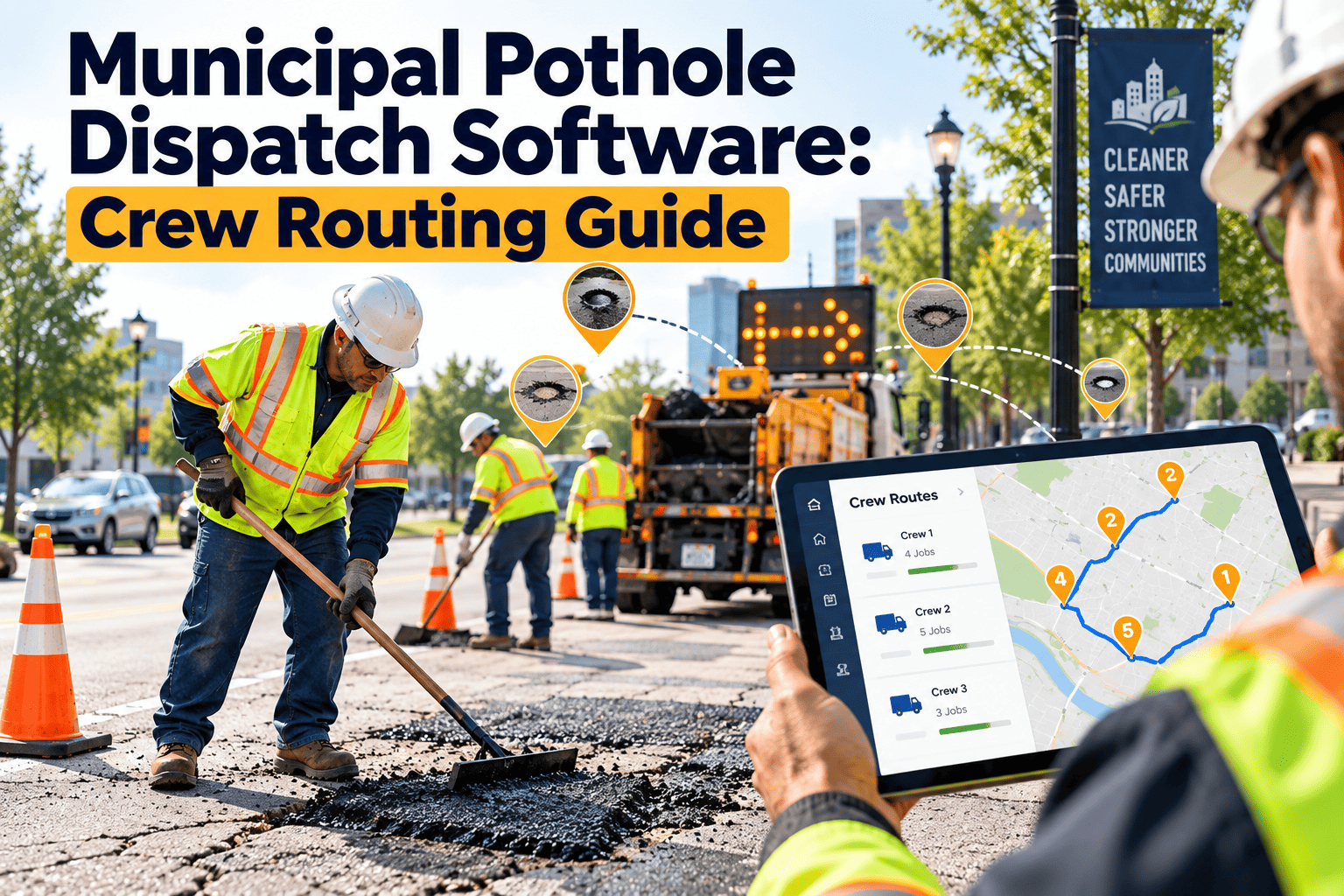
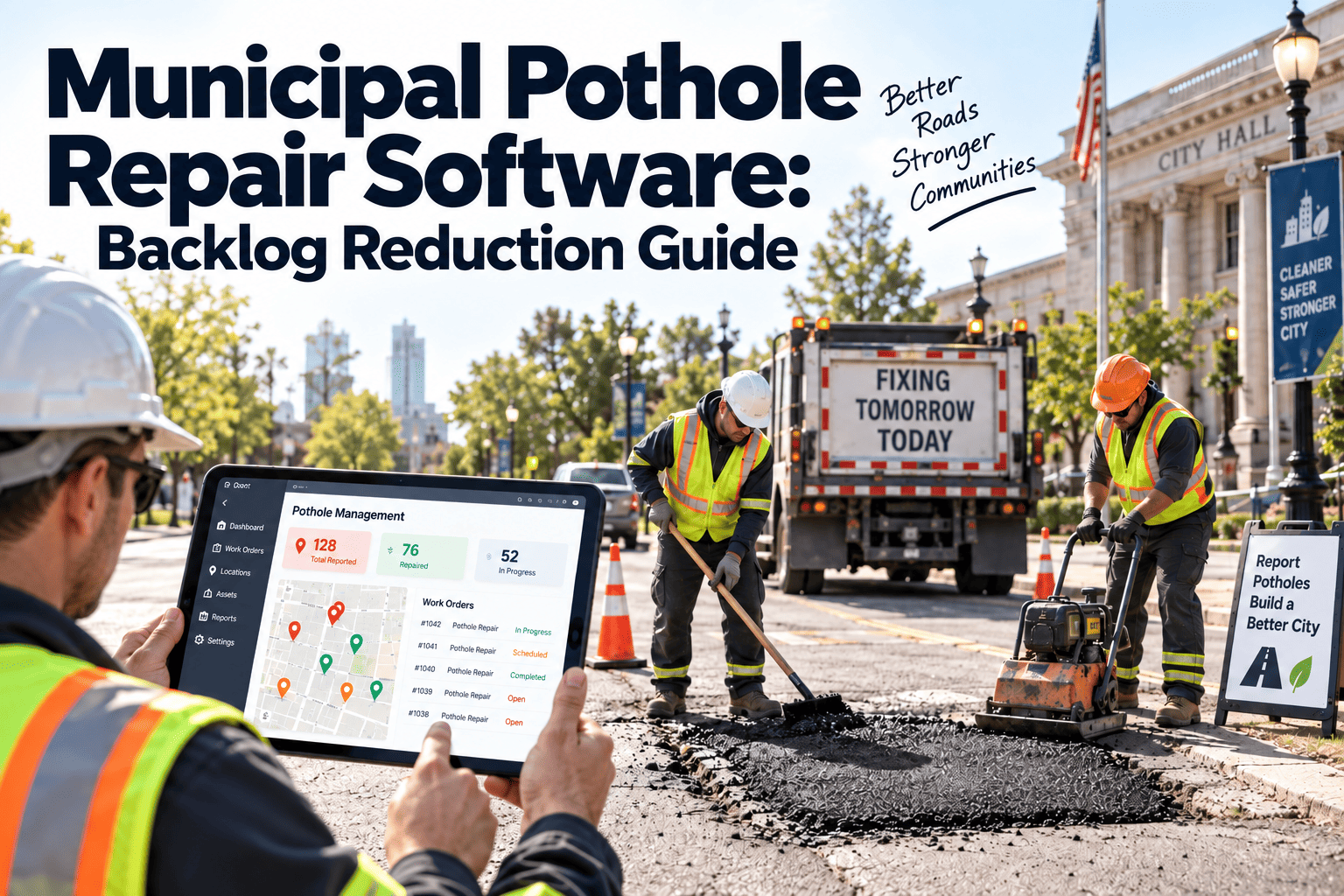
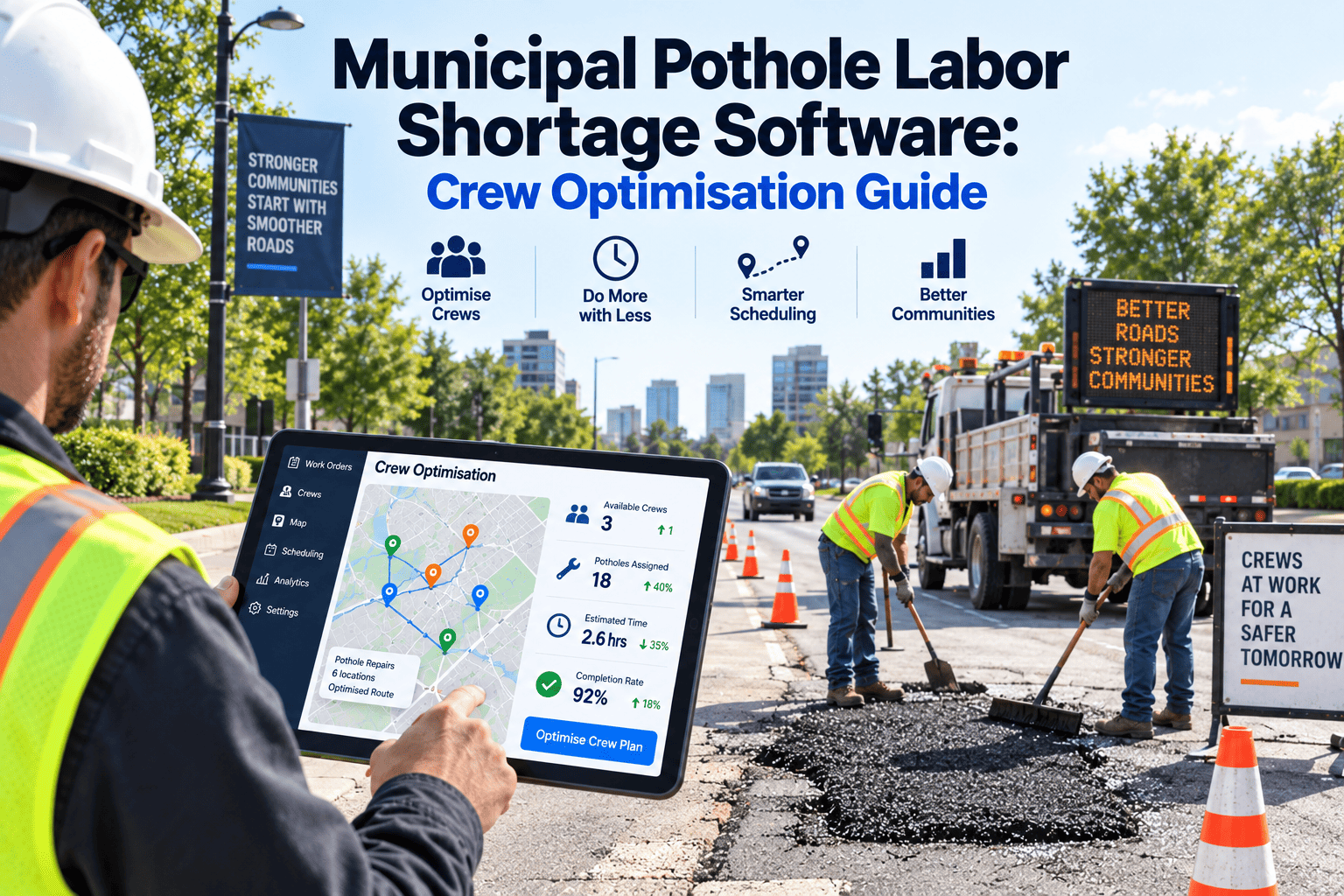
A resident calls 311 about a pothole outside their house, and from that moment a clock starts that most public works departments cannot actually see in real time. Some cities target 72 hours for a standard repair, others allow a full week, and a handful push for 24 to 48 hours on genuinely dangerous locations — but the target only matters if the department can prove, request by request, whether it was met. When a council member asks how the pothole program is performing, "we're doing our best" is not an answer that survives a budget hearing, and neither is a spreadsheet nobody updated since March. A municipal pothole KPI software layer turns 311 intake, dispatch, and repair confirmation into one timestamped record per request, so response time by priority tier becomes a number leadership can trust instead of a guess anyone can dispute. This guide breaks down the response time tiers most public works departments actually use, what a defensible KPI framework looks like, and how OxMaint tracks every request against its target automatically.
Municipal Public Works · Pothole KPIs · CMMS Guide 2026
Municipal Pothole KPI Software: The Response Time Target Guide
Why 24-hour, 72-hour, and 7-day targets exist for different pothole priority tiers — and the timestamped data your department needs to defend performance at every council meeting and 311 audit.
72hr
Standard pothole response target used by major cities including San Francisco and Washington DC
7 Days
Response target used by Chicago's Department of Transportation for routine pothole requests
24-48hr
Target window leading public works programs set for safety-critical, arterial-road potholes
2
Steps every pothole request must clear — inspection and repair — before a KPI can call it closed
Priority Tiers
Why Every Pothole Doesn't Get the Same Response Clock
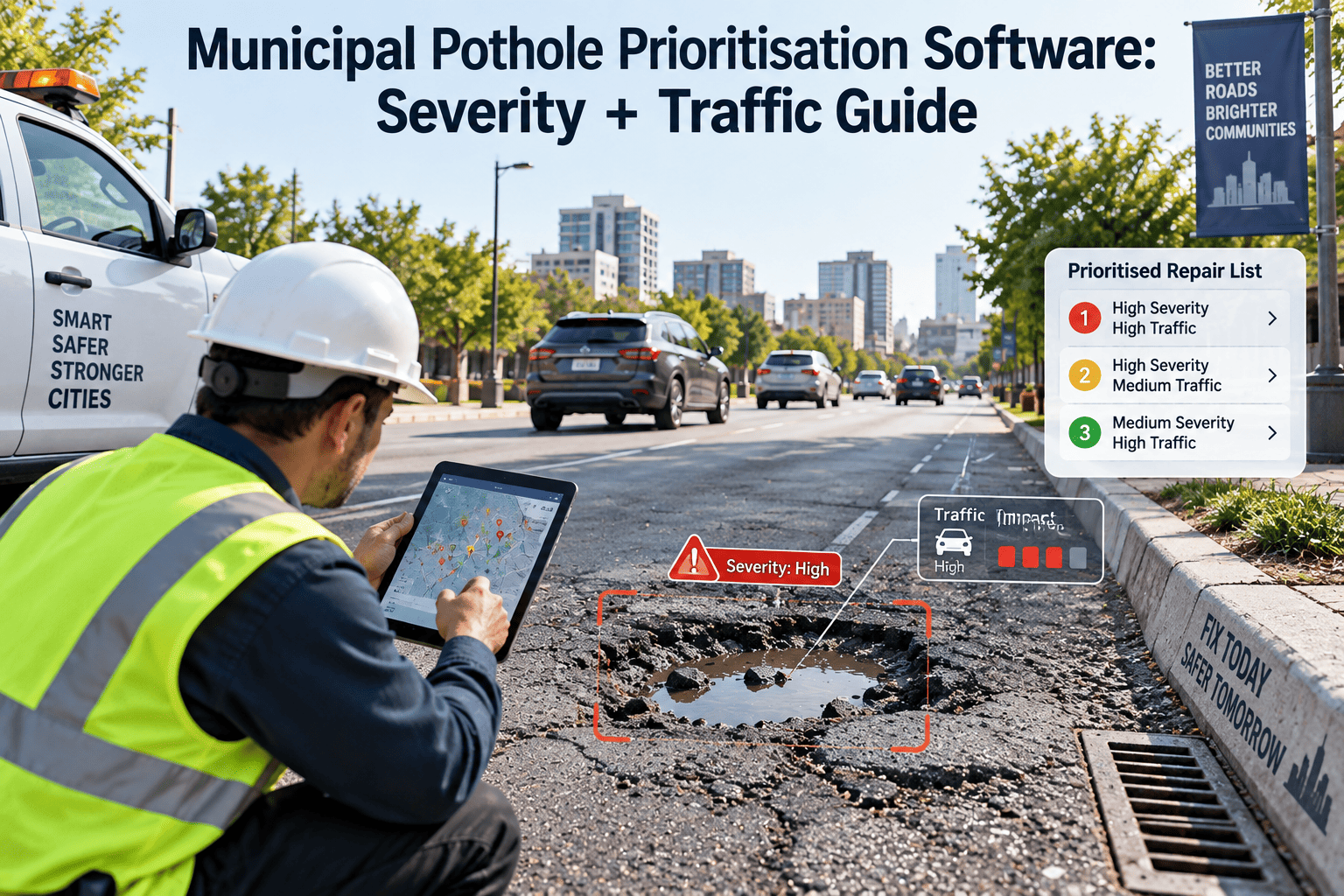
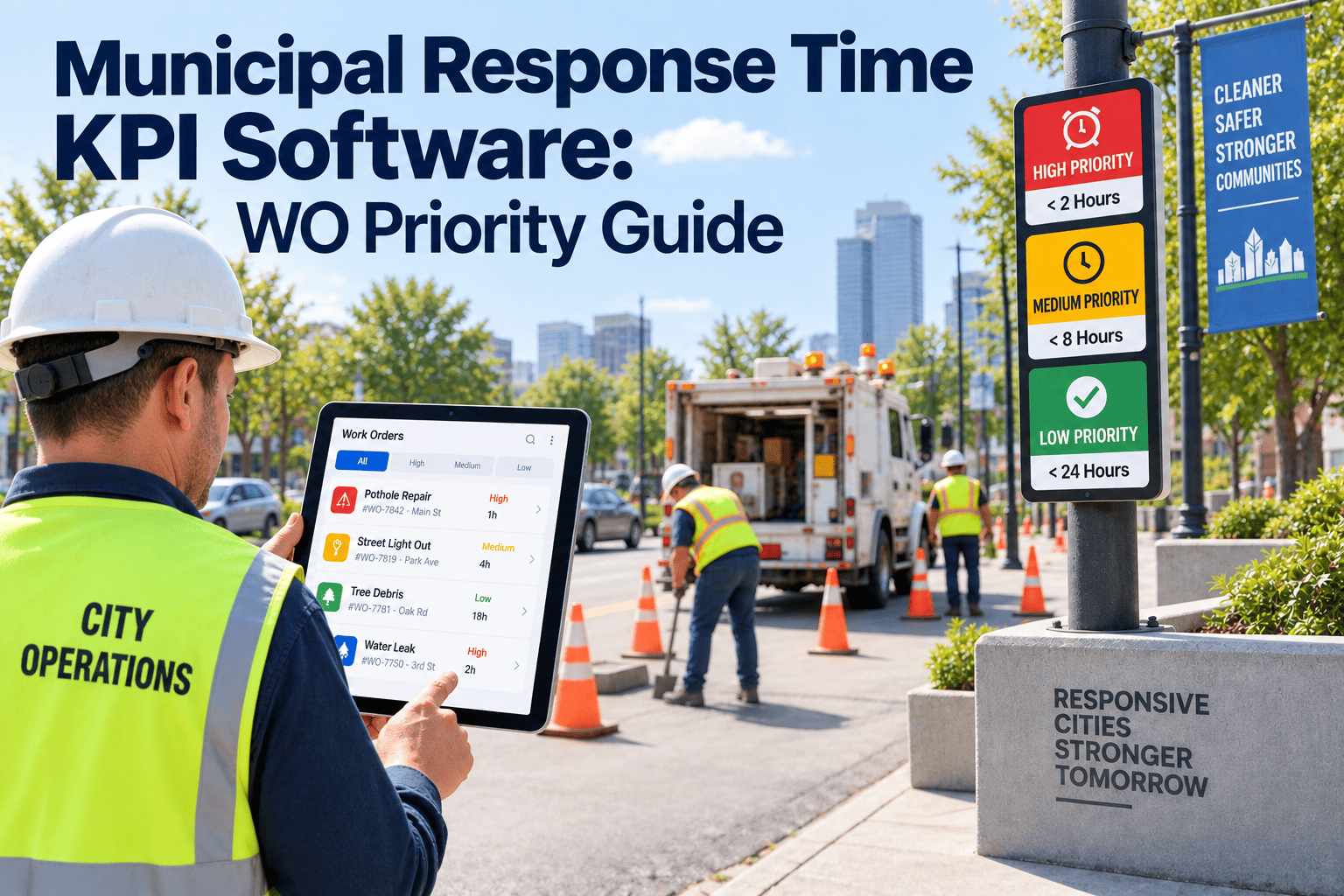
Treating every 311 pothole report identically either wastes crew time chasing cosmetic damage on a quiet cul-de-sac or leaves a dangerous, deep pothole on a school route sitting for a week. The departments that defend their performance best score every request the moment it arrives and route it into one of three response tiers.
Priority 1 — 24 to 48 Hours
Safety-Critical Hazard
Deep potholes on arterial roads, high-speed corridors, bus routes, or near schools and hospitals, and any location with a reported near-miss or vehicle damage claim already on file.
Priority 2 — 72 Hours
Standard Residential Street
The most common request type — moderate potholes on local and collector streets where traffic speed and volume are lower, matching the response target used by most large-city public works departments.
Priority 3 — 7 Days
Low-Volume or Minor Cosmetic
Shallow surface damage on low-traffic side streets or alleys where no immediate safety risk exists, allowing crews to batch these into efficient geographic routes.
Request Lifecycle
The Five Stages a Pothole KPI Actually Has to Track
Response time is not one number — it is the sum of several handoffs, and a KPI that only measures the final repair date hides exactly where delays are happening.
01
Citizen Report Received
A request enters through 311 phone, web portal, mobile app, or a field crew observation, and the SLA clock starts the moment it is logged, not when someone gets around to reading it.
02
Auto-Scored and Prioritized
Location, road classification, traffic volume, and reported severity determine which of the three priority tiers the request falls into, ideally without a human manually re-triaging every ticket.
03
Crew Dispatched and Inspection Logged
A crew is routed to the location, confirms the pothole, and logs an inspection record — this is the first of two steps most cities require before a request counts as responded to.
04
Repair Completed
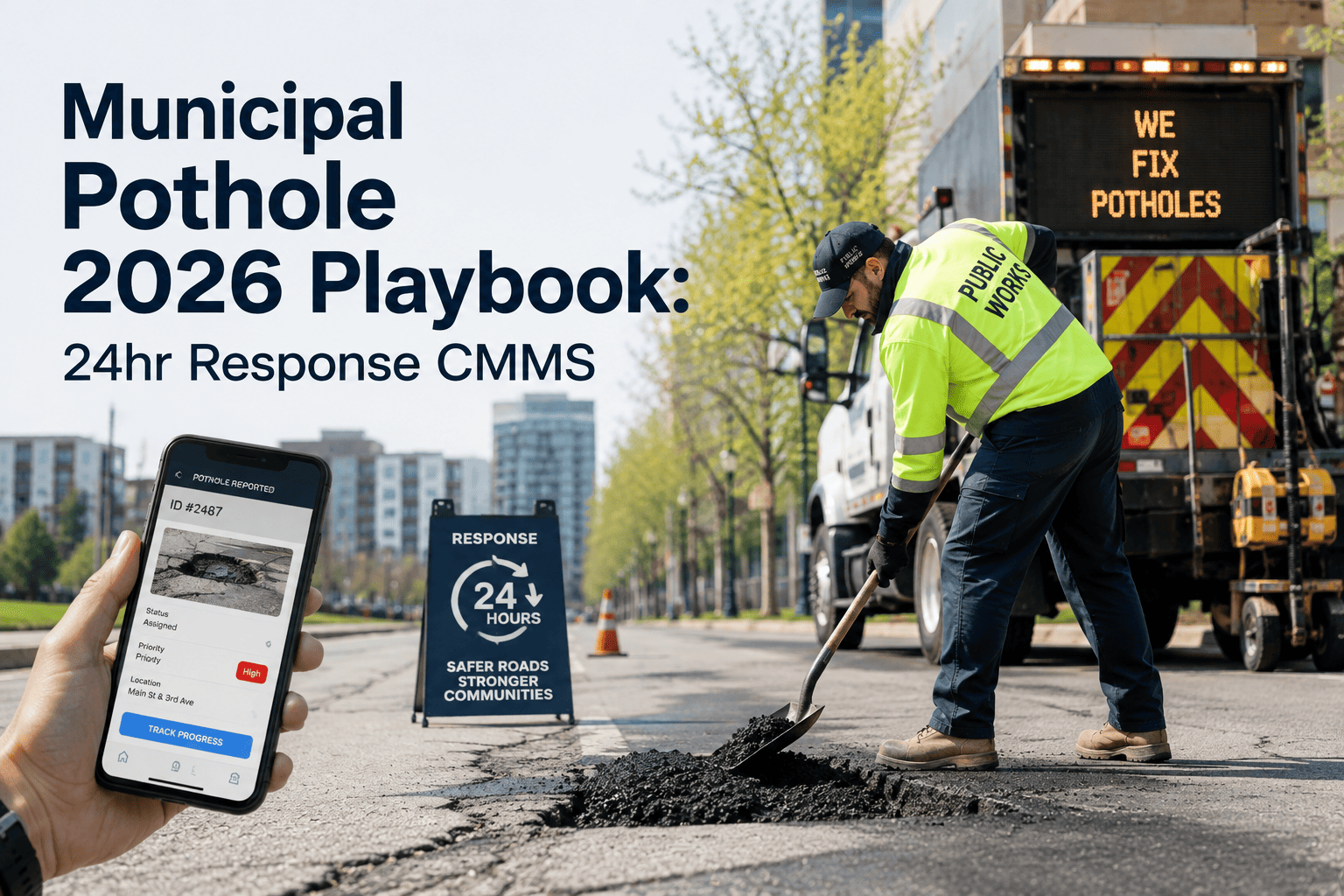
Asphalt or cold patch is placed and the crew logs completion with a timestamp and, ideally, a photo showing the finished repair for later verification.
05
Closure Verified in the System
The request is marked complete in the CMMS, the response time is calculated automatically, and the record becomes part of the monthly performance report leadership actually sees.
Municipal Pothole CMMS
Stop Rebuilding Your SLA Report by Hand Every Month
OxMaint timestamps every pothole request from 311 intake through verified repair, automatically calculates response time against each priority tier, and generates the compliance report your department needs for the next council meeting.
Benchmark Comparison
How Pothole Response Targets Compare Across Cities
| City or Program |
Standard Target |
Priority Fast-Track |
Reporting Channel |
KPI Focus |
| San Francisco Public Works |
72 hours |
Not publicly tiered |
SF 311 into CMMS |
Percent of requests responded to within target |
| Washington DC DDOT |
3 business days |
Not publicly tiered |
311 or online request center |
Repair completion within standard window |
| Chicago CDOT |
7 days |
Geographic cluster routing |
311 Customer Service Requests |
Average days to complete per week |
| High-Performing Program Target |
72 hours |
24-48 hours for safety hazards |
311, web, app, field crew |
Tiered SLA with automated escalation |
Beyond Response Time
The Other KPIs a Council-Ready Pothole Program Tracks
SLA Compliance Rate
The percentage of requests closed within their assigned priority window each month, reported as a single trackable number leadership can compare period over period.
Open Backlog Age
How many requests remain open past their target date, and how old the oldest unresolved request actually is — a number that spreadsheets tend to hide until it becomes a news story.
Repeat Report Rate
How often the same location is reported again after a repair, which usually signals a patch failure or an underlying base problem that a simple fill will not solve.
Cost Per Repair by Priority Tier
Emergency, out-of-sequence repairs on safety-critical potholes typically cost more per fill than batched, routed repairs, and tracking this separately protects the budget conversation.
Common Questions
Municipal Pothole KPIs — Frequently Asked Questions
What is a reasonable pothole response time target for a city?+
Most major cities target 72 hours for standard requests, with some allowing up to 7 days depending on staffing and road network size. High-performing programs add a faster 24 to 48 hour tier specifically for safety-critical hazards on arterial roads or near schools.
Should every pothole get the same response time target?+
No — treating every request identically either delays genuinely dangerous potholes or wastes crew time on minor cosmetic damage. A three-tier system based on road classification, traffic volume, and severity gives crews a defensible way to prioritize limited resources.
What counts as a completed pothole response for KPI purposes?+
Most cities require two steps before a request counts as responded to: a crew inspection confirming the pothole, and the actual repair. Some departments track these as separate KPIs since a fast inspection with a slow repair still leaves residents waiting.
How does OxMaint help municipalities track pothole response KPIs?+
OxMaint timestamps every request from intake through verified repair, auto-scores priority based on location and severity, and generates SLA compliance and backlog reports automatically instead of requiring manual spreadsheet work each month.
Start a free trial to see your own KPI dashboard.
Why does the same pothole location keep getting reported after repair?+
A repeat report at the same location usually means the original repair was a temporary patch over a deeper base or drainage failure, and tracking repeat report rate as its own KPI helps distinguish a true fix from a location that needs full-depth repair or repaving.
Book a demo to see repeat-location tracking in action.
OxMaint · Municipal Pothole CMMS
Give Every Pothole Request a Clock That Actually Gets Watched
OxMaint gives public works departments one platform to log, prioritize, dispatch, and close every pothole request with a full timestamped history — turning response time into a KPI your department can defend, not just report.