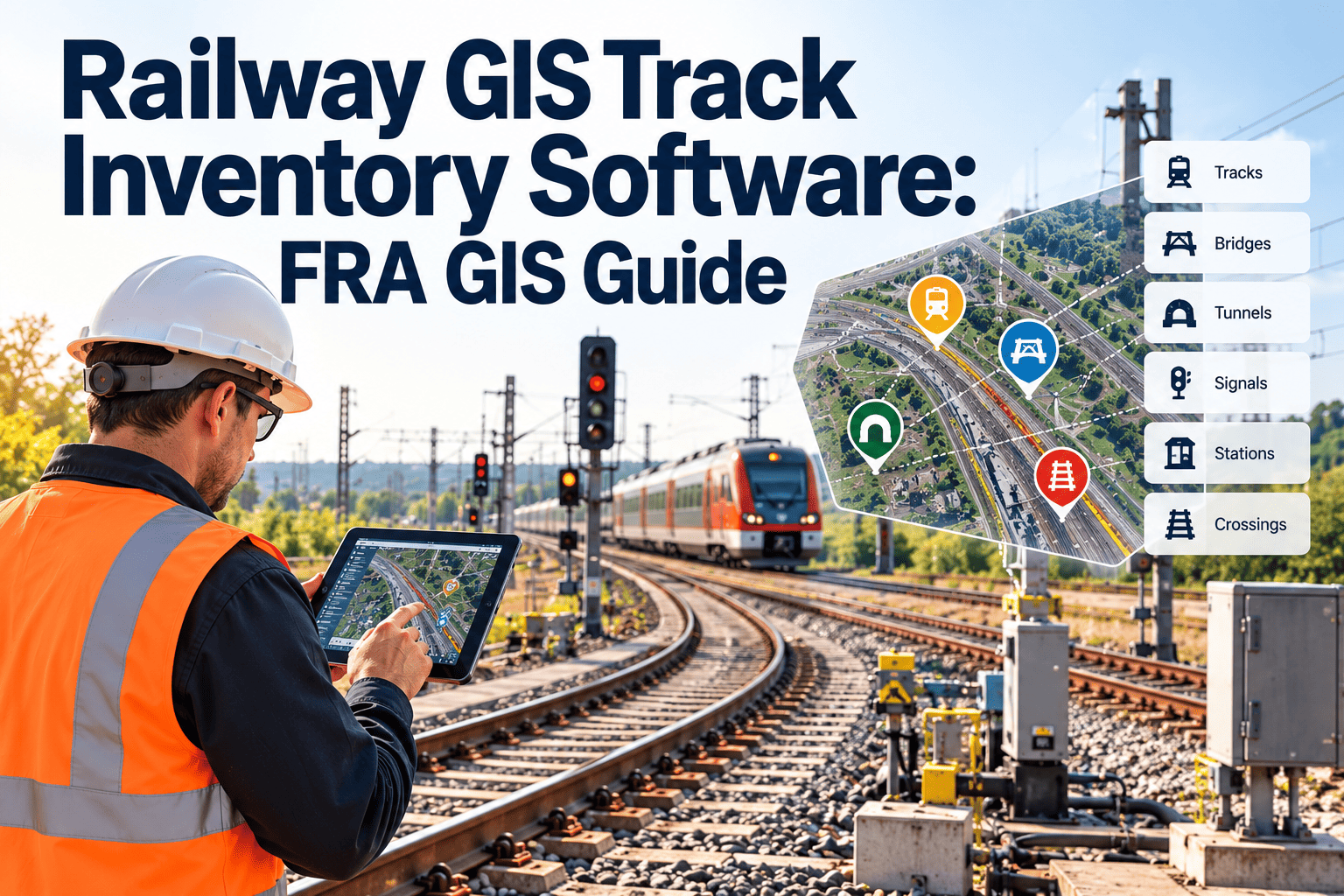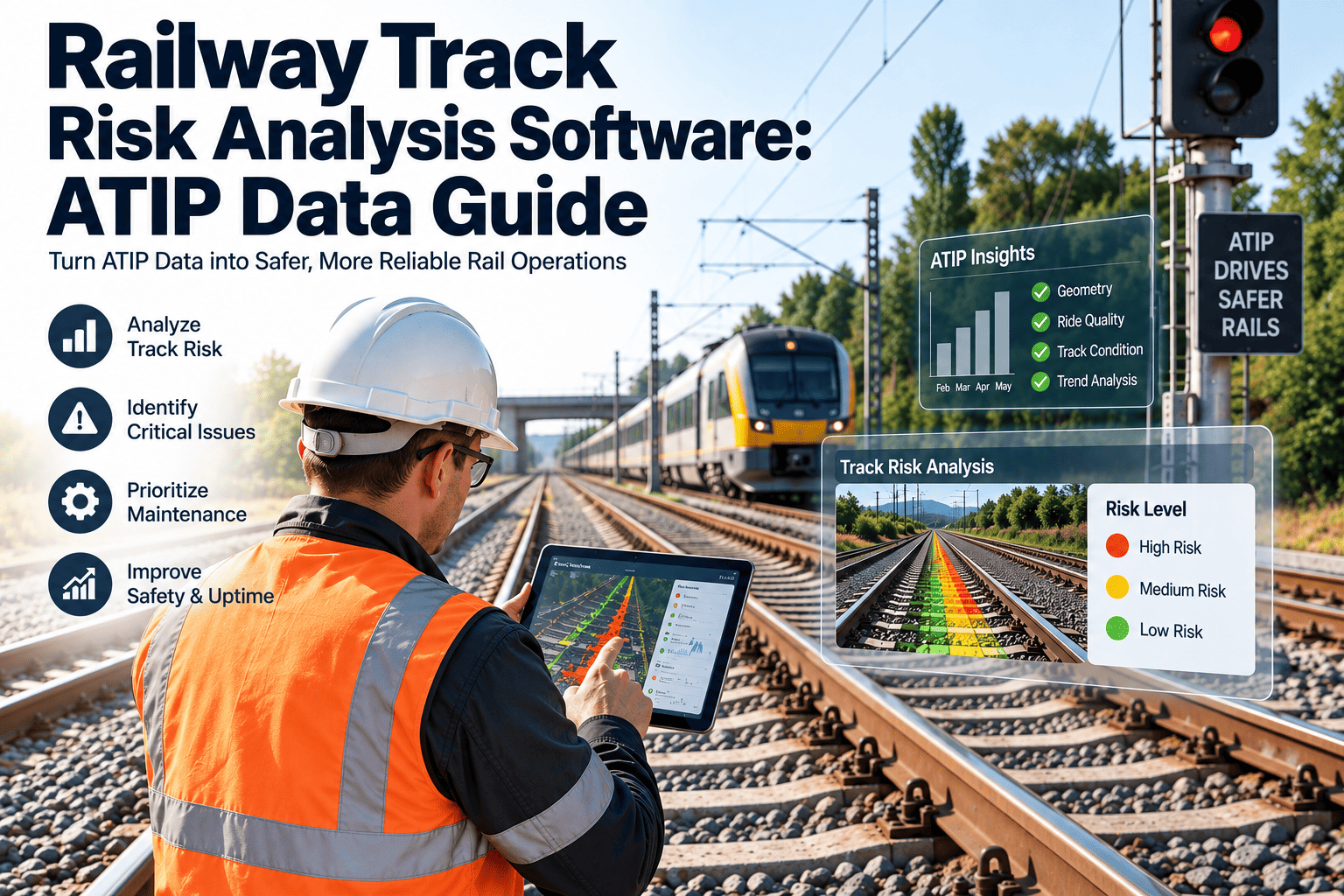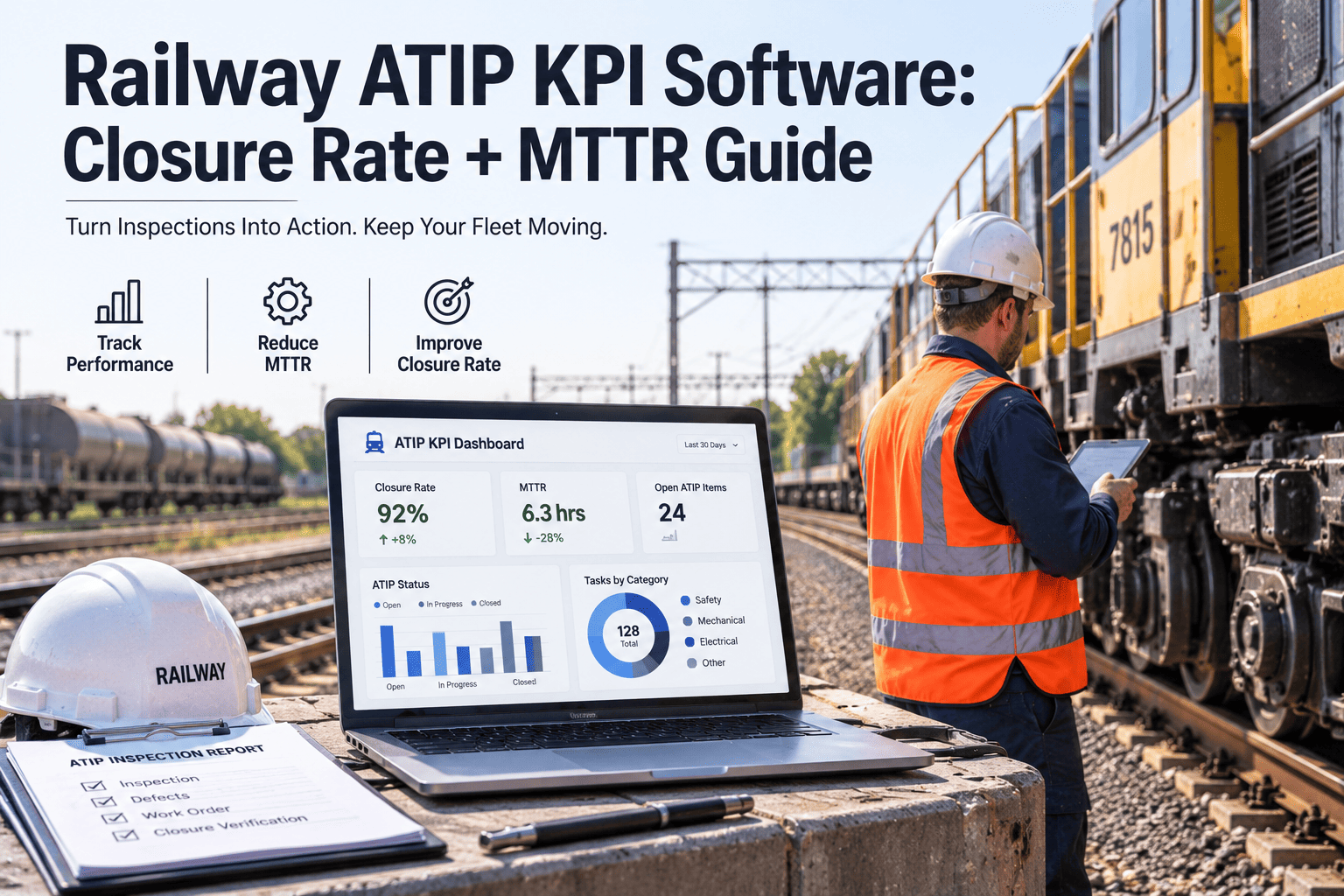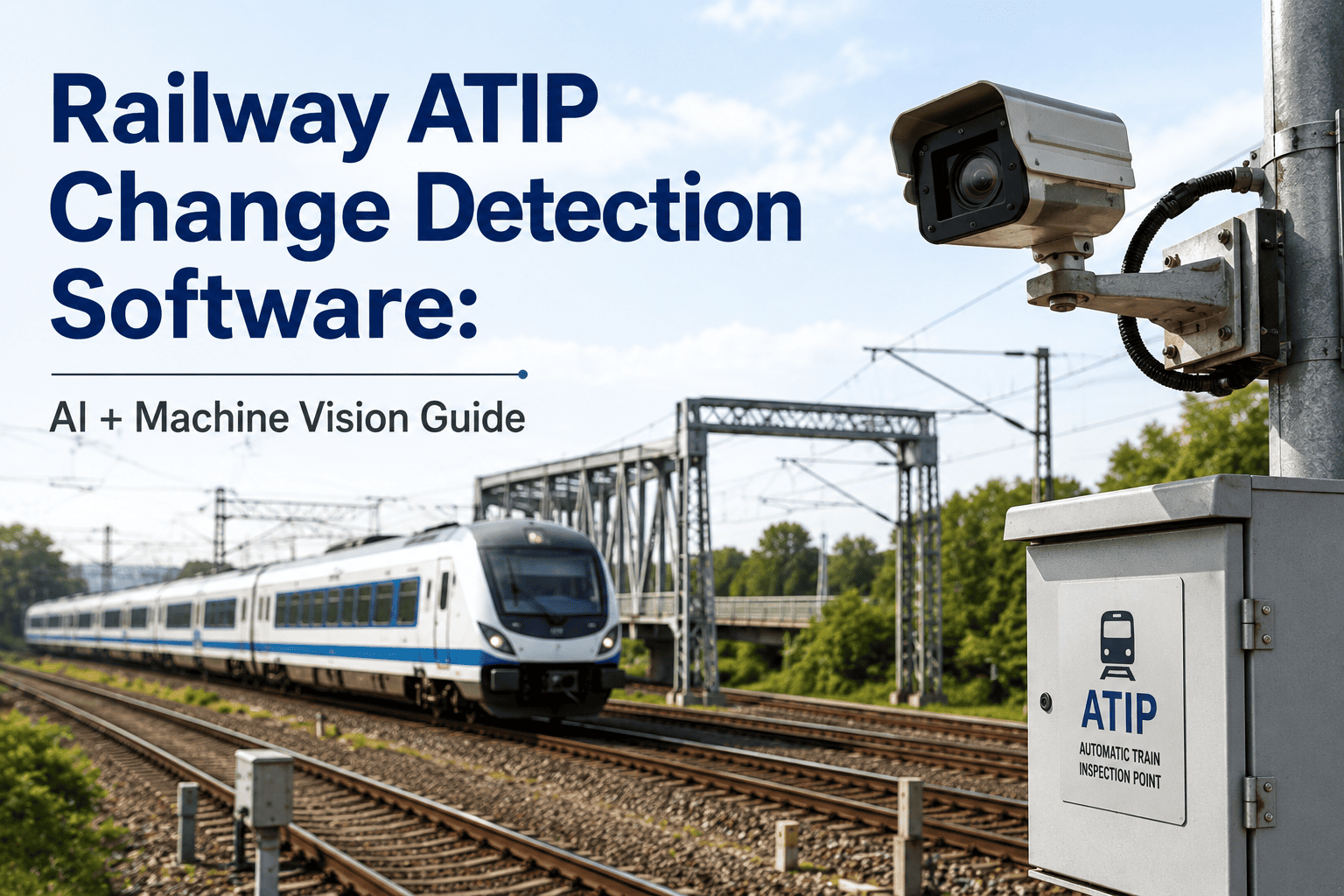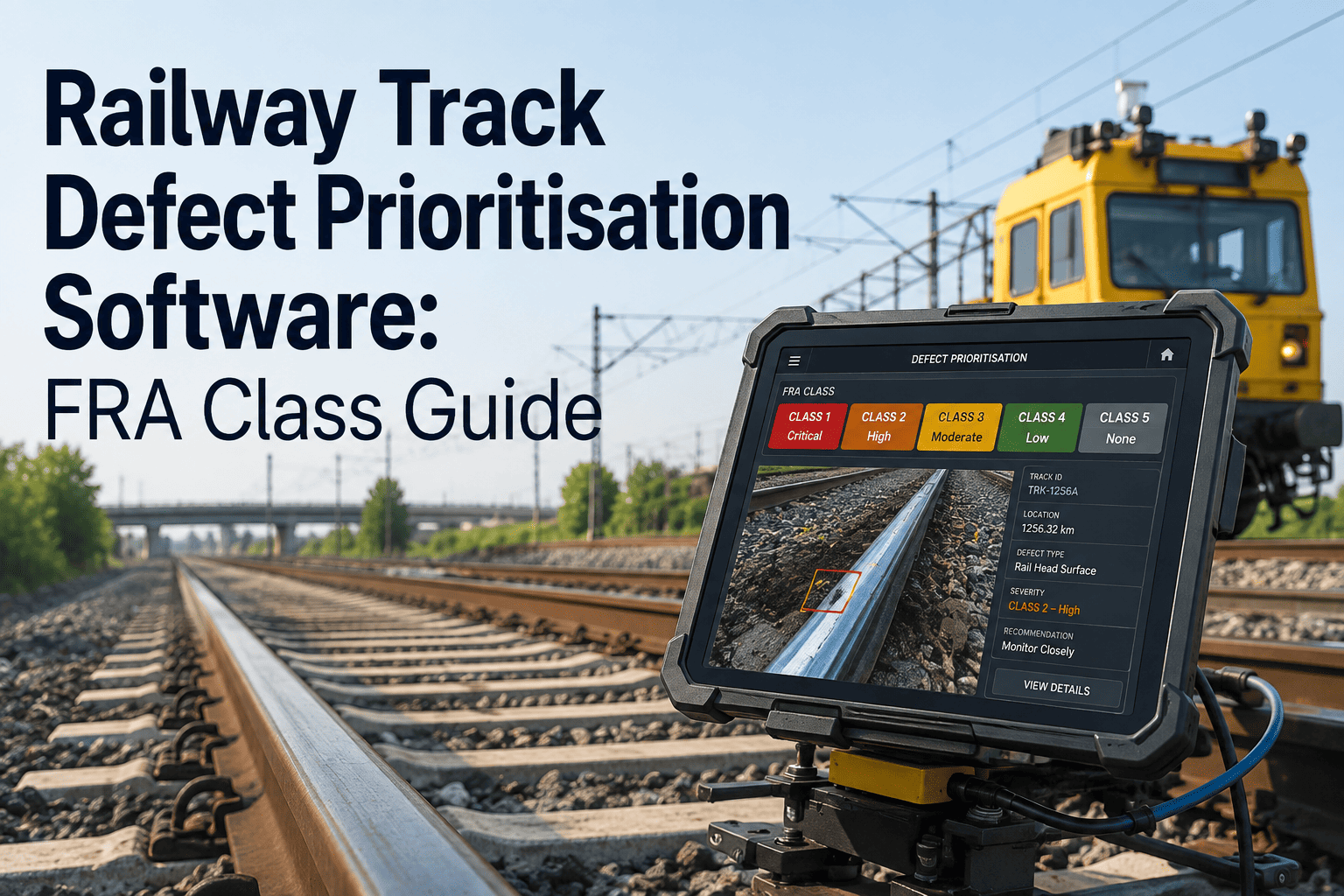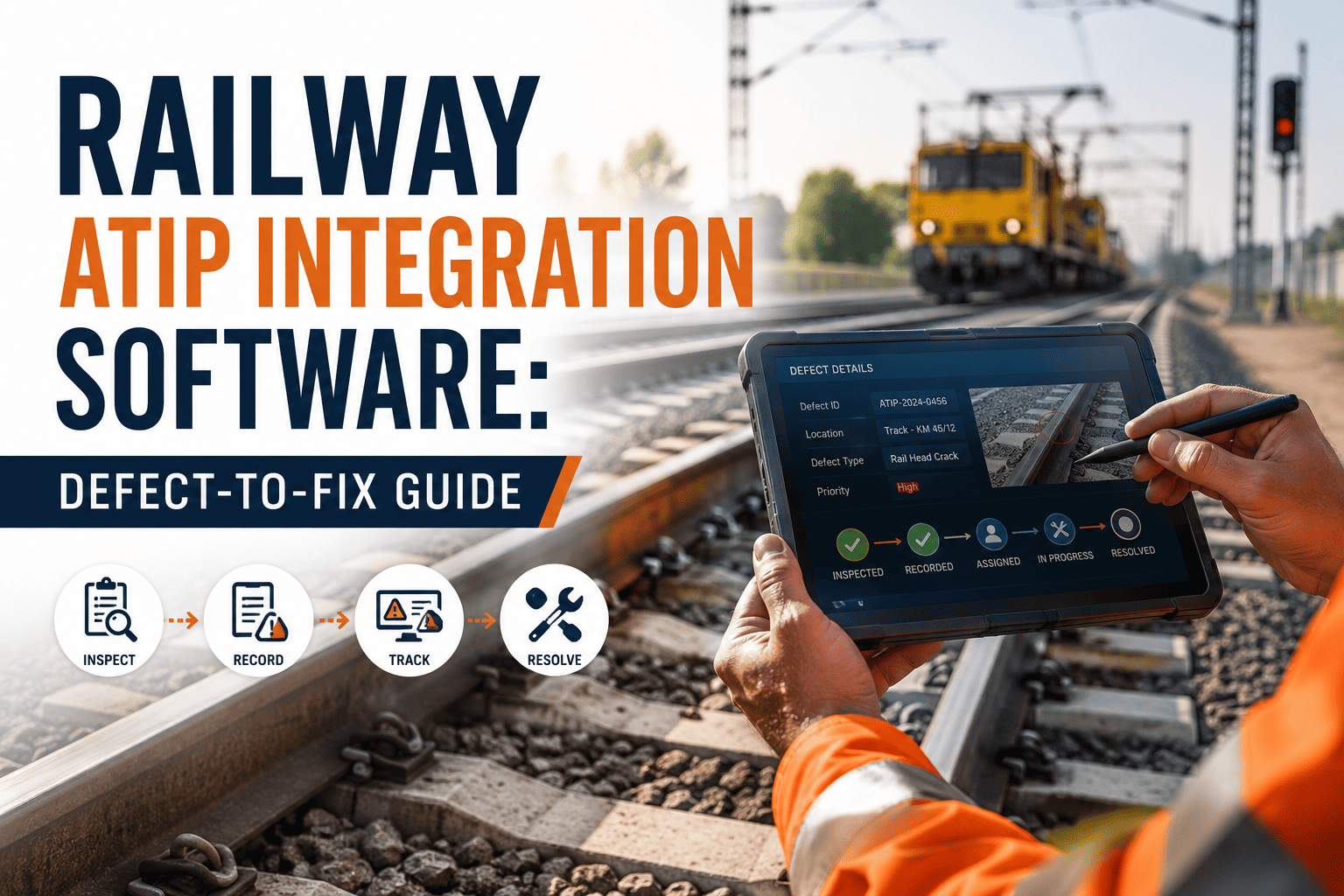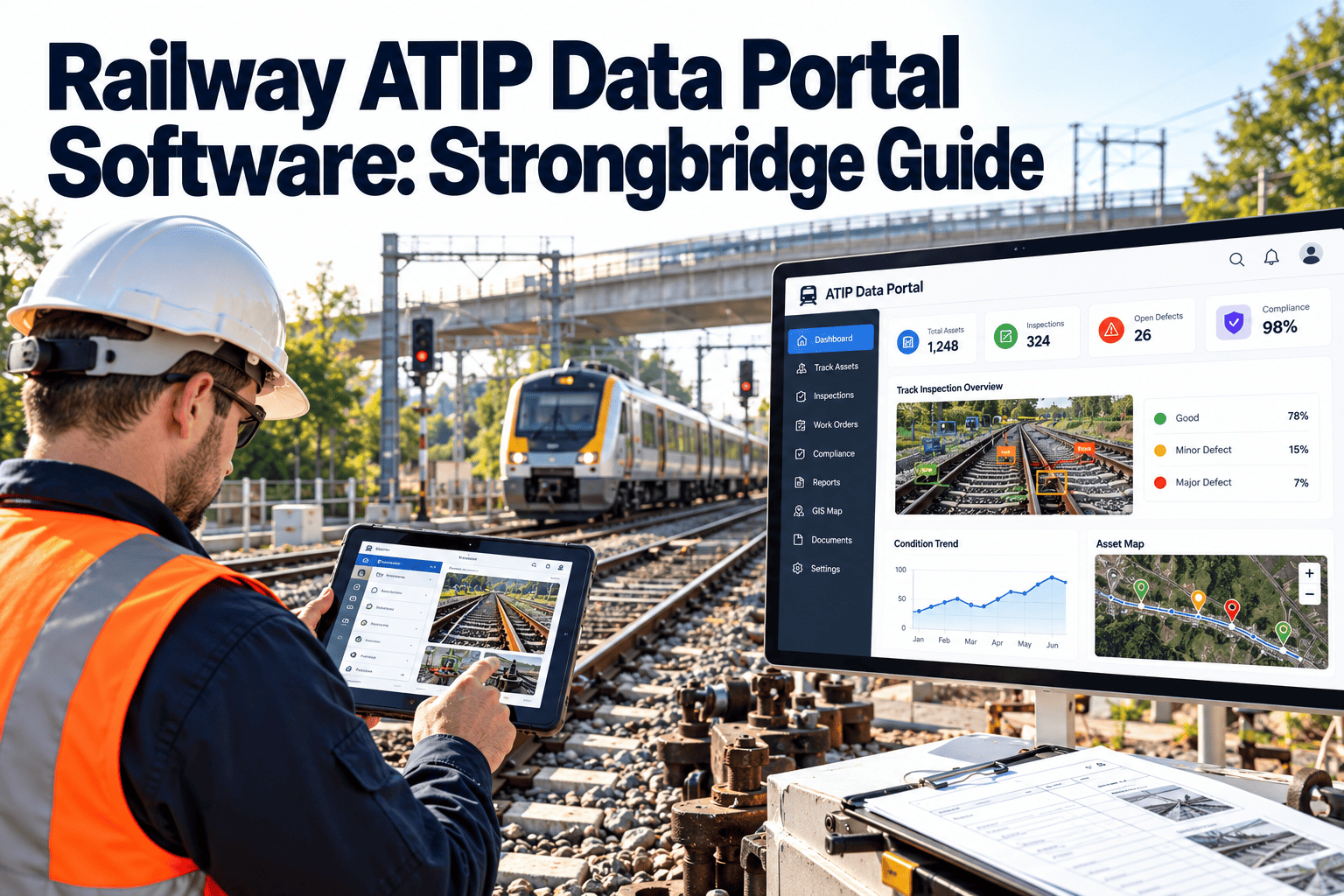
FRA's Automated Track Inspection Program surveys track with instrumented vehicles and turns the results into geometry exceptions, imagery, and trend data. That information flows through contractors and a central data portal before it reaches the people who actually fix track. The hard part for railroads and track owners is not receiving the data, but converting it into located, prioritized, verified maintenance work. This guide explains how the ATIP data chain works and how a CMMS can serve as the maintenance record that closes the loop on exceptions.
Railway ATIP Data Portal Software: A Strongbridge Data Chain Guide
Who Does What in the ATIP Data Chain
FRA's own program materials describe a three-contractor structure. Knowing each role helps you decide where your maintenance system picks up the work.
ATIP by the Numbers
FRA's December 2025 summary reports survey volume and exception counts. Mileage bars below are scaled to the 2025 figure.
| Measure | 2023 | 2024 | 2025 (through 11/30) |
|---|---|---|---|
| Geometry exceptions | 8,606 | 9,340 | 8,863 |
| Safety critical exceptions | 1,595 | 2,471 | 1,752 |
The Fleet Behind the Data
What ATIP Data Can Tell a Maintenance Team
ATIP combines several measurement types. FRA research describes machine vision working alongside track geometry and gage restraint measurement systems, with software extracting images around switches, frogs, and geometry defects.
| Data Stream | Typical Use | Maintenance Follow-Up |
|---|---|---|
| Track geometry | Finds exceptions in gage, alignment, surface, and cross level | Field verification, then tamping, lining, or surfacing as the exception demands |
| Gage restraint measurement | Highlights track with reduced lateral strength | Fastener and tie inspection, gage correction, tie replacement |
| Machine vision imagery | Flags missing or damaged components such as fasteners | Targeted visual check and component repair |
| Ultrasonic rail testing | Detects internal rail flaws | Rail defect verification and remedial action per your track program |
| Repeat survey history | Supports trend and foot-by-foot comparisons | Targeting locations that keep returning |
From Portal Exception to Verified Repair
An Example Exception Priority Matrix
Adapt this to your own track inspection program and the obligations in 49 CFR Part 213. It shows how exception class and location exposure combine.
Give Every ATIP Exception a Named Owner and a Due Date
Keeping Survey Data Trustworthy Inside Your CMMS
Once data leaves the portal, its credibility depends on what you preserve about it. Each practice below protects a decision you may need to defend later.
| Concern | Practice | What to Keep |
|---|---|---|
| Provenance | Label every record with its survey source | Vehicle, survey date, data version |
| Location accuracy | Record the reference used to place the exception | Milepost, track, and any offset applied |
| Duplicates | Match repeat exceptions to the same asset location | Link to prior records and work orders |
| Field disagreement | Allow the field result to differ from the survey | Measured value, photo, inspector notes |
| Retention | Apply your track records schedule | Exception, action taken, closure evidence |
Common Pitfalls Versus Better Practice
Where ATIP Data Is Heading
FRA lists several technology efforts alongside ATIP. Each one increases the volume and variety of data a maintenance system must absorb.
KPIs for an Exception-Driven Track Program
Where Maintenance Software Fits Downstream of the Portal
Oxmaint does not replace the portal. It acts as the maintenance record where exceptions become assigned, documented work. Confirm your data-intake method during a demo.
| Oxmaint Capability | Role in the ATIP Workflow |
|---|---|
| Asset management | Holds track segments, turnouts, and locations that exceptions attach to |
| Work orders | Assigns verification and repair with due dates and crew |
| Inspections | Structures field verification checklists and captures results |
| Preventive maintenance | Schedules recurring inspection for locations that keep returning |
| Mobile workflows | Lets track crews record measurements and photos at the location |
| Reporting and dashboards | Shows backlog by severity, aging, and completion |
ATIP Portal Questions
Who manages the ATIP data portal?
FRA's program materials list Strongbridge as managing ATIP data storage and the portal, with ENSCO and Tetra Tech operating vehicles.
Does a CMMS replace the portal?
No. It tracks the maintenance response after exceptions are received. Book a demo to review your intake method.
How should exceptions be prioritized?
Combine exception class, track class, and operational exposure, following your track inspection program and 49 CFR Part 213.
What proves an exception was resolved?
A field measurement, repair record, and confirmation in a later survey. Get started and link them to one record.
Why track repeat locations?
Locations that return across surveys often point to drainage, subgrade, or tie conditions that spot repairs will not fix.