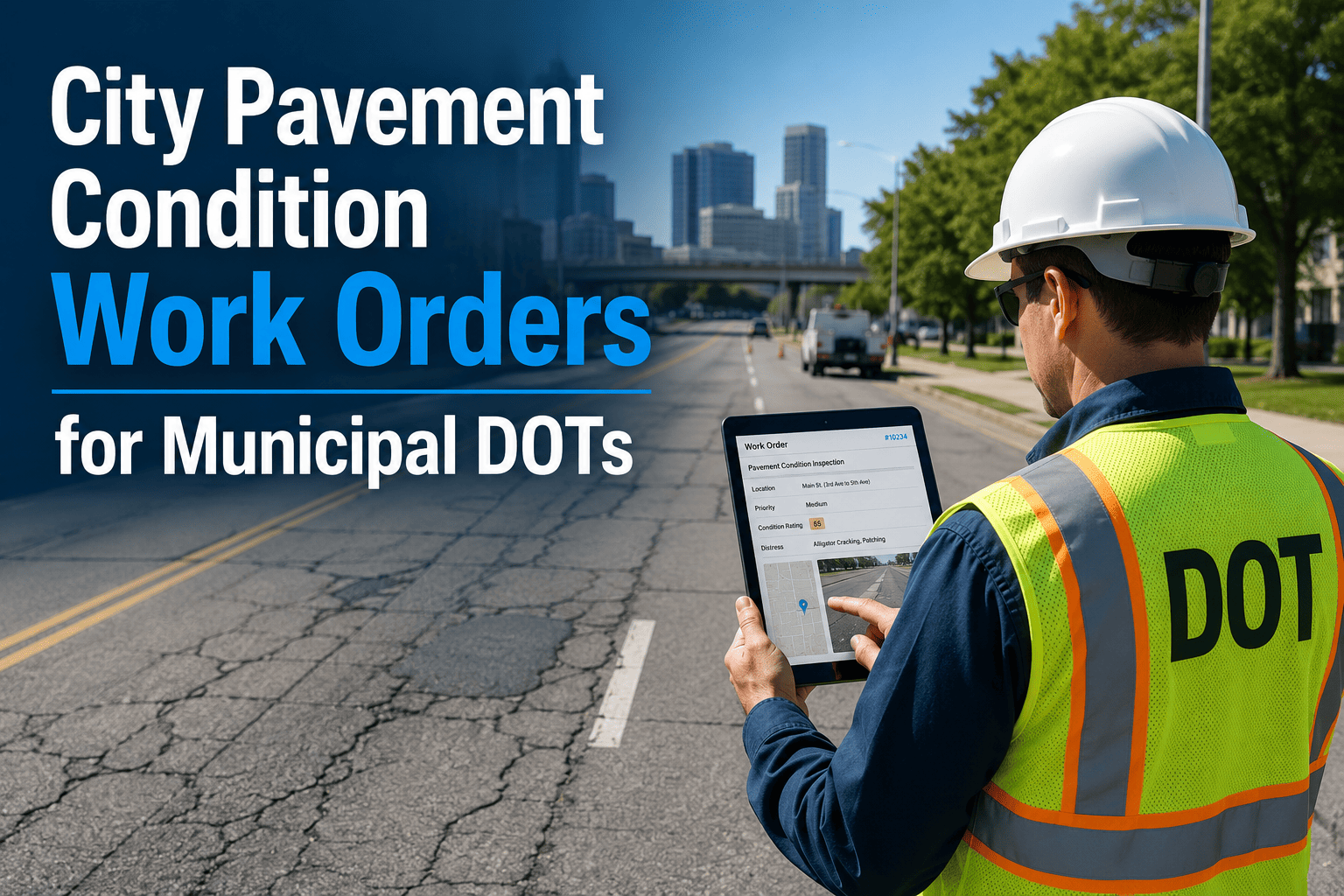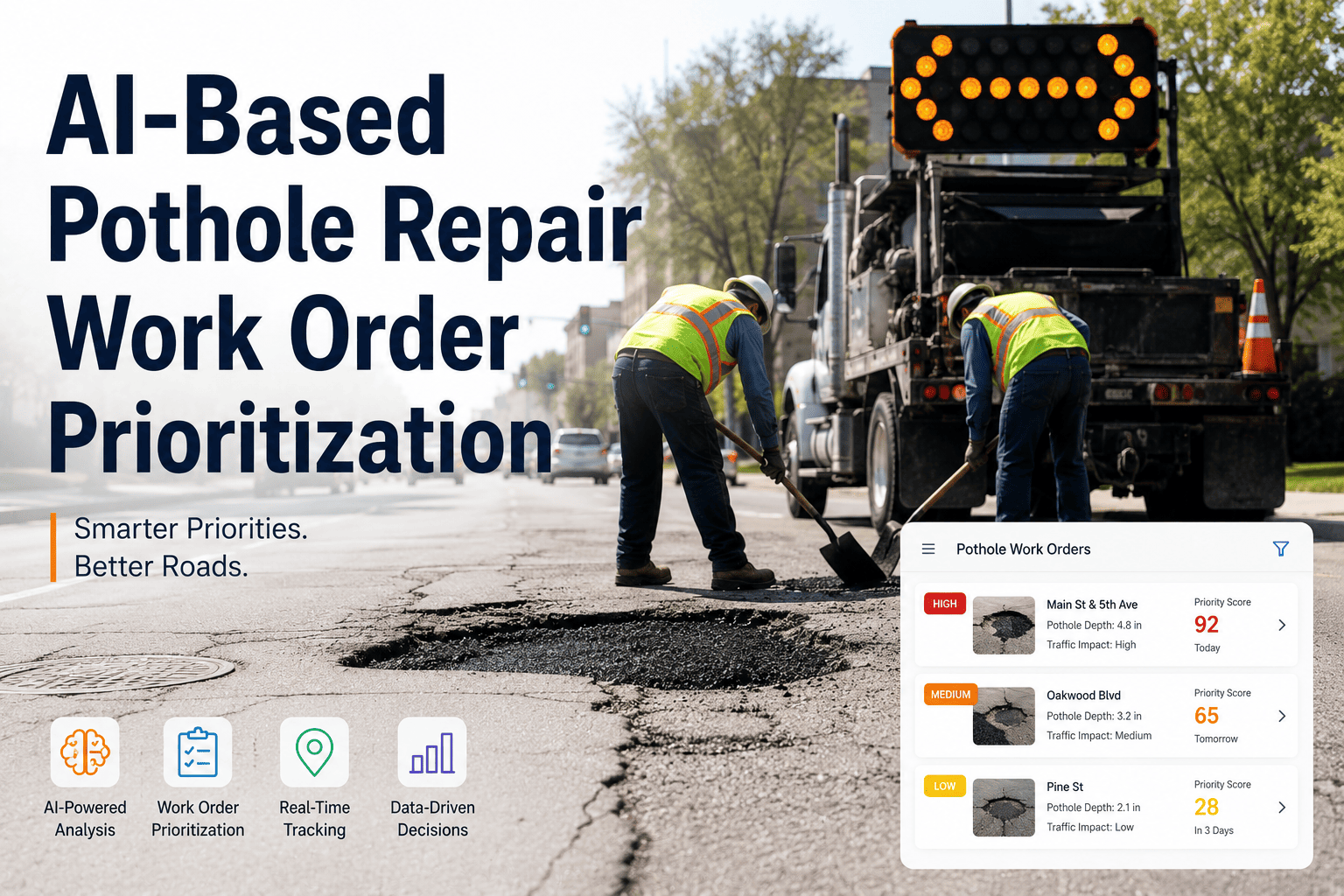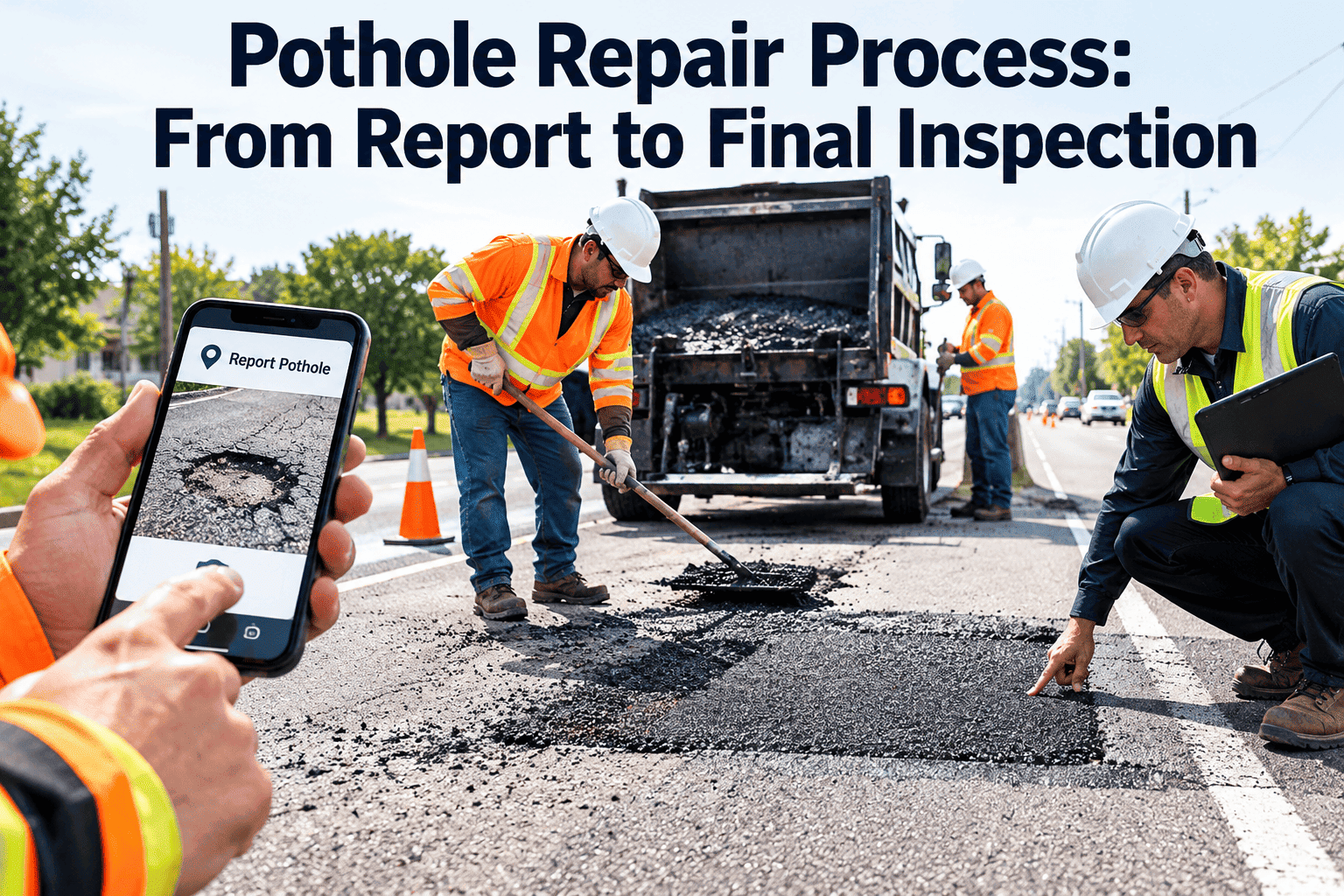
A pothole repair that takes weeks to schedule and fails after the next rain does more damage to public trust than the hole itself. Most problems trace back to the process: reports that arrive in several channels, priorities set by whoever calls loudest, crews dispatched without the right material, and no final check before the work order closes. This guide walks through each step from the first report to the final inspection, compares common patch methods, and shows what to record so repeat repairs become visible. Public works teams that want to run this as a tracked workflow can try Oxmaint and test it on a single district first.
Pothole Repair Process: From Report to Final Inspection
Standardize intake, dispatch, patching and verification so repairs are faster, patches last longer and every complaint can be traced to a closed work order.
Where the pothole process usually breaks down
Repairs take too long
Reports sit in an inbox or spreadsheet until someone has time to sort them. Crews learn about a hole days after the first call.
Likely root causeNo single queue, no priority rules and no due date on the request.
Patches fail quickly
The same hole is back within weeks, often larger. Crews are blamed, but the cause may be method, material or weather.
Likely root causeNo standard method, no checklist, and no record of how each patch was made.
Residents keep calling
People report the same hole repeatedly because they never hear back, and staff cannot tell if a call is new or a duplicate.
Likely root causeReports are not linked to a location or to a work order status.
Seven stages, with one owner and one finish line each
A repeatable process is easier to manage when every stage has an owner, required information and a clear definition of done. Adapt the table to your department's roles.
| Stage | Owner | Information required | Done when |
|---|---|---|---|
| 1. Report | 311, dispatcher or crew | Location, description, photo, source | A request exists with a pinned location |
| 2. Verify | Dispatcher | Duplicate check, road ownership, size estimate | Duplicates merged, jurisdiction confirmed |
| 3. Prioritize | Supervisor | Road class, depth, traffic, hazard level | Priority and due date assigned |
| 4. Dispatch | Supervisor | Crew, route, material, traffic control | Work order assigned and acknowledged |
| 5. Repair | Crew lead | Method, material quantity, weather, photos | Patch complete, area cleaned |
| 6. Inspect | Inspector or lead | Quality checklist, photo of finished patch | Pass recorded or rework ordered |
| 7. Close | Dispatcher | Cost, time, requester notice | Requester informed and record locked |
Intake: capture enough to act on the first look
Fields every request should carry
- Exact location, using a map pin or coordinates, not only a street name
- Photo or short description, including lane position and approximate size
- Source of the report: resident, crew, inspection or emergency services
- Contact preference, so updates can be sent without extra calls
Merge duplicates into one work order and keep each reporter attached to it. That single step reduces crew visits to holes that are already scheduled.
Triage: set priority with rules, not volume of complaints
Response windows are a policy decision for each agency, so the table shows the logic rather than fixed numbers. Define your own targets, publish them internally and measure against them.
| Priority | Typical conditions | Response expectation |
|---|---|---|
| Emergency | Deep or large hole on a high-speed or arterial road, or one that has damaged vehicles or is near a crossing | Make safe immediately, then repair permanently |
| High | Significant hole on a collector or busy street, or in a bike lane | Short window set by policy, first in the routed queue |
| Standard | Moderate hole on a residential street | Scheduled by area to batch the work |
| Planned | Surface failure better solved by resurfacing or full-depth repair | Refer to the pavement program with documentation |
Turn every report into a tracked work order
Oxmaint gives dispatchers and crews a shared queue for pothole requests with priorities, due dates, photos and status updates from the field.
Dispatch: send the right crew with the right load
Before the truck leaves
- Group requests by area to cut driving time
- Confirm material type and quantity for the day's list
- Check tools: saw or cutter, compactor, tack coat, broom, cones and signage
- Assign traffic control for roads that need it
On arrival
- Confirm the location and take a before photo
- Look for a bigger problem, such as a failing base or utility cut
- Choose the method that suits the conditions and the priority
- Escalate if the hole cannot be fixed properly with a patch
Patch methods compared
Method choice depends on weather, material availability, traffic and the condition of the surrounding pavement. The comparison below summarizes widely taught practice. Always follow your agency's specification.
| Method | What it involves | Best use | Watch out for |
|---|---|---|---|
| Throw and roll | Fill the hole with mix and compact with truck tires | Temporary fix in wet or cold weather, emergency safety | Short life, so schedule a return visit |
| Semi-permanent patch | Remove water and debris, square the edges, add tack coat if specified, fill, compact and seal edges | Most standard repairs where weather allows | Takes more time per hole, so crews need training |
| Spray injection | Air clears the hole, then emulsion and aggregate are sprayed in | Fast repairs with specialized equipment | Needs equipment, training and suitable conditions |
| Full-depth repair | Cut and remove failed pavement and base, rebuild the layers | Clusters of failures or weak base | Higher cost, longer traffic control |
Field studies of pothole repair have found that careful preparation and compaction improve durability more than speed alone. A fast patch that fails is not a saving.
Why patches fail, and what to record to find out
Final inspection: the step that closes the loop
Inspection can be a quick check by the crew lead or a sample audit by a supervisor. What matters is that every work order has a result before it closes.
Before and after standardizing the process
Ad hoc approach
- Requests come through email, phone calls and sticky notes
- Crews decide priority on the day
- Patch method varies by crew habit
- Closing a request means the crew said it was done
Standard process
- One queue with a location and status for each request
- Priority and due dates follow written rules
- Method guidance and checklists support every crew
- Closing requires photos, inspection and requester notice
Measures that show repair quality and speed
Plan for the seasonal surge
Materials: choose, store and track the patch mix
Even a well-trained crew cannot make a durable patch with the wrong or aged material. Treat patch mix as an inventory item with a type, a purchase date and a storage location.
Cold mix
- Available year round and easy to store in bags or bins
- Often used for temporary or winter repairs
- Needs proper storage, because old or wet stock performs poorly
Hot mix
- Generally preferred for more permanent repairs when available
- Depends on plant supply, temperature and delivery time
- Needs scheduling so crews do not wait or waste material
Record the material type and lot or delivery date on each work order. If repeat failures cluster around one batch or supplier, the records will show it.
Crew safety and traffic control belong in the work order
Close the loop with the resident
Many repeat calls happen because people never learn what happened to their report. A short status message at each step reduces calls and builds trust at almost no cost.
Know when to stop patching and escalate to resurfacing
Patching is the right tool for isolated failures. When the same block keeps returning to the list, the pavement is telling you something that more patches will not fix.
Clusters on one segment
Several repairs within a short stretch suggest a widespread surface or base problem.
Repeat visits to the same hole
If crews return again and again, record the cause and consider a larger repair.
Water or drainage issues
Persistent moisture from poor drainage will keep damaging the pavement until it is addressed.
Use closed work orders to plan next season
A year of consistent records answers questions that otherwise rely on memory: how many repairs did each crew complete, which streets keep returning, and how much material did we really use.
Train crews on the standard, not only on the equipment
What a short refresher should cover
- Why cleaning, squaring and compaction matter more than speed
- How to choose between a temporary and a semi-permanent repair
- What photos and notes the work order needs, and why they are useful
- When to stop and escalate a hole that needs a larger repair
Share quality results with crews every month. When people see which patches held and which returned, the standard becomes their own tool rather than an extra form to fill out.
How Oxmaint supports the pothole workflow
Capabilities that match each stage
- Work order management with priorities, due dates and assignment to crews
- Mobile forms for photos, method, materials, labor and checklists
- Asset and location records for road segments, so repeat failures are visible
- Inventory tracking for patch materials and consumables
- Reports and dashboards for backlog, response time, repeat repairs and cost
Software supports the process. It does not replace trained crews, correct materials and sound patching practice. Use the data to improve all three.
Start small. Pick one district, run the seven stages for a full month, and review the repeat repairs, response times and crew feedback together. Adjust the checklist and priority rules, then extend the process to the next district with what you learned.
Frequently asked questions
What are the main steps in a pothole repair process?
Report, verify, prioritize, dispatch, repair, inspect and close. Each step needs an owner, required information and a clear finish condition.
How do we reduce repeat pothole repairs?
Standardize patch method, record how each repair was made, and review locations that return. You can book a demo to see repeat-location reporting.
How should we prioritize potholes?
Use written rules based on road class, size, depth, traffic and hazard. Response windows are set by your agency policy.
Is a quick patch ever the right choice?
Yes, for safety or in bad weather, as long as it is flagged for a permanent repair. You can sign up to track those follow-ups.
What should be recorded on each work order?
Location, priority, method, material, weather, labor, before and after photos, inspection result and requester notification.
Fix it once, and prove it was fixed
Give dispatchers, crews and supervisors one process for every pothole. Oxmaint helps road maintenance teams track the work from the first report to the final inspection.