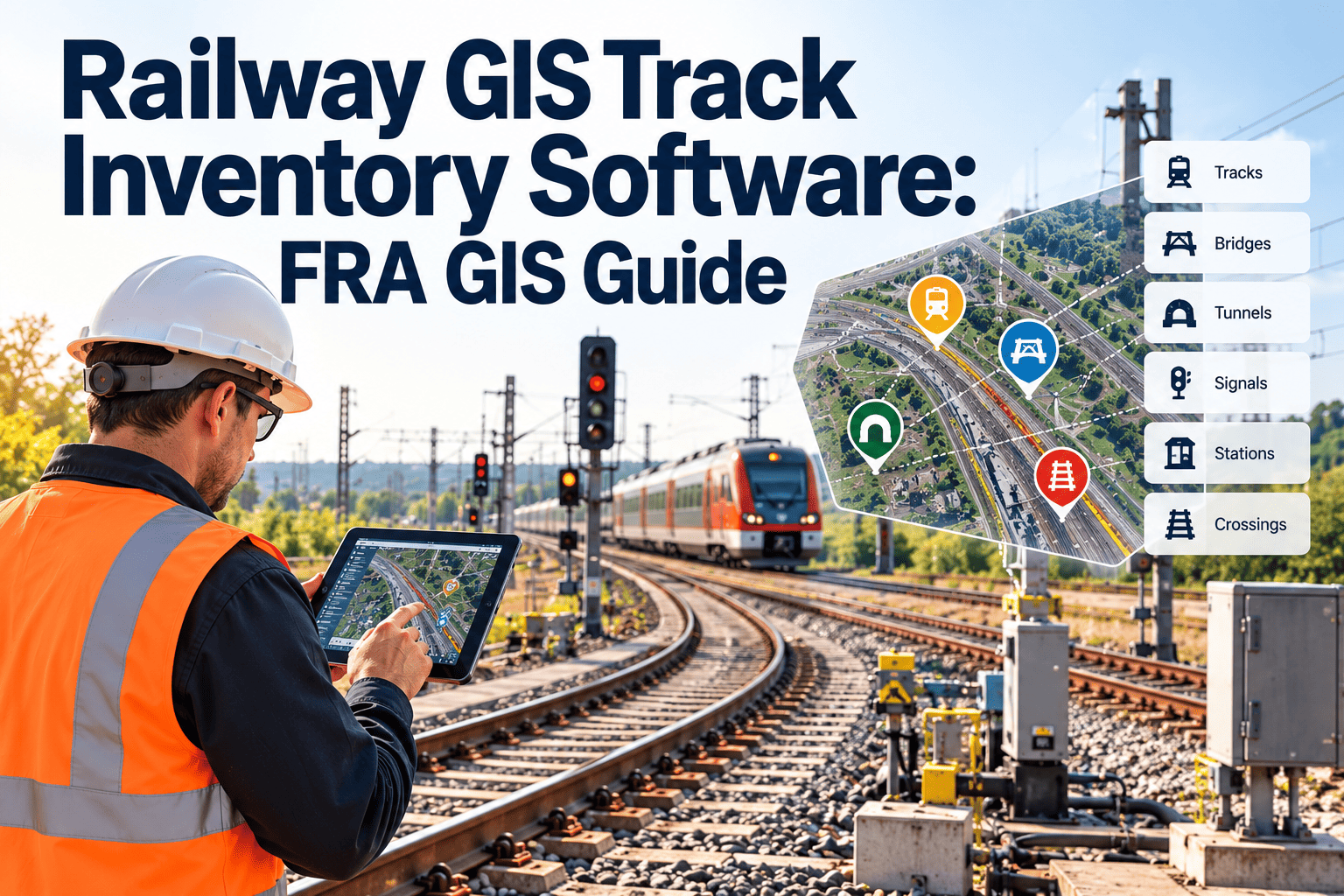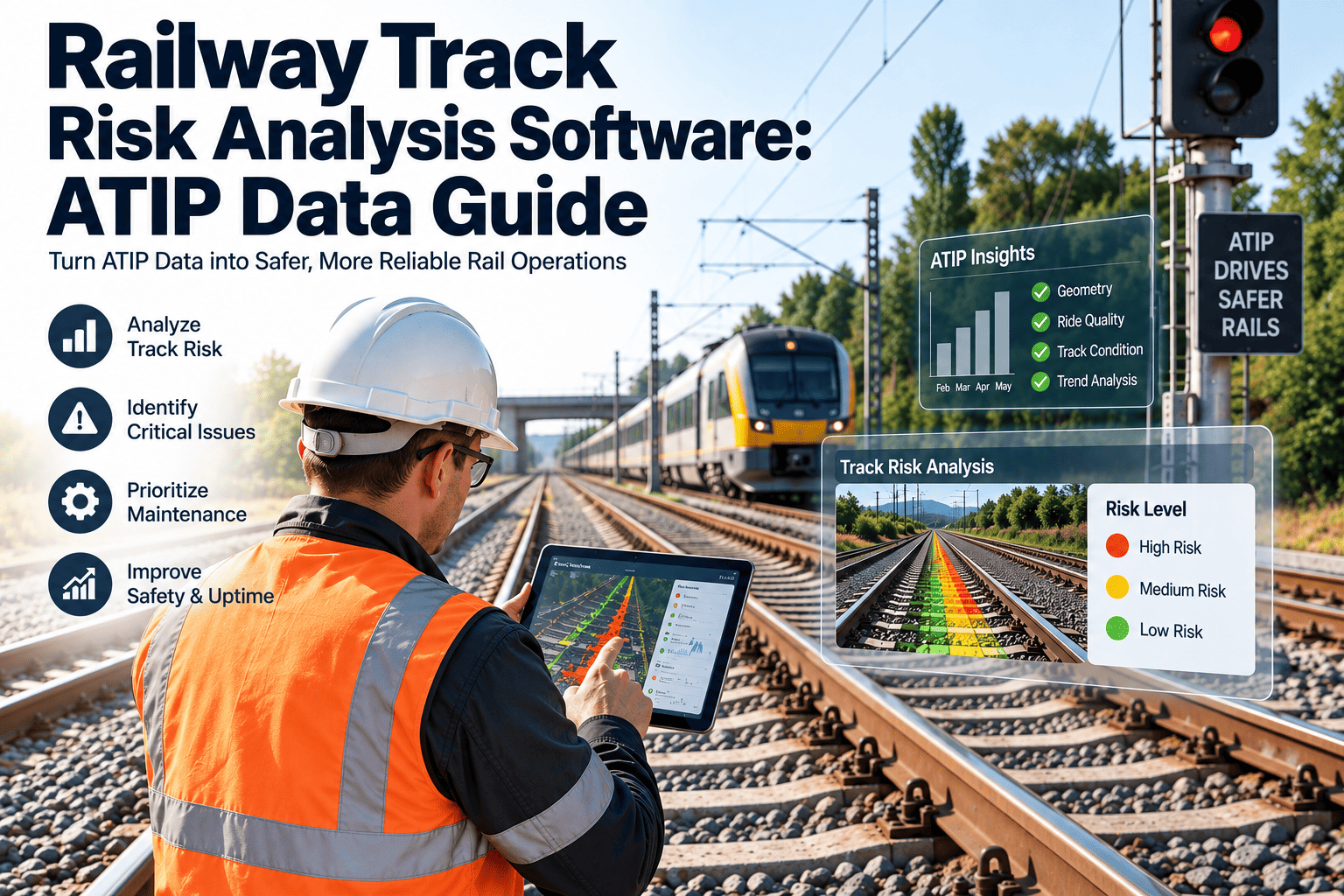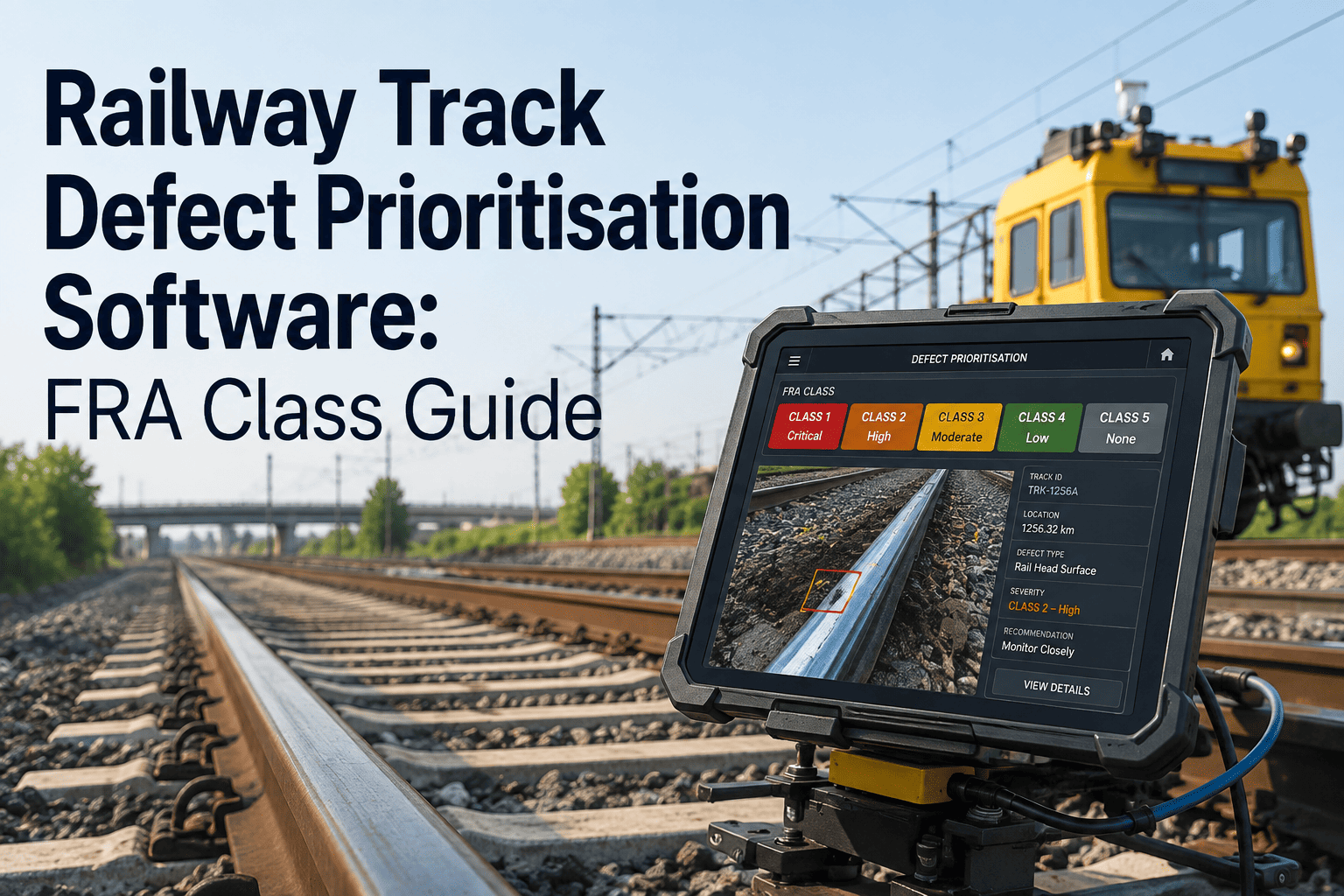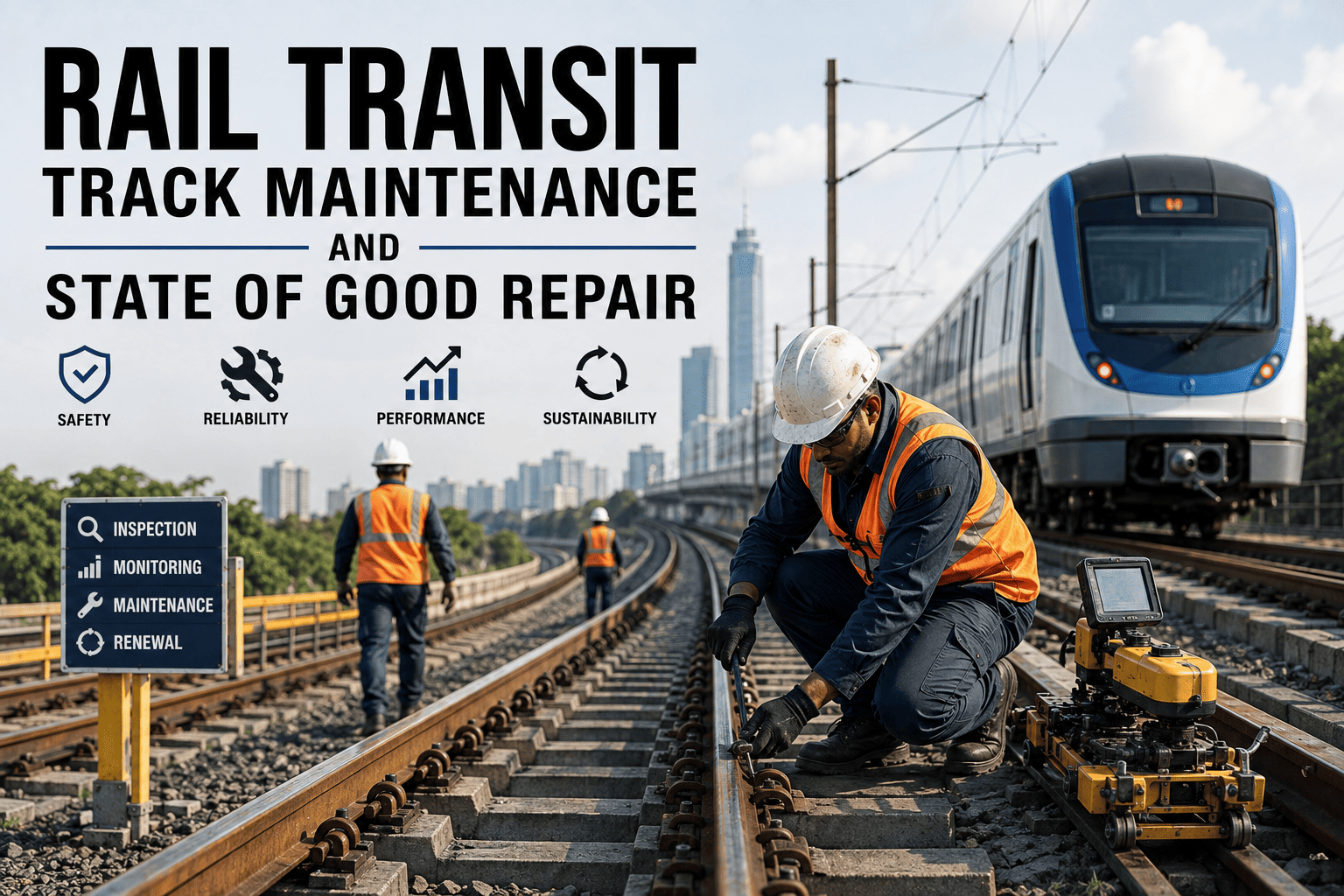
Rail transit track maintenance is the backbone of every safe, reliable public transportation system, directly impacting rider safety, on-time performance, and regulatory compliance. Achieving a state of good repair (SGR) requires transit agencies to systematically inspect, measure, and renew track assets—rails, ties, ballast, and fasteners—before failure occurs. Deferred rail infrastructure maintenance not only threatens passenger safety and increases derailment risks, but also jeopardizes federal funding eligibility under FTA oversight. Transitioning from reactive, paper-based workflows to a centralized, AI-powered CMMS like OxMaint helps maintenance directors track asset conditions, automate preventive schedules, and prove SGR compliance during audits. See how OxMaint transforms your rail maintenance program when you Start Free Trial today.
FTA State of Good Repair Framework
Is deferred track maintenance putting your transit system at risk?
The average U.S. transit agency faces a $50B SGR backlog. Track failures account for a major share of unplanned service disruptions and FTA compliance findings. OxMaint digitizes track inspection, automates work orders, and proves your rail infrastructure meets federal State of Good Repair standards.
SGR Methodology & Compliance
How to measure transit track state of good repair
The FTA defines State of Good Repair using asset condition and performance metrics. For rail transit track, SGR is measured through rail wear limits, tie density, ballast fouling, and surface alignment—benchmarks codified in FTA SGR guidance and AREMA standards. Agencies that lack a digitized asset register struggle to calculate these metrics accurately.
Rail Wear Measurement
Track gauge loss and head wear must stay within 5–8mm of original profile. OxMaint logs ultrasonic and manual gauge readings per asset, flagging rail segments that exceed 80% wear for mandatory renewal.
Tie Condition & Density
Class 1 track requires a minimum of 18 good ties per 100 feet. OxMaint ties tie-replacement work orders directly to inspection findings, ensuring defective crossties are replaced before they drop below SGR thresholds.
Ballast & Surface Alignment
Fouled ballast and cross-level deviations over 1 inch trigger immediate speed restrictions. OxMaint schedules tamping and ballast cleaning based on predictive degradation curves rather than fixed intervals.
Performance & Age Metrics
FTA's TERM (Transit Economic Requirements Model) rates assets on a 5-point scale. OxMaint maintains a live asset register that automatically calculates TERM scores and useful life remaining for every track segment.
Rail Track Inspection Checklist
Essential transit track inspection checklist for FRA & FTA compliance
Federal regulations mandate weekly visual track inspections for rail transit, supplemented by twice-annual ultrasonic testing. Missing or undocumented inspections are the #1 cause of FTA compliance findings. Here is the core checklist OxMaint digitizes for track maintenance crews.
Cost of Deferred Maintenance
The real cost of delayed rail track maintenance
Every dollar deferred in preventive track maintenance compounds into $4–$10 in capital renewal and incident costs. A single broken rail can cause a derailment exceeding $2M in damages, service interruptions, and potential loss of life. Here is a worked example of what deferred maintenance costs a mid-sized transit agency.
| Maintenance Activity | Preventive Cost | Deferred / Reactive Cost | Cost Multiplier |
|---|---|---|---|
| Rail grinding & lubrication | $8,500 / mile | $42,000 / mile (corrugation renewal) | 4.9x |
| Tie replacement (spot) | $120 / tie | $650 / tie (cluster failure + track slow order) | 5.4x |
| Ballast cleaning & tamping | $45,000 / mile | $220,000 / mile (full undercutting) | 4.9x |
| Ultrasonic rail testing | $1,200 / mile | $2M+ (undetected broken rail derailment) | 1,600x+ |
Capital Planning & Sequencing
How to sequence rail track capital renewal projects
Smart capital sequencing means prioritizing track segments with the worst TERM scores, highest traffic density, and greatest failure risk. OxMaint’s analytics engine ranks renewal candidates automatically, ensuring your limited capital budget goes to the highest-risk assets first—maximizing SGR improvement per dollar spent.
Asset Condition Assessment (Months 1–2)
Import all track assets into OxMaint. Run automated TERM scoring against inspection data to identify segments rated 4 (marginal) and 5 (poor). This establishes your SGR baseline and identifies the top 20% of assets consuming 80% of maintenance resources.
Risk-Weighted Prioritization (Month 3)
OxMaint cross-references condition scores with daily train volume, speed class, and failure history. Segments carrying 50,000+ daily passengers with TERM score 5 are flagged for immediate capital renewal—no manual spreadsheet analysis required.
Renewal & Work Order Execution (Months 4–9)
Generate capital work orders directly from the prioritized list. OxMaint assigns crews, tracks spare parts inventory (rails, ties, fasteners), and documents completion with photo evidence—creating a defensible audit trail for FTA reporting.
Post-Renewal SGR Validation (Month 10+)
After renewal, OxMaint resets the asset condition score and begins a new degradation curve using predictive analytics. Agencies typically see a 25–40% reduction in unplanned track slow orders within the first year of implementing this cycle.
How OxMaint Helps
How OxMaint powers your rail transit track maintenance program
OxMaint is an AI-powered CMMS and EAM platform built for maintenance and reliability teams managing safety-critical infrastructure. Here is how rail transit agencies use OxMaint to move from reactive firefighting to a predictive, SGR-compliant track maintenance program.
Digital Track Inspection & Work Orders
Replace paper inspection forms with mobile checklists. Inspectors log defects with photos, and OxMaint auto-generates prioritized work orders—cutting administrative time by 60% and ensuring no defect goes unaddressed.
Predictive Maintenance Analytics
OxMaint’s AI engine analyzes track geometry car data, ultrasonic test results, and wear trends to predict rail failures 30–90 days before they occur—reducing unplanned service disruptions by 30–50%.
FTA-Ready SGR Reporting
Live asset condition dashboards calculate TERM scores automatically. Export SGR compliance reports in one click for FTA submissions, eliminating weeks of manual data aggregation during audit season.
Spare Parts & Inventory Control
Track rail, tie, and fastener inventory across all yards and maintenance bases. OxMaint triggers auto-reorder when stock drops below safety thresholds, preventing capital project delays caused by material shortages.
Real-World Scenario
A 120-mile transit system cutting slow orders by 35%
Consider a mid-sized rail transit agency operating 120 miles of track, 48 turnouts, and 8 bridges. Their maintenance team of 35 relied on spreadsheets and paper work orders, resulting in frequent FTA findings and an average of 22 active track slow orders at any given time.
- 22 active slow orders averaging 14 days to resolve
- $2.1M annual unplanned repair spend
- 3 FTA compliance findings in 2 years
- 460+ paper work orders lost or incomplete annually
- No centralized view of track asset conditions
- 14 active slow orders, resolved in 6 days average
- $1.3M annual unplanned spend (38% reduction)
- Zero FTA findings during annual review
- 100% digital work orders with photo evidence
- Real-time SGR dashboard across all 120 miles
See OxMaint on your track assets — book a 30-minute demo
Discover how rail transit agencies use OxMaint to automate inspections, predict failures, and prove State of Good Repair compliance to the FTA.
Frequently Asked Questions
Rail transit track maintenance & state of good repair FAQs
What is a state of good repair in rail transit?
A state of good repair (SGR) means all transit assets are at or above their minimum condition benchmark for safe, reliable operation. The FTA uses a 5-point TERM scale where assets rated 4 or 5 are considered below SGR and require capital renewal. Rail track assets must meet specific wear, alignment, and tie-density standards to maintain SGR status.
How often should rail transit track be inspected?
Federal regulations require weekly visual track inspections for most rail transit properties, with twice-annual ultrasonic rail flaw detection and monthly switch inspections. High-speed and high-tonnage segments may require more frequent inspection. OxMaint automates scheduling so no inspection is ever missed—see how it works when you Book a Demo.
What is the difference between preventive and corrective track maintenance?
Preventive maintenance is scheduled work—like rail grinding, tie replacement, and ballast tamping—performed before failure to extend asset life. Corrective (reactive) maintenance is unscheduled repair work done after a defect or failure occurs. Preventive maintenance costs 4–10x less and is the foundation of achieving SGR. OxMaint’s predictive analytics go a step further by timing preventive work based on actual asset condition.
How does a CMMS improve rail transit track maintenance?
A CMMS centralizes asset records, automates work order generation from inspection findings, tracks spare parts inventory, and provides real-time analytics on asset condition and maintenance costs. This eliminates paper-based inefficiencies, ensures FTA audit readiness, and enables data-driven capital planning. You can experience these benefits directly by signing up for a Start Free Trial.
How much does rail transit track maintenance software cost?
CMMS pricing for rail transit agencies typically ranges from $35 to $120 per user per month, depending on asset count, predictive analytics modules, and integration requirements. The ROI is usually achieved within 6–12 months through reduced unplanned repairs, fewer compliance findings, and eliminated administrative overhead. OxMaint offers a 14-day free trial with no credit card required so agencies can validate the fit before committing.
Start your rail transit track maintenance transformation today
Join transit agencies using OxMaint to cut unplanned disruptions by 35%, achieve zero FTA findings, and prove State of Good Repair compliance with one-click reporting.
Free 14-day trial · No credit card