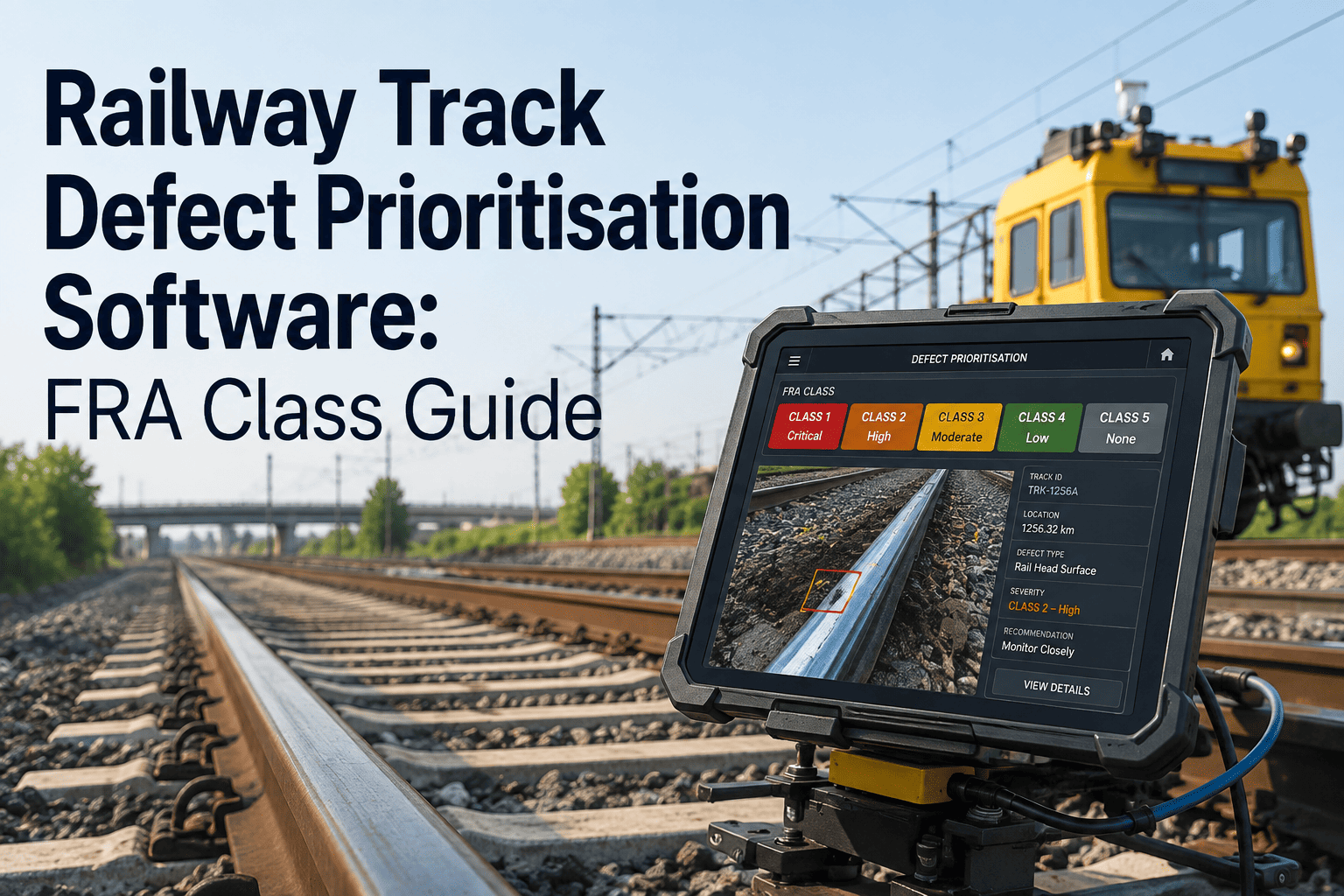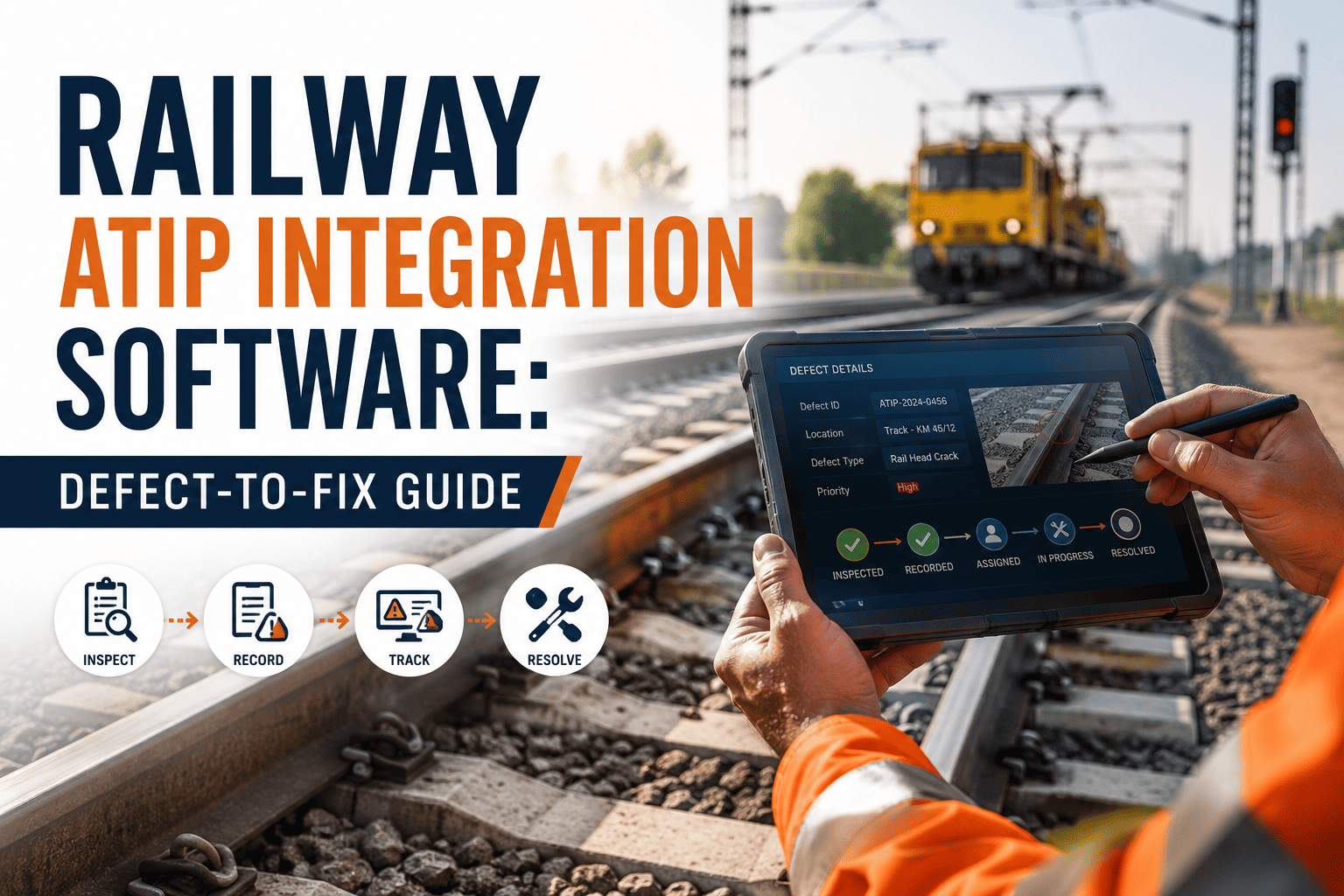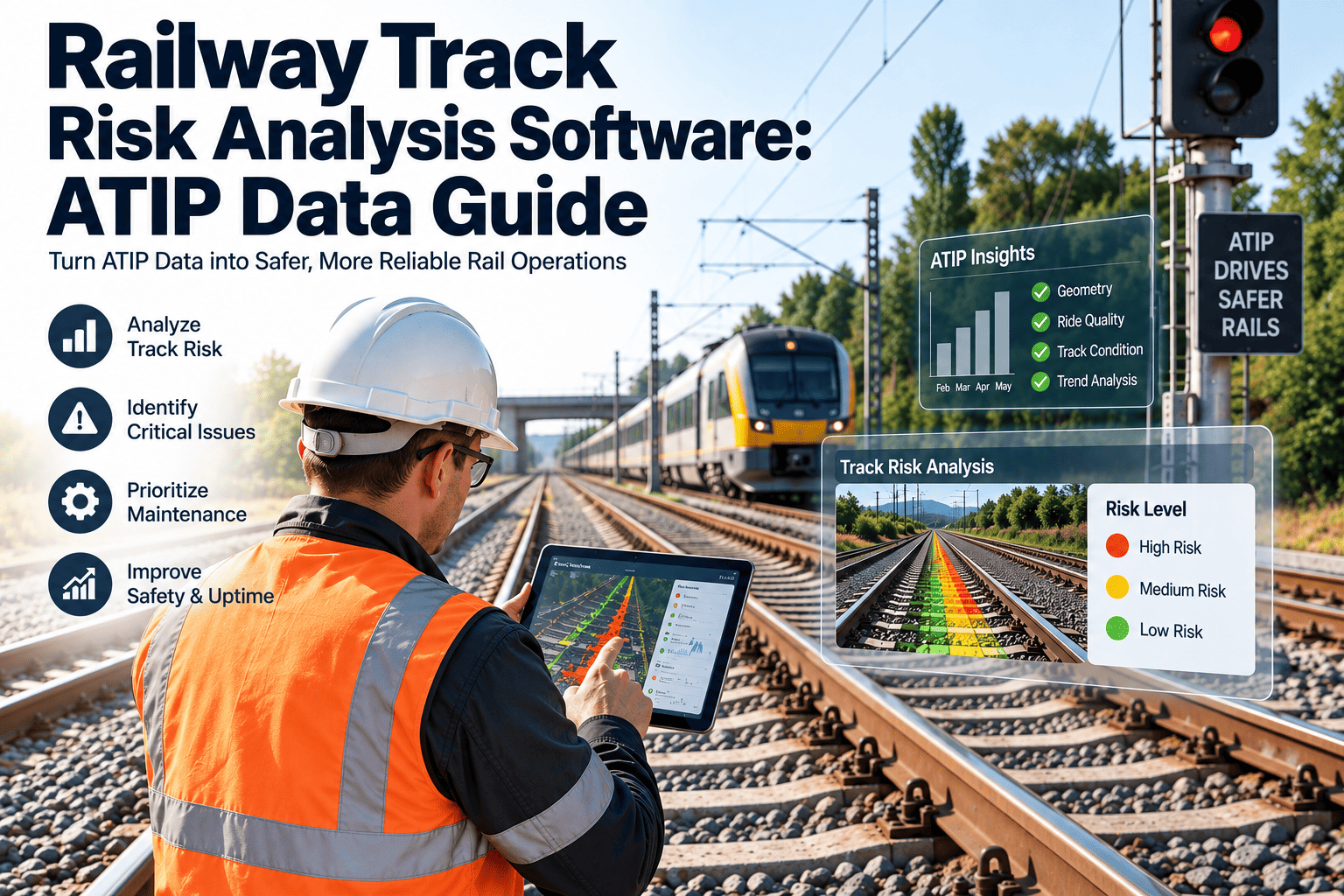
Automated Track Inspection Program vehicles generate thousands of geometry and rail-defect readings per mile, far more data than any track maintenance crew can review manually before the next inspection cycle begins. The value of that data depends entirely on whether it gets converted into a risk-ranked list of track segments — or sits in a raw exception report that nobody has time to triage. Railroads running ATIP alongside traditional manual inspections need a system that can merge both data streams into one prioritized view. OxMaint gives track maintenance teams the asset and inspection platform that turns automated defect data into an actionable state-of-good-repair plan.
Turning ATIP Track Geometry Data Into a Risk-Ranked Maintenance Plan
How to combine automated track inspection exceptions with manual inspection history to build trend analysis, state-of-good-repair scoring, and smarter allocation of scarce manual inspection resources.
Why Raw ATIP Exception Reports Are Not a Maintenance Plan
Automated Track Inspection Program vehicles measure gauge, alignment, surface, and cross-level continuously along a route, flagging any reading that exceeds FRA track safety standard thresholds for the applicable class of track. A single run can generate hundreds of exceptions across a subdivision, and on a large Class I network that volume repeats every time a geometry car passes over a given subdivision on its scheduled cycle.
The problem is not detection — ATIP systems are highly effective at finding geometry defects. The problem is prioritization: without a system that tracks exception history, repair status, and defect recurrence by segment, track supervisors are left triaging a flat list with no sense of which locations are deteriorating fastest, and no reliable way to distinguish a defect that has already been addressed from one that keeps reappearing at the same milepost run after run.
State-of-Good-Repair Scoring by Track Segment
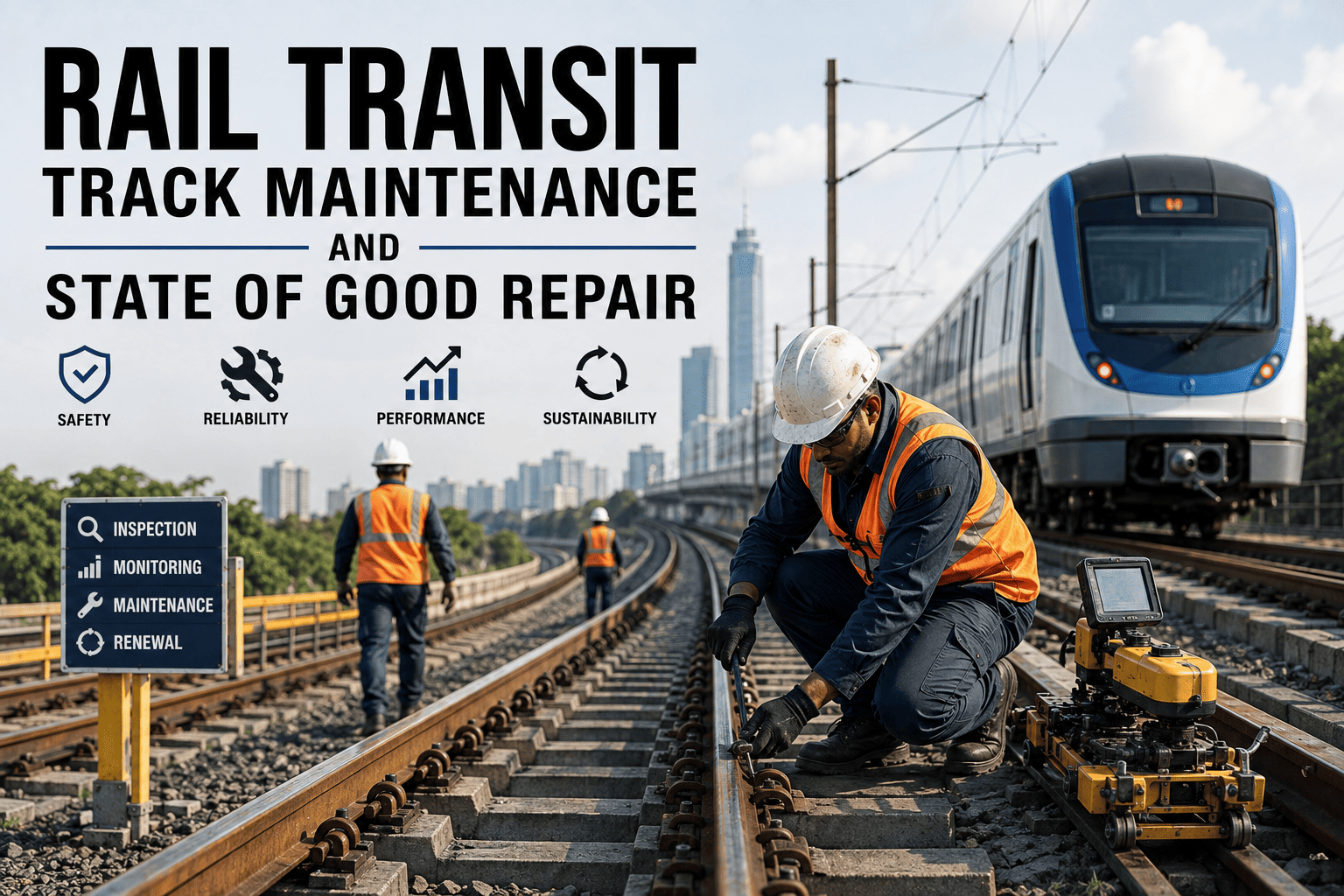
A state-of-good-repair score gives a subdivision-level view of track condition by converting individual exceptions into a single comparable rating per segment, similar to how a facility condition index works for buildings.
| Score Range | Condition | Typical Signal | Recommended Action |
|---|---|---|---|
| 90–100 | Good | No recurring exceptions across last three ATIP runs | Maintain standard inspection interval |
| 70–89 | Fair | Isolated exceptions, no recurrence pattern yet | Flag for manual inspection at next scheduled pass |
| 50–69 | Degraded | Same exception type recurring across two or more runs | Schedule targeted repair before next ATIP cycle |
| Below 50 | High Risk | Recurring exceptions plus rising severity trend | Manual inspection and slow order review required immediately |
OxMaint attaches every ATIP exception to its track segment asset record automatically, building a running history that shows which locations are trending toward failure instead of resetting the picture with every new run.
Allocating Scarce Manual Inspection Resources
Manual track inspectors cover a fraction of the mileage that ATIP vehicles do, which makes where to send them the highest-leverage decision a track maintenance team makes each week. Trend data — not a static schedule — should drive that allocation.
Building the Trend Analysis: What to Track Per Segment
A defensible trend analysis needs more than a single run's exception list. The following fields, tracked over time per segment, are what turn a raw geometry export into a real risk model.
How OxMaint Supports ATIP-Driven Track Maintenance Programs
OxMaint does not replace the geometry car or the FRA-defined exception thresholds — it gives track maintenance teams the asset-level history and workflow layer that turns each run's output into a maintained, trackable record.
Understanding FRA Track Safety Standard Thresholds in Practice
The Federal Railroad Administration's Track Safety Standards define allowable tolerances for gauge, alignment, surface, and cross-level by track class, with tighter tolerances required as authorized operating speed increases. An ATIP exception is generated whenever a geometry reading exceeds the tolerance defined for that segment's designated class, which means the same physical deviation can be a reportable exception on a Class 4 mainline and a non-issue on a Class 2 branch line running at lower speed.
This class-dependent threshold structure is exactly why a flat exception count is a poor risk indicator on its own. A subdivision with a high exception count but a low operating class may carry less actual derailment risk than a segment with fewer exceptions on track authorized for higher speeds. Any risk model built on top of ATIP data needs the track class and current speed authorization attached to every segment record, not just the raw geometry reading, or the resulting priority list will misrank easier, lower-speed problems above harder, higher-speed ones.
Regulatory exception counts also interact with slow orders. When a defect exceeds the safety threshold for the authorized class, railroads are required to either repair the defect or reduce authorized speed until it is corrected. A segment carrying an active slow order because of an unresolved geometry defect should surface at the top of any risk ranking automatically, since it represents both a known safety exposure and an ongoing operational cost in transit time, and letting a slow order sit unresolved for an extended period compounds both categories of cost simultaneously.
From Exception List to Annual Track Program Budgeting
Track maintenance budgets are typically built a year in advance, which means the risk ranking generated from this year's ATIP runs has to translate into next year's capital and maintenance-of-way labor allocation, not just this week's repair crew dispatch. Railroads that connect the two effectively treat the segment-level risk score as a planning input rather than only an operational trigger.
A segment that has moved from "Fair" to "Degraded" across two consecutive ATIP cycles is a strong candidate for programmed rail or tie replacement in the coming budget year, even if it has not yet crossed into slow-order territory. Catching that trend early and funding a planned replacement is materially cheaper than responding to an emergency slow order or derailment risk after the condition crosses the regulatory threshold. This is the same logic that applies to deferred maintenance in any asset-heavy operation — the cost of a repair rises the longer a documented, worsening condition goes unaddressed, and a subdivision-level trend view makes that escalation visible months before it becomes unavoidable.
Data Retention and Audit Trail Requirements for Track Inspection Records
Federal track safety regulations require railroads to retain inspection records for defined periods and to be able to produce them on request during an FRA audit or after an incident investigation. A raw ATIP exception file sitting in a contractor's export folder does not satisfy this requirement on its own — the record needs to be retrievable by segment, by date, and by the specific inspector or system that generated it, with a clear audit trail showing what action, if any, followed each flagged exception.
This is where segment-level asset records provide value beyond day-to-day maintenance planning. When every exception, repair action, and slow order is attached to the same segment history, producing an audit trail for a specific milepost or time period becomes a query rather than a multi-week records search across contractor deliverables, internal maintenance logs, and dispatcher slow-order records that were never designed to be cross-referenced.
Expert Perspective
Frequently Asked Questions
OxMaint gives railroads the segment-level history, trend analysis, and inspection workflow tools that convert raw geometry exceptions into prioritized, defensible maintenance decisions.