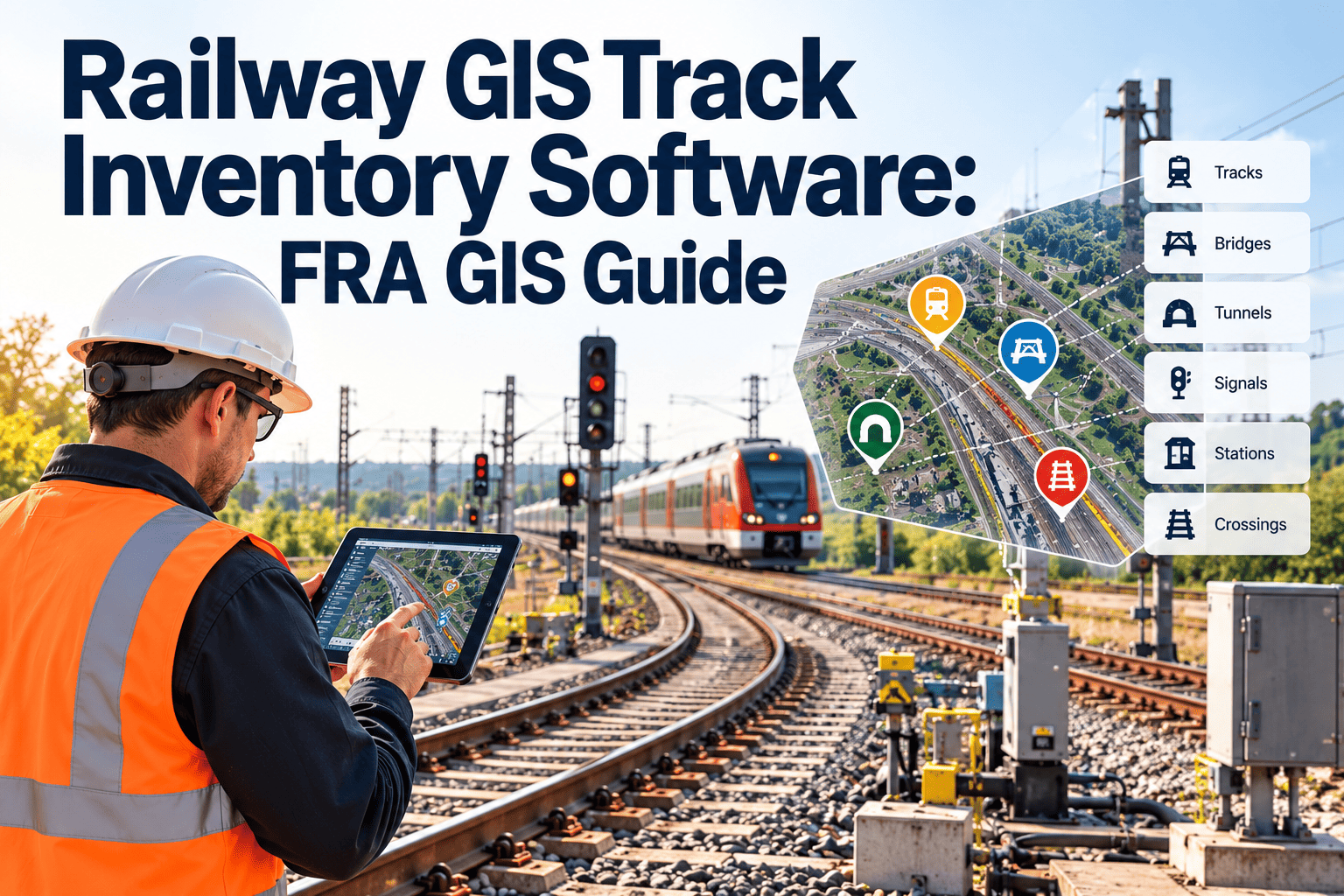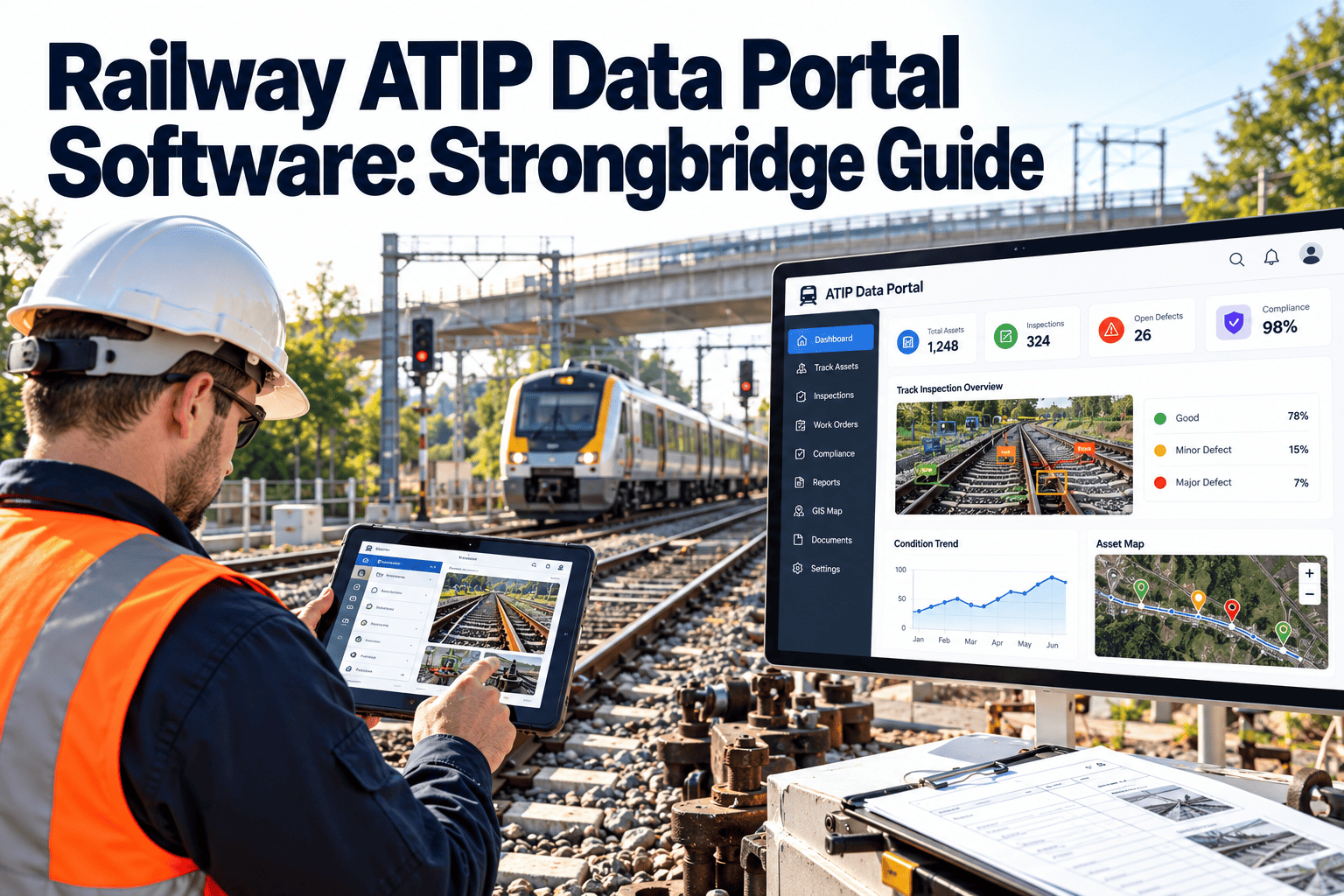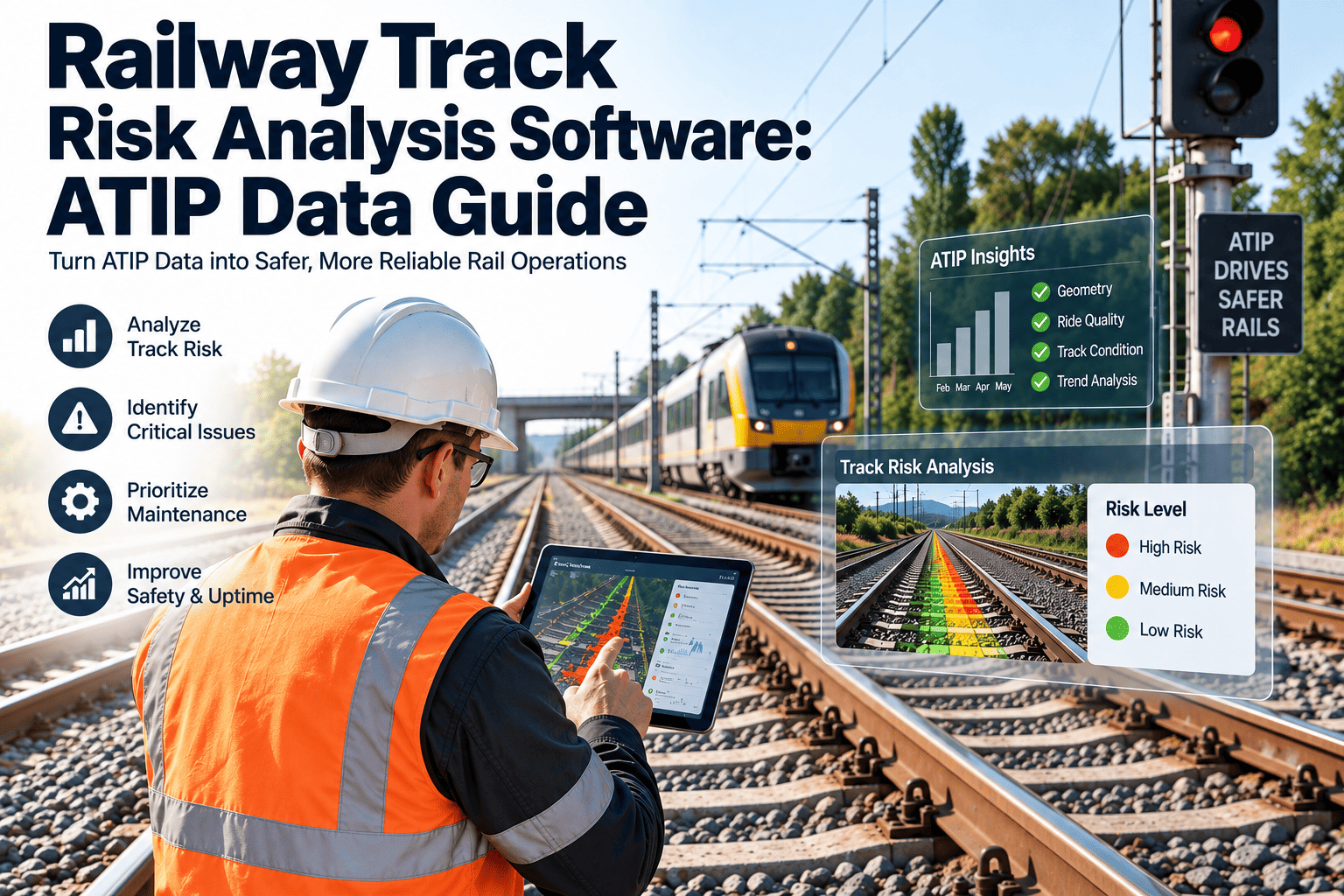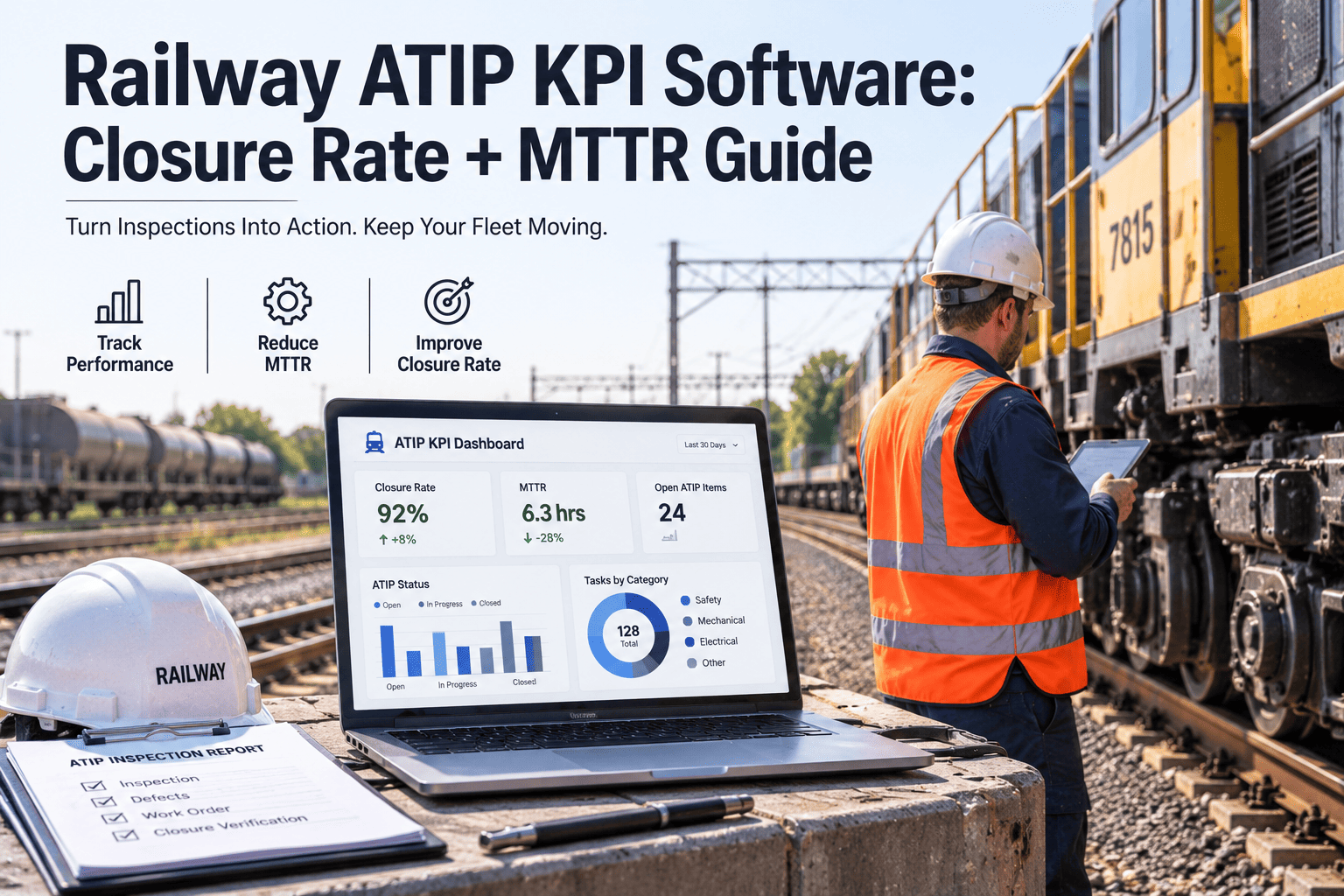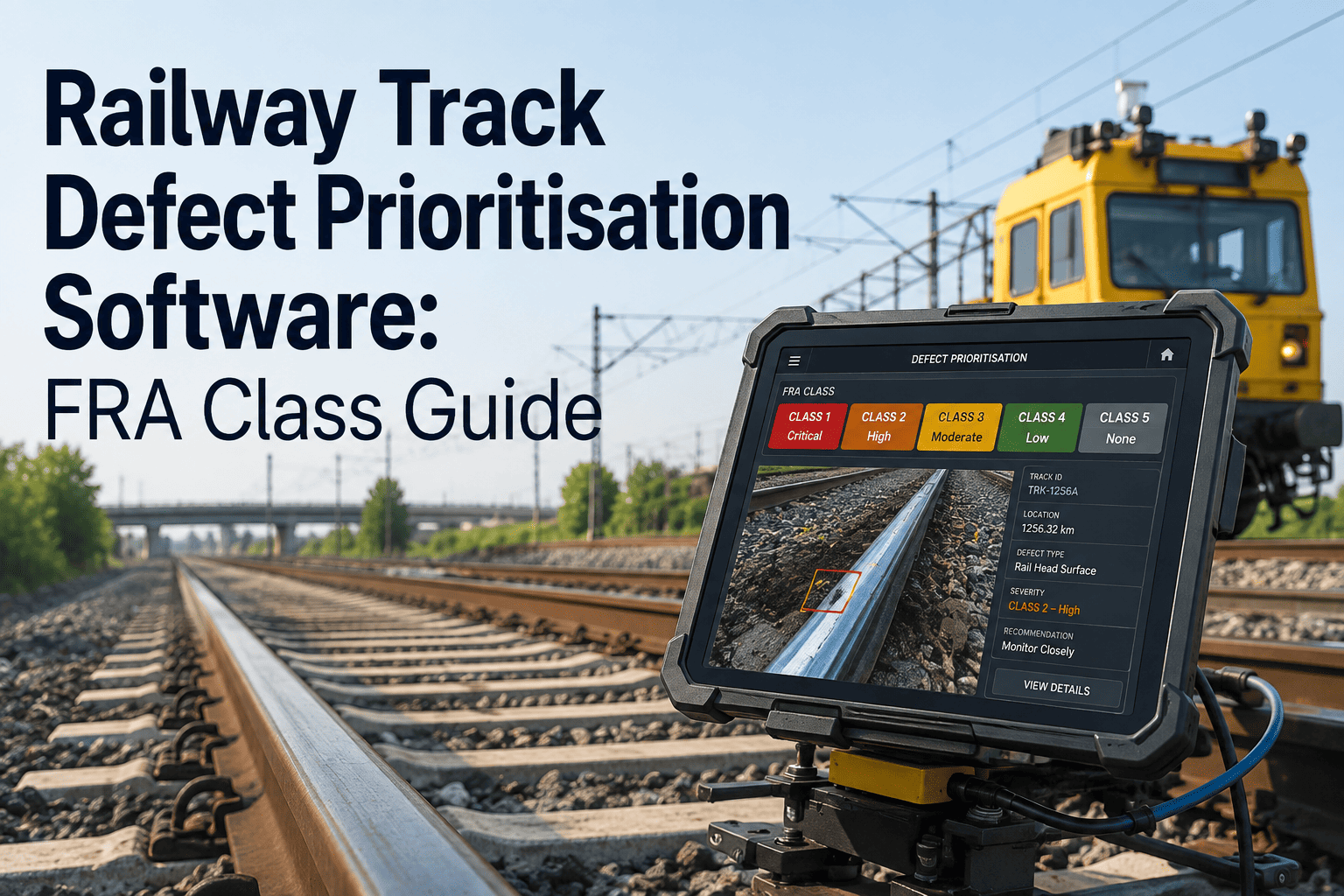
Railway track defect prioritisation is the discipline that decides which detected anomaly gets a work crew tomorrow morning and which one waits until the next 30-day window — and getting that call right is the difference between an ATIP-integrated maintenance program that runs on schedule and one that lurches from emergency slow order to emergency slow order. The Federal Railroad Administration classifies mainline track into six numbered classes tied to maximum operating speed, and every defect discovered by rail flaw detection, TGMS geometry cars, or visual inspection carries a remedial action requirement that depends on the class, the accumulated MGT, the defect type and size, and whether the segment carries passenger service or hazardous materials. Track engineers who try to run this calculation manually — across thousands of miles of subdivision, dozens of defect codes, and shifting inspection frequencies — end up prioritising by loudest phone call rather than by risk. A CMMS built around FRA remedial action logic changes that: every detected defect enters the queue with a computed priority score, a compliance deadline, and a work order already routed to the right crew. Learn how OxMaint structures rail track defect prioritisation for FRA-regulated operations.
Railway Track Defect Prioritisation Software: The FRA Class-Based Approach
How CMMS platforms score, sequence, and route rail track defects using FRA track class, accumulated tonnage, and safety-impact weighting — the operational discipline every ATIP-integrated maintenance program needs.
The Prioritisation Problem: Why FRA Class Is the First Filter
A Class 1 yard track and a Class 4 mainline carrying hazmat are governed by the same Track Safety Standards but generate radically different remedial action obligations for the identical defect. A detected transverse fissure on Class 1 yard track can be managed with a 48-hour visual inspection cadence; the same fissure on Class 4 requires immediate action or a speed reduction that ripples through the entire operating plan. Prioritisation software that ignores class collapses this asymmetry — and the result is either over-response on low-consequence segments or dangerous under-response on high-consequence ones. The FRA class of the segment where the defect sits is therefore the first variable that any credible priority engine must read.
The Five Variables of a Defect Priority Score
FRA class alone does not close the prioritisation problem. Two Class 4 defects on the same subdivision can carry very different urgency depending on the defect type, its measured size, the tonnage accumulated since last inspection, and whether the segment sees passenger service or hazmat traffic. A production-grade priority engine reads all five variables, applies the remedial action table from 49 CFR 213.113, and produces a computed score that sorts every open defect in the system into a defensible work sequence.
Score Every Rail Defect Against FRA Class, Tonnage, and Traffic Type
OxMaint's rail track defect module reads all five prioritisation variables and generates the ranked work queue your engineering department needs to stay ahead of FRA remedial deadlines.
Remedial Action Timelines by Class — The Compliance Clock
The remedial action table in 49 CFR 213.113 assigns time limits to each defect category. A CMMS that stores these as computed deadlines against each open work order — rather than as reference documents an engineer has to consult manually — converts the entire remedial process from reactive to scheduled. The table below shows representative response windows across track classes for the most common rail flaw defect categories. Actual required actions include Note A (protect and inspect), Note B (repair or speed restrict), and immediate action variants; the compliance clock starts at the moment the defect is detected and verified.
| Defect Category | Class 1–2 | Class 3 | Class 4–5 | Priority Weight |
|---|---|---|---|---|
| Transverse fissure (small) | Note A2 window | Note B repair | Immediate action | High |
| Compound fissure | 48-hour re-inspection | Repair or 30 mph limit | Immediate action | Critical |
| Detail fracture | Note A protect | Note B window | Immediate action | Critical |
| Defective weld | Extended window | Note A protect | Note B repair | Medium |
| Crushed head | Monitor | Speed limit or repair | Immediate action | High |
| Vertical split head | Note A2 window | Repair or speed limit | Immediate action | Critical |
| Gauge defect (geometry) | Repair within window | Repair or class reduction | Immediate speed limit | High |
The Priority Score in Practice — Four Defect Scenarios
The five variables combine into a single computed score that decides sequence when two defects compete for the same crew on the same day. The scenarios below show how identical defect types produce very different priority outcomes once class, tonnage, and traffic type are applied — and why a manual prioritisation process cannot reliably reproduce the ranking a CMMS engine computes automatically.
ATIP Integration — Where the Data Actually Comes From
The Automated Track Inspection Program (ATIP) and the industry's own automated track geometry measurement systems (ATGMS) generate the defect stream that a prioritisation engine has to consume. Under the proposed TGMS rule, Class I and II railroads, intercity passenger operators, and commuter railroads must run qualifying geometry inspections on all Class 1–5 mainline and controlled siding carrying more than 10 MGT annually, passenger service, or hazmat — at least three times within any 365-day period with no fewer than 90 days between runs. A CMMS built for rail must ingest these inspection outputs natively, match each exception to its GPS-referenced track segment, resolve the segment's class and tonnage, and open a scored work order without human re-keying.
Why Manual Prioritisation Breaks Down at Scale
A subdivision engineer managing a few hundred miles of track can hold FRA class, tonnage, and defect codes in their head and produce a reasonable manual priority ranking on a slow week. The same engineer managing a full regional network with thousands of open exceptions after a TGMS run cannot. The failure mode is not incompetence — it is arithmetic. When exception count exceeds working memory, prioritisation defaults to whoever calls loudest, which systematically over-services accessible defects and under-services remote ones. A CMMS priority engine removes that bias by scoring every open defect against the same rulebook regardless of who reported it.
Frequently Asked Questions
Build the Compliance Clock Into Every Rail Defect Work Order
OxMaint's rail track module scores defects against FRA class, accumulated tonnage, traffic type, and remedial action deadlines — then routes ranked work orders with 49 CFR 213.241 audit records generated automatically. Purpose-built for ATIP-integrated maintenance programs. Free to start, no hardware required.